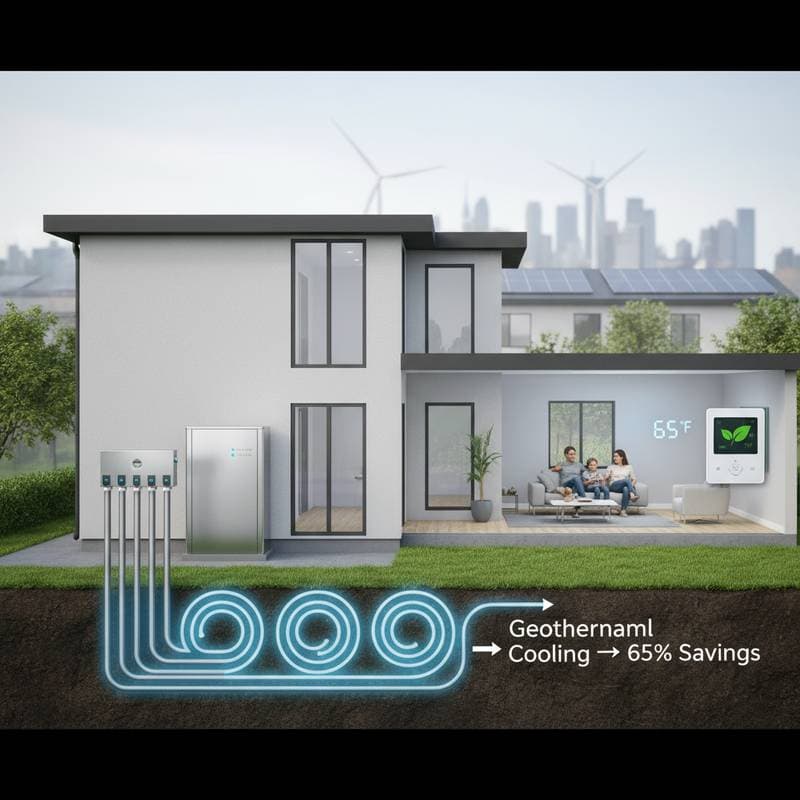
Geothermal Cooling Slashes AC Costs by 65% by 2026
Summer temperatures often force air conditioners to operate at maximum capacity, resulting in electricity bills that strain household budgets. Homeowners seek effective cooling methods that maintain comfort levels without excessive financial or environmental impact. Geothermal cooling, previously considered a costly specialized option, now stands as a practical mainstream choice capable of reducing air conditioning expenses by up to 65 percent in the coming years.
Key Advantages of Geothermal Systems
- Geothermal setups harness the consistent ground temperature for efficient home cooling, which lowers electricity usage by as much as two-thirds relative to conventional air conditioners.
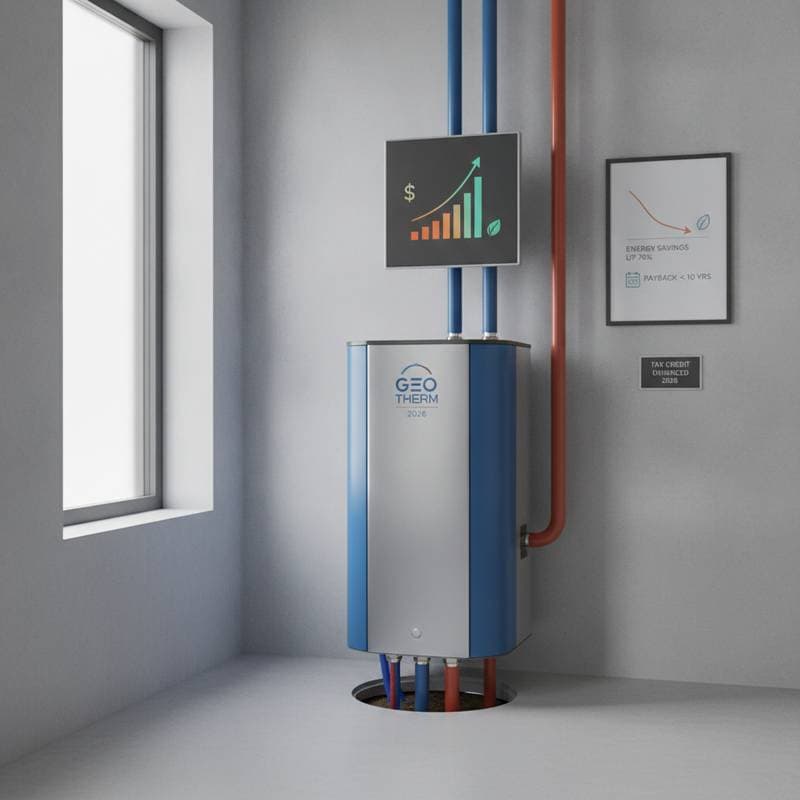
- Residential installation expenses typically fall between $18,000 and $35,000, though federal and regional incentives cover 30 to 40 percent of these costs.
- Annual operating savings reach $1,200 to $2,000 for combined cooling and heating needs.
- Indoor components last an average of 25 years, while underground loops endure 50 years or longer, ensuring extended dependability.
- Adoption rates in both commercial and residential sectors rise due to escalating energy prices and enhanced efficiency regulations.
How Geothermal Cooling Achieves Substantial Energy Savings
Conventional air conditioners demand significant electricity to expel heat into already warm outdoor environments. Higher external temperatures compel these units to exert greater effort for indoor temperature regulation. The ground, however, maintains a constant range of 45 to 75 degrees Fahrenheit based on geographic location.
This reliable thermal base enables geothermal systems to function with reduced energy input. Each kilowatt-hour consumed by the compressor and circulation pumps yields three to six kilowatt-hours of cooling output. Such efficiency directly corresponds to decreased utility expenses.
Research from the National Renewable Energy Laboratory indicates that replacing central air systems with geothermal alternatives cuts summer electricity consumption by 55 to 70 percent. These reductions gradually recover the initial investment. Including heating benefits during winter, average households realize total annual savings surpassing $2,000.
The Installation Process for Homeowners
Geothermal cooling installation demands careful preparation beyond a simple air conditioner replacement. Professionals conduct a thorough site assessment, evaluating soil composition, land availability, and groundwater levels. These elements guide the selection of horizontal, vertical, or water-based loop designs.
- Horizontal loops, positioned 4 to 6 feet underground, suit properties with ample yard space, such as those in rural or suburban areas.
- Vertical loops, extending 150 to 400 feet into the earth, fit constrained urban sites effectively.
- Pond or lake loops employ submerged piping in nearby water sources, maximizing efficiency where feasible.
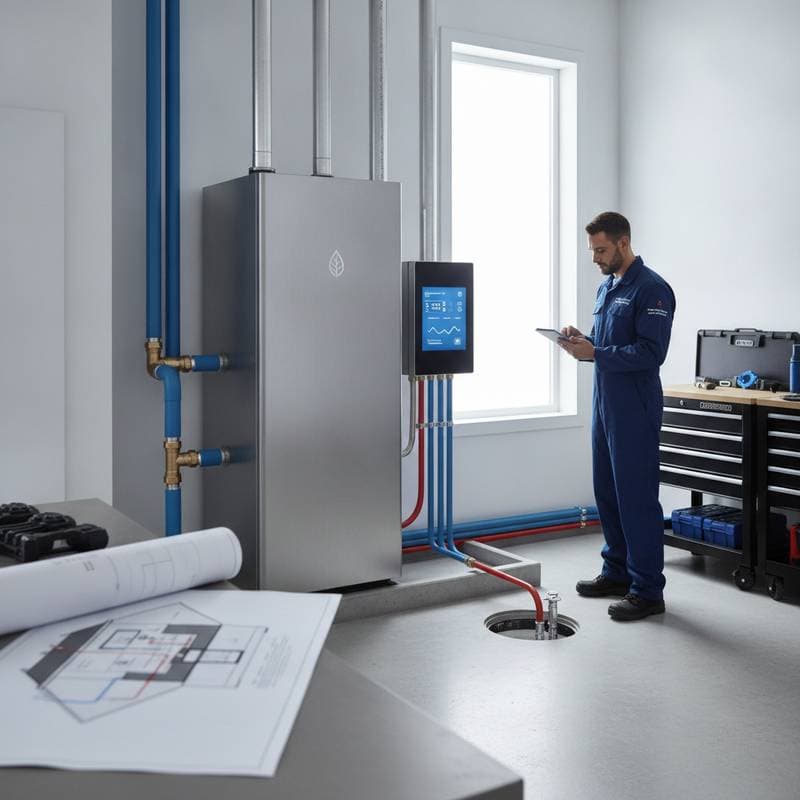
The procedure spans several days. After securing the ground loop, specialists link it to the indoor heat pump and existing duct system. Operation remains unobtrusive, with primary elements indoors and limited external hardware.
Environmental Impacts and Community Advantages
Geothermal systems generate zero direct emissions and avoid fossil fuel reliance. Relative to traditional HVAC, they diminish household carbon emissions by up to 60 percent. Broad implementation eases utility demands during peak summer periods, minimizing reliance on supplemental power sources.
On a local scale, these projects foster employment in drilling, piping, and HVAC expertise. Each installation engages qualified personnel for planning, setup, and ongoing care, bolstering training in renewable technologies.
Environmental scientist Dr. Kevin Ortega states, "Ground-source systems rank among technologies that deliver prompt energy reductions and sustained emission cuts without compromising comfort levels. They provide a tangible pathway to community-based renewable solutions."
Resolving Frequent Homeowner Questions
Does geothermal cooling suit only new builds?
Retrofits prove viable across existing structures. Technicians modify setups to integrate with current ducts or radiant heating networks. Although older homes present added challenges, advanced excavation methods ensure compatibility in nearly all scenarios.
What options exist for limited property sizes?
Vertical configurations demand little surface footprint. Specialized equipment allows geothermal drilling on compact city lots without disruption.
Can the system perform in all regions?
Ground stability ensures reliable operation nationwide, from humid tropics to arid deserts. Hybrid models blending geothermal with air-source elements optimize results in challenging terrains like rocky soils.
How does noise compare to standard units?
These systems produce minimal sound, akin to a household refrigerator. Lacking an external compressor eliminates outdoor disturbances and enhances property aesthetics.
Steps to Evaluate Geothermal Cooling for Your Home
Prospective adopters benefit from a systematic evaluation process to inform their choice:
- Schedule a professional site assessment to review soil properties, space constraints, and suitable loop types.
- Solicit detailed bids from multiple providers, incorporating projected savings, return timelines, and coverage terms for warranties.
- Examine eligibility for federal, state, and municipal rebates or tax benefits.
- Consider financing through energy-specific loans or leases that match payments to anticipated reductions.
- Verify local maintenance support and establish routines for periodic checks.
This methodical path optimizes fiscal and ecological outcomes.
Advancing Ground-Source Integration in Modern Living
Geothermal cooling extends beyond equipment upgrades to reshape attitudes toward energy use and home efficiency. Initial users once perceived these systems as innovative prototypes, yet empirical results have normalized their appeal.
Institutions such as commercial offices, educational facilities, and public buildings increasingly adopt geothermal for dual heating and cooling demands. Large-scale applications validate scalability and consistent performance.
Architectural designer Lena Park observes, "Geothermal integration appears in diverse projects, from single-family residences to apartment buildings. It transitions from specialized to standard, especially for owners committed to long-term occupancy."
Securing Long-Term Comfort and Savings
Adopting geothermal cooling invests in enduring economic security and planetary stewardship. Return on investment occurs within six to ten years, followed by decades of accumulating benefits.
Homeowners prepared to lessen dependence on traditional cooling begin by consulting accredited specialists, confirming rebate access via official resources, and aligning with personal sustainability objectives. Harnessing subterranean thermal consistency delivers consistent indoor environments, sharp utility decreases, and support for reduced-emission futures. As accessibility improves, geothermal redefines accessible, responsible climate management.