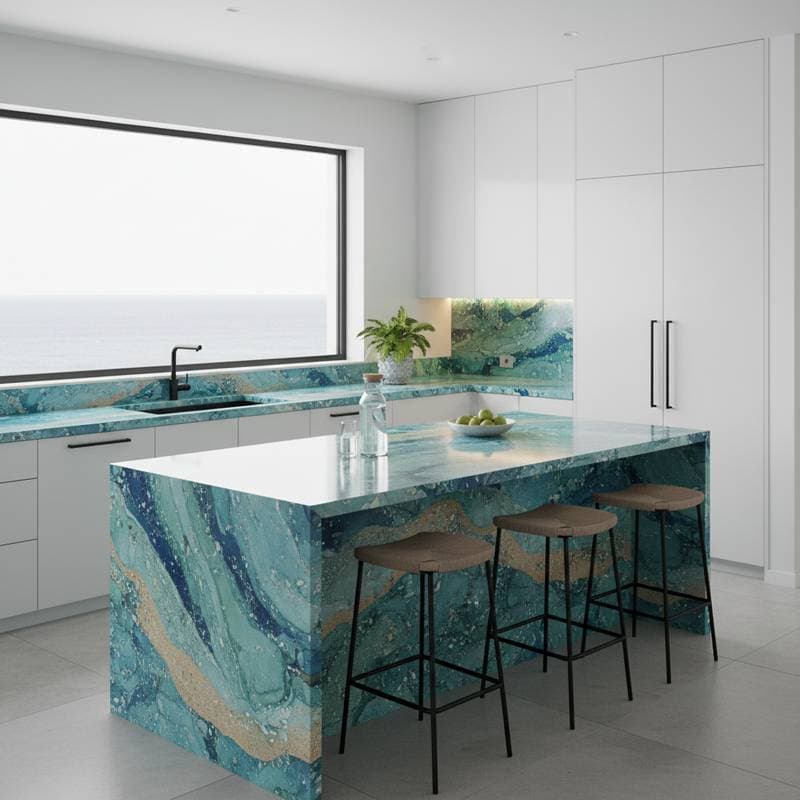
Key Points
- Ocean plastic countertops convert marine waste into robust, attractive surfaces ideal for contemporary kitchens.
- They integrate superior performance, environmental benefits, and visual charm at accessible price points.
- Owners benefit from enduring value via simple upkeep, toughness, and elevated market appeal.
- Selecting verified recycled options aids worldwide ocean cleanup and ethical material procurement.
The Story Behind Sustainable Surfaces
Picture chopping vegetables on a countertop sourced from ocean drifts. This surface offers more than beauty; it embodies transformation and accountability. Ocean plastic countertops emerge as focal points in eco-conscious kitchen renovations, delivering ecological repair alongside reliable utility.
The process starts with gathering plastics from ocean gyres and beaches. Workers clean and shred the materials, then fuse them with resins or mineral additives to form dense slabs. These creations compete with quartz or granite in durability, while addressing a pressing pollution crisis through everyday application.
Environmental and Economic Advantages
Conventional countertops, such as natural stone or synthetic composites, demand intensive mining, shipping, and production processes that generate high emissions. Ocean plastic alternatives alter this dynamic. Repurposing discarded plastics lowers greenhouse gases, eases pressure on waste sites, and promotes healing in ocean habitats.
Economically, these surfaces align with mid-range stone pricing, typically $50 to $120 per square foot including installation. Beyond upfront costs, they yield strong returns. Prospective buyers prioritize green features, often paying premiums for homes with such installations, which can boost resale prices by 5 to 10 percent in eco-aware markets.
Durability Engineered for Daily Use
Doubts about recycled plastics often center on longevity compared to traditional choices. Ocean plastic countertops, however, incorporate advanced formulations for exceptional resilience. Polymer matrices reinforced with minerals yield slabs that withstand impacts, heat up to 300 degrees Fahrenheit, and resist scratches from routine tasks.
The nonporous composition prevents stains from wine or coffee and inhibits bacterial growth, suiting busy households. Unlike porous stones, no annual sealing proves necessary. A soft cloth with mild detergent suffices for upkeep, ensuring the surface retains its luster over 20 years or more.
Expert Tip: Evaluate options by reviewing technical specifications on hardness (Mohs scale ratings above 6), abrasion tests (comparable to quartz), and thermal limits. Established brands provide independent lab validations to support these attributes.
Aesthetic Options and Design Flexibility
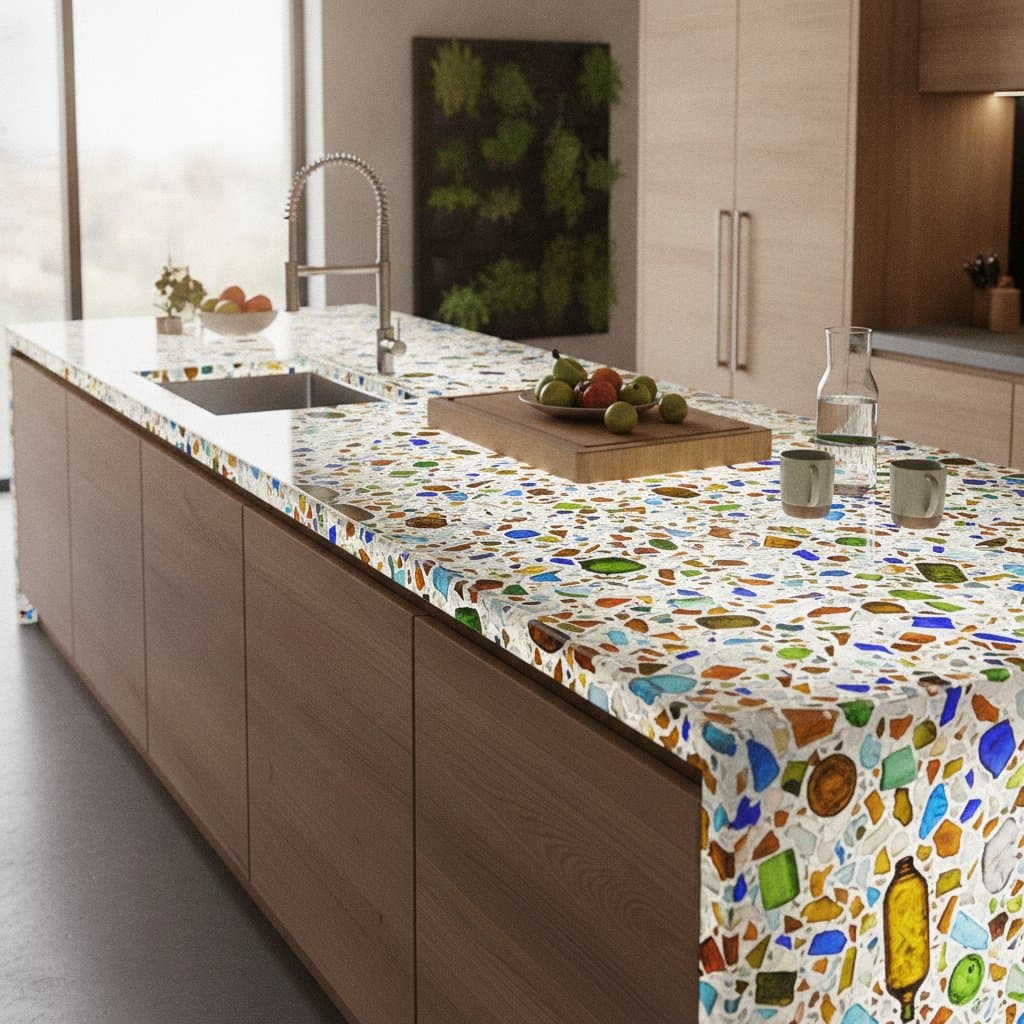
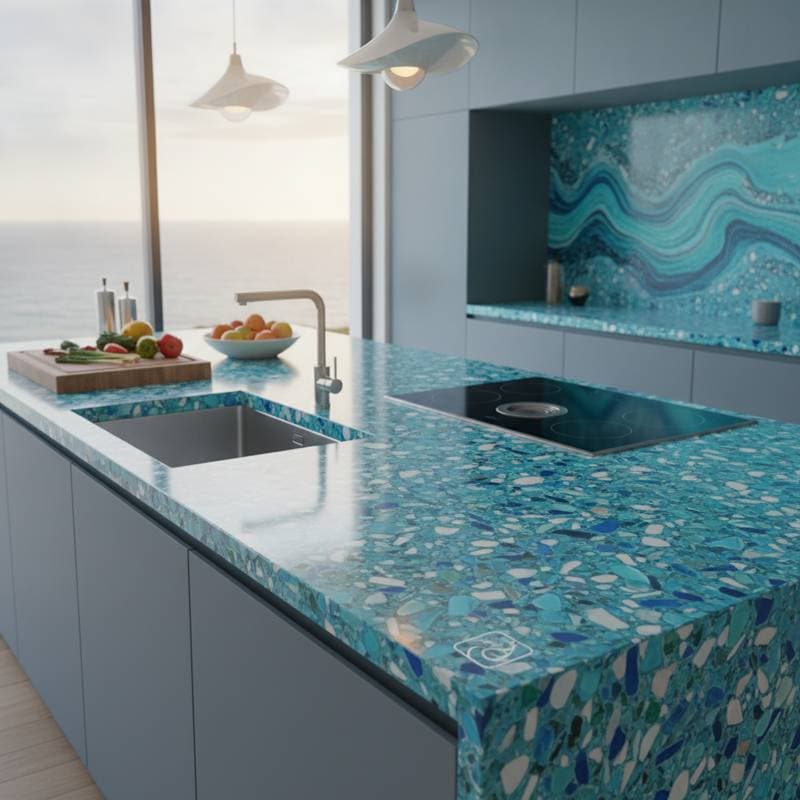
Available in diverse hues and motifs drawn from seaside inspirations, ocean plastic slabs feature marbled blues evoking waves, earthy tones resembling driftwood, or crisp neutrals for clean lines. Textures range from subtle veining to uniform solids, accommodating various decor themes.
Fabrication techniques enable precise cuts for integrated fixtures like undermount sinks or curved edges. This adaptability suits styles from sleek industrial to warm farmhouse, enhancing overall kitchen cohesion.
Actionable Next Step: Consult your installer on finish varieties, such as satin for a subdued look that conceals fingerprints or glossy for amplifying ambient light in smaller areas. Test samples in your space to assess how they interact with existing elements.
Ensuring Ethical Origins and Verification
Authentic eco-impact requires traceable supply chains and rigorous standards. Seek certifications from bodies like the Global Recycled Standard, which verifies at least 50 percent post-consumer content, or OceanCycle, confirming ocean-sourced recovery without exploitation.
Leading manufacturers collaborate with nonprofits such as The Ocean Cleanup, directing proceeds to removal initiatives. Purchasing these products contributes to removing tons of plastic annually, creating tangible progress beyond mere aesthetics.
Professional Insight: Builders note that clients now reference certifications during selections, using them to offset initial expenses through documented sustainability gains and appeal to green certifications like LEED for homes.
Cost Analysis and Long-Term Value
Upfront expenses mirror those of premium quartz, yet ocean plastic excels in ongoing savings. Minimal maintenance avoids the $200 to $500 yearly costs associated with stone sealing or repairs. Stain resistance further cuts restoration needs.
Installed properly, these surfaces endure 25 to 30 years. When paired with energy-saving fixtures in a remodel, the overall return on investment reaches 75 to 95 percent, factoring in utility reductions and market premiums for sustainable properties.
Steps to Integrate Ocean Plastic
Adopting ocean plastic countertops signals both style and stewardship. Start by engaging certified installers experienced in recycled composites. Obtain physical samples to evaluate under your kitchen lighting, and verify alignment with appliances and workflows.
For cost efficiency, blend with complementary eco-materials, such as bamboo cabinetry or recycled tile accents. This approach layers textures while distributing expenses across the project.
Upkeep involves basic habits: employ trivets for hot pots, protect against direct cuts with boards, and address spills immediately to maintain integrity.
Realizing Rewards in Everyday Design
Ocean plastic countertops demonstrate how green choices enhance functionality without compromise. They convert environmental challenges into household strengths, fostering spaces where utility meets purpose. Homeowners discover that such selections not only elevate daily routines but also contribute to broader restoration efforts, making each kitchen a hub of mindful innovation.