Key Points
- Homeowners can install geothermal HVAC systems for approximately half the previous cost due to expanded tax credits.
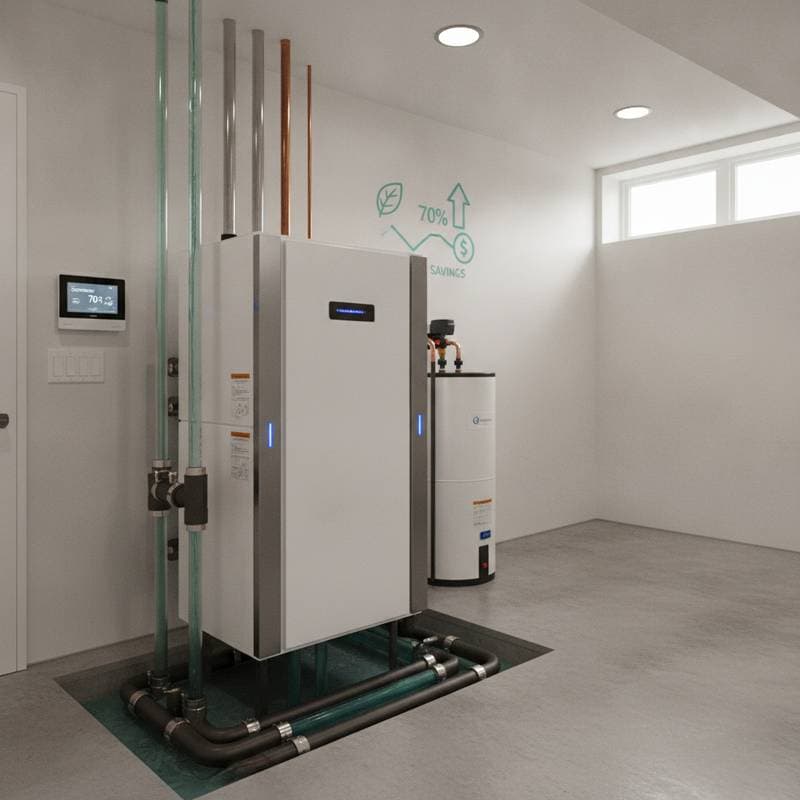
- Geothermal heat pumps reduce heating and cooling bills by up to 70 percent relative to traditional systems.
- The technology delivers long-term energy stability, resilience against fuel price fluctuations, and enhanced indoor air quality.
- Proper system design, soil testing, and installer expertise prove essential for optimal performance and reliability.
The Shift Toward Mainstream Geothermal Adoption
Imagine entering your home after a demanding day, anticipating the familiar discomfort of uneven temperatures from an aging furnace. Instead, the air maintains perfect balance, operates quietly, and remains consistent. Without disruptive blasts of air, dry heat, or abrupt cooling, this represents the daily experience in homes equipped with geothermal HVAC systems.
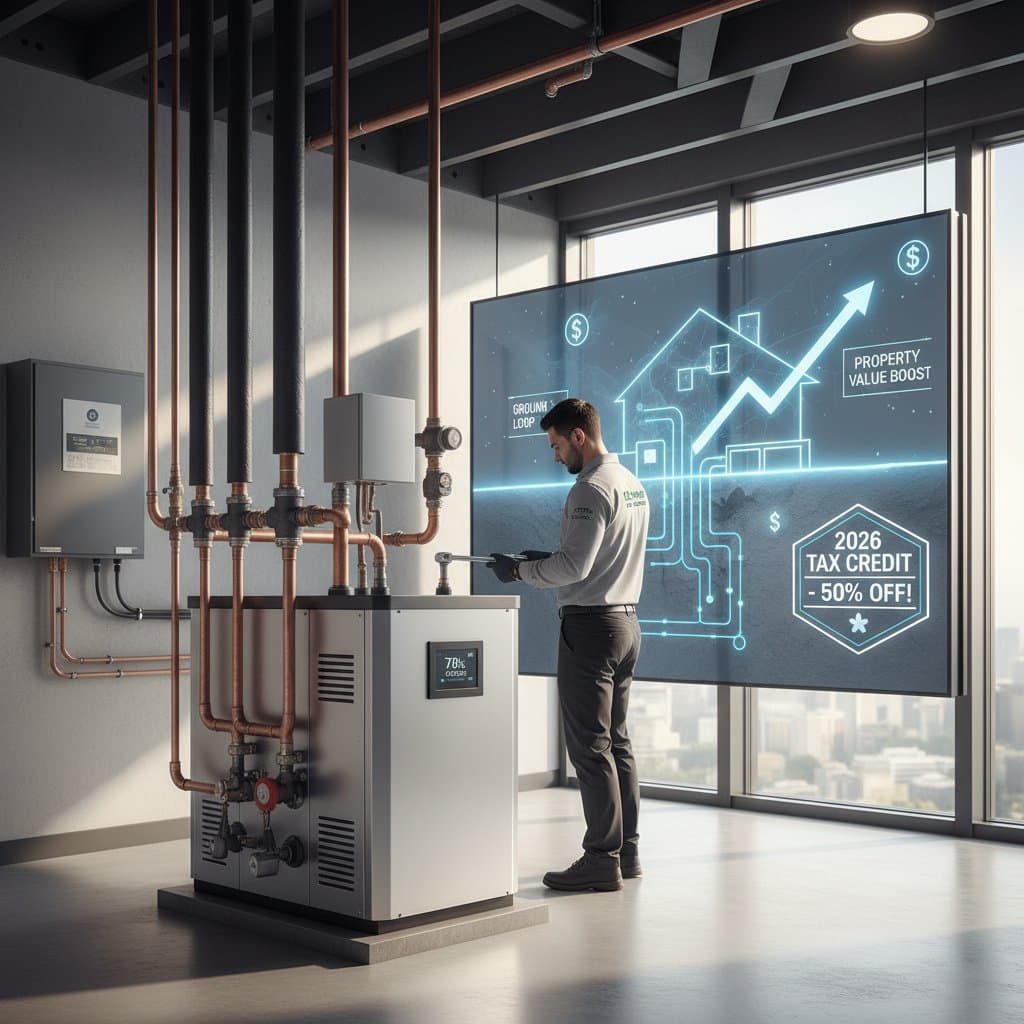
Historically, high installation costs posed the primary obstacle to widespread adoption. A ground-source heat pump often demanded twice the expense of a conventional system. Recent federal tax credits, however, reduce those costs by up to 50 percent, transforming geothermal technology from a niche choice for pioneers or high-end properties into a practical upgrade for homeowners seeking comfort, savings, and environmental benefits.
Benefits for Homeowners
Rising energy prices continue to burden households, with HVAC systems accounting for the largest portion of energy consumption. Transitioning to an efficient heating and cooling solution offers a direct method to lower monthly bills while minimizing environmental impact.
Geothermal heat pumps harness stable underground temperatures to regulate home climate. The earth's consistent subsurface conditions allow the system to avoid expending energy against surface weather extremes. This approach utilizes renewable thermal energy stored directly below the property.
Financially, the revised tax credit framework alters the landscape significantly. Homeowners qualify for a substantial portion of installation expenses returned as a tax credit, accelerating the return on investment. Paired with ongoing energy reductions and lower upkeep, geothermal systems often recoup costs within five to eight years, a marked improvement over prior timelines.
Essential Planning Factors
Installing a geothermal HVAC system extends beyond replacing a furnace; it requires ground loops, accurate sizing, and expert installation. Understanding key influences on cost and efficiency aids informed decision-making before committing.
Site Conditions
Soil type, land availability, and groundwater presence determine underground loop placement. Loamy or sandy soils facilitate drilling, whereas rocky areas necessitate alternative configurations that may elevate expenses modestly.
Loop Configurations
Two primary loop types exist: closed-loop and open-loop.
- Closed-loop systems employ sealed pipes containing an antifreeze solution that circulates underground.
- Open-loop systems extract water from wells or surface sources and discharge it back into the ground.
Closed-loop designs prevail due to their versatility across climates and reduced water oversight needs.
System Sizing and Insulation
Well-insulated homes support smaller geothermal units, lowering initial outlay. An energy audit prior to installation identifies high-impact upgrades like sealing drafts or improving windows.
Installer Qualifications
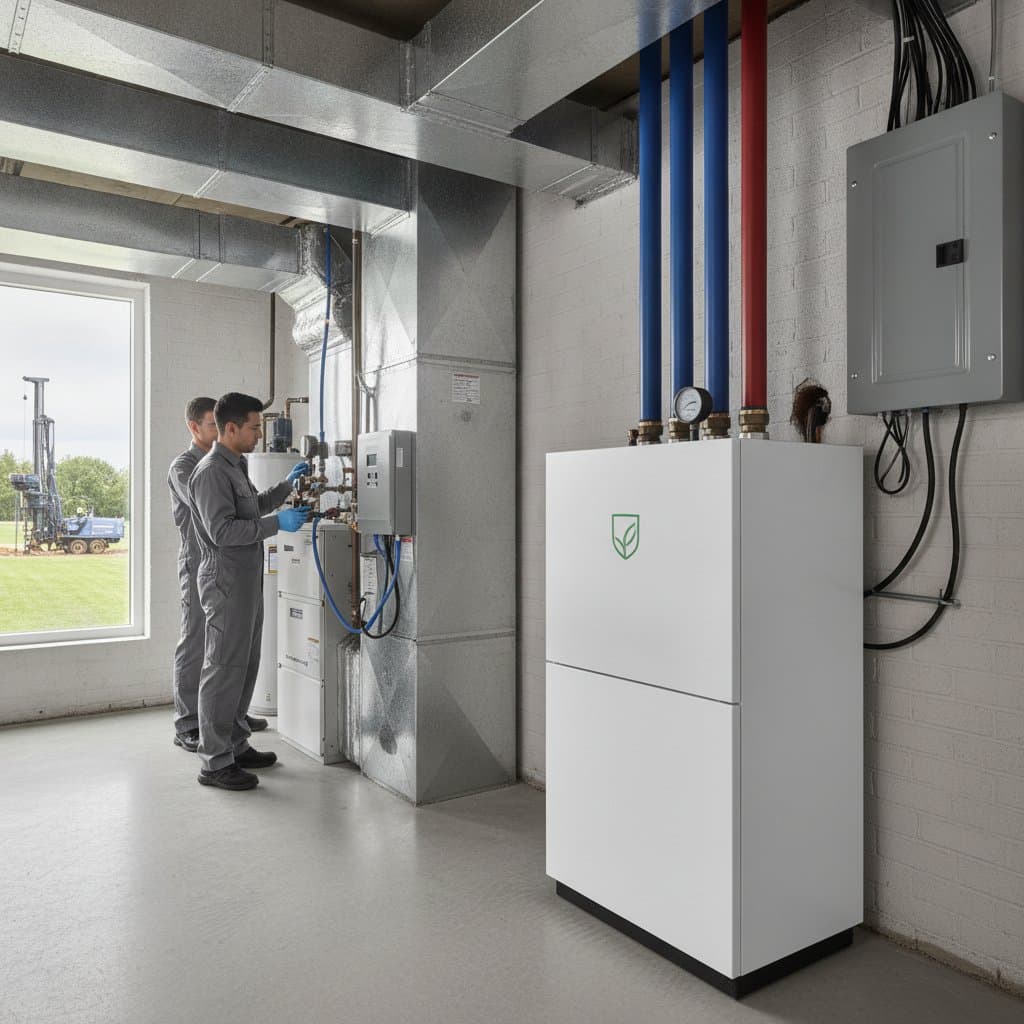
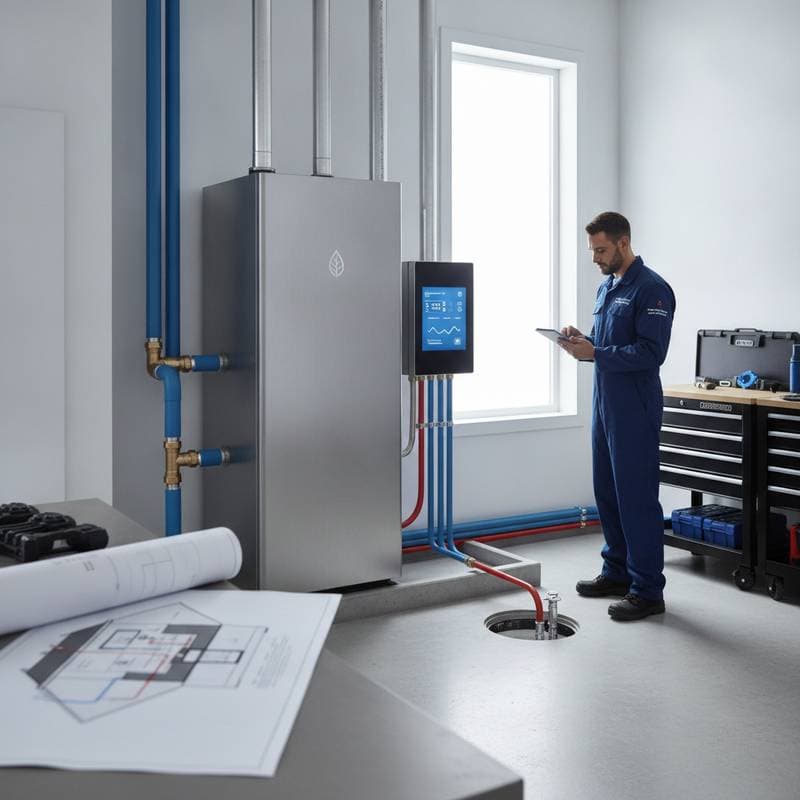
Select contractors certified by groups such as the International Ground Source Heat Pump Association. Such professionals perform precise load assessments, ensure appropriate loop depths, and integrate seamlessly with existing ducts.
Installation Costs and Return Analysis
Geothermal HVAC installations average between fifteen thousand and thirty-five thousand dollars, varying by home size, loop setup, and site specifics. Although substantial, tax credits offsetting up to half the expense render the net cost comparable to advanced conventional systems.
For context:
- Air-source heat pump setups typically range from eight thousand to fifteen thousand dollars.
- Post-incentives, geothermal options align within this bracket yet provide two to three times the efficiency.
Ongoing Savings
A well-engineered geothermal system cuts heating and cooling expenses by 40 to 70 percent versus fossil fuel alternatives. Across two decades, these reductions accumulate to tens of thousands in energy cost avoidance.
Durability and Upkeep
Underground loops endure fifty years or longer, with indoor units lasting twenty years or more. Shielded from weather exposure, the system demands infrequent maintenance.
Property Value Impact
Buyers increasingly value energy-efficient features. A geothermal installation highlights reduced operating costs and sustainability, elevating home appeal and worth.
Considering savings, incentives, and endurance, investments yield 8 to 12 percent annual returns. Such consistent performance surpasses most home enhancements.
Configuration Options
Geothermal setups adapt to diverse properties through various designs.
Horizontal Loops
These involve shallow trenches across yard areas, proving economical for spacious lots.
Vertical Loops
Bored deep into the earth, vertical options suit compact or rocky sites. Initial costs rise, but they minimize surface disturbance and enhance efficiency.
Pond Loops
Properties with qualifying water bodies utilize submerged coils for heat exchange. This method excels in efficiency when water depth and quality align with requirements.
Hybrid Integrations
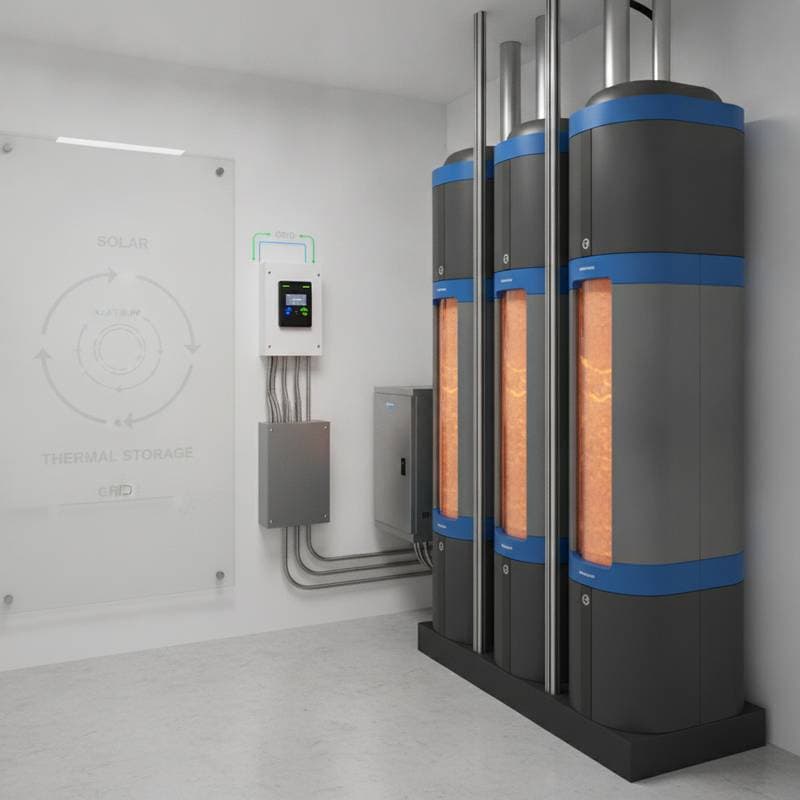
Pairing geothermal with solar arrays, radiant flooring, or water preheating amplifies overall performance, potentially achieving near net-zero energy use.
Project Influencers
Each installation presents unique challenges. Several elements shape expenses and outcomes.
- Local electricity costs: Elevated rates accelerate payback through greater savings.
- Regional climate: Geothermal excels universally, though severe conditions might warrant supplemental sizing or backups.
- Current duct infrastructure: Sealed ducts permit reuse; outdated ones require modernization for optimal flow.
- Additional support: Utility rebates or favorable loans further improve accessibility.
Together, tax credits and local aids position geothermal competitively against efficient air-source alternatives.
Sustainability and Performance Advantages
Geothermal HVAC stands among the purest residential heating and cooling solutions. It taps constant renewable energy from subsurface sources, unaffected by surface fluctuations.
Ecological Advantages
- Substantial cuts in greenhouse gases relative to oil or gas systems.
- Absence of combustion eliminates carbon monoxide hazards.
- Reduced grid strain during seasonal peaks.
Efficiency Standards
Geothermal units attain Coefficients of Performance (COP) from 3.5 to 5, delivering 3.5 to five units of heat per unit of electricity. This surpasses top air-source models.
Comfort and Air Quality
Moderate air circulation maintains even humidity, curbing allergens and dryness while ensuring steady temperatures.
Professional Insights and Next Steps
Experts in building sciences and real estate endorse geothermal as a resilient energy solution. Certifications and ratings affirm its dependable operation.
To proceed effectively:
- Conduct an energy audit to address insulation, leaks, and sealing.
- Obtain several bids, evaluating designs, brands, and warranties.
- Check local permits and geological needs.
- Consider resale benefits for future-proofing.
Frequently Asked Questions
How long does installation require? Residential projects span one to three weeks, influenced by soil, loops, and scheduling.
Does drilling harm the landscape? Specialized equipment limits disruption; lawn recovery occurs within a season.
Can it handle both heating and cooling? A single unit manages both, often aiding hot water efficiency.
Is it suitable for cold regions? Stable subsurface temperatures ensure strong performance; minor backups handle extremes.
How to assess property fit? Installers evaluate via soil and space analysis; most sites accommodate via vertical methods.
What maintenance involves? Annual filters, pressure checks, and inspections suffice, given the loop's simplicity.
How do tax credits apply? They offset a percentage of costs against taxes owed, covering equipment and labor.
What about prior installations? Eligibility varies by service date; consult a renewable energy tax specialist.
Realizing Geothermal Benefits
Geothermal HVAC delivers enduring comfort, savings, and sustainability. With incentives bridging cost gaps, the path to energy independence opens for more households. Act now to evaluate your home and secure these advantages.