Recycled Plastic Insulation: Achieving 50 Percent Cost Savings in 2025
Insulation materials often evoke images of fiberglass batts or foam boards, but recycled plastic offers a transformative alternative. Builders and homeowners increasingly turn to this option to lower expenses and environmental harm. As production advances, recycled plastic insulation stands ready to reduce costs by half in the near term, all while diminishing reliance on virgin resources.
Essential Benefits
- Installation expenses drop by as much as 50 percent relative to fiberglass or spray foam, thanks to simpler handling and reduced labor needs.
- The process reuses post-consumer plastics, preventing landfill accumulation and ocean pollution.
- It provides thermal resistance on par with established materials, plus superior defense against moisture and mold.
- Lightweight design simplifies transport and fitting across residential, commercial, and industrial structures.
- Anticipated policy shifts include expanded rebates and tax credits for projects incorporating recycled components.
- Long-term energy savings reach 30 percent on utility bills, accelerating payback periods.
The Basics of Recycled Plastic Insulation
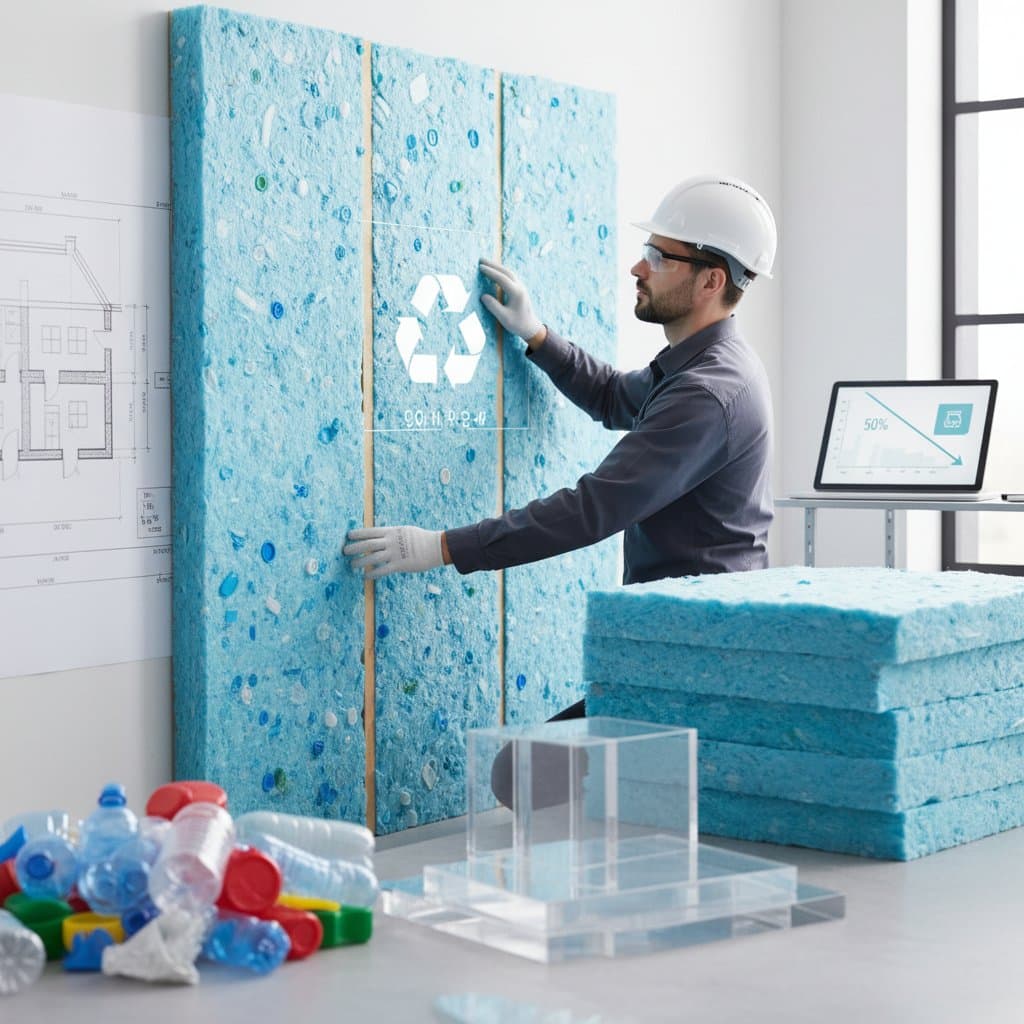
Manufacturers transform post-consumer plastics, including bottles and packaging, into insulation through shredding, melting, and reforming into fibers or foams. These components bind into rigid panels, flexible rolls, or loose-fill products suitable for walls, attics, roofs, and floors. The resulting material boasts high thermal performance, structural integrity, and longevity under varied conditions.
Research from construction standards organizations confirms that recycled plastic achieves R-values from 3.5 to 4.5 per inch, aligning closely with mineral wool or fiberglass equivalents. This metric quantifies resistance to conductive heat flow; elevated R-values enhance comfort and efficiency. Such capabilities position recycled plastic as a versatile solution for renovations, expansions, and ground-up builds.
Breaking Down Costs and Efficiency Gains
Conventional insulators demand substantial energy for mining, refining, and processing raw inputs like silica sand or petroleum derivatives. Recycled plastic sidesteps these demands by leveraging existing waste streams, which lowers production energy by up to 80 percent. The material's reduced weight cuts shipping costs and eases on-site manipulation, often trimming installation time by 40 percent.
For a typical 2,000-square-foot home, outfitting walls and ceilings with recycled plastic might cost $4,000 to $6,000, compared to $8,000 or more for traditional options. Annual heating and cooling reductions of 25 to 30 percent translate to $300 to $500 in savings per household. Pair these with incentives like the federal energy-efficient home improvement credit, and return on investment materializes within two to three years.
Energy modeling tools reveal that recycled plastic maintains consistent performance across climates, from humid coastal areas to arid interiors. Its closed-cell structure traps air pockets effectively, minimizing convective heat loss. Over decades, this reliability avoids the degradation seen in some organic-based insulators, ensuring sustained value.
Environmental Advantages and Durability
Global plastic production exceeds 400 million tons annually, with much ending in disposal sites or waterways. Recycled insulation intercepts this flow; one ton of the material equates to diverting 2,000 plastic bottles from waste cycles. Production facilities now scale to handle municipal collections, fostering circular economies in building sectors.
Performance extends beyond sustainability. The hydrophobic nature of plastics prevents water uptake, eliminating risks of microbial growth or structural weakening. Panels resist settling or compression, preserving insulation integrity for 50 years or longer. Integrated fire barriers, such as intumescent coatings, enable compliance with codes like ASTM E84 without releasing harmful fumes during combustion.
Life-cycle assessments indicate a carbon footprint 50 percent lower than virgin foam products. By reducing embodied energy, projects using recycled plastic contribute to net-zero goals. Homeowners gain peace of mind knowing their choices support biodiversity and resource conservation.
Insights from Industry Leaders
Sustainability experts in architecture emphasize recycled plastic's role in bridging affordability and ecology. A leading consultant notes, "This material democratizes green building by making high performance accessible without premium pricing." Contractors praise its compatibility with framing systems and vapor barriers, streamlining workflows.
Homeowners report enhanced indoor air quality due to low volatile organic compound emissions. In pilot projects, teams have integrated it into passive house designs, achieving certification with minimal adjustments. As supply chains mature, availability expands to major markets, encouraging widespread trials.
Steps to Implement Recycled Plastic Insulation
Start by consulting local suppliers or distributors for product specifications and regional stock. Verify compatibility with your project's scale, whether a single-room retrofit or full-home overhaul. Engage certified installers familiar with recycled materials to ensure optimal placement and sealing.
For DIY enthusiasts, select batt or board formats pre-sized for standard stud spacing. Gather tools like utility knives, staplers, and safety gear; prioritize areas with accessible framing. Test for gaps using infrared thermography if possible, and seal edges with low-expansion foam to prevent air infiltration.
Explore funding through programs like state green building grants or utility rebates. Document material sourcing for certification credits under systems like LEED. Track post-installation energy use to quantify benefits and refine future decisions.
Realizing Savings and Sustainability
Adopting recycled plastic insulation merges fiscal prudence with planetary stewardship. Projects benefit from immediate cost reductions and enduring efficiency, fostering resilient structures. This approach not only optimizes budgets but also advances collective efforts toward waste reduction and climate resilience.