Why Recycled Glass Redefines Sustainable Kitchens in 2026
Sustainable kitchen design often evokes images of bamboo cabinetry, composting systems, or high-efficiency lighting. However, a profound shift occurs at the countertop level. Recycled glass surfaces transition from specialized selections to essential components, merging aesthetic elegance, structural integrity, and ecological stewardship in a manner unmatched by most alternatives.
Essential Advantages
Recycled glass countertops incorporate up to 90% post-consumer glass, diverting substantial waste from landfills and decreasing reliance on virgin resources. Their resilience matches that of natural stone, featuring resistance to scratches and an extended service life that aligns with long-term sustainability objectives. Customization extends to virtually unlimited color variations, enabling personal style without ecological trade-offs. Over time, these surfaces prove cost-effective through diminished upkeep demands and preserved value. Production processes for recycled glass consume less energy than those for new stone fabrication, thereby curtailing greenhouse gas outputs.
Evaluating Countertop Alternatives
A clear perspective on the superiority of recycled glass emerges through direct comparison with conventional materials.
| Material | Average Recycled Content | Maintenance | Lifespan | Cost Range (per sq. ft.) | Sustainability Rating* |
|---|---|---|---|---|---|
| Granite | 0% | Moderate | 25+ years | $60-$120 | Medium |
| Quartz | 0-10% | Low | 20+ years | $70-$150 | Medium |
| Concrete | 10-30% | High | 20+ years | $80-$140 | Medium |
| Recycled Glass | 60-90% | Low | 25+ years | $70-$130 | High |
*Sustainability ratings derive from evaluations of energy consumption, recyclability, and resource preservation.
This comparison highlights the balanced profile of recycled glass: superior environmental performance paired with accessible pricing and straightforward care. Granite demands resource-intensive extraction and periodic sealing, while concrete necessitates regular resealing to prevent degradation. In contrast, recycled glass maintains its condition through basic cleaning with mild soap and water.
Aesthetic Qualities Aligned with Purposeful Design
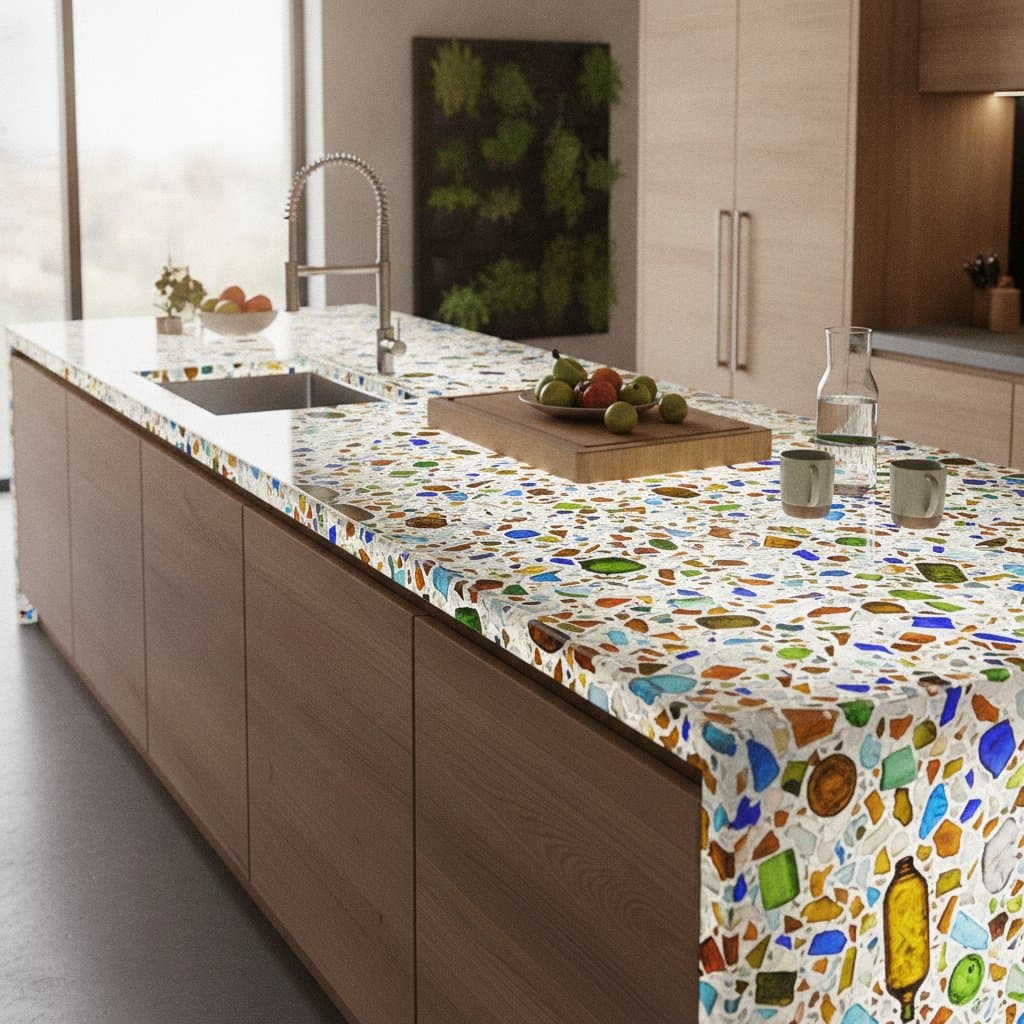
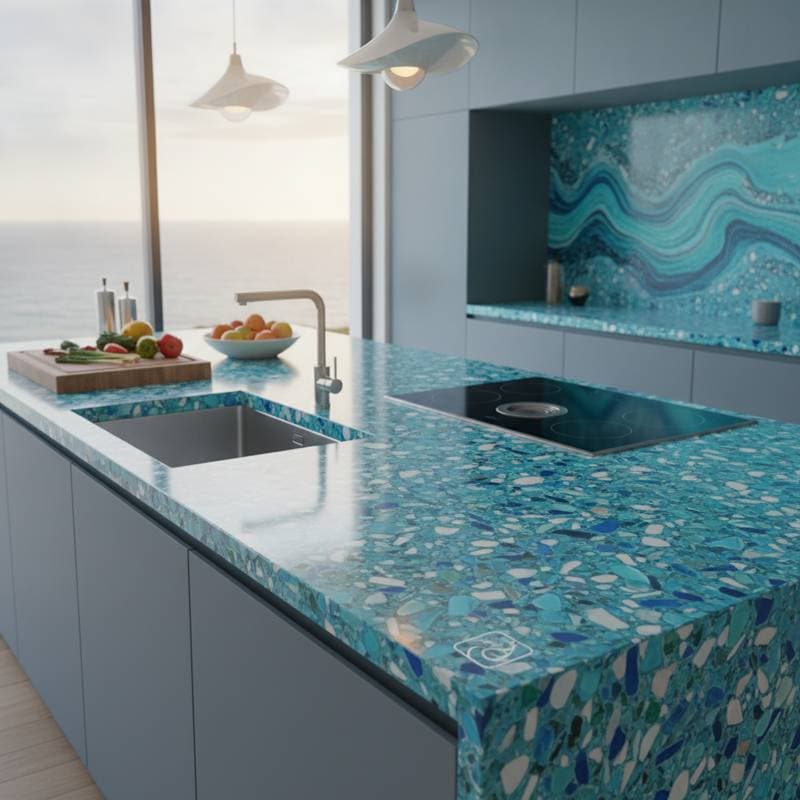
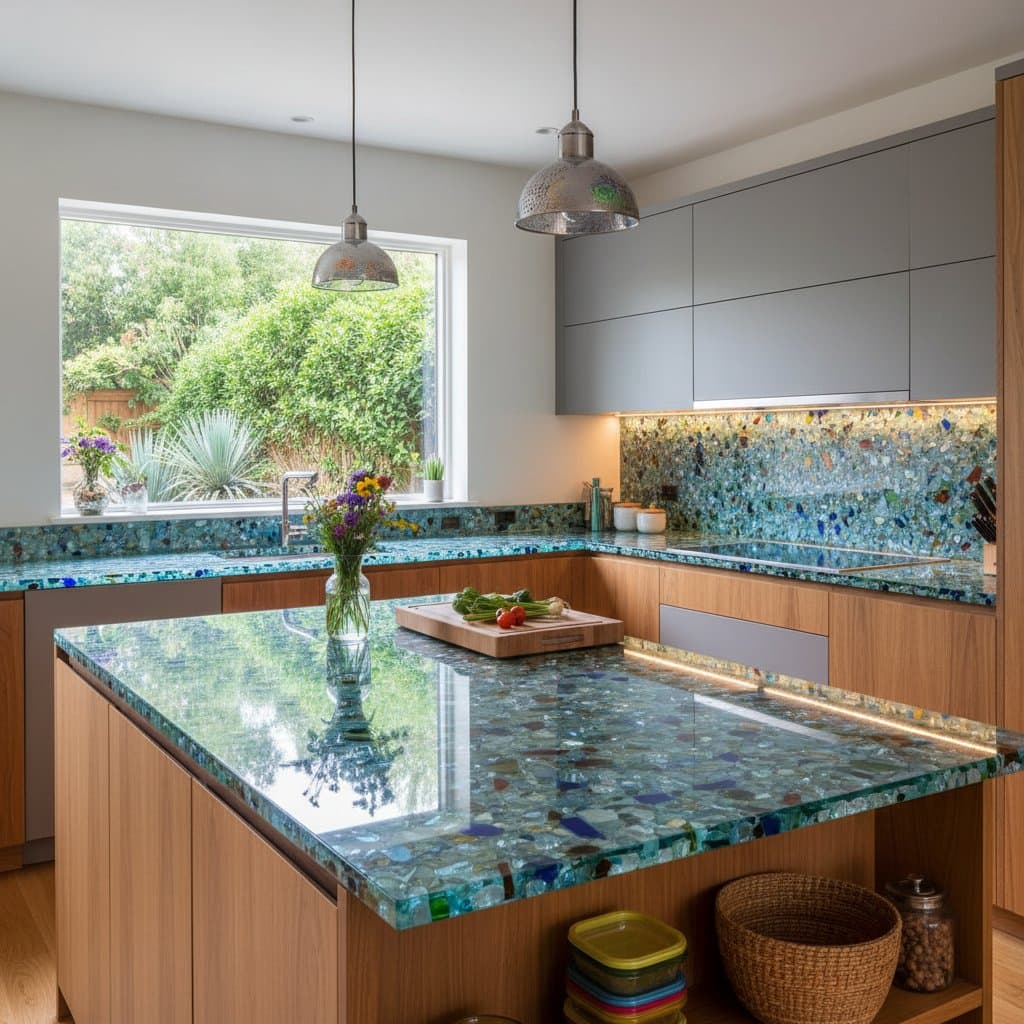
Homeowners select recycled glass for its compelling visual attributes. Embedded glass fragments within each slab produce distinctive patterns, offering depth and texture reminiscent of terrazzo or sea-worn glass, influenced by color blends and binding agents. Professionals value the material's versatility, accommodating everything from understated tones to vibrant accents.
Interior designer Carla Nguyen notes that recycled glass empowers clients to embody their principles alongside sophistication. “People used to think sustainable meant sacrificing beauty,” she observes. “Now, recycled glass surfaces rank among the most captivating options, conveying narratives of accountability as powerfully as visual allure.”
Such fusion of uniqueness and intent resonates with evolving preferences for mindful purchasing. Contemporary kitchens transcend mere utility; they manifest the occupant's commitment to planetary health.
Ecological and Financial Advantages
Kitchen renovations represent significant expenditures, where environmental benefits intersect with budgetary realities. Recycled glass countertops occupy a mid-to-premium cost bracket yet yield tangible savings long-term. Resistance to heat, stains, and abrasions minimizes ongoing expenses, with initial investments recouped through avoided resealing or refinishing within a few years.
The ecological merits amplify through efficient manufacturing. Data from the Glass Packaging Institute indicate that recycling one ton of glass averts more than 300 kilograms of carbon dioxide emissions. Applied across widespread adoption, these savings advance regional sustainability initiatives.
Furthermore, various local governments and eco-certification programs provide rebates or incentives for high-recycled-content materials. For projects seeking LEED accreditation, recycled glass contributes credits in areas such as resource efficiency, waste management, and interior air quality.
Practical Aspects of Installation and Care
Professional installation mirrors procedures for quartz or granite, given the weight of the slabs. Accurate measurements ensure seamless integration with fixtures like sinks and cooktops. Experienced installers assess underlying cabinetry strength and apply suitable adhesives to avert shifts or fractures.
Care routines prove uncomplicated. Routine wiping with a soft cloth and neutral cleanser suffices for daily use. Steering clear of harsh scrubbers or corrosive substances preserves the sheen. Cement-bound variants may require occasional sealing to repel moisture, whereas resin formulations demand virtually no intervention.
Repair options further enhance practicality. Minor imperfections, such as chips, can undergo polishing or resin patching with color-matched fillers, prolonging usability without necessitating replacement.
Resolving Frequent Questions
1. Do recycled glass countertops crack under normal conditions? Proper installation renders them as robust as granite. Fractures arise primarily from installation errors or severe impacts, not routine activities.
2. Can they withstand direct heat from cookware? They tolerate heat effectively, though protective mats or trivets prevent stress from rapid temperature fluctuations, especially in resin varieties.
3. Are stains a common issue? The impermeable finish repels most spills. Unsealed cement types may absorb liquids if exposed prolongedly, warranting sealing in demanding environments.
4. Will colors fade over time? Premium formulations hold pigmentation permanently, integrated into the glass matrix rather than surface-applied, unaffected by sunlight exposure.
Emerging Patterns and Creative Applications
Eco-materials now form standard expectations in design. Recycled glass aligns seamlessly with movements prioritizing supply chain clarity and full-cycle efficiency. Producers innovate with options like subdued textures, seamless basin integrations, and veined motifs that emulate stone aesthetics sustainably.
Designers combine these surfaces with salvaged timber fronts, water-conserving taps, and efficient heating elements to craft forward-thinking, responsible spaces. The inherent reflectivity amplifies ambient light, diminishing reliance on electric sources and bolstering overall efficiency.
Steps to Integrate Recycled Glass into Your Kitchen
Selecting recycled glass extends beyond aesthetics; it positions your home as part of a broader ecological framework. These countertops narrate renewal, converting everyday refuse into enduring focal points. Begin by consulting certified suppliers to match options with your vision, ensuring a kitchen that sustains both family life and environmental balance.