Why 2025 Tax Credits Make Geothermal HVAC More Accessible
Energy bills spike during extreme weather, prompting many homeowners to seek efficient alternatives to traditional HVAC systems. Geothermal heating and cooling stands out for its superior efficiency, yet high initial costs have limited its appeal. Federal tax credits expanding in 2025 address this barrier, reducing installation expenses by up to 30% and enabling more households to adopt this technology.
Essential Benefits
- Claim up to 30% of qualified installation costs via federal tax credits.
- Achieve energy reductions of 40% to 65% over conventional systems.
- Expect payback periods of 5 to 8 years, influenced by regional energy rates and site specifics.
- Enjoy system longevity: indoor components last 20 to 25 years, ground loops exceed 50 years.
- Stack federal credits with state rebates and utility incentives for maximum discounts.
Fundamentals of Geothermal HVAC Operation
Geothermal systems, known as ground source heat pumps, leverage stable subsurface temperatures for heat transfer. Pipes buried in the ground circulate a fluid mixture that absorbs excess home heat in summer and extracts ground heat in winter.
This method ensures high efficiency since ground temperatures remain consistent year-round, requiring minimal electricity input. The U.S. Department of Energy reports that these systems often exceed 400% efficiency, delivering four units of heating or cooling per unit of electricity used.
Significance of the Tax Credit Incentives
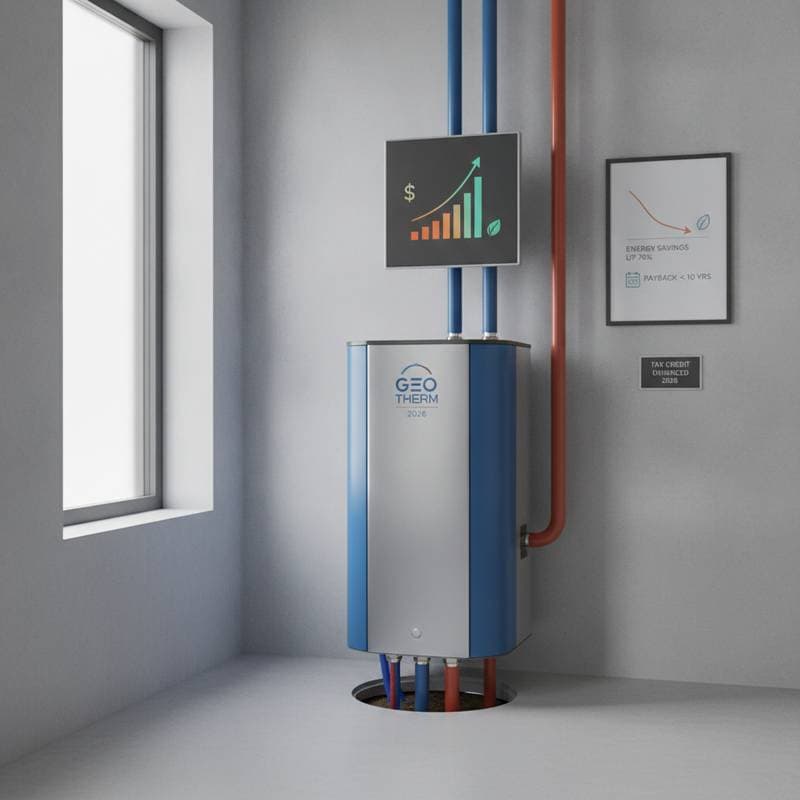
Upfront expenses have historically deterred geothermal adoption, with installations ranging from $12,000 to $30,000 based on home size, loop type, and site geology. The 2025 federal credits permit deduction of 30% of these costs from tax obligations, enhancing overall value.
Consider a $25,000 project: it qualifies for a $7,500 credit. Pairing this with state programs or utility rebates can yield over $10,000 in total relief. Eligibility covers new builds, retrofits, primary homes, and select secondary properties.
Market trends indicate rising interest, with installers noting a 25% increase in consultations as incentives align long-term savings with immediate affordability.
Geothermal Versus Traditional HVAC: A Side-by-Side Analysis
| Feature | Geothermal HVAC | Conventional HVAC |
|---|---|---|
| Efficiency Range | 300% to 500% | 80% to 95% |
| System Lifespan | 20-25 years (indoor), 50+ years (loop) | 10-15 years |
| Yearly Energy Savings | 40% to 65% | None (baseline) |
| Maintenance Needs | Low | Moderate to high |
| Operational Noise | Minimal | Audible from compressors and fans |
This comparison highlights geothermal's advantages in efficiency, durability, and quiet performance, amplifying returns over time.
Breaking Down Installation Costs and Returns
Initial outlays appear substantial, but operational savings offset them rapidly. Average monthly heating and cooling expenses of $200 to $300 can fall to $100 or less with geothermal.
Over 10 years, cumulative savings frequently exceed $20,000, excluding credits and rebates. Maintenance remains straightforward, involving annual checks, filter replacements, and rare loop interventions due to protected underground components.
Financing has evolved to support adoption: secure low-rate loans for energy upgrades or opt for utility on-bill repayment, spreading costs across statements. These options, alongside tax benefits, minimize initial cash requirements.
Environmental Advantages and Enhanced Comfort
Geothermal technology lowers emissions by up to 70% through heat transfer rather than combustion, positioning it as a top eco-friendly choice for residences.
Users benefit from even temperatures, eliminating drafts and imbalances found in forced-air setups. Additional perks include reduced noise and optimal humidity control, with one system handling both heating and cooling duties.
The International Ground Source Heat Pump Association projects that widespread use could trim U.S. heating and cooling energy demand by nearly 33%, with 2025 incentives driving faster progress.
Addressing Myths and Installation Realities
Geothermal suits diverse settings, not just expansive rural lots. Vertical loops fit urban or small properties, while horizontal designs accommodate larger sites; boreholes enable city installations with minimal footprint.
Concerns about landscape disruption are outdated: advanced directional drilling preserves surfaces, allowing swift restoration of yards or gardens. Post-installation, systems blend seamlessly into the property.
Projects complete in 2 to 5 days, yielding instant comfort gains and bill reductions starting with the next cycle.
Steps to Adopt Geothermal HVAC
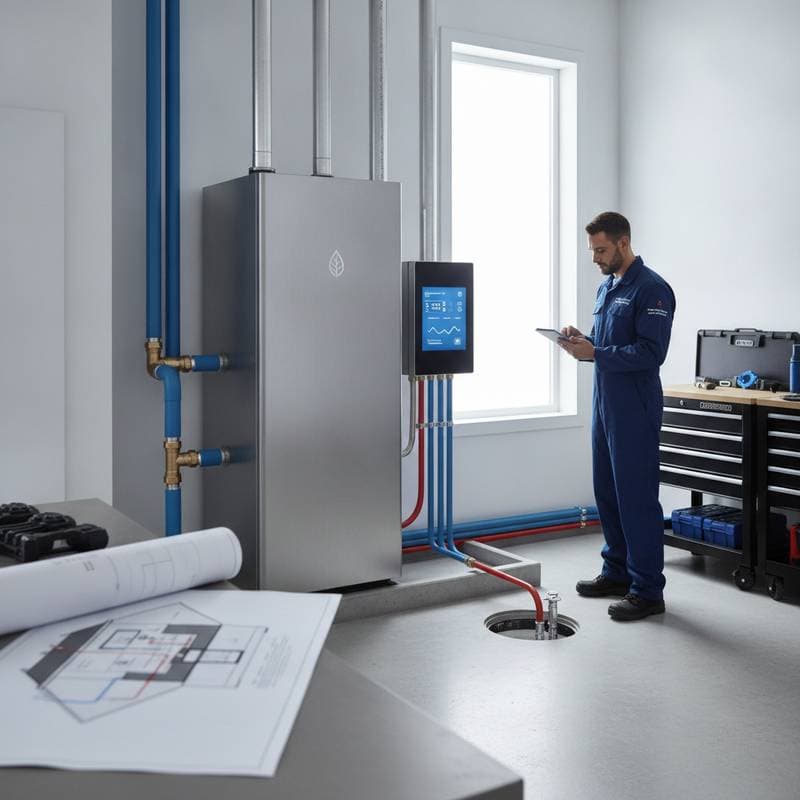
Begin with a professional site assessment to evaluate soil, space, and usage patterns for optimal loop design. Request comprehensive quotes detailing savings projections and incentive applications.
For renovations or builds, geothermal integrates efficiency, environmental gains, and economic benefits. The 30% credit lowers hurdles, positioning this upgrade as a strategic home investment.