Key Points
- Recycled glass countertops integrate beauty, performance, and sustainability into eco-conscious kitchens.
- These surfaces divert substantial post-consumer waste from landfills by converting bottles, jars, and scraps into durable, premium materials.
- Advanced fabrication techniques and increased regional availability position recycled glass as a strong competitor to natural stone in terms of strength and visual appeal.
- Homeowners benefit from enhanced return on investment, lower embodied carbon, and distinctive artistic finishes not found in alternative materials.
The Rise of Recycled Glass in Sustainable Kitchens
Green building professionals observe that homeowners frequently face difficulties in selecting kitchen materials that harmonize environmental responsibility with enduring style. Options such as bamboo cabinetry or low-VOC paints address some needs, yet countertops pose persistent challenges. Traditional choices like granite or quartz deliver striking appearances, but their extraction and processing impose significant environmental burdens. Recycled glass emerges as a compelling alternative that aligns design enthusiasm with ecological mindfulness.
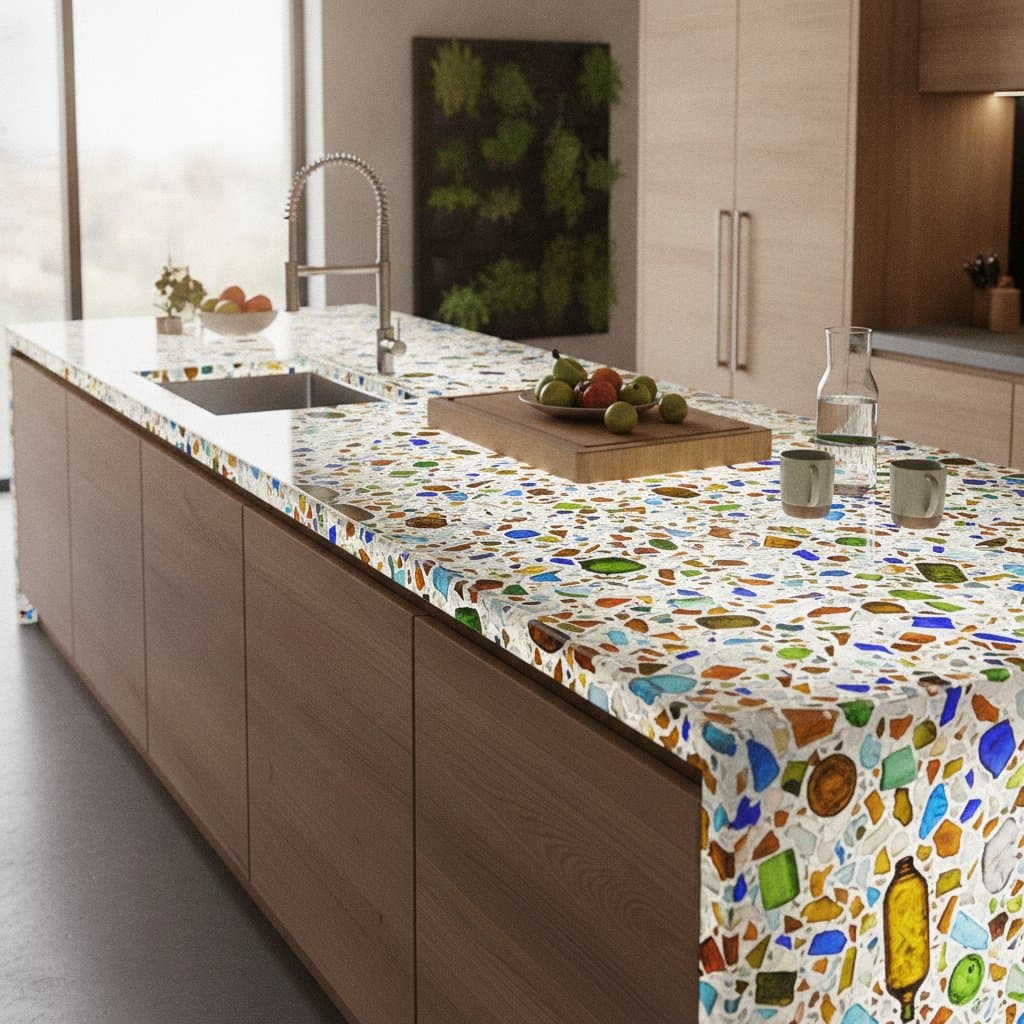
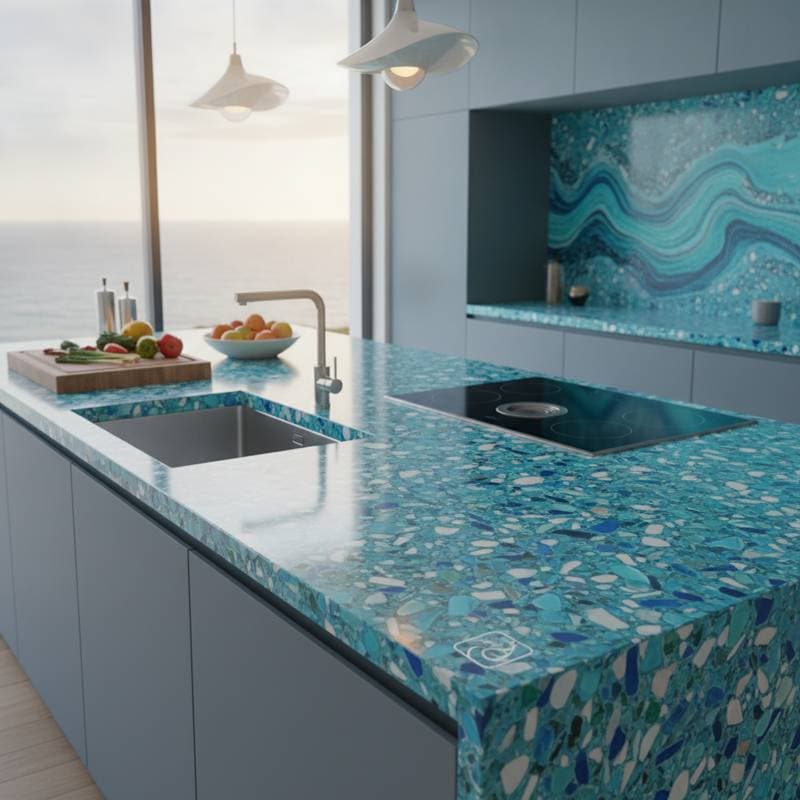
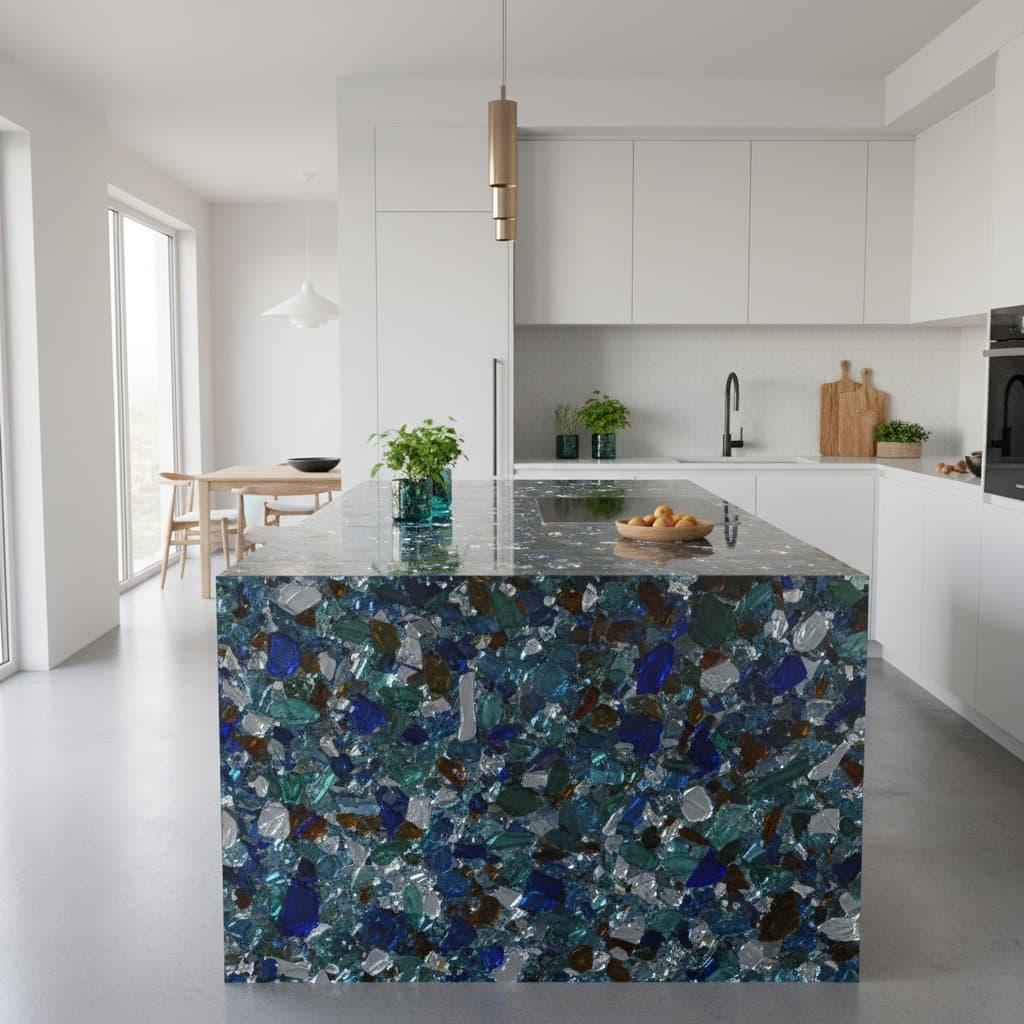
Imagine sunlight illuminating a countertop embedded with shimmering fragments of ocean-blue and amber glass, each piece embodying renewal. The surface remains cool to the touch and smooth beneath fingers, demonstrating that luxury and sustainability coexist. This option represents a current, attainable solution ideal for contemporary eco-kitchens.
The Environmental Opportunity
Recycled glass countertops consist mainly of waste glass from bottles, windows, and industrial byproducts. Manufacturers crush this material, blend it with binders such as cement or resin, and polish it into sturdy slabs. Industry data indicate that utilizing 100 pounds of recycled glass conserves approximately 10 gallons of water and avoids about 20 pounds of carbon emissions relative to virgin materials. For residents in areas with constrained landfills or recycling infrastructure, this choice provides a tangible method to support waste minimization.
Professionals in the field note that municipalities with robust glass recycling initiatives have elevated their construction sustainability benchmarks substantially. Rising consumer interest in recycled products has prompted fabricators to enhance production processes, yielding slabs that exhibit greater uniformity, resilience, and aesthetic quality than initial iterations.
Why This Material Stands Out
Individuals may wonder why recycled glass surpasses other sustainable countertop alternatives, such as concrete or reclaimed wood. The distinction arises from its blend of design versatility and functional excellence.
- Visual Appeal: Every slab features a one-of-a-kind mosaic effect with color variations suitable for minimalist or coastal settings.
- Durability: The non-porous composition withstands stains and scratches more effectively than numerous natural stones.
- Low Maintenance: Routine sealing preserves the surface's luster with little ongoing effort.
- Eco Performance: Incorporating locally sourced glass waste minimizes transportation emissions and overall embodied energy.
Green building specialists advise examining samples from various providers to assess resin transparency, percentage of recycled content, and surface texture. Certain brands incorporate up to 85 percent recycled material, while others prioritize local sourcing to qualify for LEED or other regional green certifications.
Expert Tips to Boost Your Home's Eco-Efficiency
To incorporate recycled glass countertops successfully, apply these professional approaches to design and installation:
-
Assess Local Climate and Use Patterns: In humid areas, cement-based recycled glass benefits from more frequent sealing to resist moisture. Resin-based variants handle such conditions with marginally superior performance.
-
Plan for Lighting and Reflection: These surfaces amplify light effectively, particularly alongside warm LED under-cabinet lights. Strategic illumination accentuates color depth and conceals seams.
-
Coordinate with Sustainable Cabinets and Fixtures: Match the countertop with FSC-certified wood cabinets, low-flow faucets, and recycled metal accents to sustain an unified eco-narrative.
-
Choose Professional Fabrication: Specialized equipment is essential for cutting and edging these slabs. Engage certified installers familiar with expansion joints and techniques to avoid chipping.
-
Opt for Local Fabrication: Selecting regional manufacturers cuts transport-related carbon emissions and provides superior traceability and support after installation.
Practical Considerations for Budget and Longevity
Installed recycled glass countertops typically range from $65 to $120 per square foot, yet they yield substantial enduring benefits. Their lifespan matches granite, often surpassing 20 years with standard care. Maintenance expenses stay modest, requiring resealing only every three to five years.
Environmental advantages, including diminished landfill use and reduced embodied carbon, further clarify the investment value. Residences certified for green standards with such materials frequently command resale premiums of 5 to 10 percent, per evaluations from national green building organizations.
Safety merits attention as well. Verify that binders in the selected product lack volatile organic compounds. Non-toxic resins protect indoor air quality and facilitate adherence to rigorous green certification criteria.
Customization and Local Adaptation
Recycled glass countertops offer varied color options, ranging from coastal-inspired oceanic blues to landscape-reflective earthy greens. Fabricators may integrate elements like shells or pebbles for bespoke designs.
In sunny locales, pale shades reflect heat to keep kitchens cooler, supporting energy conservation. Darker varieties suit cooler regions by absorbing warmth and easing heating needs in connected areas.
Local craftspeople often utilize glass from proximate recycling facilities, breweries, or demolition projects. This method transforms the countertop into a narrative of regional heritage, connecting aesthetics to community environmental efforts. As certified fabricator Dana Ruiz observes, "Every recycled glass countertop tells a story about where it came from. It is both functional surface and environmental statement."
Long-Term Environmental Payoff
Advancements in manufacturing continue to lessen the energy demands of recycled glass countertops. Lower kiln temperatures result from optimized melting processes, and numerous facilities now rely on renewable power sources. These developments elevate the material from a specialized eco-option to a widely adopted, superior performer.
Recycled glass enhances indoor environments too. The surfaces release no harmful vapors and inhibit bacterial adhesion thanks to their seamless, non-porous quality. For health-aware households, this fosters safer, cleaner culinary spaces.
Advising clients over years reveals that those selecting eco-surfaces develop a profound attachment to their homes. The choice extends beyond aesthetics to embody alignment with planetary well-being.
Steps to Implement Recycled Glass Countertops
To pursue recycled glass countertops, start with a home sustainability audit to gauge your existing material impact. Evaluate regional suppliers based on recycled content levels and obtain samples to observe color interactions under your kitchen lighting. Collaborate with a qualified green building consultant to oversee fabrication, sealing, and installation while meeting local regulations.
View this enhancement within a comprehensive strategy. Integrate it with energy-efficient LED fixtures, water-conserving appliances, and intelligent ventilation systems to create a cohesive sustainable kitchen. Recycled glass countertops deliver aesthetic excellence alongside dedication to resource preservation, bridging design and environmental harmony.
Frequently Asked Questions
Q: How durable are recycled glass countertops compared to granite or quartz?
A: They match the strength of these materials and frequently exceed granite in resistance to chipping. Proper maintenance ensures a lifespan beyond two decades.
Q: What maintenance routine should I follow?
A: Clean daily with mild soap and water. Reseal every three to five years based on the binder, and steer clear of abrasive cleaners that could diminish the finish.