Recycled Glass: 2026's Eco-Chic Kitchen Upgrade
When you picture your dream kitchen, you likely envision clean lines, vibrant light, and materials that feel both luxurious and responsible. Recycled glass countertops achieve that balance precisely. They combine color, shimmer, and sustainability in a manner that renders your kitchen as intelligent as it appears. For those planning an eco-conscious remodel, recycled glass surfaces emerge as the defining choice among homeowners seeking style that conveys both elegance and environmental awareness.
Key Points
- Recycled glass countertops contain between 70% and 90% post-consumer glass, granting discarded bottles and windows new purpose.
- These surfaces prove durable, nonporous, and resistant to stains when sealed appropriately, delivering performance on par with stone.
- Installation costs generally fall between $85 and $140 per square foot, varying by brand, design, and local labor rates.
- Numerous brands incorporate low-VOC binders and locally sourced materials, thereby reducing transportation emissions and indoor air pollutants.
- With appropriate maintenance, recycled glass countertops endure two decades or longer while preserving their distinctive color depth and luster.
The Appeal of Recycled Glass Countertops
Recycled glass surfaces have transitioned from niche offerings to mainstream selections because they address three primary homeowner concerns: sustainability, durability, and aesthetics. Homeowners obtain a countertop that resembles art, functions like engineered stone, and bolsters the circular economy by diverting waste from landfills.
A Modern Answer to Traditional Stone
Granite and quartz have dominated kitchen remodels for years, yet both demand intensive mining, energy-heavy processing, and intricate supply chains. Recycled glass utilizes post-consumer waste that already exists. The process involves cleaning, crushing, and blending the glass with a cement or resin binder, followed by molding into slabs. The outcome yields a surface that sparkles with embedded fragments, capturing light in varied ways throughout the day.
Manufacturers frequently source locally collected glass, which lowers transportation costs and carbon emissions. The Environmental Protection Agency notes that recycling one ton of glass conserves more than 1,300 pounds of sand and 400 pounds of soda ash otherwise extracted from the earth. Such conservation directly contributes to diminished emissions and reduced ecological disturbance.
Visual Versatility
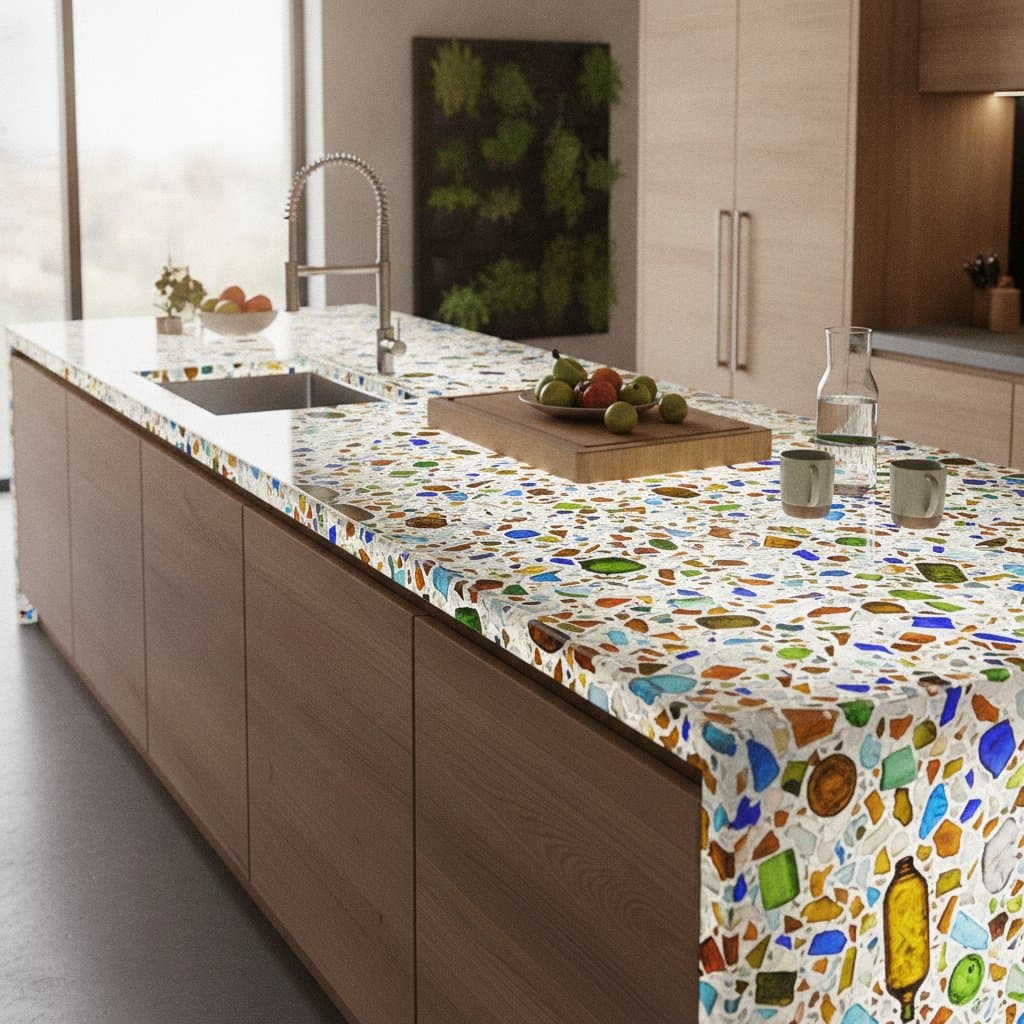
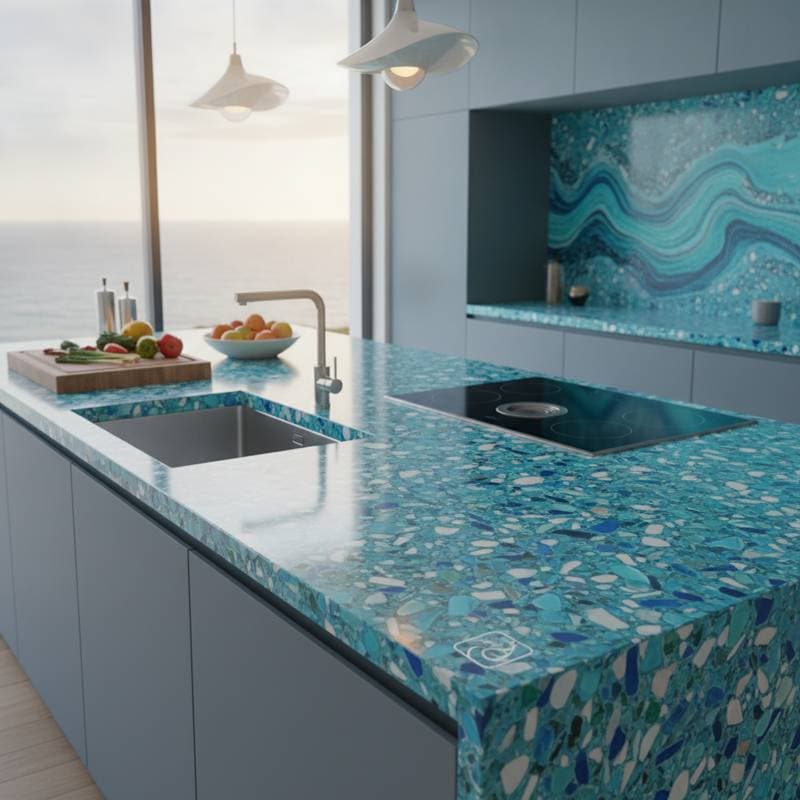
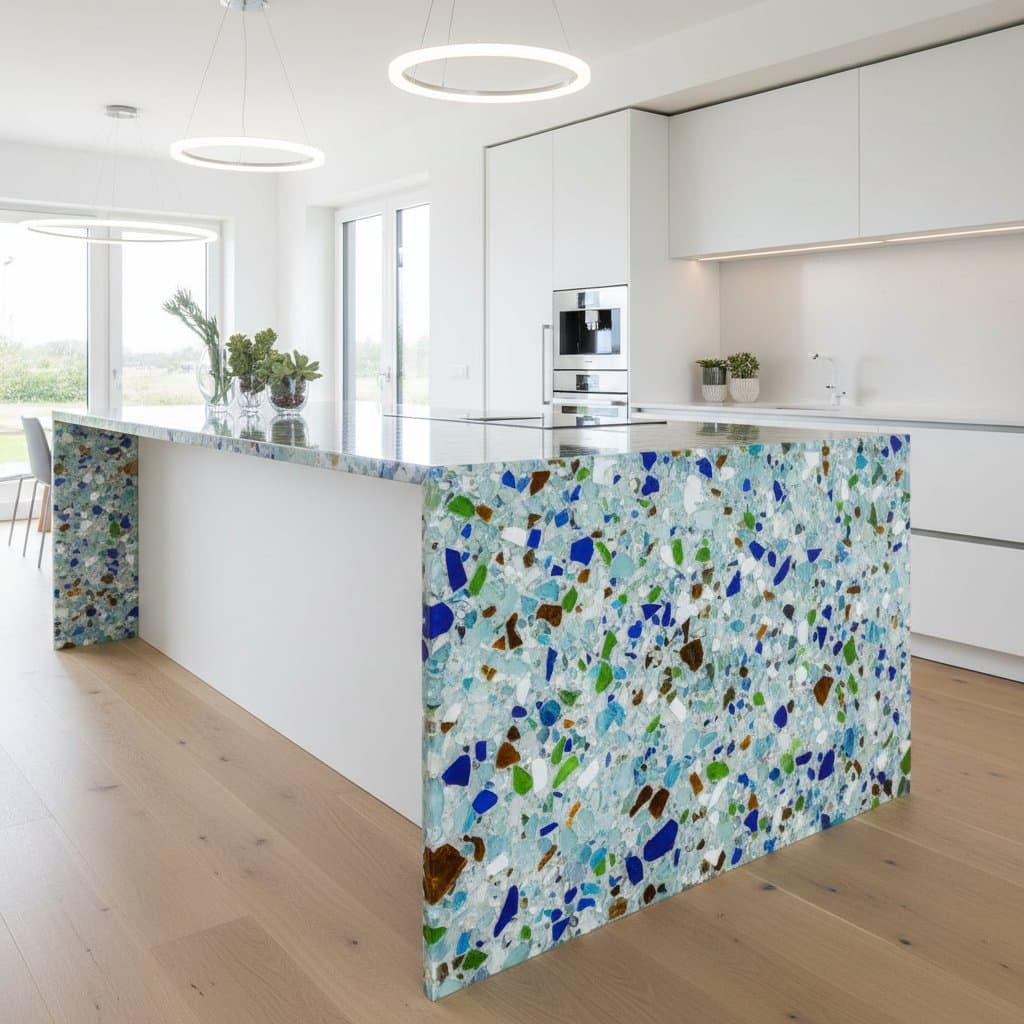
Each recycled glass countertop possesses genuine uniqueness. Certain designs incorporate subtle specks that evoke terrazzo, whereas others display large, colorful shards akin to sea glass. Since the blend may encompass items from old beer bottles to window panes, the color palette spans soft neutrals to vivid blues and greens. This flexibility allows matching to diverse design themes, from minimalist Scandinavian kitchens to bold coastal styles.
Designers value how recycled glass complements natural woods, matte cabinetry, and stainless steel appliances. It reflects light effectively, which enlarges and brightens compact kitchens.
Understanding the Material Composition
Recycled glass countertops typically divide into two categories: cement-based and resin-based. Each category presents specific advantages based on preferences for appearance, upkeep, and sustainability.
| Type | Composition | Appearance | Maintenance | Sustainability Score |
|---|---|---|---|---|
| Cement-based | Crushed glass in a concrete matrix | Matte or lightly polished | Requires periodic sealing | Very high, often low VOC |
| Resin-based | Glass bound with polymer resin | Highly polished, glossy | Low maintenance, no sealing | Moderate, resin is petroleum-derived |
Cement-Based Countertops
Cement-based recycled glass countertops attract homeowners who prioritize natural materials and artisanal finishes. The surface offers a tactile, stone-like texture and can undergo honing for a soft sheen or light polishing for enhanced reflection. As concrete proves porous, these countertops necessitate sealing every one to two years. Proper sealing enables resistance to stains and etching from acidic foods.
These options weigh more than resin-based alternatives, requiring professional installation and reinforced cabinetry. Their environmental advantages remain robust, as many incorporate recycled fly ash or slag in place of pure Portland cement, thereby further lowering emissions.
Resin-Based Countertops
Resin-based recycled glass surfaces provide a lighter, glossy look comparable to quartz. They remain nonporous, demand minimal upkeep, and come in extensive color varieties. Although the resin binder derives from petroleum, select manufacturers now employ bio-resins sourced from plant oils to enhance sustainability.
Resin-based choices suit households emphasizing ease of maintenance and uniform appearance. They withstand scratches, stains, and moderate heat, rendering them suitable for busy kitchens.
Cost and Installation Considerations
Prices for recycled glass countertops fluctuate significantly according to brand, customization, and location. Most homeowners anticipate expenditures between $85 and $140 per square foot, encompassing fabrication and installation. This pricing aligns recycled glass with premium granite or engineered quartz.
Key Cost Drivers
- Material Composition: Resin-based slabs frequently incur slightly higher costs due to their glossy finish and maintenance simplicity.
- Color Complexity: Custom blends featuring rare glass shades or elaborate patterns elevate production expenses.
- Edge Profiles: Straight edges prove most economical, whereas waterfall or beveled edges demand additional labor.
- Cutouts and Seams: Accommodations for sinks, cooktops, and irregular shapes heighten fabrication efforts.
- Sealing and Finishing: Cement-based surfaces require sealing at installation, introducing a small material expense.
Installation Process
Professional installation remains essential. The slabs carry substantial weight and demand solid cabinetry support. Installers apply epoxy adhesives and silicone for joints to reduce visible seams. After setting, gentle polishing achieves the intended sheen. Recycled glass tolerates less error than quartz, so accurate measurements and careful handling avert edge chipping.
Environmental Benefits You Can See and Measure
Selecting recycled glass countertops constitutes a stylistic choice alongside a quantifiable environmental commitment. The Glass Packaging Institute indicates that each 10% increase in recycled content during manufacturing can decrease energy consumption by as much as 3%. When applied across extensive kitchen remodels, this efficiency yields concrete impacts on community sustainability objectives.
Reducing Landfill Waste
One recycled glass countertop reuses material equivalent to approximately 700 to 1,000 wine bottles. Thus, your kitchen surface may divert hundreds of pounds of waste from landfills. Glass recycles infinitely without quality loss, positioning it among the rare truly circular materials for interior applications.
Lower Emissions and Healthier Indoor Air
Many manufacturers fabricate recycled glass countertops locally, minimizing transportation emissions. Moreover, cement-based variants utilize low-VOC sealers and finishes, enhancing indoor air quality. Individuals sensitive to chemical odors often favor these over laminates or conventional composites that release volatile compounds.
Ethical Production Practices
Certain brands highlight fair labor and community recycling initiatives. For instance, smaller studios collaborate with municipal facilities, acquiring post-consumer glass directly and reinvesting in local waste systems. This method diminishes environmental effects while bolstering regional economies.
Comparing Recycled Glass to Other Countertop Materials
To determine suitability for your kitchen, compare recycled glass against common alternatives.
| Material | Eco Rating | Durability | Maintenance | Cost Range | Unique Appeal |
|---|---|---|---|---|---|
| Recycled Glass | Excellent | High | Moderate to Low | $85-140 per sq. ft. | Unique sparkle, sustainable story |
| Quartz | Good | Very High | Low | $70-120 per sq. ft. | Consistent color, low maintenance |
| Granite | Fair | Very High | Moderate | $60-120 per sq. ft. | Natural variation, classic luxury |
| Concrete | Good | High | Moderate | $80-130 per sq. ft. | Custom colors, industrial look |
| Laminate | Poor | Moderate | Very Low | $30-60 per sq. ft. | Affordable, limited durability |
Recycled glass distinguishes itself through aesthetic individuality paired with sustainability. Quartz ensures uniformity, yet recycled glass introduces artistic diversity. Granite offers inherent beauty but involves resource-intensive mining. For eco-luxury seekers, recycled glass provides visual and ethical fulfillment.
Care and Maintenance Tips
Recycled glass countertops endure well but require mindful handling. Proper care sustains their vibrancy and strength for decades.
Routine Cleaning
- Employ a pH-neutral cleaner or mild soap diluted in warm water.
- Steer clear of abrasive pads that could dull the finish.
- For resin-based surfaces, utilize a microfiber cloth to preserve shine.
Preventing Damage
- Place cutting boards beneath knives to safeguard against marks.
- Position heat-resistant mats under hot pans to avoid thermal shock.
- Reseal cement-based countertops at intervals advised by the manufacturer.
Long-Term Preservation
Professionals can buff minor scratches over time. Coloration permeates the material, keeping wear inconspicuous. Periodic resealing and polishing maintain original luminosity amid years of use.
Expert Insights from the Field
Design professionals and sustainability experts increasingly regard recycled glass as emblematic of contemporary eco-luxury. Interior designer Mia Hernandez observes that clients appreciate how recycled glass “catches light and tells a story.” She notes that the material’s provenance narrative equips homeowners with a compelling account to share upon receiving compliments on their kitchen.
Research from the U.S. Green Building Council reveals that high-recycled-content surfaces contribute to LEED certification points in green projects. Recycled glass countertops thus elevate a home’s aesthetic and environmental profile, potentially increasing resale value.
Manufacturers such as Vetrazzo and IceStone document rising demand from residential and commercial sectors. Their findings indicate that recycled glass countertops can lower lifecycle emissions by up to 45% relative to quarried stone, contingent on production energy sources.
Integrating Recycled Glass into Your Home
Recycled glass countertops extend beyond kitchens to bathrooms, vanities, and even outdoor spaces. Consider them for backsplashes or islands to amplify sustainable impact. By choosing this material, you invest in a durable, beautiful feature that aligns personal style with planetary health. Homeowners report enhanced satisfaction from surfaces that embody both innovation and responsibility, transforming daily routines into acts of mindful living.