Recycled Glass Countertops Offer Affordable Style
Recycled Glass Countertops Redefine Eco Kitchens
When you walk into a modern kitchen, the surfaces often tell a story of both style and conscience. Homeowners now ask a new question before any renovation begins. Can beauty and sustainability share the same counter space? Recycled glass countertops deliver an emphatic yes by combining environmental responsibility with striking design.
Key Points
- Recycled glass countertops use up to 85 percent post-consumer glass and reduce landfill waste.
- These surfaces cost 60 to 120 dollars per square foot installed depending on brand and finish.
- Properly sealed surfaces resist stains and heat as effectively as engineered stone.
- Each slab remains unique and offers color depth plus sparkle that synthetic materials cannot replicate.
- Maintenance stays minimal compared with natural stone and requires only mild cleaners plus periodic sealing.
Why Recycled Glass Countertops Are Gaining Momentum
Sustainability has moved from a niche concern to a central priority in kitchen design. Homeowners recognize that traditional countertop materials such as granite demand significant quarrying, transportation, and energy-intensive processing. Recycled glass instead transforms discarded bottles, windows, and industrial glass into durable non-porous slabs that rival traditional stone in strength and appeal.
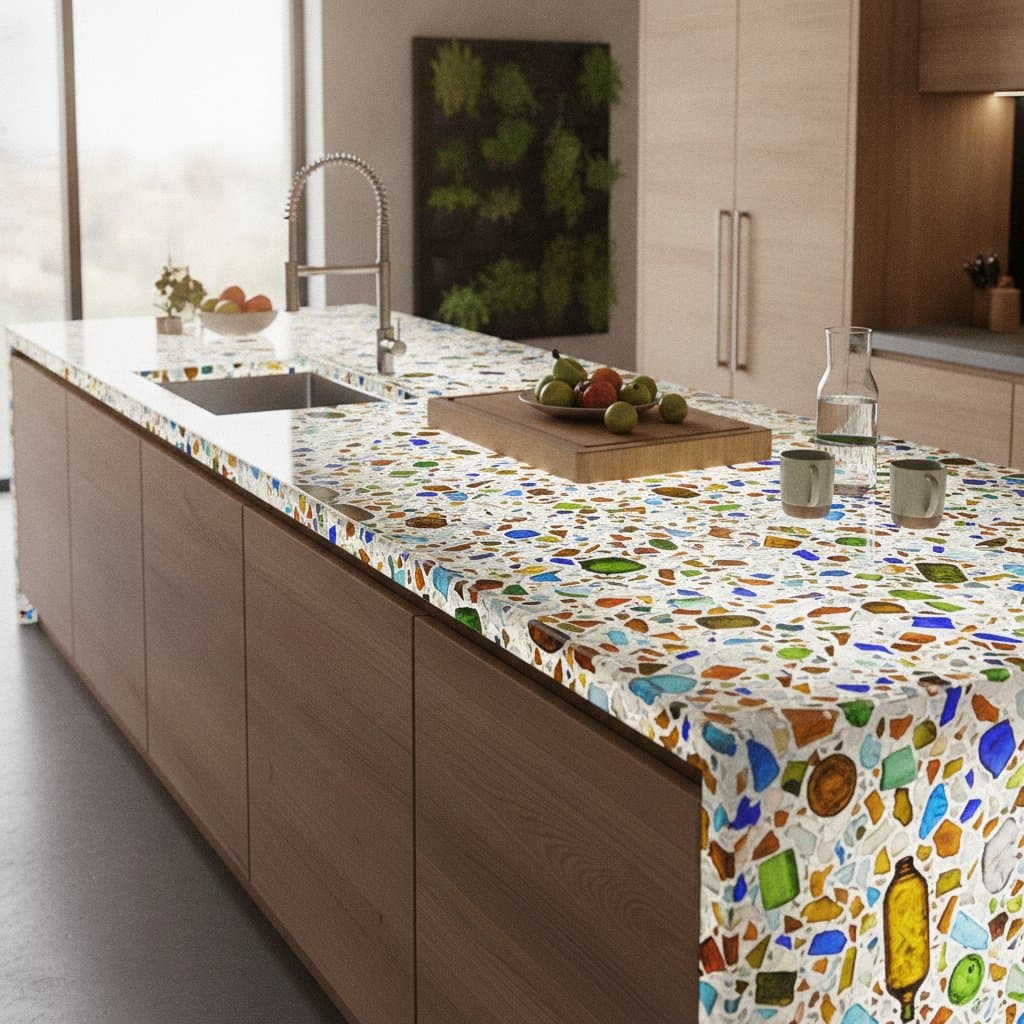
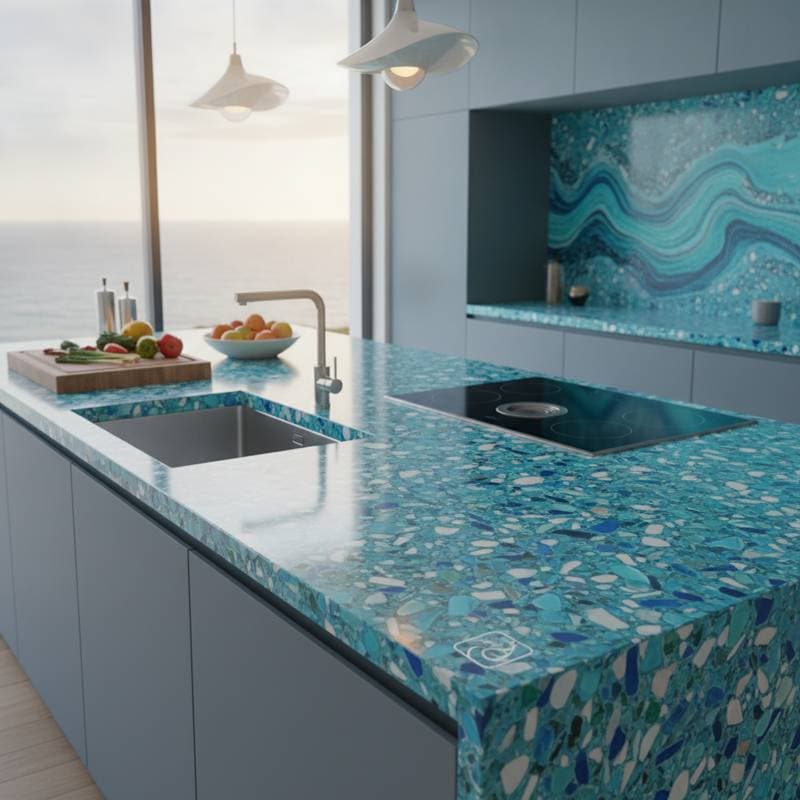
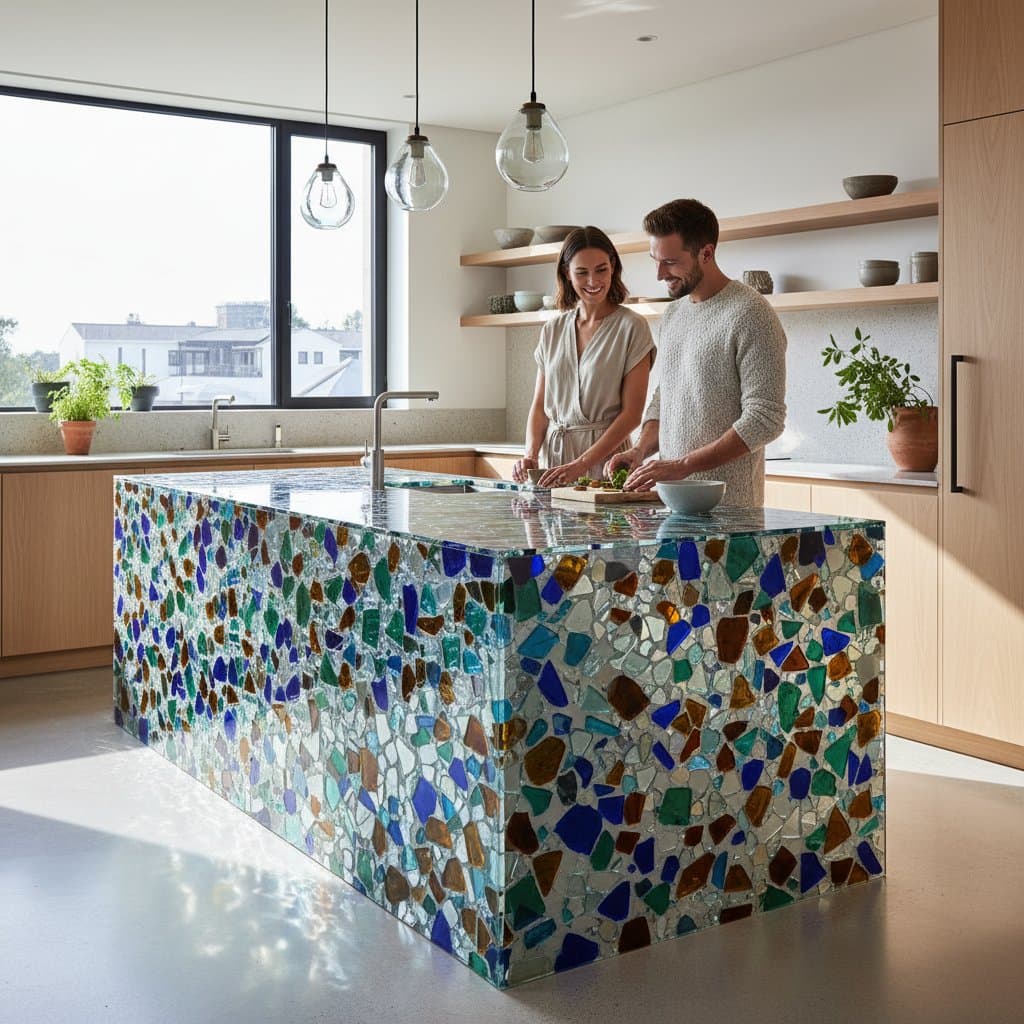
Glass can be recycled indefinitely without losing quality. That perpetual recyclability makes it one of the most circular materials available. When used in countertops each piece of crushed glass is suspended in a cement or resin binder and creates a mosaic effect that reflects light across the kitchen. Designers often describe the look as functional art because no two slabs are identical.
Comparing Material Performance
| Material Type | Average Recycled Content | Durability Rating | Price Range (per sq. ft. installed) | Maintenance Level |
|---|---|---|---|---|
| Recycled Glass | 70-85% | High | 60-120 dollars | Low |
| Granite | 0% | Very High | 50-150 dollars | Medium |
| Quartz | 0-10% | Very High | 70-140 dollars | Low |
| Concrete | 0-20% | High | 80-130 dollars | Medium |
This table highlights one of the most compelling aspects of recycled glass countertops. They often outperform other sustainable options in both environmental and practical metrics. Their resistance to water absorption and bacteria growth makes them suitable for busy home kitchens while their color range allows creative freedom.
The Design Appeal
What sets recycled glass apart is its visual character. Tiny flecks of amber, cobalt, or sea-green shimmer beneath a smooth surface and catch light from every angle. Designers appreciate this versatility because it works in both minimalist spaces and eclectic artistic interiors. Some homeowners choose neutral tones with subtle sparkle while others prefer bold compositions that feature visible shards for dramatic effect.
Interior designer Clara Jensen noted that recycled glass lets clients make an environmental statement without sacrificing elegance. The material pairs well with bamboo cabinetry, recycled metal accents, and energy-efficient appliances and helps create a cohesive eco-conscious kitchen.
Cost, ROI, and Longevity
While the upfront cost can match high-end quartz the long-term benefits often justify the investment. Sustainable material upgrades can increase a home resale value by up to 6 percent when paired with energy-efficient systems. Recycled glass countertops contribute both aesthetic and environmental appeal, two factors that modern buyers prioritize.
Maintenance remains straightforward. Daily cleaning with a mild detergent keeps the surface spotless and resealing every few years maintains resistance to stains. Because the material is non-porous it does not harbor bacteria, a key advantage over untreated natural stone.
Practical Considerations Before Installation
Before committing to recycled glass countertops assess a few factors.
- Binder type: Cement-based options provide a more natural matte finish but can require sealing while resin-based versions are glossier and less porous.
- Color variation: Each slab is unique so request samples from the same batch to ensure the desired tone.
- Edge finishing: Rounded or beveled edges can prevent chipping especially in high-traffic kitchens.
- Installation expertise: Choose a fabricator experienced with recycled glass because improper cutting or polishing can weaken the surface.
Environmental Benefits Beyond the Counter
The sustainability story extends beyond the kitchen itself. Many manufacturers source their glass from local recycling programs and minimize transportation emissions. Some even offer take-back initiatives that reclaim old countertops for reuse and create a closed-loop production system.
Architectural designer Mateo Ruiz explained that recycled glass surfaces represent the shift from extraction to regeneration in building materials. That philosophy matches the broader movement toward circular design where materials stay in use rather than becoming waste.
Selecting Your Countertop Material
Once installed recycled glass countertops become more than a design choice. They serve as a daily reminder that sustainability can be tangible, functional, and beautiful. Their durability ensures they will last for decades while their unique sparkle continues to catch the eye of anyone who enters the kitchen. For homeowners seeking to combine environmental responsibility with refined design these surfaces deliver measurable results and lasting aesthetic value.