Key Points
- Algae panels produce renewable energy, purify air, and offer natural insulation for buildings.
- These bioreactors use sunlight and carbon dioxide to grow microalgae, yielding biomass for energy or other uses while releasing oxygen.
- Homeowners benefit environmentally and financially through strategic installation, ongoing maintenance, and compatibility with current home systems.
- Adopting this technology early supports long-term savings on energy, superior indoor air quality, and higher property values amid evolving green standards.
When Walls Become Living Systems
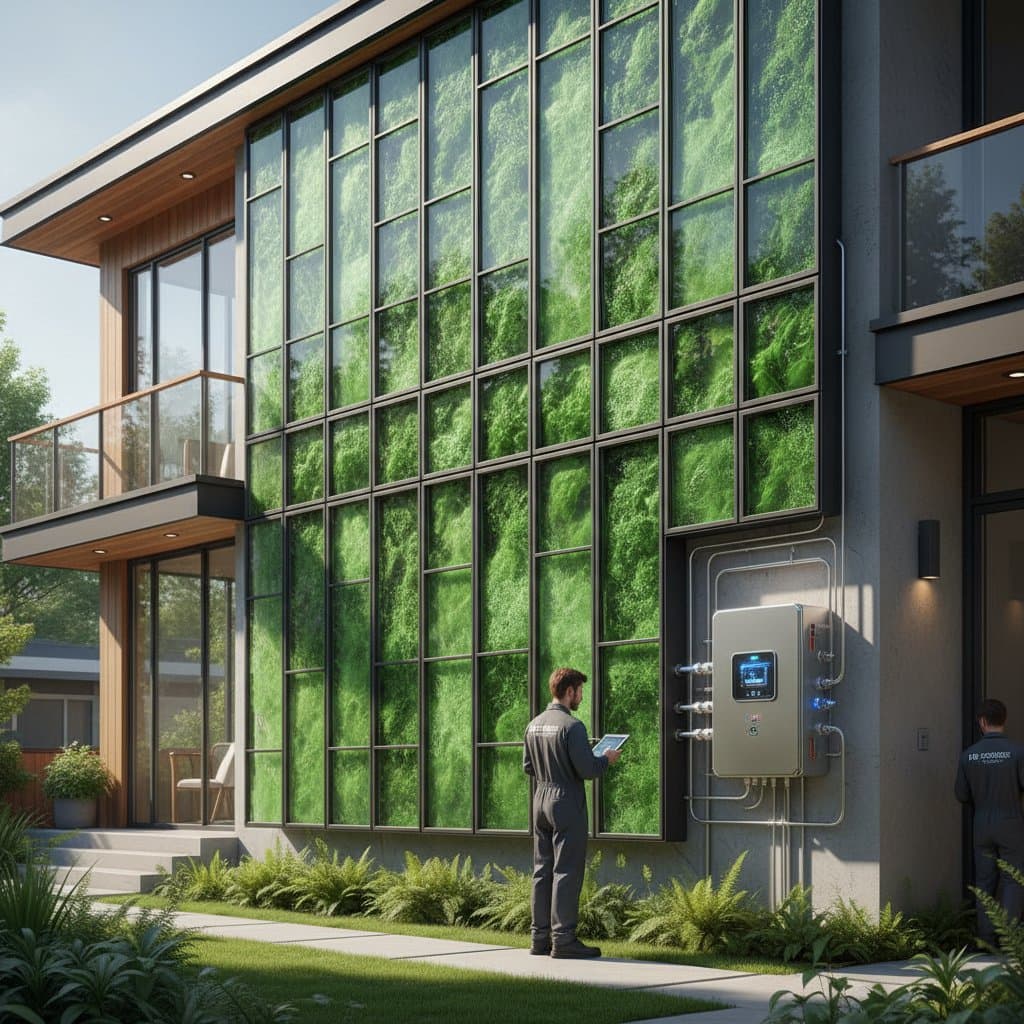
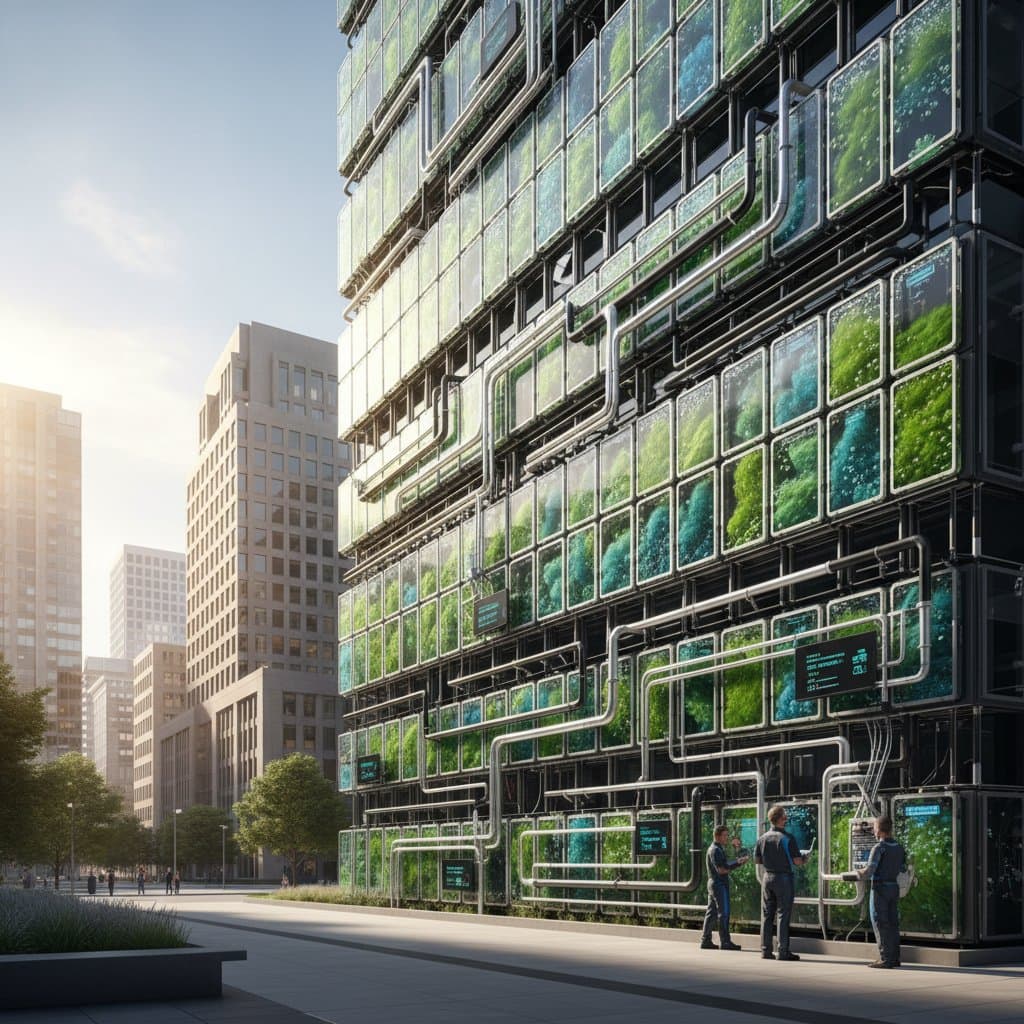
Picture sunlight filtering through a wall that glows with subtle life. This is no ordinary surface; it houses countless microalgae that capture carbon dioxide, release oxygen, and convert light into energy. Algae panels represent a breakthrough in sustainable architecture, blending biological processes with building design.
Homeowners accustomed to solar installations will recognize the core principle. Microalgae thrive in a clear fluid within durable panels, harnessing sunlight for growth. The resulting biomass serves as a source for biofuels, fertilizers, or electricity generation. Additionally, the panels provide shading to minimize heat buildup and maintain comfortable indoor climates.
Benefits for Homeowners
Rising energy costs and variable weather patterns make self-sufficient homes essential. Algae panels address these challenges by producing power on-site and enhancing living conditions.
Specific advantages include:
- Renewable energy production via microalgae photosynthesis, which transforms sunlight into harvestable biomass.
- Air quality improvement through carbon dioxide absorption and oxygen emission.
- Thermal management with built-in shading that cuts heat gain and eases cooling demands.
- Visual appeal from a dynamic, living exterior that shifts hues with sunlight and seasons.
Initial expenses align closely with solar setups, though scale and features influence the total. Returns extend beyond electricity savings; biomass conversion to biofuel or compost adds value. Over years, these multifaceted outputs recover costs and elevate home worth in eco-friendly markets.
Planning Essentials
Algae panels function as bioreactors, requiring optimal conditions for microalgae health. Effective implementation demands attention to site specifics and system demands.
Evaluate these factors:
-
Sunlight Exposure and Orientation
South-facing walls in the northern hemisphere maximize output. Avoid shaded spots, as they limit growth rates. -
Maintenance Requirements
Schedule regular cleaning to remove buildup and adjust nutrients to sustain algae balance. Automated sensors in advanced models simplify this process. -
Integration with Home Systems
Link biomass harvesting to storage tanks or energy converters. Compatible designs sync with existing electrical or heating setups for seamless operation. -
Regulatory Compliance
Review local building codes for living façades. Engage sustainable design professionals to navigate approvals and ensure structural safety. -
Financial Planning and Returns
Residential systems range from $10,000 to $30,000, based on size, materials, and conversion tech. Calculate ROI by including energy offsets, biomass sales potential, and market premiums for green features.
Cost Structure and Return Projections
Value in algae panels emerges from integrated benefits, differing from solar's straightforward electricity focus.
Typical expenses break down as:
- Bioreactor Panels and Components: 40 to 50 percent of budget
- Installation and Structural Work: 25 to 30 percent
- Monitoring and Nutrient Systems: 15 to 20 percent
- Energy Processing Links: 10 percent
Projected gains encompass:
- Annual Energy Reductions: 15 to 25 percent on power and heating bills
- Biomass Output Value: Hundreds of dollars yearly from biofuel or compost
- Property Value Increase: Premiums from sustainable upgrades appealing to environmentally aware buyers
Payback periods depend on usage and incentives, but holistic advantages extend beyond finances to lifestyle enhancements.
Installation Designs and Applications
Versatile in form, algae panels suit new constructions or retrofits, serving dual roles in function and style.
Practical configurations feature:
- Exterior Shading Arrays: Positioned as vertical screens to block direct sun and lower cooling needs.
- Balcony or Rooftop Units: Compact setups in high-light areas for targeted energy capture.
- Greenhouse or Atrium Walls: Combined with plant spaces to boost overall productivity.
Aesthetic variety arises from algae types, displaying greens, golds, or reds that evolve daily. This organic integration appeals to those seeking harmony between home and nature.
Efficiency and Sustainability Impacts
Algae panels advance multiple environmental objectives simultaneously.
Core contributions include:
- Carbon Reduction: Direct absorption of CO2 paired with renewable energy offsets household emissions.
- Temperature Stability: Natural shading decreases mechanical system reliance.
- Resource Conservation: Recirculating water loops cut usage significantly.
- Durability: Robust materials ensure 20-plus years of service with routine care.
While direct power output may trail solar, the broader ecological and health gains position algae panels as comprehensive solutions.
Common Questions
How do algae panels compare to traditional solar panels?
Solar panels generate electricity from light alone. Algae panels cultivate living organisms for bioenergy, air filtration, and shading benefits.
Can algae panels work in diverse climates?
Optimal in sunny areas, they adapt via insulation and circulation controls for cooler or humid regions.
What maintenance do they demand?
Periodic checks for cleaning and nutrient levels suffice. Many include automation to streamline care.
Integrating Algae Panels into Daily Life
Adopting algae panels creates a home that actively contributes to sustainability. Residents enjoy cleaner air, stable temperatures, and energy independence. As technology matures, these systems promise to shape resilient, vibrant living spaces for generations.