Why 2026 Signals a Breakthrough for Geothermal HVAC
Geothermal heating and cooling systems promise to shift from specialized installations to everyday solutions by 2026. Federal incentives, local regulations, and technological progress make these systems financially attractive for both heating and cooling needs. Builders report rising interest as property owners prioritize long-term energy reliability.
While solar panels capture much attention in renewable energy conversations, geothermal technology operates quietly below ground. This method draws on stable earth temperatures to provide efficient climate control. As supportive policies take effect, geothermal HVAC emerges as a smart choice for homes and businesses seeking comfort, cost savings, and longevity.
Key Developments Driving Adoption
- Federal tax credits and state rebates cover up to 50% of installation expenses, easing upfront barriers.
- Advanced drilling tools and modular components lower labor and material costs by 35%.
- Smart-grid linkages turn systems into energy storage assets that stabilize local power networks.
- Contractors prepare for higher volumes as awareness grows among homeowners and developers.
How Ground-Source Heat Pumps Work
Geothermal HVAC relies on the earth's steady underground temperatures, typically between 45 and 75 degrees Fahrenheit, to exchange heat with buildings. Closed-loop systems circulate water or antifreeze through buried pipes to absorb or release energy, eliminating the need for fossil fuels or reliance on variable outdoor conditions. This design delivers reliable operation across seasons.
According to the U.S. Department of Energy, ground-source heat pumps cut energy consumption for heating and cooling by as much as 65% compared to conventional systems. Fewer outdoor parts mean lower maintenance demands and extended equipment life. Several drivers accelerate adoption: financial aids, engineering improvements, and policies favoring reduced carbon footprints.
Financial Incentives That Boost Accessibility
Upfront expenses have long challenged geothermal adoption, with typical residential installations ranging from $15,000 to $30,000. Policy changes now transform this equation. Federal tax credits under the Inflation Reduction Act, combined with state rebates and utility incentives, reduce qualified costs by 40% to 50%.
Examine this breakdown of expenses:
| Cost Element | Conventional HVAC | Geothermal HVAC with Incentives |
|---|---|---|
| Equipment Cost | $8,000 - $12,000 | $15,000 - $20,000 |
| Installation and Drilling | $2,000 - $4,000 | $5,000 - $10,000 |
| Incentive Reductions | Minimal | Up to 50% |
| Payback Timeline | 10-12 years | 5-8 years |
Shorter payback periods influence choices significantly. Homeowners view geothermal as a dependable path to savings. In new developments, shared loop systems allow multiple homes to share drilling costs, amplifying efficiency.
Technological Advances Simplifying Installation
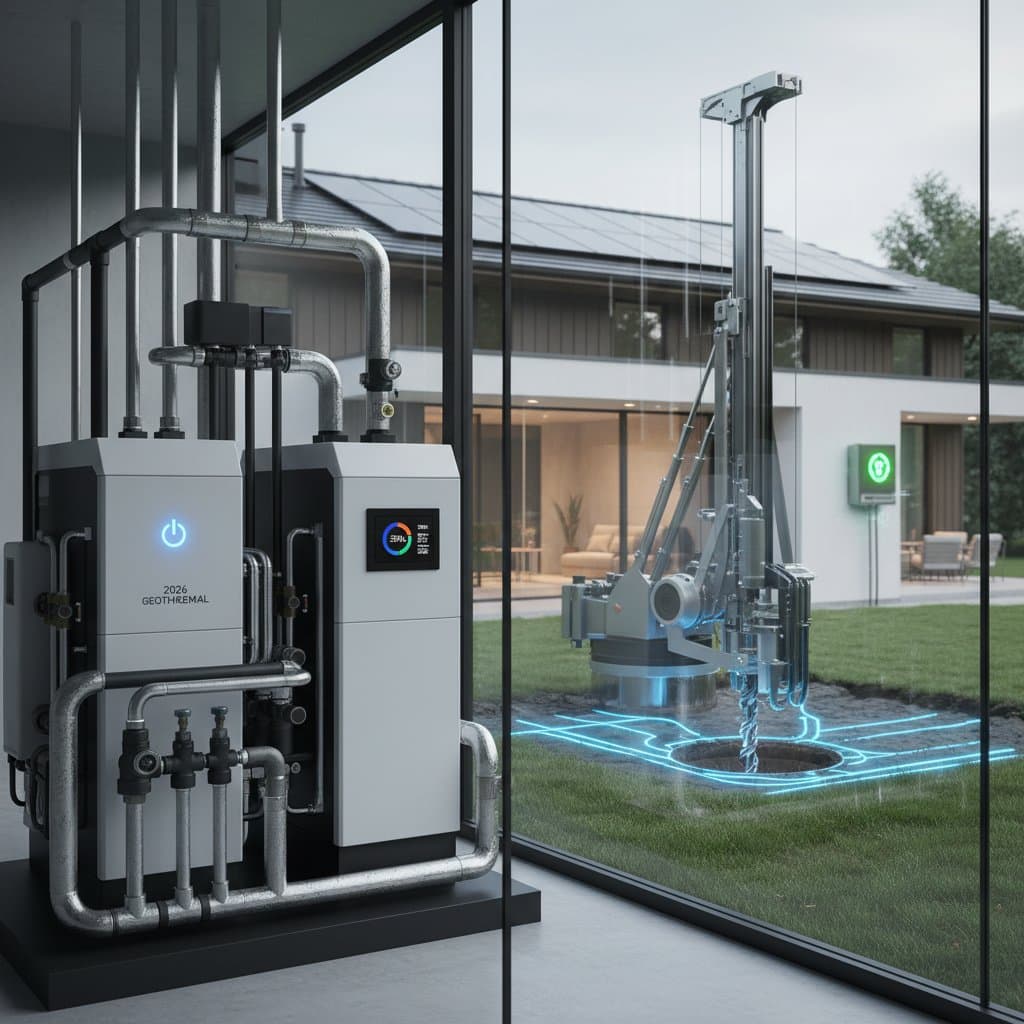
Traditional geothermal setups required deep excavation and specialized crews, which often discouraged widespread use. Modern vertical drilling rigs complete loops faster with less surface impact, cutting time by half in many cases. Horizontal options snake pipes under existing surfaces like parking areas, avoiding major disruptions.
Heat pump units feature variable-speed compressors that adjust output precisely to demand, maintaining even temperatures while using less electricity. Pairing with smart thermostats allows users to monitor and optimize performance via mobile apps. Dr. Lena Hart, a senior engineer at a leading HVAC research center, notes, "Advanced refrigerants, lower drilling costs, and improved controls make geothermal competitive with premium air-source systems. Routine HVAC teams can now handle these projects using standard tools."
Smart-Grid Connections for Enhanced Value
Linking geothermal systems to smart grids unlocks additional benefits. Underground loops store excess heat or coolness, acting as buffers during peak grid stress. Buildings can release stored energy back to the network when demand spikes, earning utility credits.
This capability turns individual installations into community assets. Utilities use these thermal reserves to balance loads from intermittent sources like solar and wind. Projections indicate that shared geothermal networks could reduce local energy use by 25% to 40% and improve grid stability, particularly in urban settings with limited space.
Benefits for Environment and Health
Geothermal systems minimize environmental impact by transferring heat without burning fuels, producing virtually no on-site emissions. When powered by renewables, they reach full carbon neutrality. This shift supports broader goals of reducing greenhouse gases.
Health improvements arise from cleaner indoor air, as systems eliminate combustion byproducts such as nitrogen dioxide and carbon monoxide that exacerbate respiratory issues. Quiet operation and compact designs enhance neighborhood aesthetics without visible outdoor equipment.
Expanding into Commercial Applications
Residential installations grow steadily, but commercial sectors show even faster uptake. Buildings with constant thermal loads, like schools, offices, and hospitals, benefit from geothermal's scalability and efficiency. These setups meet sustainability mandates while trimming operational budgets.
The International Ground Source Heat Pump Association reports investment returns of 12% to 20% for commercial projects, depending on size and usage patterns. Financing models treat shared loop fields as group infrastructure, spreading costs across multiple users. Municipalities invest in community geothermal to provide reliable, low-emission heating, spurring economic development.
Overcoming Remaining Challenges
Despite advances, challenges remain for retrofits in older buildings, where soil conditions or space constraints complicate loops. Limited public knowledge sometimes confines perceptions to luxury homes. The industry counters with expanded training programs that certify more technicians for safe, efficient work.
Manufacturers introduce flexible designs, such as slim vertical loops for urban lots or apartments. Utility-backed financing integrates installation payments into monthly bills, offset rapidly by lower energy charges. These solutions broaden access across diverse settings.
Practical Steps for Geothermal Adoption
With incentives peaking and technologies maturing, now presents an ideal time to explore geothermal HVAC. Start by assessing your property's soil and space with a certified installer to confirm feasibility. Review federal, state, and local programs to maximize savings, then integrate smart features for optimal performance.
This transition delivers immediate gains in efficiency, lower emissions, and energy independence. Businesses and homeowners alike secure resilient comfort tailored to future needs, contributing to a cooler planet through proven, practical innovation.