Key Points
- Mycelium insulation harnesses fungal roots to produce a biodegradable substitute for synthetic foams, grown from agricultural waste.
- It delivers superior thermal resistance, inherent fire retardancy, and improved indoor air quality without harmful chemicals.
- Effective installation requires careful curing, moisture management, and integration with building envelopes.
- Production scaling positions costs at $4 to $8 per square foot, aligning with premium natural insulators.
- By substituting fossil fuel-derived products, mycelium fosters a closed-loop economy through renewability and compostability.
The Future of Insulation Grows in the Ground
Imagine entering a home where comfort aligns seamlessly with the natural environment. Walls maintain steady temperatures, air remains fresh, and energy use declines noticeably. As a green building professional, I have guided numerous clients toward this ideal, often navigating the tension between advanced technologies and legacy materials that generate excess waste.
Nature provides an elegant answer in mycelium, the thread-like root system of fungi. This bio-material expands rapidly on substrates such as straw or hemp residues, creating networks that insulate effectively, purify air, and withstand flames. The process proves straightforward: inoculate, cultivate, form, and cure. It avoids petroleum derivatives, toxic additives, and end-of-life disposal challenges.
The Problem: Traditional Insulation’s Hidden Costs
In varied climates, from moisture-laden coasts to arid interiors, standard insulators like fiberglass and polystyrene foams falter in delivering both performance and ecological benefits. These products depend on non-renewable petrochemicals and may emit volatile organic compounds that compromise indoor environments.
The U.S. Department of Energy reports that inadequate wall and roof insulation leads to 35 percent energy loss in heating and cooling. Homeowners frequently overlook embodied carbon, the emissions from manufacturing, which amplifies a structure's overall footprint. Through extensive field experience, I have observed how these factors erode long-term value.
The Solution: Mycelium as a Living Building Partner
Approach mycelium insulation as a dynamic element in regenerative design. It converts farm byproducts into durable components that sustain functionality over decades. Once cured, the material forms lightweight panels with robust thermal and sound-absorbing qualities, bolstered by chitin's natural defenses against mold, insects, and fire.
Integration demands familiarity with conventional framing. Mycelium adapts to blocks for rigid applications, mats for flexible spaces, or pastes for targeted fills. Its sponge-like matrix captures air pockets, moderating heat flow much like mineral wool or plant fibers, yet with minimal ecological impact.
How Mycelium Insulation Works
1. Growth and Curing Process
Production starts by mixing fungal spores with substrates like corn stalks or sawdust in custom molds. Within five to ten days, mycelium colonizes the material, weaving a solid matrix. Heat treatment at 160 to 180 degrees Fahrenheit stops growth, expels excess water, and solidifies the structure for handling.
2. Thermal and Acoustic Benefits
Insulation functions by impeding heat conduction, convection, and radiation. Mycelium achieves R-values of 3.5 to 4.5 per inch, matching dense foams while its open-cell design scatters sound waves effectively. This dual role suits noisy urban settings or multi-room layouts seeking tranquility.
3. Fire and Mold Resistance
Exposed to flames, mycelium carbonizes slowly, limiting flame spread and avoiding noxious smoke common in plastics. Chitin's antifungal traits, combined with low water retention under 10 percent, minimize decay risks in damp conditions.
4. End-of-Life Compostability
At decommissioning, mycelium breaks down in industrial composters within months, enriching soil without residues. This cycle diverts waste from landfills and replenishes agricultural lands, embodying true sustainability.
Expert Tips to Boost Your Home's Eco-Efficiency with Mycelium
- Select suppliers using regional feedstocks to minimize shipping emissions and bolster local economies.
- Pair with breathable barriers like lime plasters to manage vapor diffusion in variable weather.
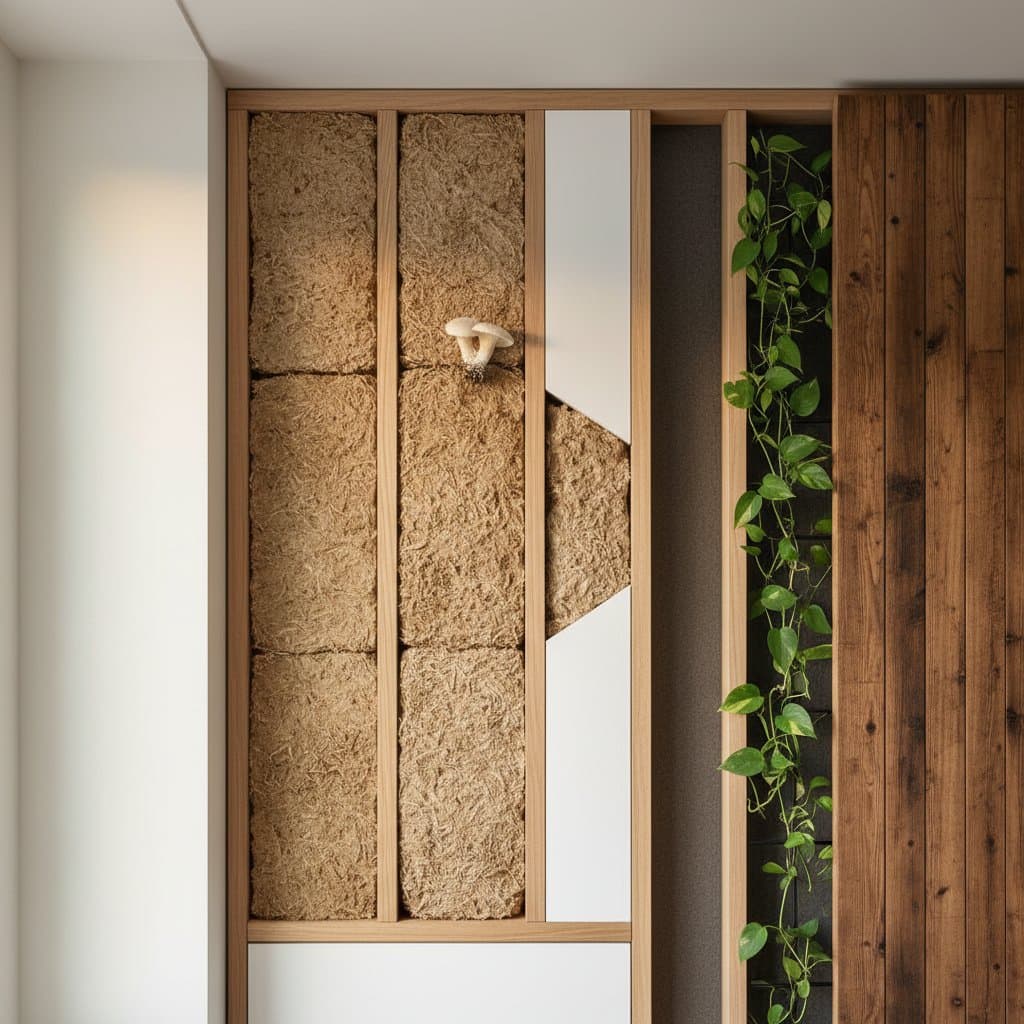
- Assemble walls layering mycelium with wood studs or fiber fills for optimized insulation depth.
- Conduct a blower-door test post-installation to verify airtightness and pinpoint inefficiencies.
- Apply acoustic sealants at edges to prevent drafts, preserving the material's full potential.
Practical Considerations for Homeowners and Builders
Adopting mycelium involves evaluating availability and expertise. Current pricing sits at $4 to $8 per square foot installed, comparable to wool batts, with economies emerging as production expands.
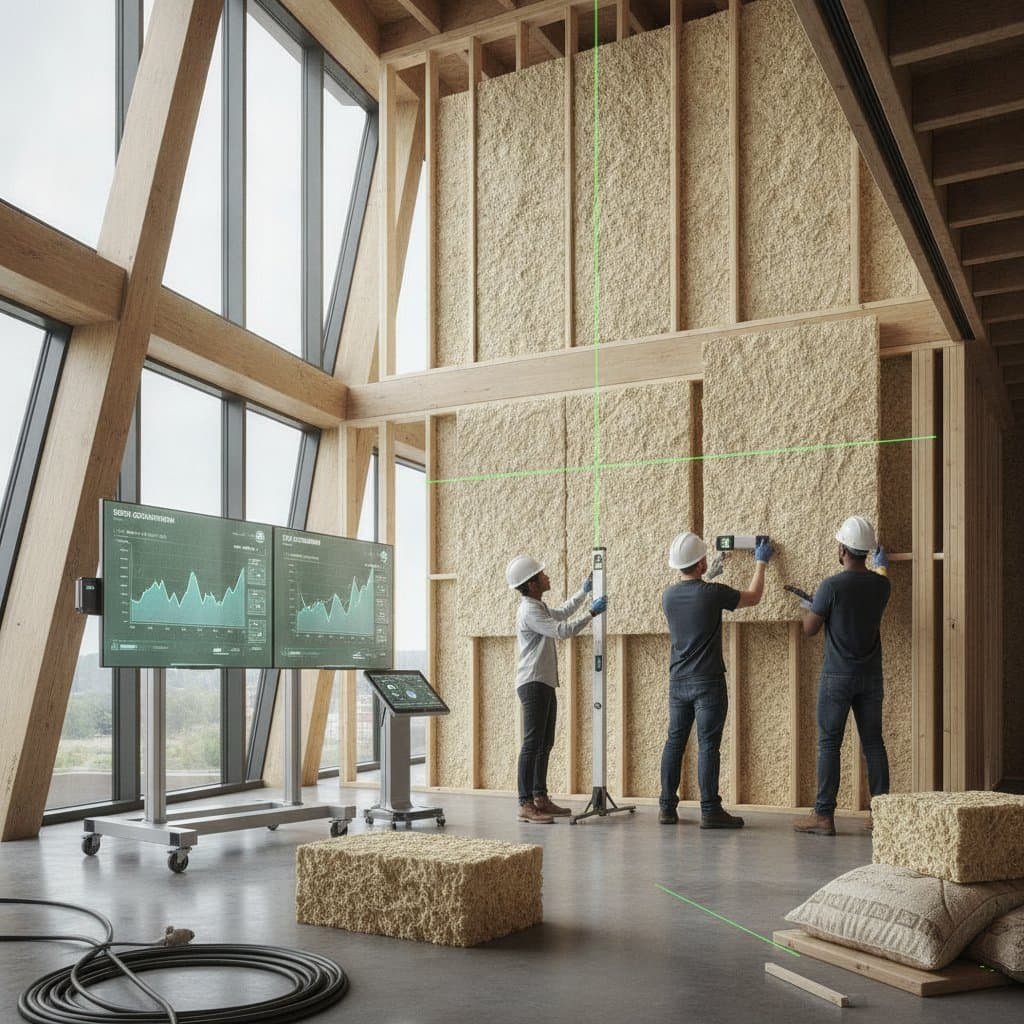
Labor mirrors natural alternatives: cut panels with standard tools, secure via friction fit or adhesives, completing a 1,000-square-foot retrofit in three to five days. Train crews on bio-material protocols to avoid moisture traps that could foster unintended growth.
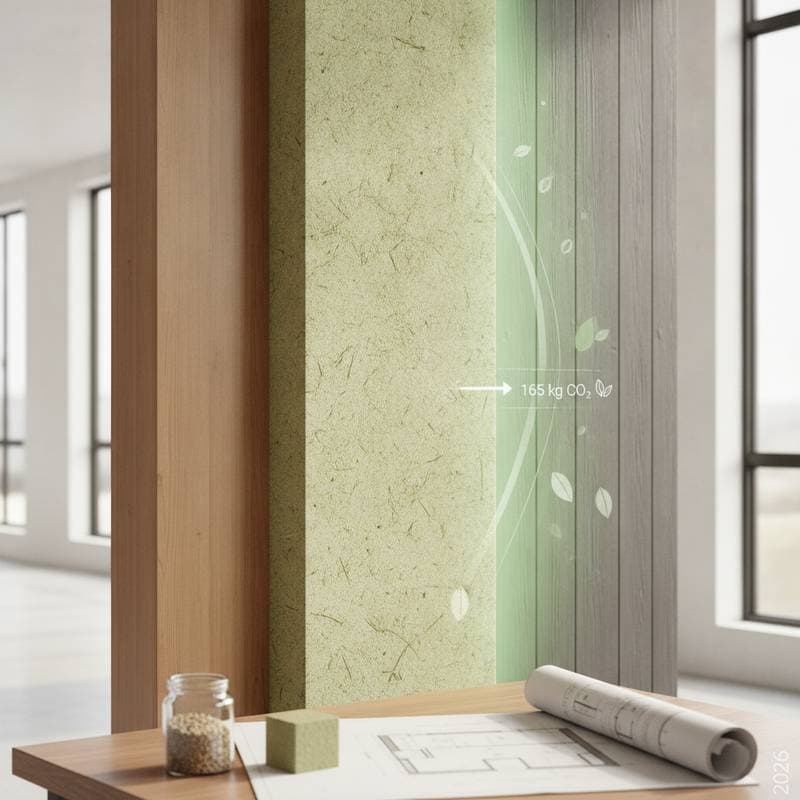
Environmentally, it slashes embodied carbon by 70 percent versus foams, aiding compliance with net-zero standards. Explore incentives through energy departments or green certifications for rebates up to 30 percent on qualifying projects.
Safety and Compliance
Mycelium poses no toxicity risks, but use protective gear during fabrication to guard against dust. Verify integrations with wiring and framing adhere to International Building Code provisions.
Products often achieve Class A fire ratings per ASTM standards, suitable for homes and offices. For certifications like LEED, track sourcing documentation to claim credits in sustainable materials and indoor environmental quality.
Real-World Applications
Mycelium thrives in challenging environments. In humid tropics, it regulates interstitial condensation without synthetic vapor barriers. In subzero zones, layered assemblies maintain efficacy down to -20 degrees Fahrenheit.
One project involved retrofitting a 1920s bungalow's walls, yielding 22 percent lower heating costs and reduced allergens. Architects now blend it with reclaimed timbers for load-bearing panels, accelerating prefab green builds.
Making It Happen
Begin by assessing your structure's envelope via infrared thermography to target weak spots like rim joists or gables. Collaborate with certified installers experienced in fungal composites for precise execution.
Contact specialists through sustainability networks for tailored assessments, ROI projections, and code navigation. Embracing mycelium accelerates a shift to homes that enhance well-being and planetary health, one installation at a time.
Frequently Asked Questions
What is the lifespan of mycelium insulation? Properly installed, it endures 50 years or more, comparable to cellulose, with no degradation in key properties.
Can mycelium handle extreme temperatures? Yes, it operates from -40 to 140 degrees Fahrenheit without losing integrity.
Is it suitable for retrofits? Absolutely, its modularity fits attics, basements, and cavity walls with minimal disruption.
How does it compare to spray foam? Mycelium offers similar R-values but excels in breathability and zero off-gassing.
Where can I source it? Look for producers like Ecovative or regional bio-factories; availability grows annually.