Ocean Plastic Countertops Revolutionize Eco Kitchens
Visualize the ocean as a vast expanse of blue waves rather than a repository for billions of plastic fragments. This pervasive pollution now serves as the foundation for an innovative sustainable home design solution. Ocean plastic countertops convert discarded waste into robust, elegant surfaces that match the performance and aesthetics of natural stone.
These countertops divert up to 100 pounds of marine waste per installation. They provide strength and longevity comparable to quartz or granite, yet with a reduced environmental impact. Each slab displays unique patterns derived from a mix of recycled plastics. Maintenance involves only mild soap and water. Installed costs average between 65 and 125 dollars per square foot, varying by brand and customization.
What began as a modest recycling initiative has developed into a practical option for environmentally aware homeowners and remodelers. This material narrates a tale of ecological restoration while supplying the durability and refinement essential for contemporary kitchens.
How Ocean Plastic Countertops Are Made
The production of ocean plastic countertops commences with worldwide cleanup operations. Organizations and suppliers gather abandoned fishing gear, packaging, and other marine plastics from shorelines and waterways. The collected material undergoes cleaning, shredding, and sorting by color and polymer type.
The Processing Journey
- Collection and Sorting: Plastics separate into categories such as HDPE, LDPE, and polypropylene. This step guarantees uniform texture and strength after melting and forming.
- Shredding and Melting: Sorted plastics grind into flakes, then heat to create a molten composite.
- Compression and Cooling: The molten mixture presses into large sheets or slabs, cools, and trims to countertop sizes.
- Finishing and Polishing: Surfaces sand and polish for a smooth, stone-like appearance. Certain manufacturers incorporate natural minerals or recycled glass to add texture and depth.
A distinctive feature of this process lies in its preservation of the material's origins. Rather than concealing the recycled source, ocean plastic surfaces frequently exhibit subtle color swirls or speckled designs that emphasize their reclaimed character.
Comparing Ocean Plastic to Traditional Countertop Materials
Assessing kitchen surfaces requires consideration of durability, appearance, maintenance, and sustainability. Ocean plastic countertops excel across these areas, positioning them as viable alternatives to granite, quartz, and laminate.
| Material Type | Average Cost (per sq. ft.) | Durability Rating | Maintenance Level | Sustainability Score |
|---|---|---|---|---|
| Ocean Plastic | 65–125 dollars | High | Low | Excellent |
| Quartz | 75–150 dollars | Very High | Low | Moderate |
| Granite | 80–140 dollars | Very High | Medium | Moderate |
| Laminate | 25–50 dollars | Medium | Low | Poor |
Durability: Ocean plastic countertops withstand moisture and stains more effectively than porous options like granite or marble. They prove slightly softer, so intense knife contact may cause marks, though sanding often removes these without slab replacement.
Maintenance: These surfaces eliminate the need for periodic sealing, unlike stone. Mild soap and water suffice for preserving their luster.
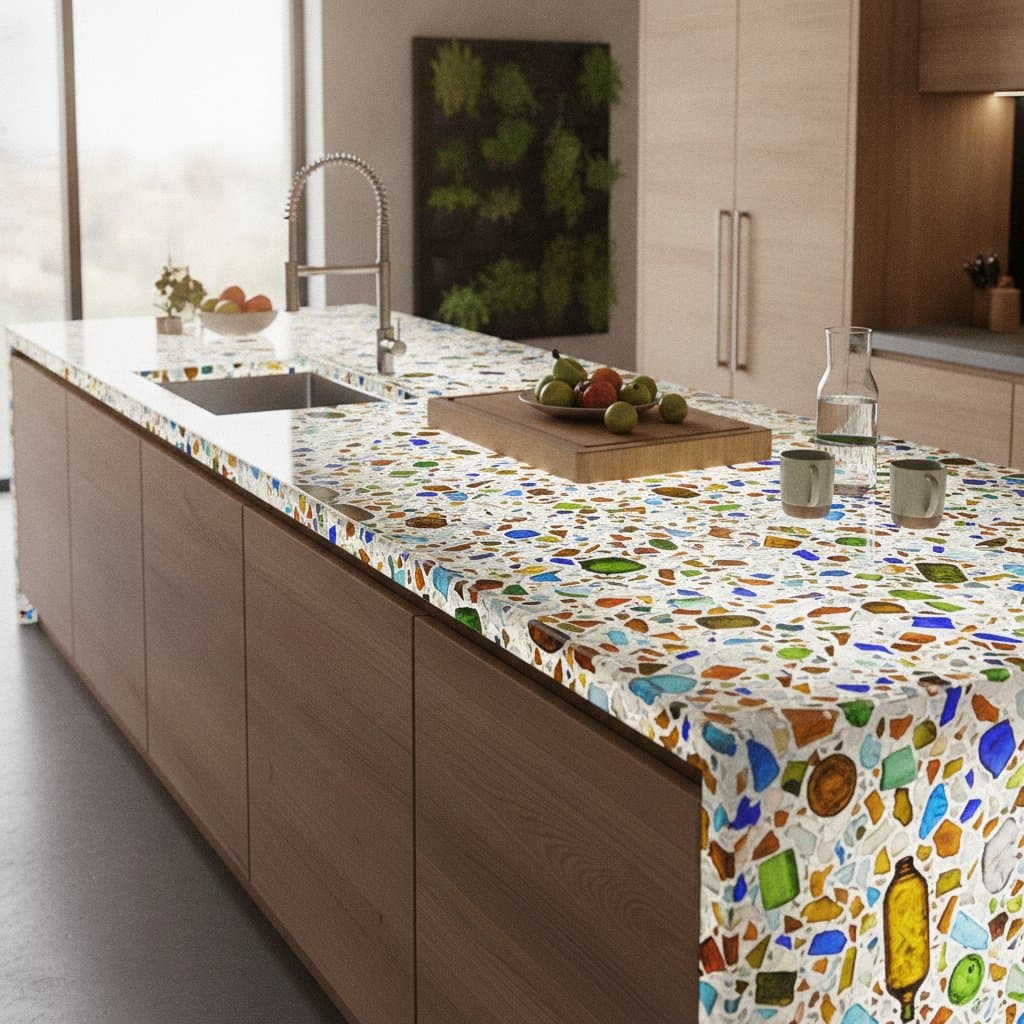
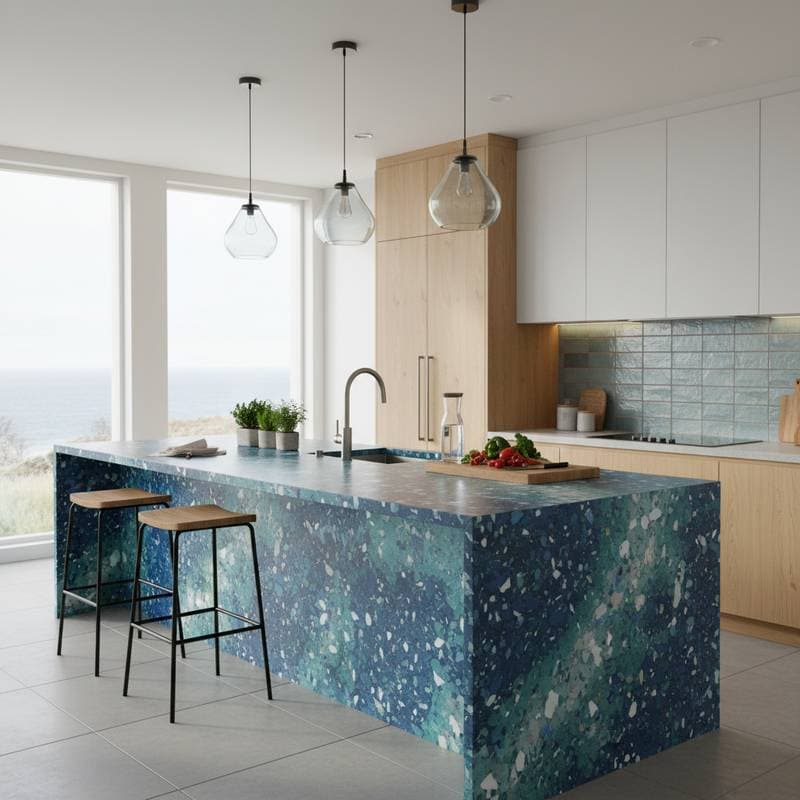
Aesthetic Appeal: Each piece offers distinct visuals with organic patterns akin to terrazzo. Homeowners value the artistic variation, ensuring no two kitchens match precisely.
Environmental Impact: Installations extract quantifiable plastic from oceans and lessen reliance on new materials. Production demands less energy than quarrying or resin composites, thereby decreasing carbon emissions.
Environmental and Social Benefits
These surfaces extend beyond aesthetics to deliver significant ecological effects. Industry studies indicate that ocean plastic countertops avoid more than 1,000 pounds of carbon emissions per kitchen remodel compared to traditional stone methods.
Reducing Ocean Waste
Marine plastics persist for centuries, breaking down into microplastics that endanger marine ecosystems and infiltrate human food supplies. Reclaiming these materials diminishes pollution and promotes conservation awareness.
A sustainability consultant from the Ocean Recovery Alliance notes that embedding recycled marine waste in everyday items links individual decisions to broader environmental results. Preparing meals on a surface from recovered fishing nets directly engages users in the remedy.
Supporting Circular Economy Principles
Ocean plastic countertops embody circular economy ideals, transforming waste into resources for new goods. This model promotes designs focused on durability and recyclability, bridging consumption and renewal.
Producers frequently collaborate with coastal communities, compensating local collectors fairly for debris gathering and sorting. Such partnerships yield environmental gains alongside economic opportunities for waste-impacted areas.
Energy Efficiency and Production Savings
Fabricating recycled plastic slabs uses approximately 60 percent less energy than extracting natural stone or producing quartz. Lighter slabs also cut transportation fuel needs, easing shipping and installation burdens.
Design Versatility and Customization
Ocean plastic countertops transcend early recycled material stereotypes. Current versions offer diverse colors, finishes, and edge styles suitable for minimalist or classic kitchen schemes.
Color and Texture Options
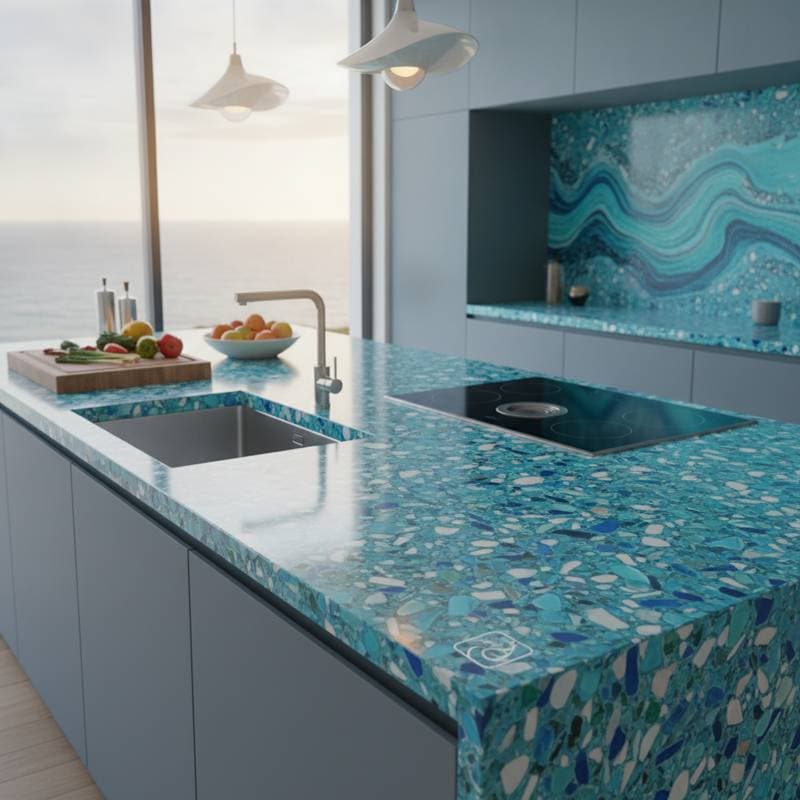
- Speckled Blue-Green Mixes: These ocean-evoking patterns enhance coastal or nautical interiors.
- Monochrome Black or White Slabs: Precise sorting and pigment integration yield quartz-like results.
- Terrazzo-Inspired Styles: Flecks of glass or shell create compelling accents.
Compatibility with Other Materials
These countertops integrate seamlessly with reclaimed wood cabinets, bamboo shelves, or stainless-steel fixtures. Juxtaposing glossy composites with natural elements adds dimension and coziness to kitchen areas.
Designers recommend applying the material to islands or accents for cost efficiency and prominent sustainability emphasis.
Installation and Maintenance Best Practices
Fitting ocean plastic countertops resembles handling other engineered surfaces, with specific steps to maximize lifespan.
Preparation and Installation
- Accurate Measurement: Molded slabs necessitate exact initial measurements for optimal fit.
- Proper Support: Despite reduced weight, slabs demand solid cabinetry to avoid distortion.
- Seam Management: Color-matched adhesives form discreet seams for a unified appearance.
- Edge Finishing: Opt for rounded or beveled edges to minimize chipping risks.
Professionals handle most installations, particularly for brands mandating certified technicians to uphold warranties.
Care and Cleaning
Nonporous ocean plastic resists stains from coffee, wine, or oil. Clean daily with a soft cloth and mild detergent. Steer clear of abrasive tools that might diminish surface gloss.
Scratches typically buff out using fine-grit sandpaper. Deeper damage warrants professional refinishing to revive the original finish without full replacement.
Cost and Long-Term Value
Upfront costs for ocean plastic countertops align with mid-to-premium options. Although laminate costs less initially, recycled plastic delivers enduring value via resilience and ecological merits.
Cost Breakdown
- Material: 45 to 90 dollars per square foot
- Installation: 20 to 35 dollars per square foot
- Finishing and Sealing (optional): 5 to 10 dollars per square foot
Overall installation averages 65 to 125 dollars per square foot. This parity with granite offsets through lower upkeep, decreased weight, and green credentials.
Return on Investment
Appraisers observe that sustainable upgrades boost property values by 5 to 10 percent in eco-preferring markets. These countertops support green certifications, enhancing resale potential.
Challenges and Considerations
Ocean plastic countertops present minor hurdles alongside their strengths.
- Heat Sensitivity: They tolerate moderate heat but may warp under direct hot pot contact; employ trivets consistently.
- Limited Color Uniformity: Batch variations from recycled sources complicate exact matches for expansions.
- Supply Availability: Smaller production scales result in extended lead times versus conventional choices.
Rising demand spurs advancements in manufacturing for greater consistency and availability.
Real-World Examples of Ocean Plastic Kitchens
Interior designers demonstrate the material's role in eco kitchens. One studio designed a coastal haven with turquoise and white slabs alongside reclaimed oak cabinets. The marbled effect evoked flowing currents for a serene ambiance.
A homeowner selected deep charcoal from fishing nets for a matte finish that harmonized with stainless appliances, blending modernity and sustainability.
In each instance, the countertops sparked discussions on merging aesthetics with ethical choices.
Industry Trends and Future Outlook
Recycled surfacing demand surges as consumers and producers prioritize alternatives. Green Building Council analysts report over 30 percent growth in recycled home renovation products.
Enhanced collection efforts promise steadier colors and slimmer slabs for simpler setups. Emerging ventures blend ocean plastics with natural fibers for amplified durability and recyclability.
Policy support through incentives like tax credits for certified remodels broadens accessibility.
Steps to Integrate Ocean Plastic Countertops
To achieve optimal outcomes:
- Combine with bamboo cabinetry or recycled tile backsplashes for cohesive sustainability.
- Select neutral shades for adaptable designs or vibrant hues for standout features.
- Map layouts meticulously, as slab adjustments exceed those of engineered stone in complexity.
This integration elevates kitchens while advancing environmental stewardship.