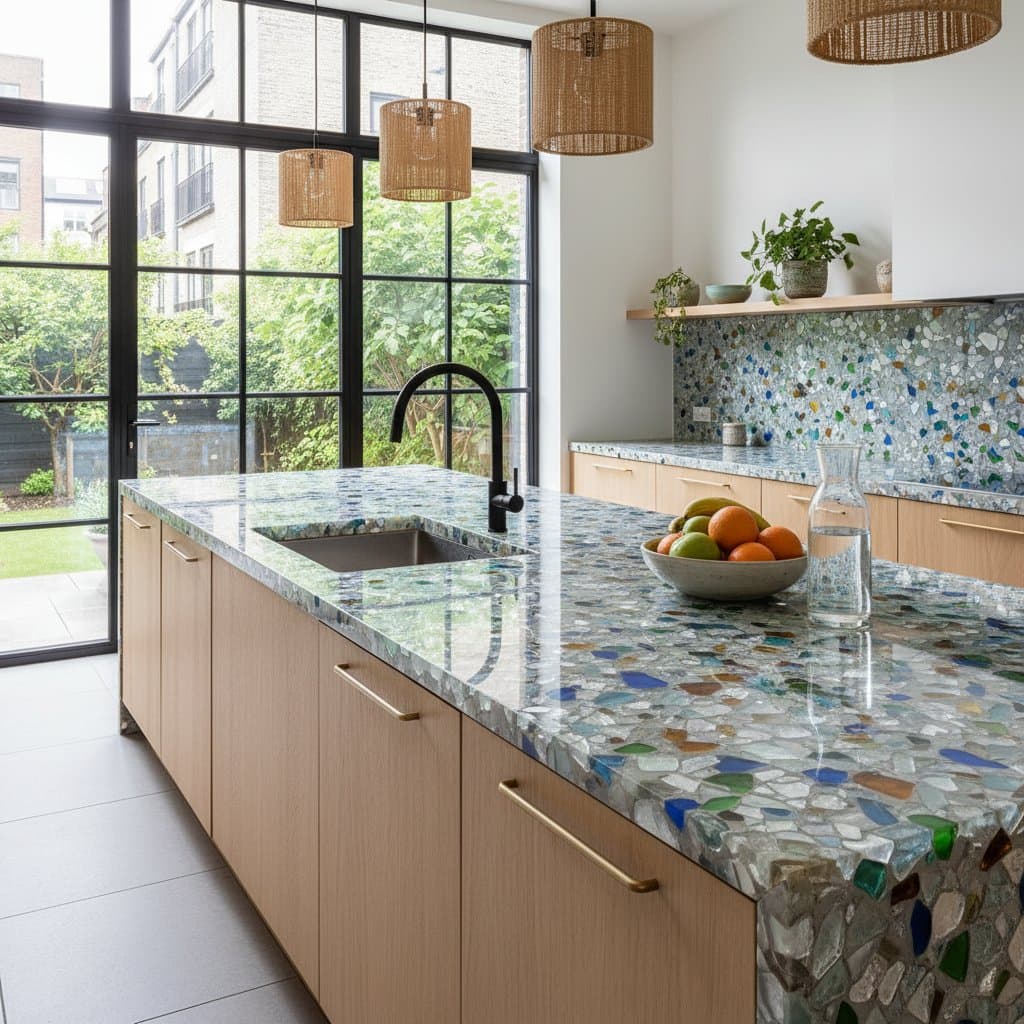
Key Benefits of Recycled Glass Countertops
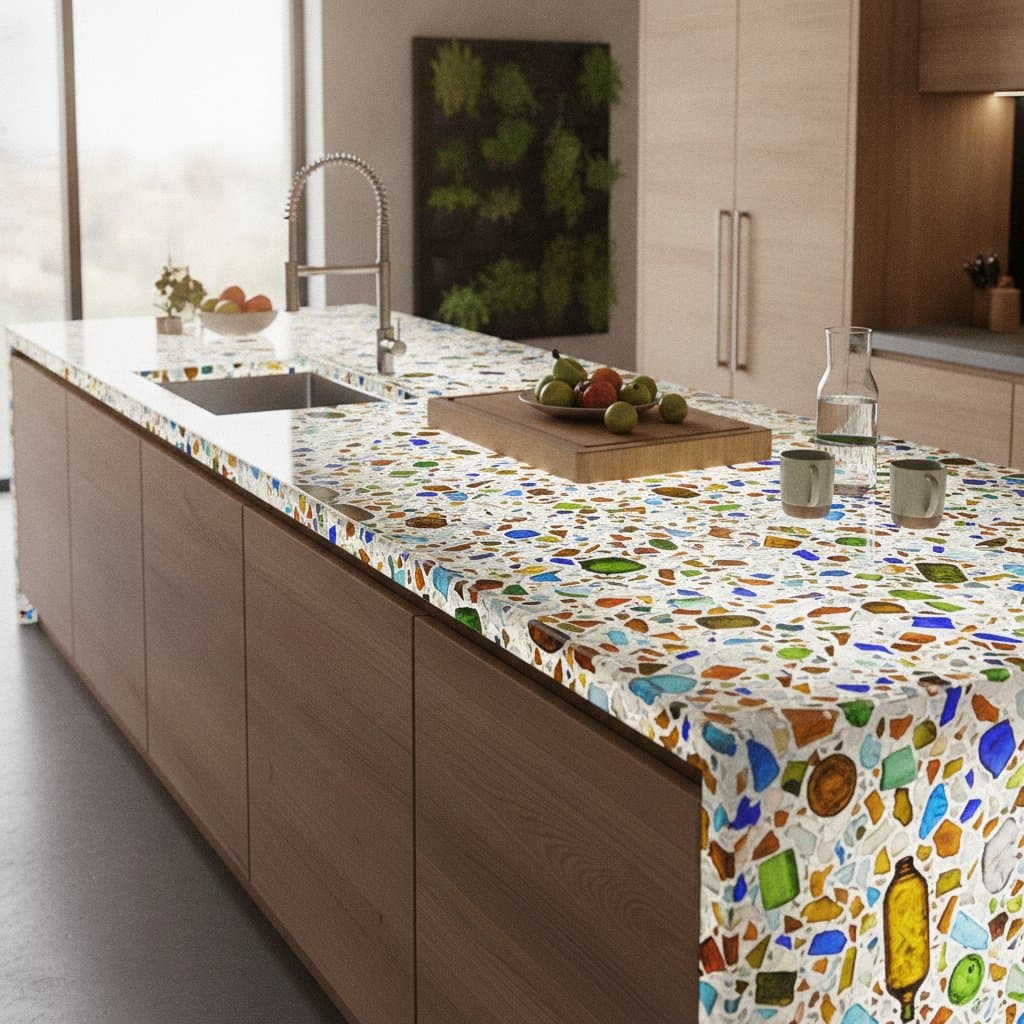
- These surfaces deliver robust durability alongside customizable, vibrant aesthetics that suit diverse interior styles.
- They redirect glass waste from landfills, substantially lowering embodied carbon emissions in construction.
- Perfect for eco-focused kitchen renovations that harmonize visual appeal with environmental stewardship.
- Expert installation guarantees structural integrity and extended lifespan.
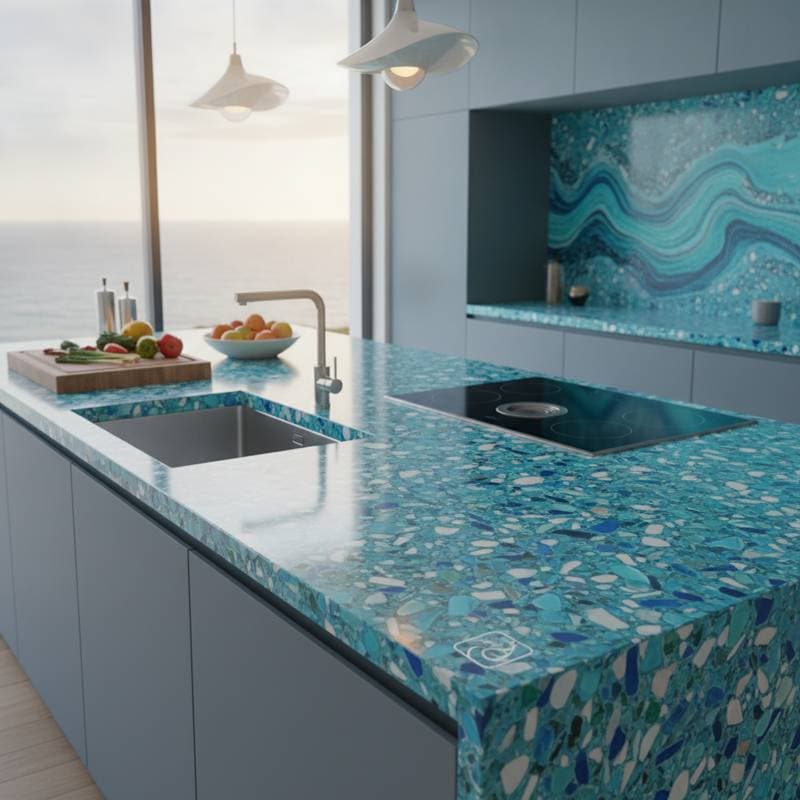
- Options span numerous finishes, accommodating modern, rustic, or coastal themes seamlessly.
Addressing Waste and Emissions in Kitchen Materials
Traditional kitchen countertops often depend on materials such as quarried granite or composites laden with resins. These choices impose significant environmental burdens, including habitat disruption from mining and substantial emissions from global transport. In areas facing strained landfills or inadequate recycling systems, discarded glass accumulates without purpose, exacerbating waste management issues.
Data indicates that debris from construction and demolition accounts for about one-third of landfill capacity, with glass forming a considerable portion. Opting for standard countertops perpetuates this pattern inadvertently. In contrast, recycled glass countertops incorporate 75 to 85 percent post-consumer glass, matching granite's longevity while exerting far less strain on natural resources. This shift not only conserves energy during production but also promotes a more circular approach to material use.
Practical Strategies for Integrating Recycled Glass
Select an Appropriate Binder System
Recycled glass countertops come in two primary varieties based on their binding agents.
Cement-based versions provide an organic, matte appearance that complements natural themes. Although slightly porous, regular sealing every two to three years maintains their condition and prevents moisture absorption.
Resin-based alternatives feature a polished, glossy surface with superior resistance to stains, making them suitable for high-traffic family environments. As a specialist in green building practices, I advise selecting resin options formulated with low levels of volatile organic compounds to safeguard indoor air quality and occupant health.
Align Color and Texture with Your Aesthetic Vision
The versatility of recycled glass allows for tailored visual effects, from fine particles that create a subtle sparkle to larger chunks for dramatic impact. Customize hues to match specific palettes, such as serene coastal blues, sophisticated urban grays, or inviting earthy tones. In kitchens with wooden cabinets or stone flooring, opting for a lighter glass composition introduces harmony, enhances natural light, and fosters an airy atmosphere.
Consider how texture influences daily use: smoother finishes ease cleaning, while textured ones add tactile interest without compromising functionality. Testing samples in your space ensures the final choice integrates effortlessly with existing elements.
Focus on Local and Ethical Sourcing
Inquire about the origin of the glass used by your supplier to minimize environmental impact. Prioritizing locally recycled materials reduces transportation-related emissions and bolsters regional economies committed to sustainability. Certain manufacturers offer personalized services, enabling you to contribute household glass waste for incorporation, which infuses your countertop with a unique, narrative element.
This practice extends beyond ecology; it fosters community ties and supports innovation in waste reduction. Verify certifications for recycled content to confirm authenticity and align with verified green standards.
Engage Skilled Professionals for Installation
The installation of recycled glass demands meticulous attention to prevent fractures or misaligned joints. Qualified installers employ advanced adhesives and reinforcing frameworks to distribute weight evenly and mitigate potential stresses on the material.
Expect costs between $80 and $120 per square foot, influenced by factors like slab size, edge profiling, and regional labor rates. Investing in expertise yields a flawless result that withstands daily rigors, from food preparation to entertaining. Post-installation care, including prompt spill cleanup, preserves the surface's integrity over time.
Aligning with Broader Sustainability Objectives
Recycled glass countertops extend beyond mere waste diversion; they embody principles of circular economy design, where resources cycle indefinitely rather than reaching disposal. This method bolsters local recycling initiatives and illustrates how sustainability enhances rather than compromises design excellence.
Architect and sustainability consultant Dana Lewis observes, “When you choose recycled glass, you invest in a material that reflects both craftsmanship and conservation. It bridges creativity with responsibility in a way few surfaces can.”
Homeowners adopting these materials frequently spark interest among peers, prompting wider adoption of eco-conscious renovations. A simple countertop choice can catalyze neighborhood-wide shifts toward reduced environmental impact and innovative living spaces.
Realizing Long-Term Value in Your Kitchen
Integrating recycled glass countertops yields enduring benefits, from aesthetic elevation to ecological contributions. These surfaces withstand scratches, heat, and wear while requiring minimal upkeep, ensuring your investment appreciates over decades. By selecting this option, you craft a kitchen that not only serves practical needs but also advances personal and planetary well-being.
Consider the ripple effects: lower energy use in production translates to reduced household carbon contributions, and the material's recyclability at end-of-life closes the loop. This forward-thinking choice positions your home as a model of balanced, responsible design.
Frequently Asked Questions
How do recycled glass countertops compare in durability to granite?
They offer equivalent strength and lifespan. Proper sealing and routine maintenance allow them to endure for several decades, retaining both luster and stability.
Are recycled glass countertops suitable for outdoor use?
Certain resin-based formulations resist weathering effectively, making them viable for covered patios or outdoor kitchens. Consult installers for climate-specific recommendations to ensure performance.
What maintenance do these countertops require?
Clean daily with mild soap and water; avoid harsh abrasives. Seal cement-based types periodically, while resin versions typically need less intervention for stain prevention.