Key Points
- Ocean plastic countertops advance sustainable kitchen design by integrating innovation with environmental stewardship.
- These countertops deliver superior durability, contemporary style, and solid investment returns relative to conventional options.
- Homeowners select from various product levels to align budget, functionality, and ecological advantages.
- Correct installation and maintenance routines preserve appearance and strength over time.
When Ocean Waste Becomes Kitchen Luxury
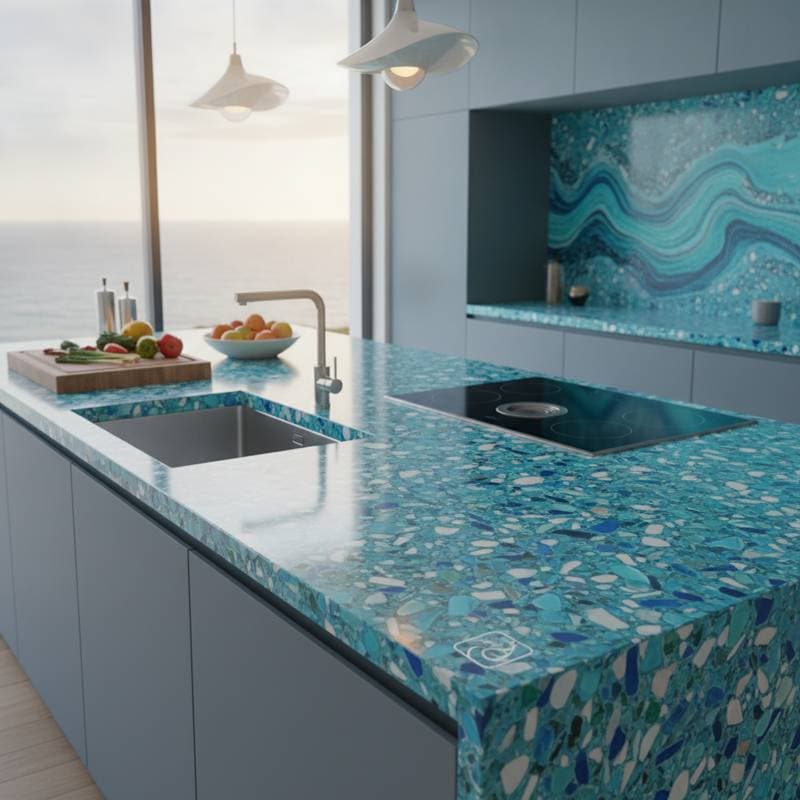
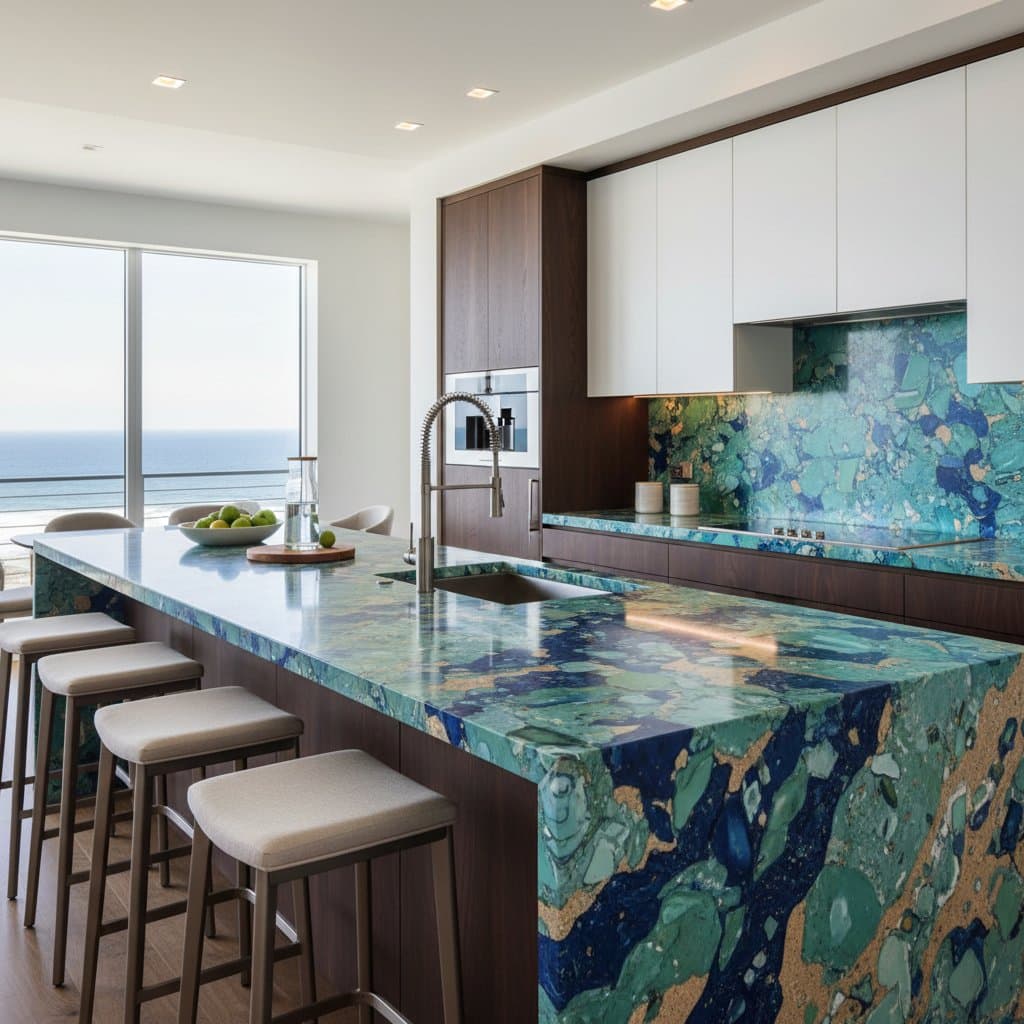
Imagine a sunlit kitchen where the countertop gleams with a history of ocean voyages. This surface, featuring smooth textures and faint marbled veins, embodies more than decoration. It signifies the conversion of discarded plastic into a vital element of daily life.
Sustainable construction previously involved trade-offs in style or expense. Ocean plastic countertops disrupt this pattern. They unite ecological repair with creative design, enabling choices that excel in appearance, reliability, and planetary contribution.
Why Ocean Plastic Appeals to Homeowners
Annually, millions of tons of plastic endanger ocean habitats. Harvesting ocean plastic provides a tangible method to reverse this damage. Beyond ecology, homeowners value these countertops for wider reasons, including:
- Waste diversion from oceans and disposal sites.
- Decreased reliance on new resources, which cuts manufacturing emissions.
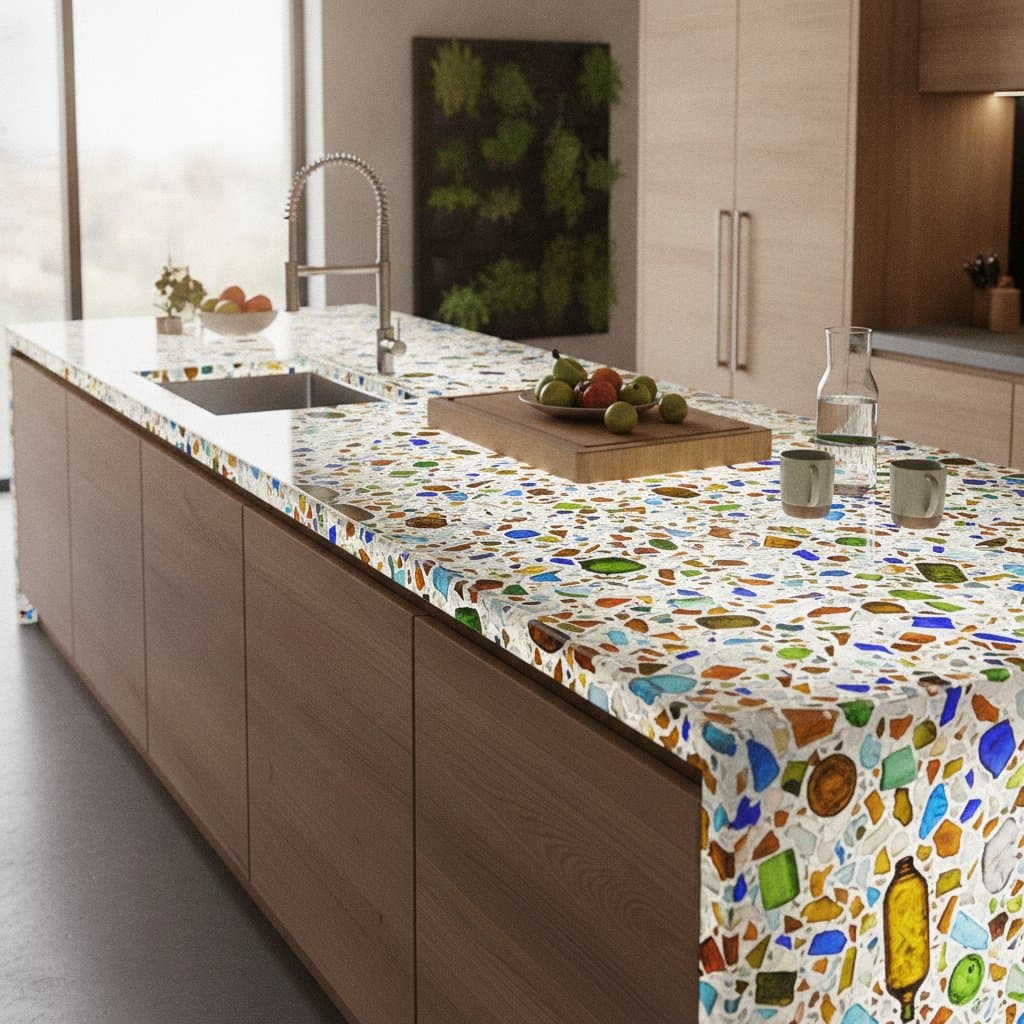
- Unique visual traits, as each piece displays distinct patterns from its recycled origins.
Financially, eco-friendly selections affect home resale and appeal. Real estate experts note that properties with verified green materials draw more buyers and sell quicker. Ocean plastic countertops, backed by documented origins and genuine sustainability, enhance both sentimental and tangible worth in renovations.
Material Performance and Durability
Doubters may wonder if recycled plastic equals stone or composites in quality. Reputable products confirm it does, when produced and fitted correctly. Ocean plastic countertops blend dense recycled polymers with natural binders for a firm, reliable base.
Essential durability features encompass:
- Resistance to impacts on par with engineered quartz.
- Impermeable structure that prevents swelling or discoloration from water.
- Simple upkeep, limited to gentle soap and a soft cloth.
- Color retention in premium variants, even under sunlight exposure.
Manufacturers project service lives of decades, often with extended guarantees. With routine care, these countertops endure multiple kitchen updates, yielding excellent value.
The Cost Equation
Budget concerns frequently arise with green upgrades. Installed ocean plastic countertops cost between $70 and $150 per square foot, varying by maker, surface type, and location. This range sits between standard quartz and premium stone.
Initial outlay exceeds laminates, yet long-term evaluation shifts the view. Reduced repair needs, extended durability, and possible rebates create a 15 to 25 percent superior return over ten years.
Budget-conscious owners opt for sectional setups, like applying ocean plastic to central islands or highlights. Such strategies lower expenses while delivering noticeable sustainability.
Design Versatility
Visual allure fuels demand for ocean plastic countertops. Recycled panels show natural flecks, waves, and depths that echo stone yet retain individuality.
Options for finishes cover:
- Subdued mattes suited to sleek, modern spaces.
- Polished sheens that amplify light and hue shifts.
- Stone-inspired mixes incorporating recycled minerals with ocean plastic.
Designers leverage these for backsplashes, tables, or sink integrations, ensuring unified looks. Brands provide tailored hue mixes to coordinate with cabinets or floors, upholding eco standards.
The Broader Market Shift
Ocean plastic adoption marks an industry pivot from waste to resource. Investments in looped production grow, as do preferences for clear sourcing.
Builders see sustainability as a competitive edge. Incorporations of recycled elements earn eco certifications, boosting worth and appeal. Ocean plastic countertops integrate easily, thanks to proven chains and quantifiable gains.
Installers find the process familiar. Standard tools handle cutting and securing, akin to solid surfaces. Brief training suffices, and existing setups minimize expenses, accelerating use.
Health and Wellness Benefits
Ocean plastic extends beyond green credentials to indoor health. Nonabsorbent and free of volatile compounds, these surfaces resist microbes and off-gas no toxins. Families prone to sensitivities benefit from improved air purity.
The feel adds comfort too. These countertops warm quickly and yield slightly to touch, ideal for meal prep or gatherings. Paired with smart lighting and appliances, they foster kitchens that nurture well-being and earth care alike.
Future-Proofing Your Kitchen Investment
Design movements change, yet circular materials ensure enduring fit. Ocean plastic countertops align with adaptable, efficient paradigms.
Refinishing or reusing avoids disposal in future changes. Return programs from some makers keep materials cycling. This practice curbs waste and safeguards value amid rising stewardship demands.
Steps to Install Ocean Plastic Countertops
Homeowners eyeing this upgrade follow these steps for optimal outcomes:
- Define priorities. Determine focus on ecology, style, or endurance.
- Vet suppliers. Seek proof of ocean recovery and recycling percentages.
- Test samples. View under ambient light to gauge true tones.
- Consult experts. Cover edges, joints, and bases for durability.
- Establish care. Use basic cleaners and guards to prolong use.
Selecting ocean plastic countertops elevates renovation to renewal. Each installation narrates recovery, ingenuity, and progressive skill. As preferences lean toward balanced beauty, function, and ethics, these countertops emerge as a model for enduring homes.