Recycled Plastic Roofs: 2025's Essential Sustainable Choice
Homeowners envisioning sustainable residences often consider solar panels, efficient windows, or reclaimed wood features. Yet, an emerging innovation reshapes rooftops in urban and suburban settings. Recycled plastic roofing emerges as a vital option for those prioritizing the environment, integrating robust durability, adaptable aesthetics, and substantial sustainability gains into a single effective approach.
Essential Advantages
- Recycled plastic roofing endures up to twice the lifespan of numerous conventional materials, thereby reducing maintenance expenses and material waste.
- An average installation diverts 30 to 80 percent of its components from landfills.
- Numerous designs achieve full recyclability upon reaching the end of their service life, fostering a closed-loop production process.
- Initial installation expenses align closely with those of standard asphalt systems, with potential long-term savings of 25 to 40 percent.
- The composition withstands rot, ultraviolet degradation, and mold development, suiting diverse climates and lifestyles demanding minimal upkeep.
The Rising Popularity of Recycled Plastic Roofs
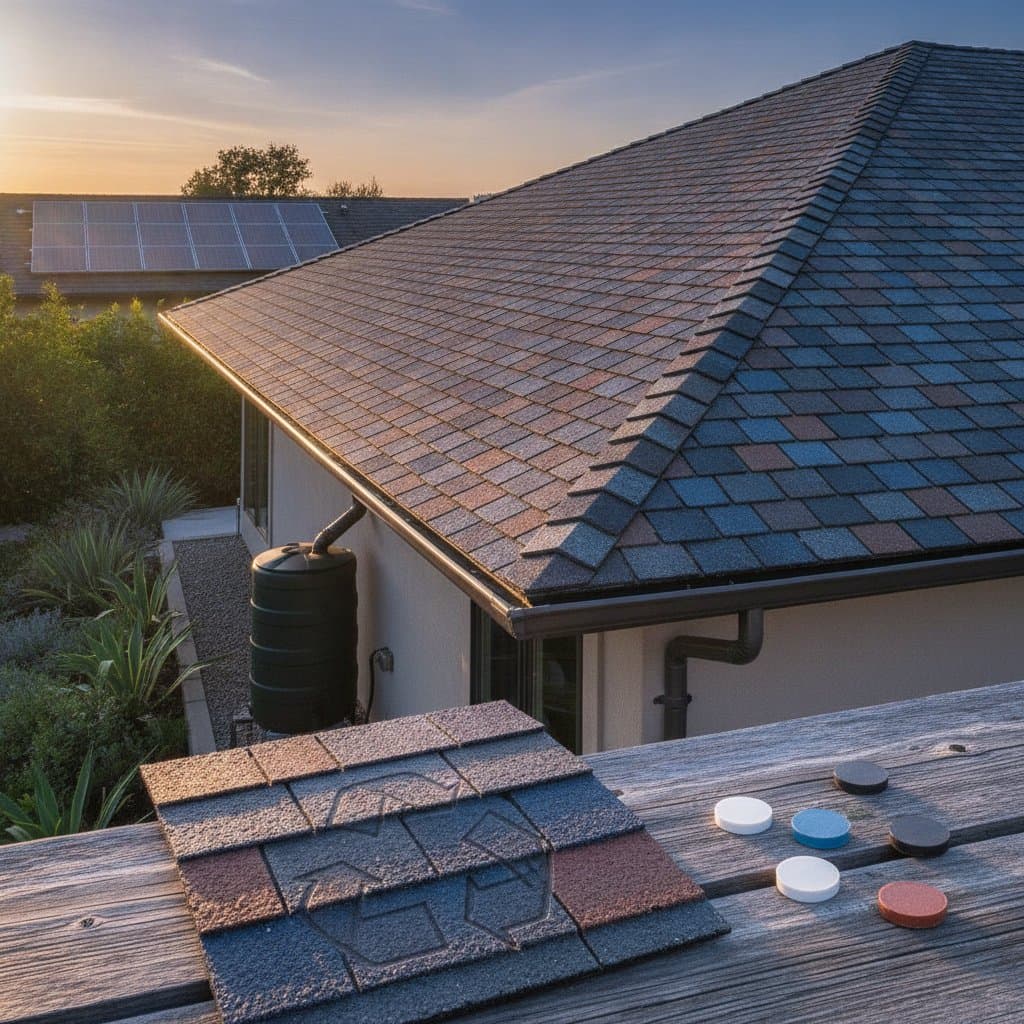
Sustainability evolves from optional choice to standard requirement, positioning recycled plastic roofing among the most feasible green enhancements for residences. Distinct from certain eco-friendly alternatives that demand concessions in functionality or visual quality, these roofs provide both endurance and attractiveness. They emulate conventional shingles, tiles, or slate appearances while delivering enhanced resistance to weather elements and requiring little ongoing care.
Research from the Environmental Product Research Institute indicates that recycled plastic roofing diminishes lifecycle emissions by as much as 65 percent relative to asphalt shingles. This assessment encompasses manufacturing, shipping, and end-of-life phases, underscoring the significant influence of material selection on a structure's ecological impact.
For property owners, such roofs safeguard both the dwelling and the environment. The synergy of diminished waste, improved energy performance, and extended durability renders them an exemplary selection for eco-oriented renovations.
Composition of Recycled Plastic Roofing
Recycled plastic roofs generally consist of high-density polyethylene (HDPE), polyethylene terephthalate (PET), or polypropylene (PP). These elements derive from consumer discards such as bottles, packaging containers, and industrial wrappings. Certain producers incorporate recycled rubber or natural fibers to improve pliability and surface feel.
This formulation yields a substance optimized for strength and appearance. Contemporary production techniques enable authentic textures resembling wood shakes or ceramic tiles, alongside color integrations that endure intense solar exposure without significant fading. The reduced weight facilitates application on prevailing frameworks without necessitating extra supports.
Varieties of Recycled Plastic Roofing
| Type | Composition | Typical Lifespan | Visual Style | Ideal For |
|---|---|---|---|---|
| Plastic Shingles | 100% recycled HDPE or PP | 40–50 years | Slate or shake mimic | Residential properties |
| Composite Tiles | Plastic and rubber blend | 30–45 years | Clay or ceramic style | Humid, warm areas |
| Plastic Panels | Recycled PET or HDPE | 25–40 years | Flat or corrugated | Sheds, outbuildings, contemporary homes |
Ecological and Economic Advantages
1. Minimizing Waste Through Circular Processes
Each recycled plastic roof prevents thousands of bottles and containers from entering landfills. For instance, covering a standard single-family home equates to repurposing approximately 50,000 plastic bottles. Since many configurations permit full recycling at the conclusion of their use, they advance a circular economy model emphasizing repeated material utilization over disposal.
2. Extended Service Life and Reduced Upkeep
Conventional asphalt roofs frequently require replacement after 20 years, whereas recycled plastic variants persist for double that duration. The material defies distortion, fractures, and discoloration amid severe weather. Cleaning involves a simple low-pressure rinse, with no need for frequent resealing or repainting, which minimizes waste generation and cumulative expenses.
3. Enhanced Energy Performance
Select recycled plastic roofs feature reflective surfaces that curtail heat uptake by up to 30 percent. This capability decreases cooling demands in hotter regions and elevates indoor livability. The lighter profile also lowers emissions associated with transport and installation when compared to denser alternatives.
4. Expense Evaluation and Investment Return
Costs fluctuate based on supplier and location, but installed recycled plastic roofing typically ranges from 7 to 12 dollars per square foot. This positions it within moderate pricing tiers, yet the prolonged durability and scant maintenance yield strong returns. Across 40 years, owners may realize savings of 25 to 40 percent versus asphalt or wooden counterparts.
Durability and Functional Performance
The superior attributes of recycled plastic roofing stem from its precise engineering. It repels water infiltration, thereby averting decay and fungal proliferation. The material retains adaptability through wide temperature ranges, lessening risks of brittle failure in winter or undue swelling in summer.
Independent evaluations by construction research entities demonstrate that premium recycled plastic roofing endures winds reaching 110 miles per hour and preserves integrity following prolonged ultraviolet assault. These capabilities suit coastal, inland, and varied geographic conditions alike.
Additionally, the composition excels in acoustic dampening, muting precipitation and hail impacts more effectively than metallic or tiled surfaces, thereby enhancing occupant tranquility.
Aesthetic Versatility and Design Options
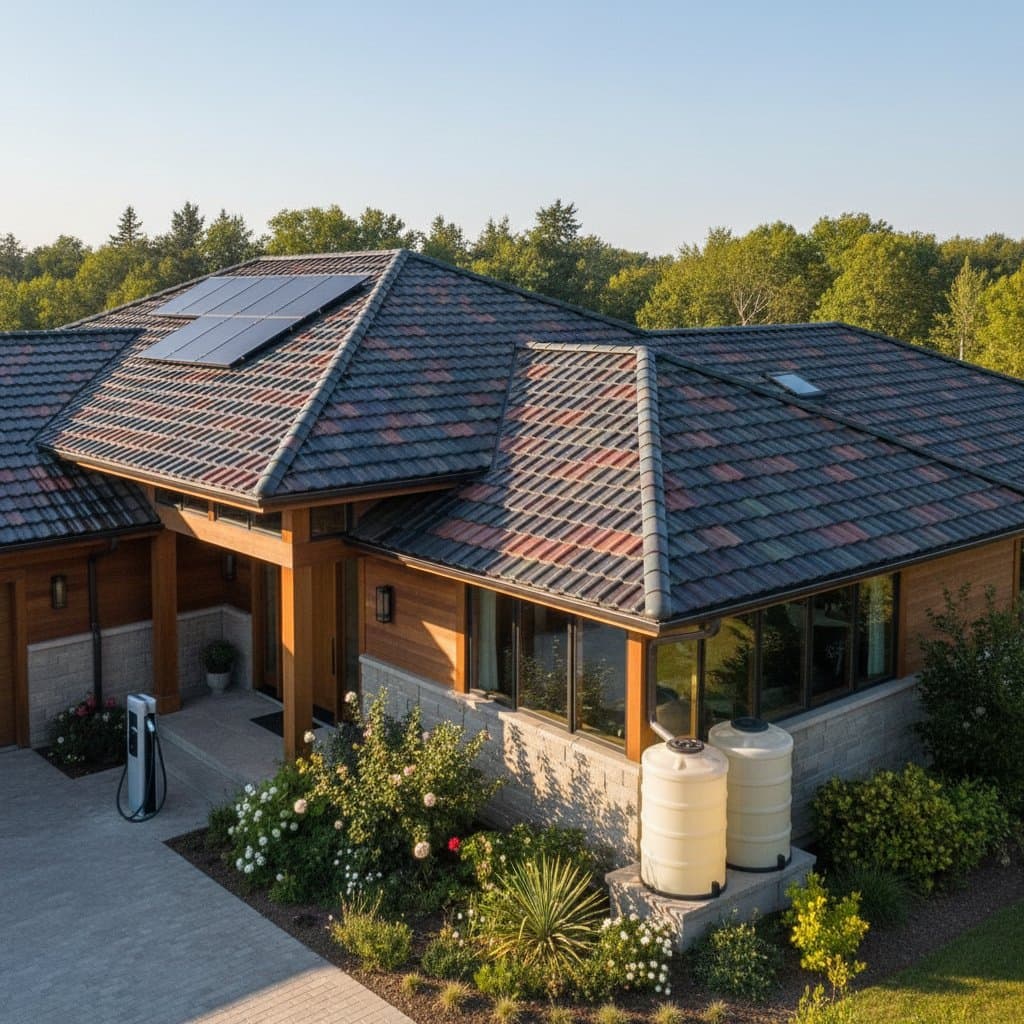
Sustainable choices previously entailed stylistic sacrifices, but recycled plastic roofing demonstrates that environmental responsibility aligns with visual excellence. Producers provide extensive selections in hues, patterns, and surfaces, spanning rustic wood emulations to refined contemporary tiles. Precision molding ensures uniform designs, with integrated coloring that permeates the full thickness for lasting vibrancy.
Options include matte, semi-gloss, or embossed finishes tailored to architectural themes. The modular nature supports innovative applications like varied color schemes or complex roof contours. Professionals value the adaptability, while residents appreciate the harmony of form, function, and conscience.
Available Customizations
- Color selections: Earth-inspired tones, slate grays, and neutral modern shades.
- Shape options: Classic shingles, curved edges, or planar sheets.
- Surface varieties: Polished, wood-like grain, or stone-inspired textures.
- Integration potential: Compatible with photovoltaic arrays and water harvesting setups.
Guidelines for Installation and Care
Recycled plastic roofing installation mirrors traditional shingle methods, though specific measures optimize outcomes. Use corrosion-resistant stainless steel fasteners and adhere to producer-recommended intervals to accommodate minor thermal shifts. Selecting an appropriate underlayment proves crucial; a permeable layer mitigates moisture accumulation below the covering.
Care demands little effort. Annual or biannual rinsing clears debris like dust or organic residues. Steer clear of high-pressure equipment or abrasive agents; gentle soap solutions and water suffice. The inherent resistance to organic growth eliminates the need for routine anti-moss applications.
Pitfalls to Sidestep
- Bypassing expert fitting: While self-installation occurs, certified professionals secure airtight seals and uphold warranty terms.
- Mismatched underlayment: Align choices precisely with supplier directives.
- Ignoring airflow: Adequate attic venting regulates thermal variations to prolong service life.
- Disregarding drainage: Maintain clear gutters, as pooled water accelerates deterioration on any covering.
Insights from Specialists and Future Directions
Sustainability authorities in architecture regard recycled plastic roofing as a rapidly advancing domain within eco-construction. Dr. Lena Hart, a specialist in composite materials, observes, "Performance indicators now match or surpass legacy options, absent the ecological drawbacks."
Construction teams favor the material's transport and assembly simplicity. Its reduced mass accelerates workflows, curtails labor, and eases handling relative to slate or tile. This attribute particularly aids aging structures unable to bear heavy loads.
On a worldwide scale, funding for repurposed construction elements surges. Advancements in processing broaden the spectrum of viable plastics for superior roofing. Innovations include additives elevating ultraviolet protection and fire resilience, cementing the material's role in conventional building practices.
Evaluation Against Other Roofing Materials
| Material | Average Cost per Sq. Ft. | Lifespan | Maintenance | Environmental Score* |
|---|---|---|---|---|
| Asphalt Shingles | 4–7 | 15–25 years | Moderate | 3/10 |
| Wood Shake | 6–9 | 20–30 years | High | 5/10 |
| Metal Roofing | 9–15 | 40–60 years | Low | 7/10 |
| Recycled Plastic | 7–12 | 40–50 years | Very Low | 9/10 |
*Scores derive from lifecycle analyses evaluating production, durability, recyclability, and waste mitigation.
This overview illustrates recycled plastic roofing's emergence as a benchmark for environmentally aware construction, equaling rivals in efficacy while elevating sustainability benchmarks.
Steps to Adopt Recycled Plastic Roofing
To pursue a roof upgrade, consult regional providers focused on sustainable products. Request certification of recycled content proportions and end-of-life recyclability. Evaluate warranty durations, with leading brands extending protection to 40 years or beyond.
Prior to proceeding, engage a qualified roofer for a structural assessment covering load-bearing capacity and airflow systems. The lightweight design generally accommodates legacy frameworks, obviating expensive modifications.
Enduring Gains
- Diminished upkeep expenses: Routine rinsing replaces painting or sealing.
- Eco-complete cycle: Total recyclability curtails landfill contributions.
- Elevated property appeal: Green features draw prospective purchasers and boost valuations.
- Superior livability: Enhanced thermal regulation and acoustic control.