Key Points
- Eco shingles from recycled plastic enhance residential roofing through superior durability, cost savings over time, and environmental sustainability.
- Installation requires attention to local climate conditions to achieve maximum performance and longevity.
- These shingles redirect substantial volumes of plastic waste from landfills and provide excellent insulation alongside weather resistance.
- Homeowners benefit from reduced maintenance expenses and improved energy efficiency.
- Engaging certified professionals in green roofing guarantees adherence to local regulations and peak system efficiency.
The 2025 Roofing Revolution: Eco Shingles from Recycled Plastic
Imagine sunlight reflecting off your rooftop, where sleek, durable shingles made from recycled plastic replace conventional asphalt or wood. The surrounding air seems fresher, your home stays cooler, and you gain satisfaction from knowing your roof supports planetary health. As a green building professional, I have observed numerous homeowners grappling with the trade-offs among durability, expense, and ecological impact. Recycled plastic eco shingles resolve this challenge effectively.
The roofing sector evolves slowly, based on my extensive field experience. However, this emerging category of recycled plastic shingles marks a genuine advancement in performance and sustainability. These materials shield homes from severe weather while mitigating plastic pollution that otherwise burdens waterways and landfills for generations.
Challenges of Traditional Roofing and Environmental Impact
Homeowners frequently choose asphalt shingles for their low initial price, yet these prove expensive over time. Such shingles endure only 15 to 20 years and generate significant waste during replacement. Industry statistics indicate that roofing debris constitutes about 10 percent of all construction waste. The energy demands of production further highlight the need for sustainable alternatives in this sector.
In hot regions, dark asphalt surfaces absorb heat, elevating interior temperatures and increasing air conditioning use. In cold areas, inadequate insulation allows heat to escape via the roof, inflating heating expenses. This pattern results in elevated costs and substantial ecological consequences.
Recycled plastic shingles address these issues by converting former pollutants into a robust, energy-saving barrier for residences.
Recycled Plastic Shingles: A Superior, Sustainable Option
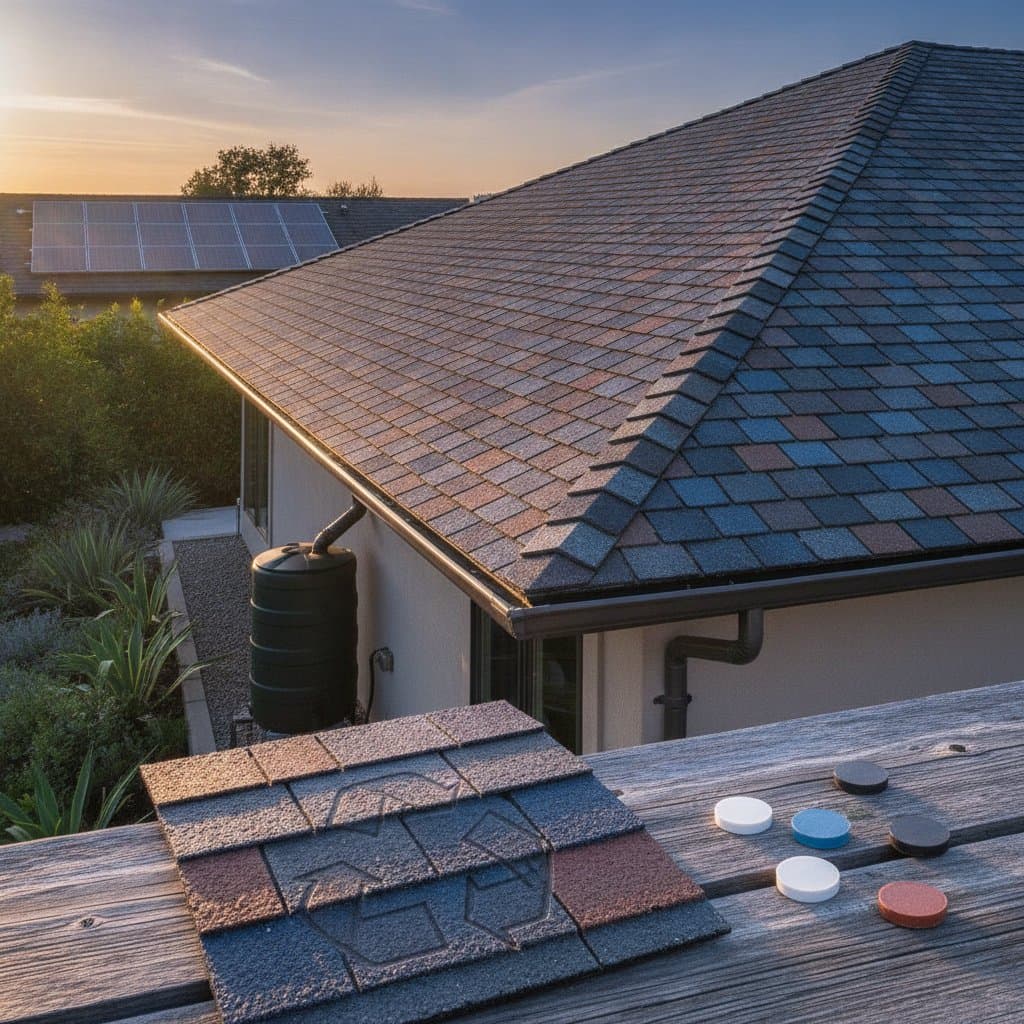
Recycled plastic shingles merge ecological responsibility with structural integrity. Producers typically source post-consumer plastics, such as milk jugs, shampoo containers, and industrial wrappers. The material undergoes cleaning, melting, and forming into roofing tiles that replicate the appearance of slate, wood, or architectural styles.
I endorse this option for homeowners prioritizing longevity alongside environmental principles. Many variants endure up to 50 years, outlasting conventional choices. They withstand cracking, fading, and algae accumulation, while handling heavy precipitation, hail, or prolonged sun exposure. Certain models incorporate UV stabilizers to maintain vibrancy through the years.
Strategies to Enhance Home Eco-Efficiency
To optimize recycled plastic shingles, follow these preparatory measures:
- Evaluate your roof framework to confirm it supports the new material weight. Although lighter than slate, densities among recycled plastic options vary.
- Review municipal regulations for required fire or wind ratings. Select products that meet or surpass these criteria.
- Employ a certified green roofing specialist. Precise installation determines overall roof effectiveness.
- Integrate high R-value insulation beneath the shingles to minimize energy use further.
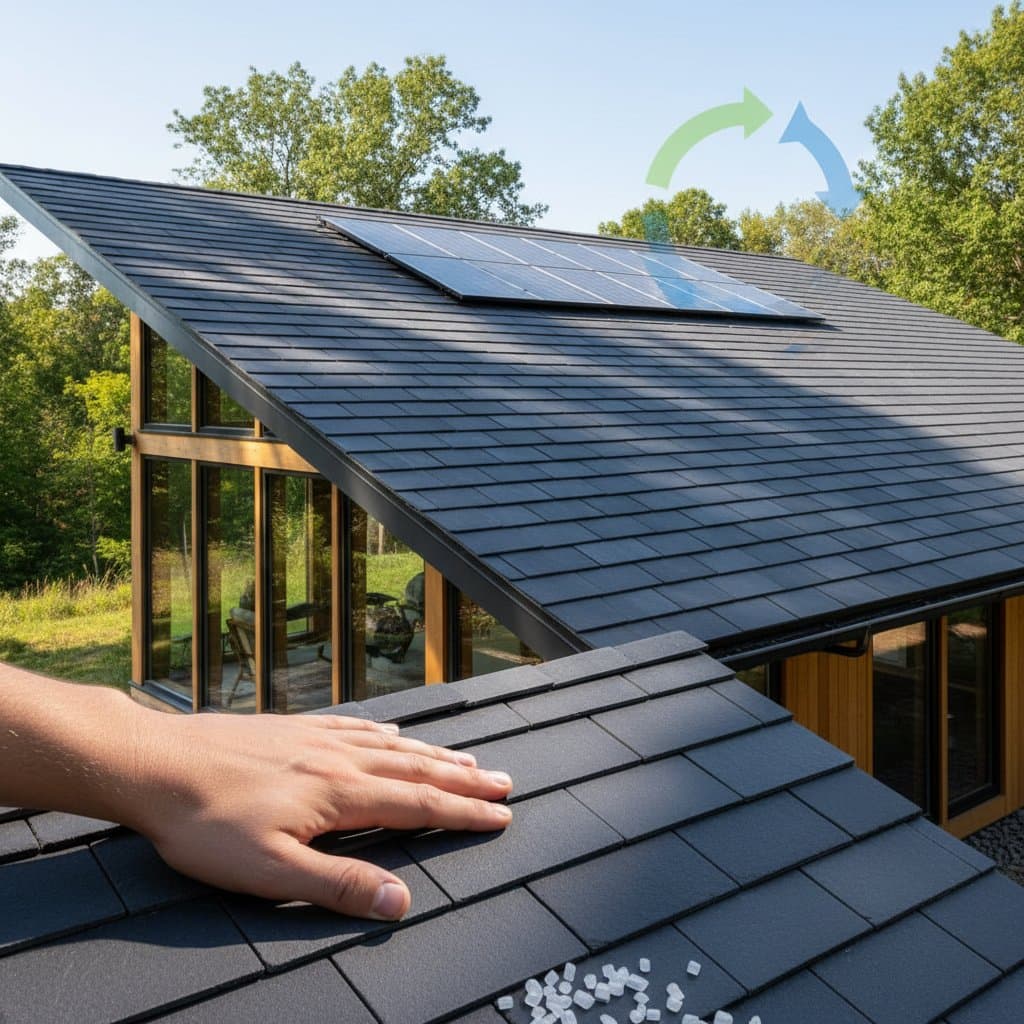
- Explore solar panel compatibility, as many recycled plastic shingles accommodate such integrations for amplified energy savings.
Climate Resilience of Plastic Shingles
Recycled plastic roofing adapts well across diverse environments. In moist coastal zones, it resists corrosion and mold more effectively than wood or metal alternatives. In snowy locales, smooth surfaces facilitate ice shedding, lowering damage and leak risks.
These shingles exhibit less expansion and contraction with temperature fluctuations than asphalt, minimizing cracks and prolonging service life. Designs often include underlying ventilation pathways to encourage air circulation, curbing heat accumulation in summer.
One client reported a 20 percent reduction in energy bills after installing recycled plastic shingles with reflective underlayment. Such outcomes prove consistent and quantifiable in various settings.
Cost Analysis and Long-Term Value
Upfront expenses average $8 to $12 per square foot for installation, yet the extended benefits justify this. Minimal upkeep arises from resistance to algae, moisture, and UV degradation. Across their lifespan, savings in replacements and energy often reach thousands of dollars.
Sustainability represents an investment rather than an extravagance, in my professional view. The initial premium recoups within 10 years through durability and efficiency. Combining with attic insulation or solar systems amplifies financial returns.
Broader Environmental and Community Advantages
Installing a recycled plastic roof diverts thousands of pounds of waste from landfills annually. Manufacturers collaborate with recycling centers for reliable sourcing and quality assurance. Select companies provide end-of-life retrieval programs, fostering a complete circular economy.
These roofs also curb emissions by lessening heating and cooling demands. In communal or eco-oriented developments, they embody advancement and stewardship.
Dr. Helen Wu, a materials scientist focused on sustainable construction, states, "Recycled plastic roofing transcends mere substitution. It paves the way for a circular economy linking waste reduction to durable infrastructure."
Essential Evaluations Prior to Installation
Sustainable choices demand careful assessment. Consider these factors:
- Color options and reflectivity: Lighter shades deflect sunlight to lower cooling needs; darker ones aid heat retention in cooler areas.
- Warranty terms: Seek coverage of 40 years or longer, reflecting producer reliability.
- Fire performance: Confirm Class A ratings for optimal safety.
- End-of-life recycling: Opt for brands that reclaim used shingles for reuse.
Request a physical sample to assess quality firsthand. It should feel substantial and textured, resisting brittleness or excessive sheen under varying conditions.
Steps to Achieve a Sustainable Roof Upgrade
Begin with a professional home energy audit to quantify your existing roof's energy inefficiencies. Next, obtain estimates from verified local green roofing contractors via trusted directories. Compare specifications, guarantees, and techniques systematically.
The investment warrants itself through enduring comfort, reduced ecological footprint, and improved aesthetics. Such a roof demonstrates that eco-conscious choices enhance daily life and community standards.
A veteran contractor shared with me, "Each recycled plastic roof installation represents progress against waste." This perspective defines the movement: superior materials that safeguard homes and the environment alike.
Frequently Asked Questions
What materials form recycled plastic shingles?
They derive from post-consumer plastics like bottles and packaging, processed into durable tiles without compromising strength.
How do they compare to asphalt shingles in lifespan?
Recycled plastic versions last up to 50 years, versus 15 to 20 years for asphalt, offering greater value over time.
Are they suitable for all climates?
Yes, their resistance to temperature extremes, moisture, and impact makes them versatile for humid, cold, or arid regions.
What is the installation process like?
It mirrors traditional roofing but requires certified installers to ensure proper ventilation and adhesion for peak performance.
Can they integrate with solar panels?
Many designs support solar mounting, enabling combined energy generation and efficiency gains.