Save 60% on Geothermal HVAC with Federal Tax Credits
Federal tax credits scheduled for 2026 allow homeowners to reduce the cost of a geothermal HVAC system by up to 60 percent. Ground source heat pumps deliver consistent heating and cooling while lowering utility expenses and supporting long term property value.
How Geothermal Systems Operate
A closed loop design circulates fluid through pipes buried in the ground to exchange heat with the stable earth temperature. This approach eliminates external fuel combustion, reduces the number of moving parts, and lowers maintenance needs compared with furnaces or air conditioners.
Performance and Energy Savings
Geothermal units produce three to four units of heating or cooling for every unit of electricity consumed. Resulting efficiency ratings often exceed an EER of 25 and a COP near 4. Homeowners commonly record annual utility reductions between 1,000 and 2,500 dollars after switching from conventional equipment.
Payback and Lifetime Returns
After application of the tax credit, most installations reach full payback in five to eight years. Over a typical 25 year service life the cumulative savings frequently surpass 30,000 dollars. The ground loop itself often remains functional for 50 years, so later upgrades require only indoor unit replacement.
Impact on Home Value
Properties equipped with high efficiency renewable systems sell for 3 to 6 percent more than comparable homes without them. Local market awareness and prevailing energy prices influence the exact premium.
Health and Environmental Benefits
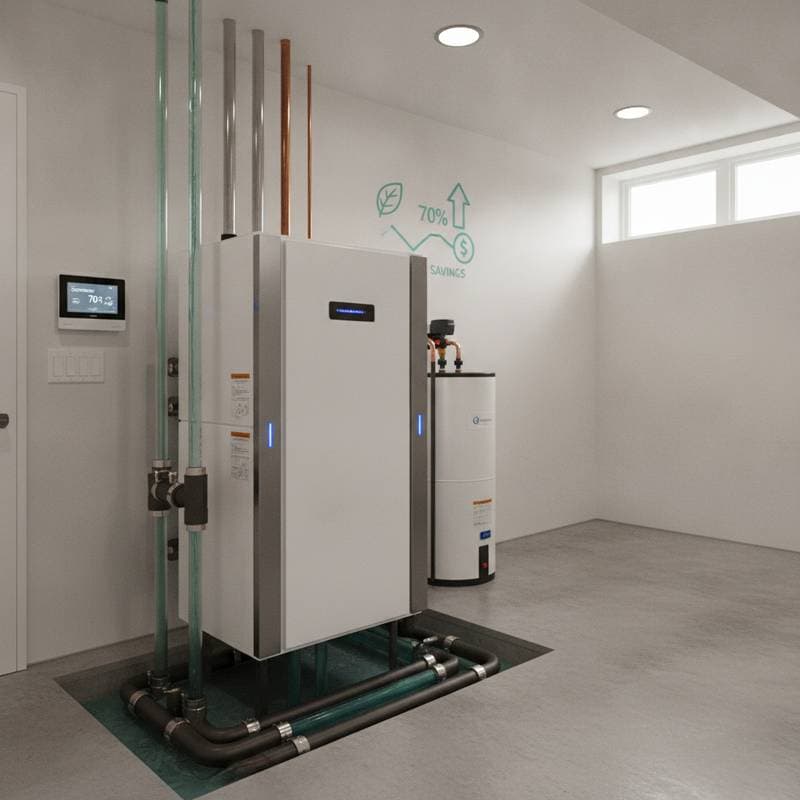
Because the system moves heat rather than burning fuel, onsite emissions drop to zero. Household carbon output can fall by as much as 70 percent relative to oil or gas heating. Stable humidity control and the absence of combustion gases also improve indoor air quality, which benefits occupants with respiratory sensitivities.
Site Assessment and Installation Process
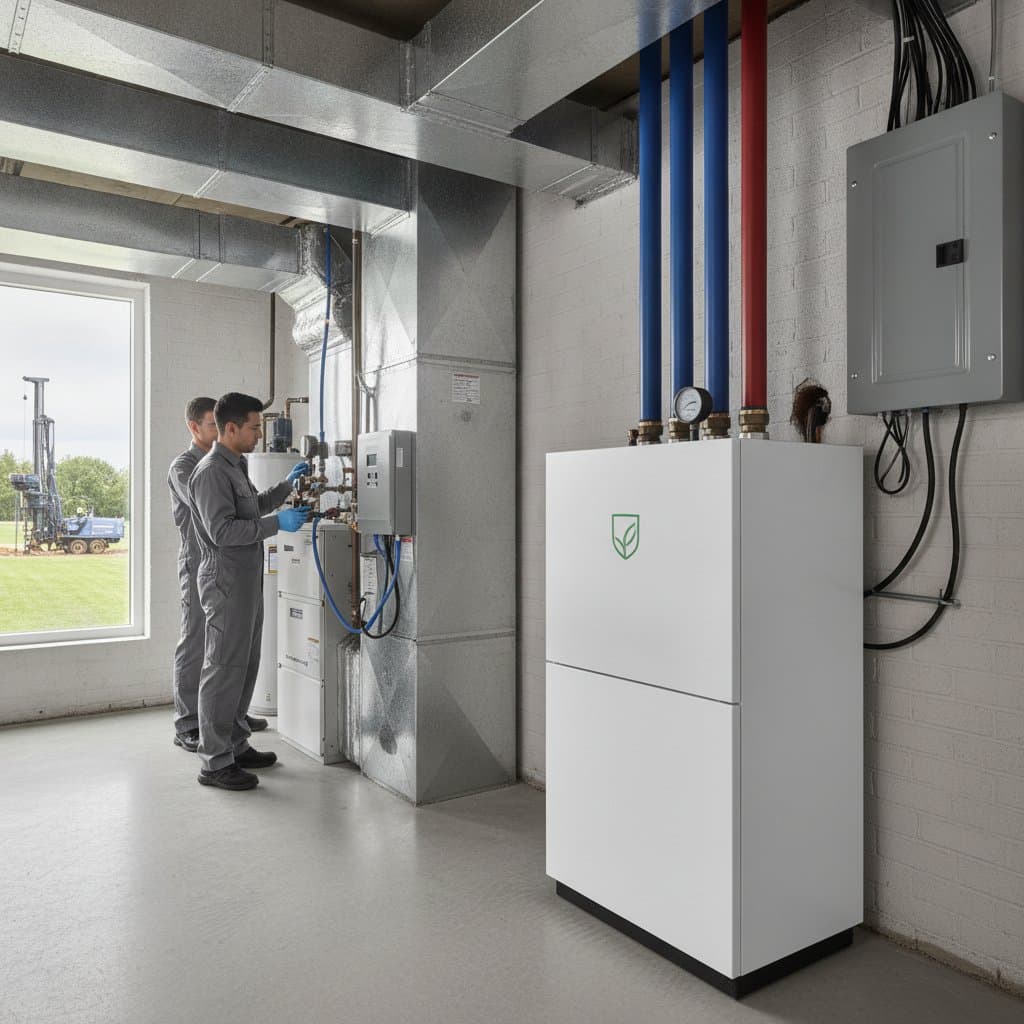
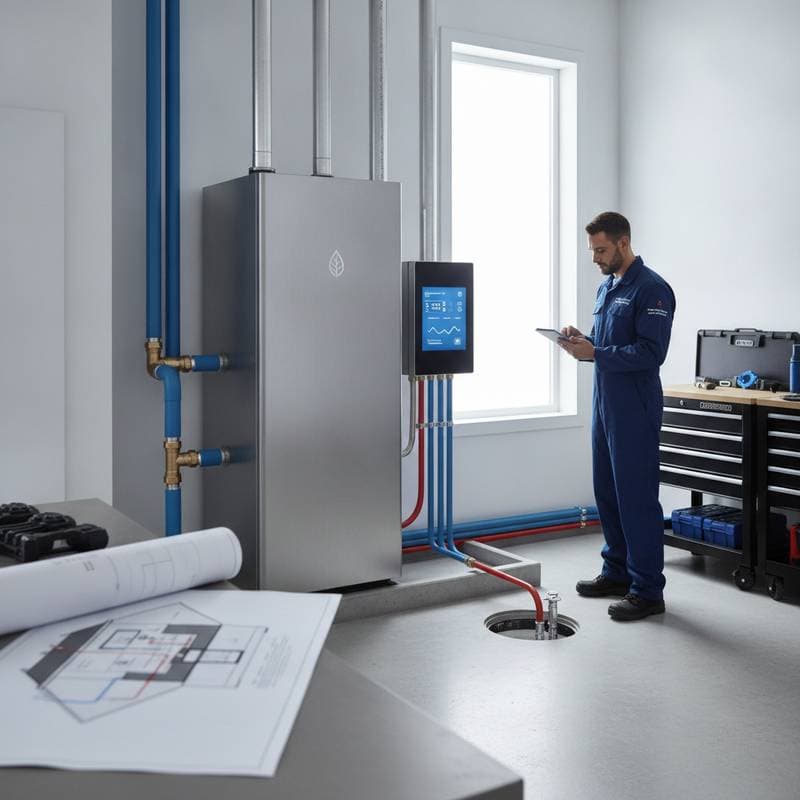
Successful projects begin with an energy audit followed by a site survey that examines soil type, lot size, and drilling access. Certified installers then select the appropriate loop configuration, secure permits, and complete trenching or boring work.
- Conduct an energy audit to baseline current consumption.
- Perform a site survey to map soil conditions and available space.
- Finalize system design, including loop layout and heat pump capacity.
- Obtain permits and confirm code compliance.
- Install loops, connect indoor equipment, and complete commissioning.
Most residential jobs finish within several days once permits are approved.
Available Financing Options
State and utility rebates often supplement the federal credit. Some programs permit owners to finance the net cost through property tax assessments, aligning payments with realized energy savings.
Sample Cost Breakdown
A 30,000 dollar system qualifies for an 18,000 dollar credit, leaving a net investment of 12,000 dollars. At 1,800 dollars in yearly energy savings the payback occurs in roughly six to seven years, after which the equipment generates pure savings for the remainder of its life.
Answers to Frequent Homeowner Questions
Does geothermal work in cold climates? Yes. Underground temperatures stay constant year round, allowing reliable performance even where winters are severe.
How much land is required? Horizontal loops need more surface area while vertical loops require less space but greater depth.
Can an existing home be retrofitted? Yes. Most ducted or hydronic systems can be adapted after a compatibility review by the installer.
What routine maintenance is needed? Filter changes and an annual professional inspection keep the system operating at peak efficiency. The buried loop requires no regular attention.
Will property taxes rise? Many jurisdictions exempt renewable energy equipment from reassessment, yet owners should verify local rules in advance.
Durability and Daily Comfort
Protected underground piping resists weather and mechanical damage. Indoor units run quietly and deliver even temperatures without the swings common to forced air systems. Lower thermal stress on components extends service life and produces steady, balanced humidity throughout the year.
Expert Recommendations for Success
Contractors advise completing insulation and air sealing upgrades before or during installation to shorten payback. They also stress the value of hiring technicians who hold ground source heat pump certification and understand regional soil conditions. Real estate professionals note that documented efficiency features attract buyers and can accelerate sales.
Scheduling Your Geothermal Assessment
Contact a certified installer to arrange an energy evaluation and obtain detailed proposals. Review available incentives, compare design options, and select financing that aligns with your budget to lock in current credit levels.