Retrofit Your Home with Geothermal and Reduce Energy Costs by 70 Percent
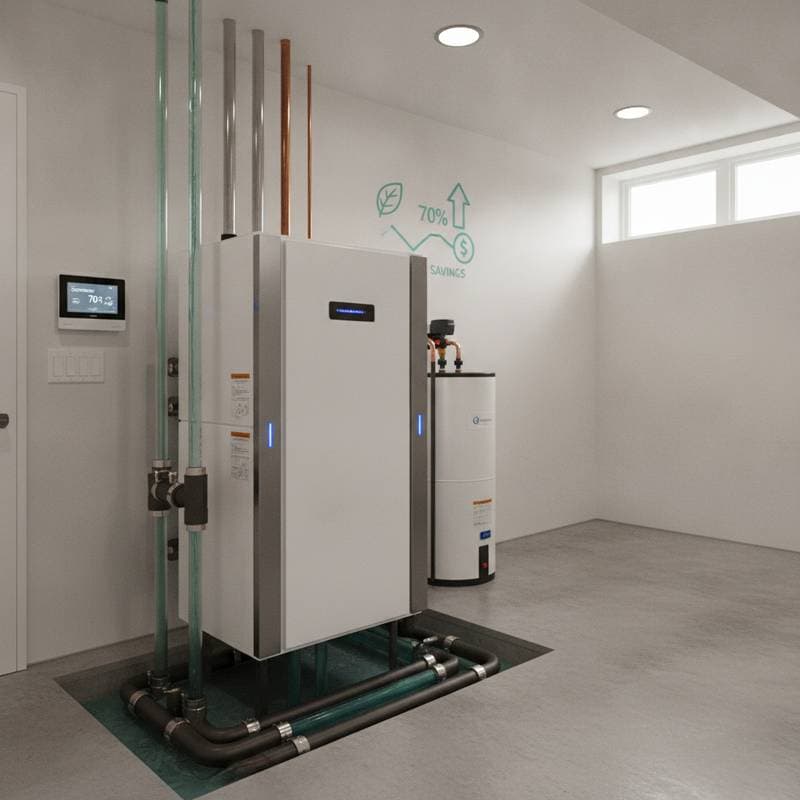
When you enter a comfortably warm house in winter or enjoy cool air in summer, the experience seems simple. Traditional heating and cooling equipment often uses large amounts of energy and money to achieve that result. Homeowners now find that geothermal technology provides equivalent comfort while lowering energy consumption sharply. Retrofitting a home with a geothermal system can reduce heating and cooling expenses by as much as 70 percent.
How Geothermal Heating and Cooling Works
A geothermal system draws on the steady temperature found several feet underground. A ground-source heat pump moves fluid through buried pipes called ground loops. In winter, the fluid collects heat from the soil and carries it indoors for distribution. In summer, the cycle reverses and removes heat from the house.
The efficiency arises because the system moves heat instead of creating it through combustion. Conventional furnaces burn fuel and lose much of the energy produced. Geothermal equipment reaches efficiencies of 300 percent to 500 percent, supplying three to five units of heat for each unit of electricity used.
Assessing Retrofit Compatibility
A professional site assessment precedes any installation. The evaluation examines property layout, soil type, and available space for ground loops. It also reviews insulation, windows, air sealing, and the home’s heating and cooling load. Improving these areas before installation can reduce equipment size and improve comfort throughout the house.
Site Factors
- Soil composition affects heat transfer; sandy or loamy ground performs well, while rocky areas may need special drilling.
- Land size determines loop type; horizontal loops require several hundred feet of trenching, and vertical loops suit smaller lots through deep boreholes.
- Groundwater conditions may allow an open-loop design when local rules permit.
- Access for drilling equipment, landscaping, patios, and mature trees can influence installation methods and project costs.
- Local permits and water protection requirements should be reviewed before selecting an open-loop or closed-loop system.
Home Integration
Existing ductwork or radiant systems can often remain in place after adjustments for airflow or water temperature. A qualified designer checks whether current infrastructure supports efficient operation or requires added modifications. Older ducts may need sealing and insulation, while rooms with uneven temperatures may benefit from additional registers or zoning controls.
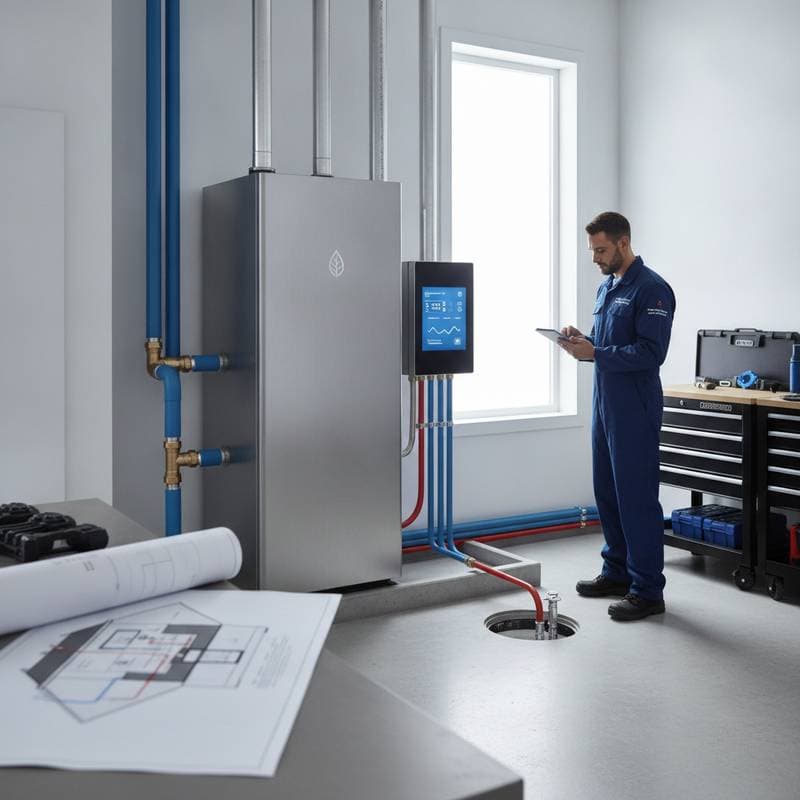
Geothermal heat pumps also work well with radiant floor systems because both operate efficiently at moderate water temperatures. In homes without suitable ducts, installers can consider hydronic distribution, compact air handlers, or carefully placed indoor units. These choices allow homeowners to protect original architectural details while improving comfort.
Environmental and Comfort Advantages
Geothermal systems lower greenhouse gas emissions by more than 60 percent compared with fossil-fuel heating because they move heat rather than generate it through burning. When paired with renewable electricity, operational emissions can reach near zero.
Homeowners value the steady indoor temperatures these systems maintain. The lack of combustion removes sudden temperature changes and drafts. Many units also supply domestic hot water, which increases overall efficiency. The indoor compressor and silent underground loop eliminate the noise associated with outdoor condensers.
Because the system does not require fuel combustion inside the home, it also reduces concerns about exhaust gases and fuel storage. High quality filtration can improve indoor air quality, while zoning allows different areas to receive customized temperatures. This is especially useful in homes with large windows, finished basements, or rooms that receive uneven sunlight.
Retrofit Installation Steps
- An initial consultation reviews energy use, home size, and system fit.
- A site survey analyzes soil, yard layout, and loop options.
- Required permits are obtained from local building and environmental offices.
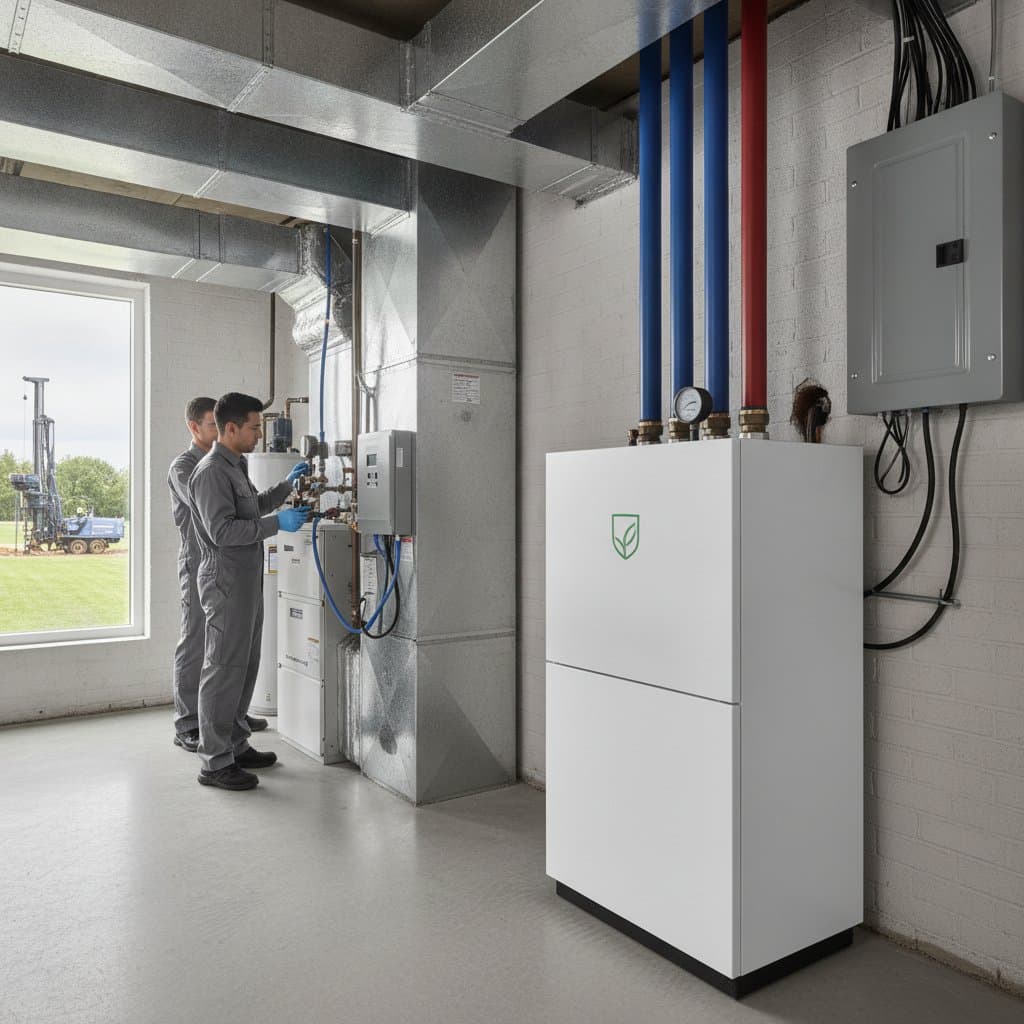
- Installers place the ground loop through trenching or drilling.
- The indoor heat pump connects to ducts or hydronic lines and the electrical supply.
- Final testing confirms performance in every operating mode.
- The homeowner receives operating instructions, maintenance recommendations, and documentation for future service.
Installation may temporarily affect lawns, garden beds, or driveways, so the project plan should include restoration work. A reputable contractor explains where excavation will occur and how surfaces will be protected. Once the loop is buried and pressure tested, the landscape can be repaired and the system can operate with minimal visible equipment.
Market Trends and Specialist Views
Installations have increased steadily as electricity prices vary and emissions goals tighten. Retrofit projects now form a large share of new work in existing homes.
Heating specialist Laura Kim noted that homeowners recognize geothermal as both an environmental and financial step. The predictable operating costs compared with fuel systems provide households with long-term stability. HVAC contractor James Ortega emphasized that careful loop sizing matched to the home load delivers maximum efficiency without excess drilling expense.
Proper maintenance remains straightforward. Homeowners should replace or clean filters, keep air passages clear, and schedule professional inspections according to manufacturer guidance.
Planning Your Geothermal Upgrade
A geothermal retrofit requires investment yet returns clear gains in comfort, lower bills, and reduced emissions. Begin with a professional energy audit to measure current use and identify savings opportunities.
Compare proposals based on loop design, equipment efficiency, warranties, projected operating costs, and installer experience rather than choosing solely by the lowest bid. Ask whether the contractor has completed similar retrofits and request a clear explanation of excavation, duct modifications, and restoration responsibilities.
The upgrade also improves property value because buyers increasingly seek energy-efficient homes. Work with experienced professionals to match system design to site conditions and achieve reliable performance for decades.