Thermal Walls: Harnessing Solar Heat for Efficient Home Warming
Thermal walls represent a passive solar design strategy that captures the sun's energy during the day and releases it gradually to maintain comfortable indoor temperatures. These structures, often built from dense materials such as concrete, brick, or stone, absorb heat through direct sunlight exposure and radiate it back into living spaces over extended periods. Homeowners who incorporate thermal walls experience significant reductions in energy use, with potential savings of up to 80 percent on heating costs, all without relying on electricity or complex mechanical systems.
This approach aligns with sustainable building practices, offering a reliable method to achieve warmth in colder climates. By integrating thermal walls thoughtfully, individuals can create homes that feel naturally cozy while minimizing environmental impact. The following sections explore the principles behind this technology, its advantages, and practical implementation steps.
Understanding Thermal Walls
Thermal walls function as thermal mass elements within a building's architecture. They collect solar radiation through south-facing windows or direct exposure, converting light into stored heat within their mass. As temperatures drop in the evening, the warmed material releases heat slowly, preventing rapid cooling inside the home.
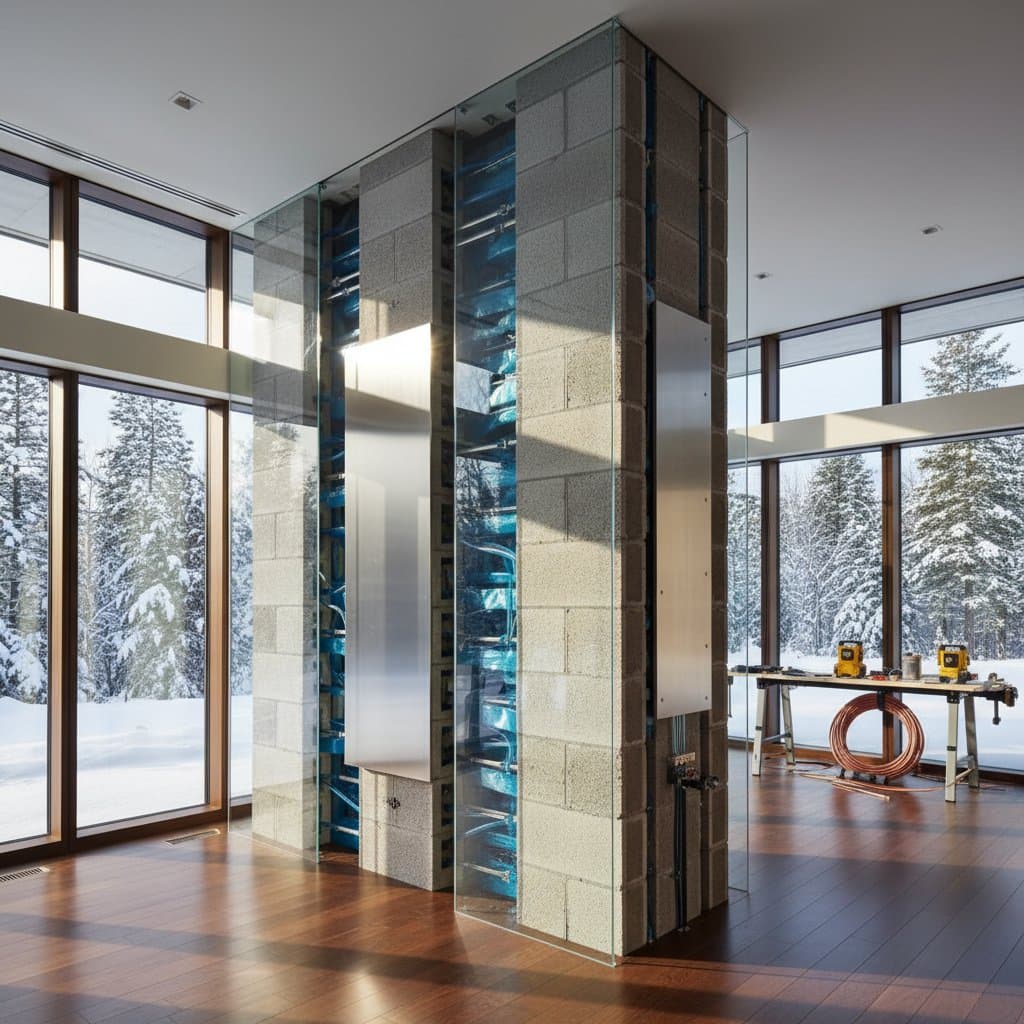
Key components include a solid wall facing the sun, often painted dark to enhance absorption, and an air space or glazing layer that traps heat. Materials like adobe or rammed earth have been used for centuries in traditional architecture, but modern adaptations employ concrete blocks or water-filled containers for similar effects. This passive system requires no moving parts, making it durable and low-maintenance compared to active solar heating setups.
The effectiveness depends on local climate; in regions with ample winter sunlight and cold nights, thermal walls excel at stabilizing temperatures. Engineers calculate the required mass based on home size and insulation levels to ensure optimal performance.
How Thermal Walls Operate
The process begins with solar gain, where sunlight passes through transparent barriers and strikes the thermal mass. The wall absorbs up to 90 percent of this energy, raising its temperature to 50 degrees Celsius or higher on clear days. Convection currents then circulate the warm air into adjacent rooms, while radiation provides steady heat transfer.
At night, the mass cools gradually, typically over 8 to 12 hours, maintaining indoor temperatures 10 to 15 degrees warmer than outside. Insulation on the back side of the wall directs heat inward, preventing loss to the ground or exterior. Vents can modulate airflow, allowing excess heat to escape during milder weather.
Studies of passive solar homes demonstrate that well-designed thermal walls reduce peak heating demands by smoothing out daily temperature fluctuations. This thermal inertia mimics the steady warmth of a wood stove but operates silently and indefinitely with sunlight as fuel.
Benefits of Installing Thermal Walls
One primary advantage lies in cost savings. Traditional heating systems consume electricity or fossil fuels, leading to bills that rise with energy prices. Thermal walls eliminate these expenses, potentially cutting annual heating costs by 80 percent in suitable climates, according to building performance data.
Environmentally, this design lowers carbon emissions by reducing reliance on power grids. Homes with thermal walls often achieve energy efficiency ratings that qualify for green building certifications, enhancing property value. Residents report improved comfort, with fewer drafts and more even temperatures throughout the day.
Long-term durability adds to the appeal; these walls withstand decades of use with minimal upkeep, unlike mechanical heaters that require repairs. In off-grid or remote locations, thermal walls provide essential warmth without infrastructure dependencies.
Designing Effective Thermal Walls
Successful implementation starts with site assessment. Orient the wall toward the equator for maximum solar exposure, ideally with 180 degrees of southern exposure in the northern hemisphere. Calculate the surface area needed: a rule of thumb suggests 0.5 to 1 square meter of thermal mass per square meter of floor space in the heated area.
Select materials based on availability and thermal properties. Concrete offers high density at 2000 kilograms per cubic meter, while brick provides similar benefits with easier installation. Dark colors, such as black or deep brown, boost absorption rates by 20 to 30 percent.
Incorporate glazing, such as double-pane glass, to create a greenhouse effect that amplifies heat gain. Position vents at top and bottom to control circulation: open them during the day for heating and close at night to retain warmth. Combine with overall home insulation, including sealed windows and insulated roofs, to maximize efficiency.
Professional consultation ensures compliance with local building codes, particularly regarding structural integrity and fire safety. For retrofits, modular panels can attach to existing walls, minimizing disruption.
Step-by-Step Design Process
-
Evaluate your home's layout and sunlight patterns using sun charts or modeling software.
-
Determine the thermal mass volume: aim for 10 to 20 percent of the home's heated volume in dense material.
-
Choose and prepare materials, ensuring they are weatherproof and non-toxic.
-
Install the wall with proper foundation and sealing to avoid moisture issues.
-
Test the system over a season, adjusting vents and shading as needed for fine-tuning.
Real-World Applications and Considerations
In southwestern United States communities, adobe homes with thick thermal walls have maintained livable conditions for generations. Modern examples include eco-villages where concrete trombe walls, named after architect Felix Trombe, heat communal spaces efficiently. These installations often pair with other passive features like overhangs to block summer sun.
Challenges include initial construction costs, which range from 500 to 2000 dollars per square meter, offset by long-term savings. In humid climates, ventilation prevents mold growth. Overheating risks in intense sun require shading devices, such as deciduous trees or adjustable louvers.
Homeowners should monitor performance with simple thermometers to verify heat retention. Integrating thermal walls into new builds proves most cost-effective, but renovations yield quick returns in energy bills.
Achieving Sustainable Comfort with Thermal Walls
Adopting thermal walls transforms homes into self-regulating environments that prioritize natural resources. This technology empowers individuals to reduce energy dependence while enjoying consistent warmth. By following design principles and leveraging local sunlight, substantial savings and comfort await.
Explore these systems to align your living space with eco-friendly ideals. The result is a warmer home, lower costs, and a lighter environmental footprint.