Geothermal HVAC Cuts Energy Bills 60 Percent But Payoff Depends on Three Factors
The Hidden Power Beneath Your Backyard
Your home can maintain steady temperatures year round while energy bills fall sharply. Geothermal HVAC systems achieve this by drawing on the stable temperature of the ground rather than relying on outdoor air. The approach works in coastal humidity or inland winters because soil temperatures change little with the seasons.
Why Geothermal HVAC Matters
Energy prices fluctuate and create budgeting challenges for homeowners. Geothermal equipment transfers heat instead of generating it, which reduces electricity consumption by up to two thirds compared with conventional furnaces and air conditioners. Lower emissions and reduced fossil fuel use follow directly from this efficiency.
Property values rise with the addition of a geothermal system. Fewer exposed moving parts mean the equipment outlasts typical air source units. Ground loops often operate effectively for more than fifty years, while indoor components commonly last twice as long as standard furnaces or air conditioners.
Key Considerations for Planning
A geothermal installation requires careful site evaluation. The following factors determine system performance:
- Soil composition and moisture content affect heat transfer rates. Dense, moist soil performs better than dry or sandy ground.
- Available lot space influences loop design. Horizontal loops require larger yards, while vertical loops suit smaller properties.
- Existing ductwork may need resizing to match new airflow requirements.
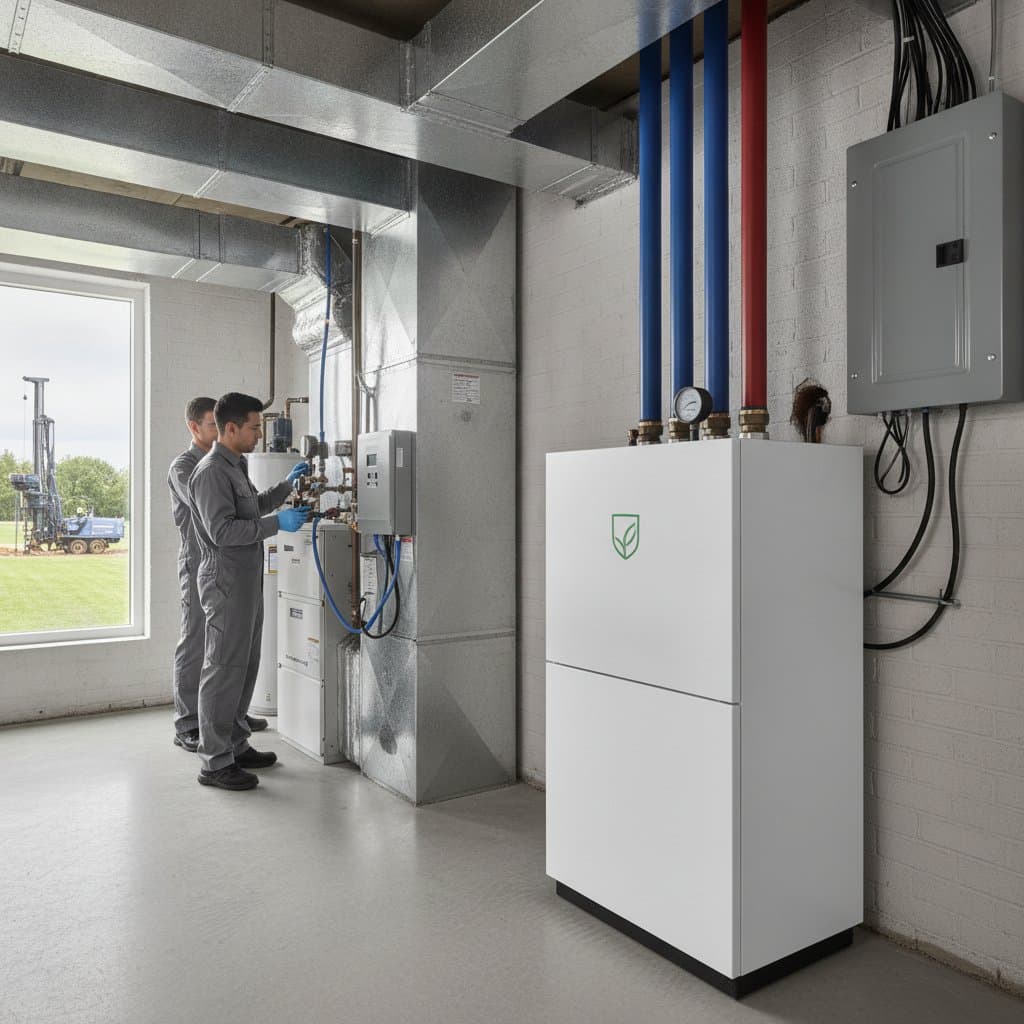
- Equipment access must allow safe operation of drilling or excavation machinery.
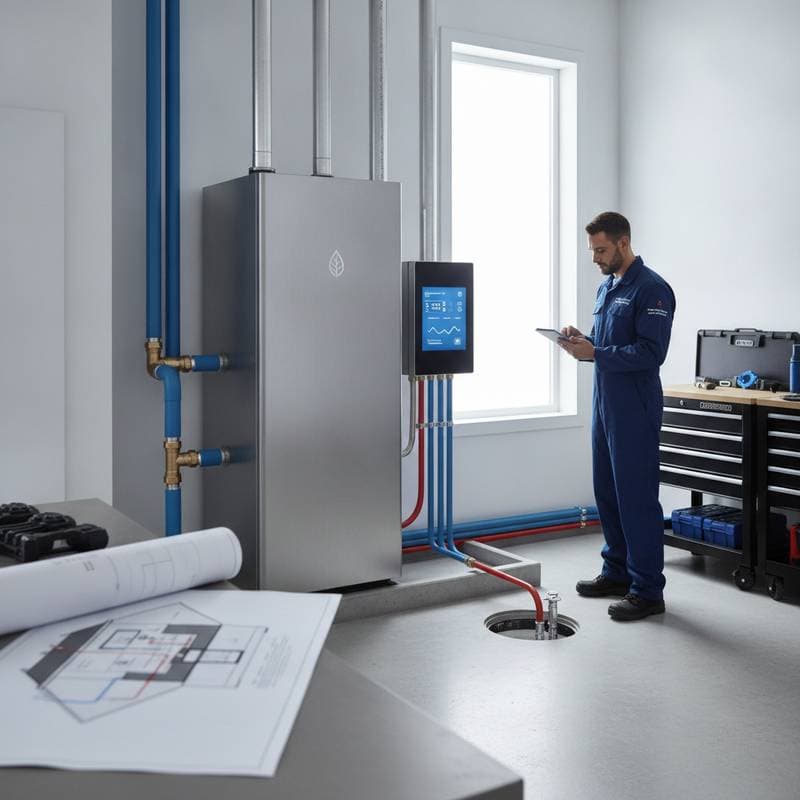
A certified designer calculates heat loads and loop lengths from square footage, insulation levels, and climate data.
Cost Breakdown and ROI Analysis
Installed costs range from moderate to high based on geology, loop configuration, and home size. A typical residential system costs roughly twice as much as a conventional HVAC replacement. Operating savings usually recover the difference within eight to twelve years.
Homeowners commonly record energy reductions between 50 and 65 percent. Pairing the system with solar panels or smart controls increases those gains. Available local incentives further shorten payback periods. Lifetime savings frequently exceed several times the original investment when energy rates remain steady.
Sustainable Features and Efficiency Gains
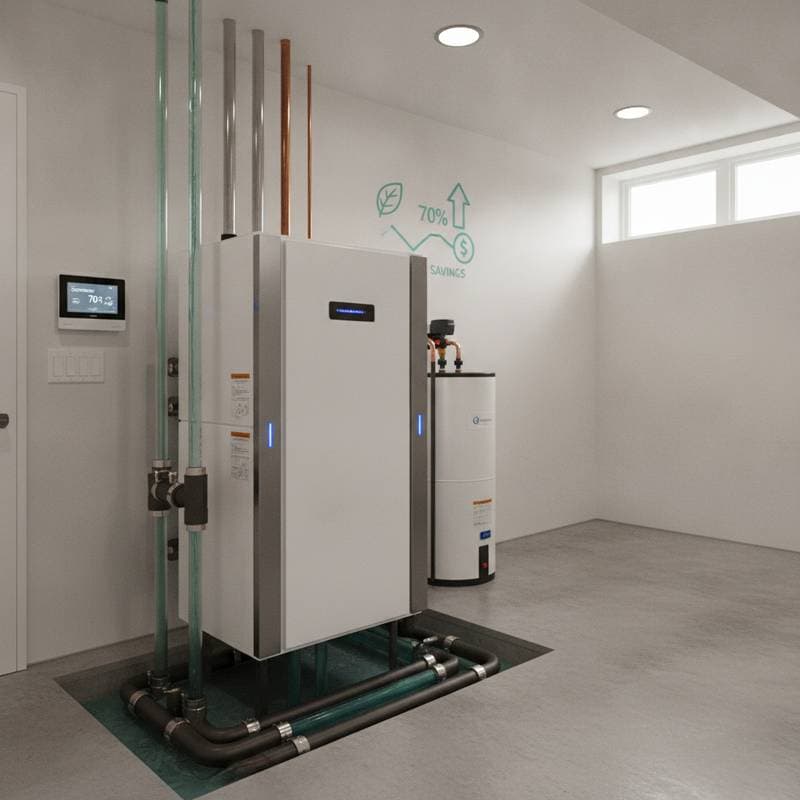
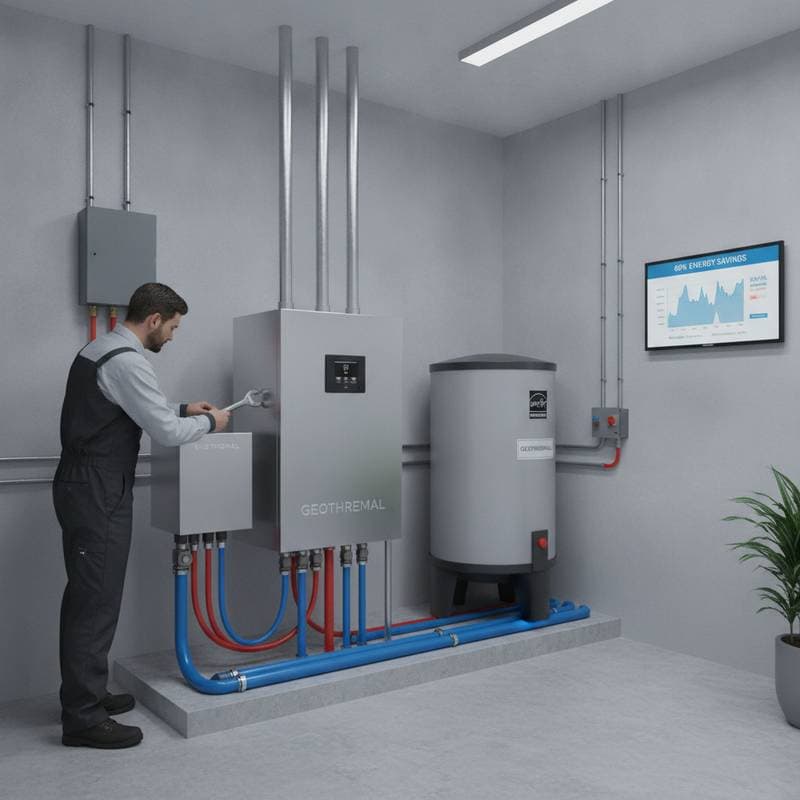
The system circulates a water based fluid through buried pipes. In winter it extracts ground heat and delivers it indoors. In summer the process reverses, moving indoor heat back into the earth. Some units also supply domestic hot water from waste heat, which lowers overall energy demand.
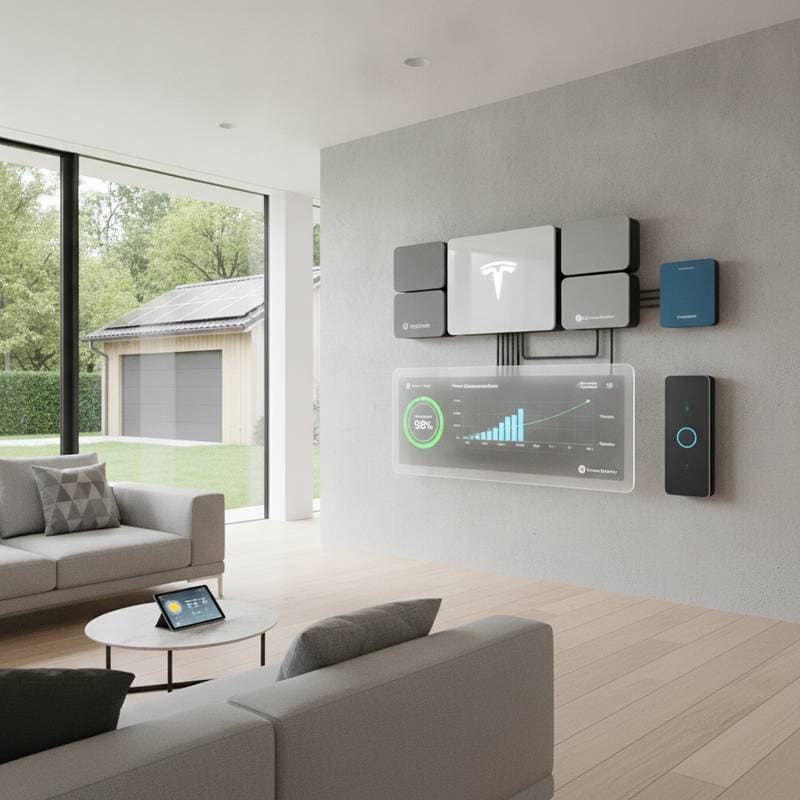
When combined with on site solar generation, geothermal equipment supports near zero energy operation.
Frequently Asked Questions
How noisy are geothermal systems?
Operation resembles a refrigerator. The outdoor compressor found on conventional units is absent.
Can geothermal work in cold climates?
Ground temperatures stay stable enough to provide heat even when air temperatures fall below freezing.
What maintenance is required?
Filter changes and annual professional inspections maintain efficiency.
Next Steps for Homeowners
Begin with a professional energy audit to map heating and cooling needs. Obtain bids from contractors certified in ground source installations. The upgrade delivers decades of consistent comfort, lower utility costs, and reduced environmental impact.