Key Points
- Geothermal HVAC systems leverage the earth's constant underground temperature to provide highly efficient heating and cooling for homes.
- These systems reduce energy bills by up to 50 percent relative to traditional setups, while maintaining steady comfort throughout the seasons.
- Although initial installation expenses exceed those of conventional systems, the long-term benefits include substantial savings, enhanced durability, and environmental gains.
- Optimal performance depends on meticulous design, thorough soil evaluation, and appropriate loop configurations.
- Prospective owners must assess local soil properties, available yard space, and current HVAC setups prior to installation.
Understanding Geothermal Systems
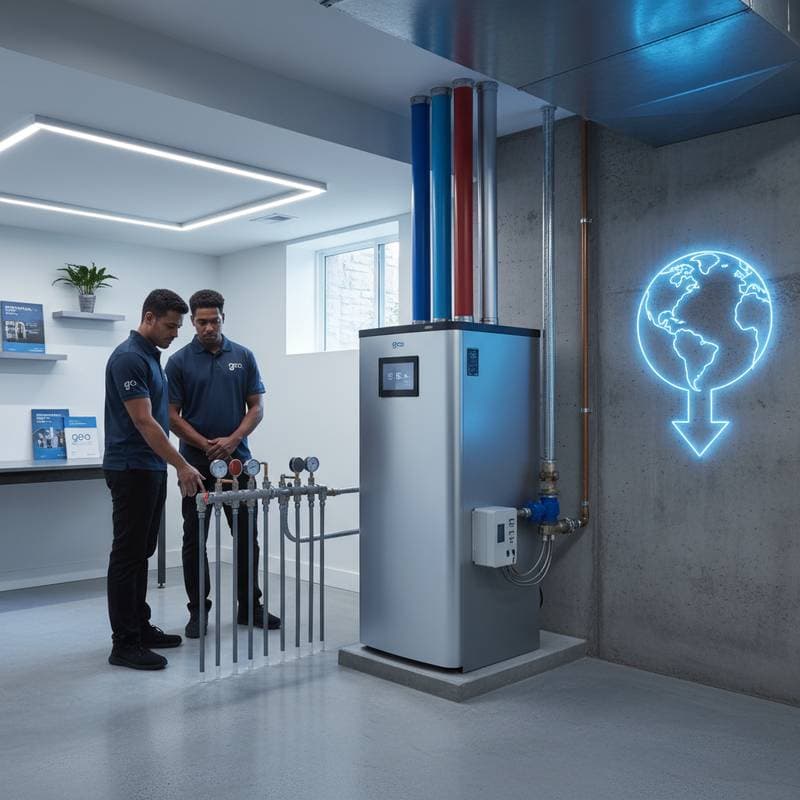
Conventional HVAC units depend on fuel combustion or air compression, processes that consume considerable energy and require frequent upkeep. Geothermal systems, known as ground-source heat pumps, operate on a distinct principle. They transfer heat between the home and the earth via a closed loop of fluid circulating through underground pipes. The ground's stable temperature, typically between 45 and 75 degrees Fahrenheit depending on location, enables the system to function with superior efficiency.
From a financial perspective, these systems lower energy use by 40 to 70 percent compared to air-source alternatives. On the environmental front, they diminish greenhouse gas emissions and lessen reliance on non-renewable fuels. In daily use, homeowners enjoy reduced noise levels, as major components remain indoors, and extended equipment longevity due to protection from outdoor elements.
Analyzing Costs and Return on Investment
A detailed cost examination clarifies the allocation of funds and anticipated returns. Initial outlays for a typical residential geothermal system range from $20,000 to $40,000, influenced by home size, loop type, and regional labor rates.
- Equipment and Components (30 to 40 percent of total cost): This category covers the ground-source heat pump unit, circulation pumps, thermostats, and control systems.
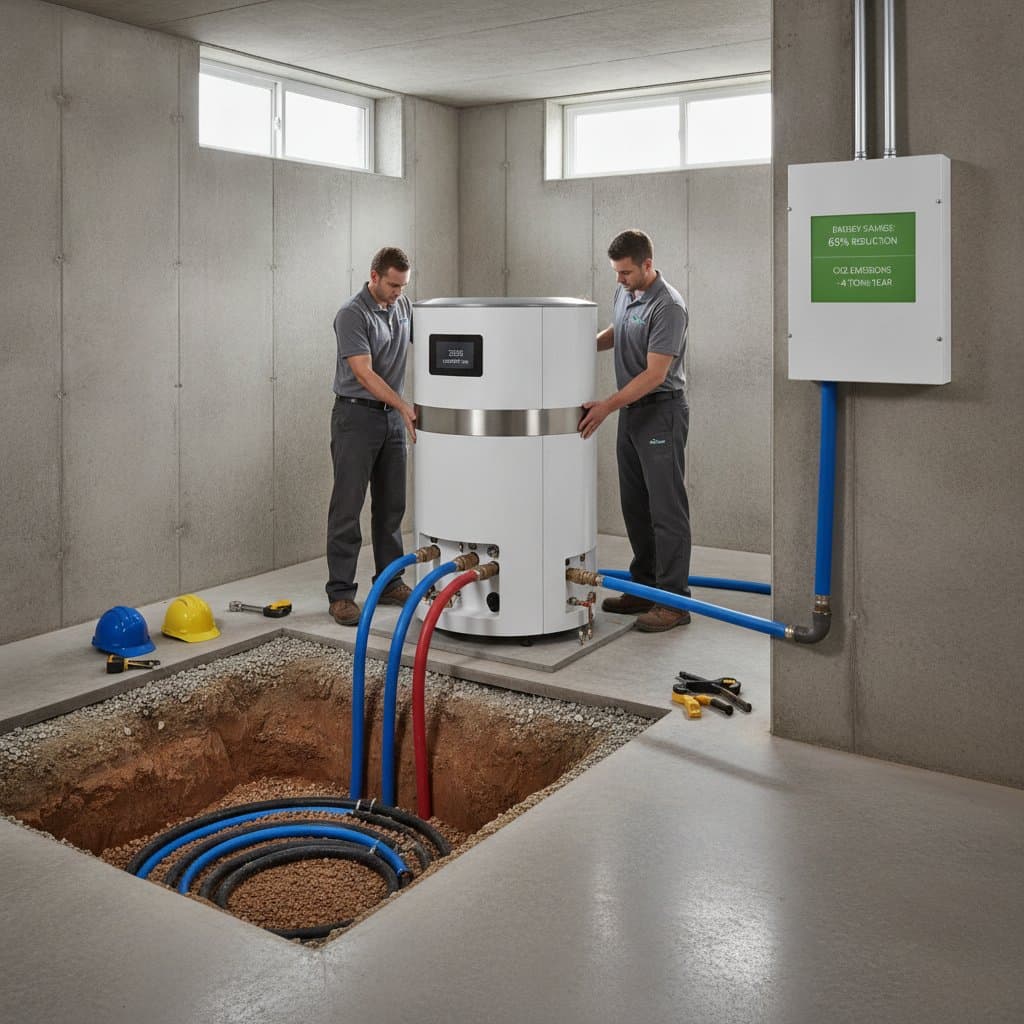
- Loop System Installation (40 to 50 percent): Expenses here involve site excavation, high-density polyethylene piping installation, and soil backfilling, with horizontal loops suiting larger lots and vertical ones fitting smaller areas.
- Ductwork and Distribution Modifications (10 to 20 percent): Adjustments to existing air handlers or radiant flooring ensure even heat distribution.
Once operational, running costs plummet. Geothermal units produce four to five units of heating or cooling for each unit of electricity consumed, far surpassing the one-to-one ratio of standard furnaces or air conditioners. In regions with electricity rates above $0.12 per kilowatt-hour, monthly savings often exceed $100 during peak seasons.
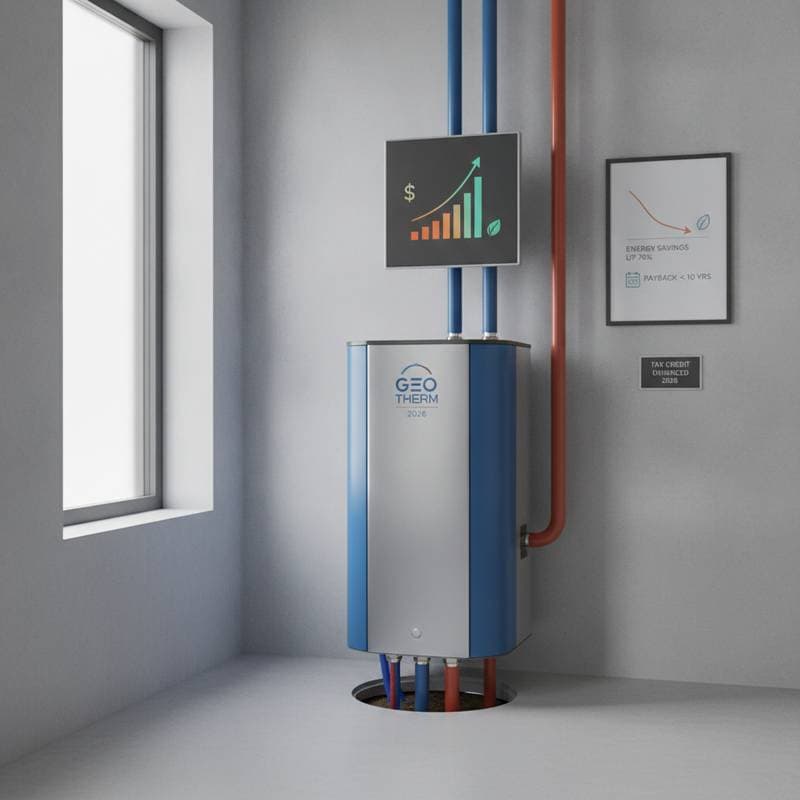
Maintenance further bolsters the economic case. The underground loop endures for 50 years or longer with minimal intervention, while indoor heat pumps last 20 to 25 years. Federal tax credits, such as the 30 percent investment tax credit under the Inflation Reduction Act, can offset up to $12,000 of the upfront cost, accelerating payback to 5 to 10 years in high-energy-cost areas.
Benefits for Sustainability and Home Comfort
Geothermal HVAC extends beyond individual savings to contribute to wider ecological and livability improvements.
- Lower Carbon Emissions: Drawing on the earth's renewable heat reservoir, these systems minimize fossil fuel use and associated pollutants, potentially reducing a household's heating-related CO2 output by 50 percent or more.
- Silent Performance: The indoor placement of the compressor eliminates the hum of outdoor units, creating a quieter living environment.
- Enhanced Air Quality: Precise temperature and humidity regulation prevents moisture buildup, curbing mold, dust mites, and respiratory irritants.
- Robust Construction: Shielded from weather extremes, components experience less wear, leading to repair costs that are 30 to 50 percent lower than those for traditional systems.
Performance data from the U.S. Department of Energy indicates that geothermal setups achieve coefficients of performance (COP) of 3.5 to 5.0, outperforming air-source heat pumps in most climates. When paired with solar or wind-generated power, operational emissions approach zero, aligning with net-zero home goals.
Common Questions About Geothermal HVAC
In what ways does a geothermal heat pump differ from an air-source model?
Air-source heat pumps interact with fluctuating outdoor air temperatures, which limits efficiency in extreme weather. Geothermal variants connect to the ground's unchanging thermal mass, yielding higher efficiency ratings and more reliable operation across seasons.
Does the system handle both heating and cooling needs?
Absolutely. A single setup reverses heat flow direction: extracting ground warmth for winter heating and dissipating indoor heat into the ground for summer cooling, often with dehumidification capabilities.
What level of maintenance is required?
Routine care mirrors that of standard systems, involving yearly professional checkups, filter replacements every three months, and fluid level monitoring. Breakdowns occur infrequently due to the design's simplicity.
Are these systems viable for properties with limited space?
Yes, options like vertical boreholes drilled 100 to 400 feet deep or pond-based loops accommodate urban or small-lot sites. Shared community loops in subdivisions further reduce individual costs and space demands.
What is the typical payback period?
Energy bill reductions, combined with incentives, enable most owners to recover investments in 7 to 15 years. Subsequent decades yield pure savings, with systems operating at 20 to 30 percent of conventional energy costs.
Steps to Implement Geothermal HVAC
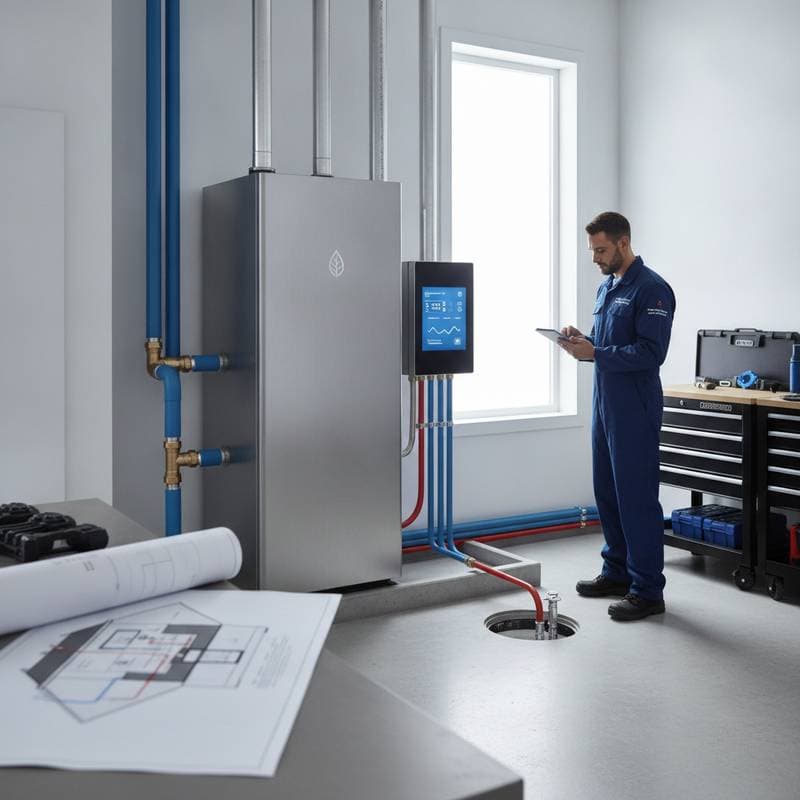
To pursue geothermal adoption, start with a professional site assessment. Engage a certified installer to test soil thermal conductivity, measure available land for loops, and review your home's insulation and duct efficiency. An energy audit, often available through local utilities at low or no cost, quantifies potential savings based on your current usage patterns.
Select a system sized correctly—typically 1 to 5 tons for average homes—to avoid inefficiency. Explore financing options like home equity loans or green energy grants to manage upfront costs. With proper planning, geothermal HVAC delivers reliable comfort, financial returns, and environmental stewardship for decades.