Addressing these elements upfront leads to reliable performance and sustained savings.
Investment Costs and Return Analysis
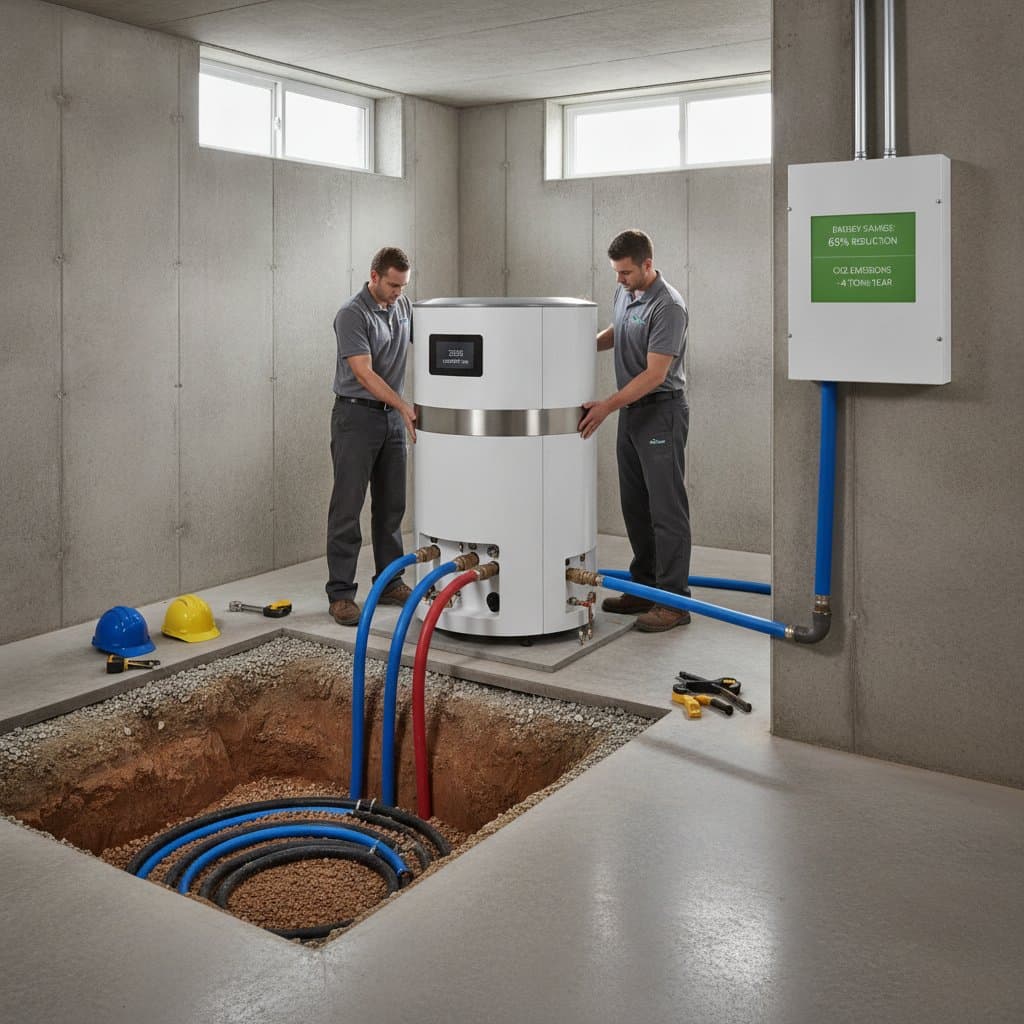
Smart grid water heaters involve higher initial costs compared to basic electric models. Typical installation expenses include:
- Basic Upgrade from Standard Electric to Smart Electric: 1,200 to 2,000 dollars, including labor.
- Hybrid Heat Pump with Grid Interaction: 2,000 to 3,800 dollars.
- High-Capacity Units for Larger Households: 3,500 to 5,000 dollars or higher.
These figures may appear substantial at first glance. However, from an investment perspective, they align with options like solar panels or efficient HVAC systems, offering simpler integration and reliable returns over time. The technology operates unobtrusively, generating both short-term savings and long-term value.
Core Design and Operational Elements
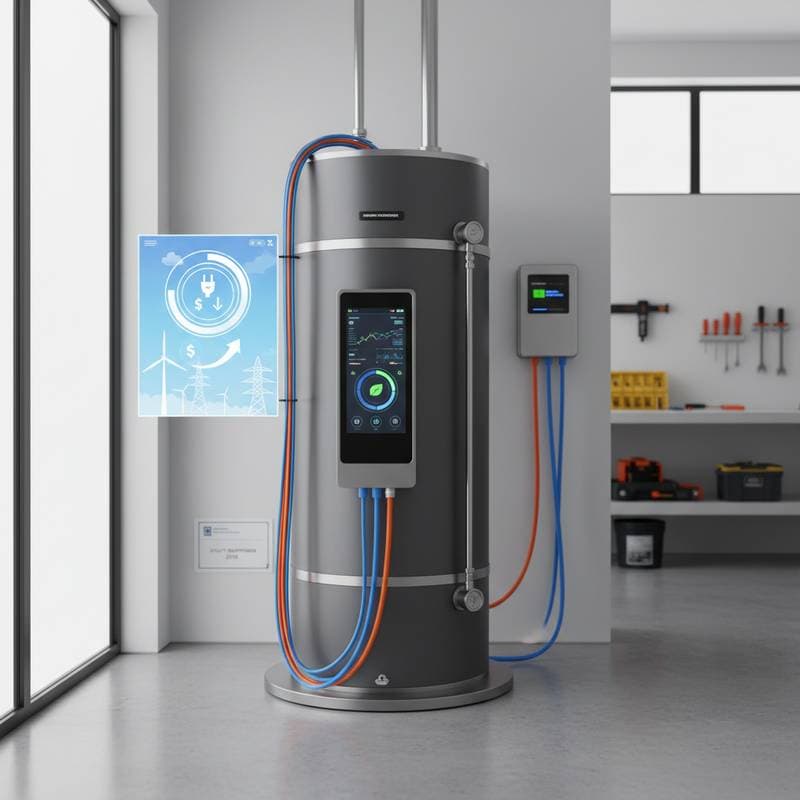
Grid-interactive water heaters rely on three primary components:
- Thermal Storage: The tank retains heated water for on-demand use, functioning as a thermal energy reservoir.
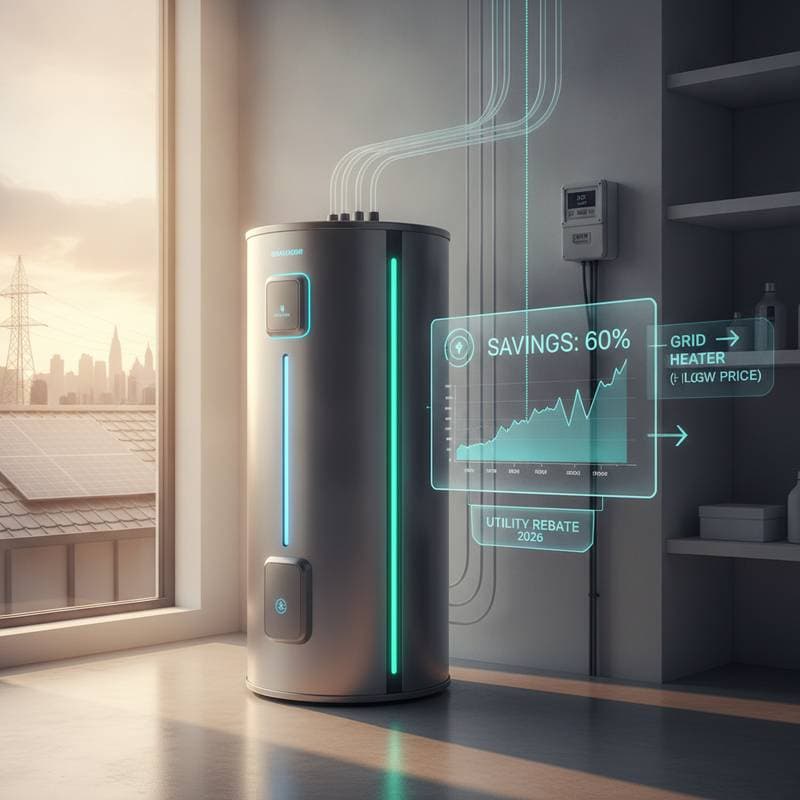
- Intelligent Controls: Sensors and algorithms monitor grid signals, optimizing heating cycles to bypass expensive peak periods.
- Bidirectional Communication: Via Wi-Fi or utility networks, the system receives directives to heat or delay based on current grid status.
This setup fosters collaboration between the home and the grid. Excess renewable energy prompts heating, while stressed conditions prompt deferral. Hot water remains available, but energy usage timing enhances overall efficiency.
Advancements in Sustainability and Efficiency
Hybrid heat pump models elevate performance by extracting heat from ambient air, requiring less electricity. When combined with grid features, they achieve energy factors two to three times greater than traditional electric tanks.
Additional eco-friendly attributes encompass:
- Sustainable Materials: Use of recycled components in tank insulation to lessen environmental impact.
- Learning Algorithms: Adaptive software that analyzes household usage patterns for refined operation.
- Smart Home Integration: Seamless connection with broader energy management platforms.
These elements position the technology as both ecologically sound and economically advantageous.
Variables Affecting Savings Potential
Savings vary based on specific circumstances:
- Regional Electricity Rates: Greater disparities between peak and off-peak pricing amplify benefits.
- Available Incentives: Utilities often provide rebates ranging from 200 to 800 dollars for qualifying installations.
- Household Water Demand: Consistent usage patterns maximize the value of stored thermal energy.
- Local Climate: Heat pump efficiency improves in warmer areas due to easier access to ambient heat.
Considering these factors during planning refines expectations and boosts outcomes.
Common Questions Addressed
How does a smart grid water heater connect with the utility?
The system links via Wi-Fi or specialized signals, enabling the utility to issue basic instructions. For instance, it may initiate heating in the early morning when energy costs are minimal, then suspend during evening peaks.
Is it possible to override utility controls for immediate hot water needs?
Yes, most units support manual or app overrides, prioritizing user comfort.
What maintenance do these systems require?
Routine procedures, including sediment draining and anode rod checks, suffice. Smart features demand only consistent connectivity.
Do they work with solar panel installations?
Yes, they can capture surplus solar production as stored hot water, accelerating solar investment recovery.
Steps to Implement Your Upgrade
Transitioning to a smart grid water heater combines everyday convenience with meaningful financial and environmental gains. Begin by consulting your local utility to identify rebate-eligible models and demand response opportunities. Assess units suited to your household size and water consumption.
Following installation, the system delivers effortless operation, lowering costs and bolstering grid sustainability. Such upgrades demonstrate how targeted energy adjustments yield substantial results.