Key Points
- Induction cooking lowers annual energy costs by up to $800 through direct heat transfer to cookware, minimizing waste.
- It improves indoor air quality by eliminating gas combustion byproducts and simplifies cleaning compared to traditional stoves.
- Models range from budget-friendly to premium, making the switch to electric cooking accessible for most homeowners.
- Beyond savings, induction provides enhanced safety features, precise control, and boosts to home comfort and resale value.
The Everyday Kitchen Revolution
Imagine cooking a family dinner without the lingering smell of gas or the extra heat that turns the kitchen into a sauna. An induction cooktop operates with a quiet electromagnetic hum, boiling water in under two minutes while keeping the surface safe to touch. Over time, these features translate to lower energy bills and a more pleasant cooking experience for busy households.
This technology represents a practical upgrade for modern homes. It combines precise temperature control with clear financial and environmental benefits. Annual savings often reach or exceed $800 due to efficient energy use and reduced heat loss, which matters greatly for budget-conscious families.
Why Efficiency Matters
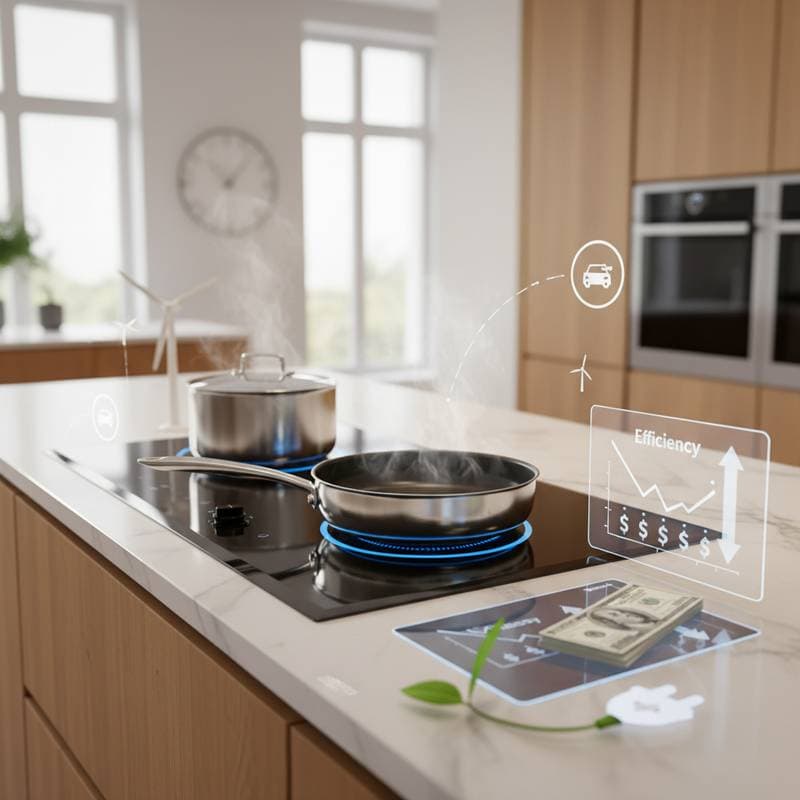
Traditional gas and electric coil stoves lose much of their heat to the surrounding air before it reaches the food. Induction cooktops use electromagnetic fields to heat the cookware itself, reaching efficiency levels of 85 to 90 percent. Gas stoves, by comparison, achieve only 30 to 35 percent efficiency, leading to higher bills and longer cooking times.
The math is straightforward for most households. Cooking typically requires several hundred kilowatt-hours of energy each year. With induction, less energy escapes as ambient heat, and when factored against local utility rates, the result is savings of several hundred dollars annually. This efficiency also cuts air conditioning use in warmer months, pushing total benefits closer to $800 per year.
Health and Environmental Gains
Savings form just one part of the appeal. Gas stoves produce harmful pollutants like nitrogen dioxide, carbon monoxide, and fine particles from open flames. These can affect breathing, particularly in small or poorly ventilated spaces, increasing risks for children and those with respiratory issues.
Switching to induction eliminates these combustion byproducts right away. It supports broader goals of home electrification by reducing reliance on fossil fuels. When powered by renewable energy sources, induction cooking becomes nearly carbon-free, making it a key component in eco-friendly living that attracts buyers focused on sustainability.
Real-World Costs and Payback
Upfront costs vary by model and features. Entry-level induction cooktops start around $300, while high-end versions with smart controls can exceed $2,000. View the purchase as a long-term investment rather than a simple expense.
A typical mid-range unit, including professional installation, often pays for itself in three to five years through lower utility bills. If replacing an old gas or electric stove, the payback happens even faster. Over ten years, total savings can surpass $5,000, especially when factoring in reduced repair needs.
Induction surfaces clean easily with a damp cloth and resist wear better than traditional burners. This durability means fewer service calls and less time scrubbing off stuck-on food. To maximize value, compare models based on size, zones, and compatibility with your kitchen layout.
ROI Snapshot
- Upfront investment: $1,000 to $2,500, including installation
- Energy bill reduction: $600 to $800 per year on average
- Payback period: 3 to 5 years
- Long-term value: Better air quality, faster meals, and higher home resale appeal
Safety and Performance Advantages
Safety sets induction apart in busy kitchens. The cooktop stays cool to the touch during operation, reducing burn risks for children or accidental contact. It shuts off instantly when cookware is removed, adding peace of mind for families, renters, and older adults.
Performance matches this reliability with gas-like responsiveness but superior precision. Adjust heat levels in seconds for simmering sauces or searing steaks without overshooting. Home cooks appreciate consistent results, while professionals praise the even heating that prevents hot spots and burnt edges.
To test compatibility, use a magnet on your pots and pans; if it sticks, the item works with induction. Upgrade non-compatible pieces gradually, starting with essentials like skillets and saucepans.
Market Trends and Future Appeal
The push toward home electrification grows in the building sector, with induction cooktops becoming standard in new constructions and renovations. Builders recommend them for meeting energy codes and improving daily living. Real estate professionals note that homes with efficient electric appliances command higher prices due to lower operating costs and healthier environments.
Options now fit every lifestyle and budget. Portable single-burner units suit apartments or temporary setups, while built-in systems integrate seamlessly into upscale designs. This range ensures that transitioning to cleaner energy feels straightforward, regardless of space constraints or financial plans.
Making It Happen
Start by checking your home's electrical setup. Most induction cooktops require a dedicated 240-volt circuit, but many modern homes already support this. Hire a licensed electrician to assess and make any necessary upgrades, which often take just a few hours.
Choose cookware that responds to magnetic fields, such as cast iron or certain stainless steel. Test with a fridge magnet for quick verification. Stock up on versatile pieces that work across recipes to get the most from your investment.
Look into local utility rebates or government programs promoting clean energy. These can offset $200 to $500 of the initial cost, speeding up your return on investment. Contact your provider or visit energy department websites for eligibility details.
Upgrade Your Home for Lasting Efficiency
Adopting induction cooking goes beyond better meals; it creates a safer, cooler, and more economical kitchen. Families gain immediate relief from high bills and hidden health risks while building toward a sustainable future. This choice enhances daily comfort and positions your home as a smart, forward-thinking space.