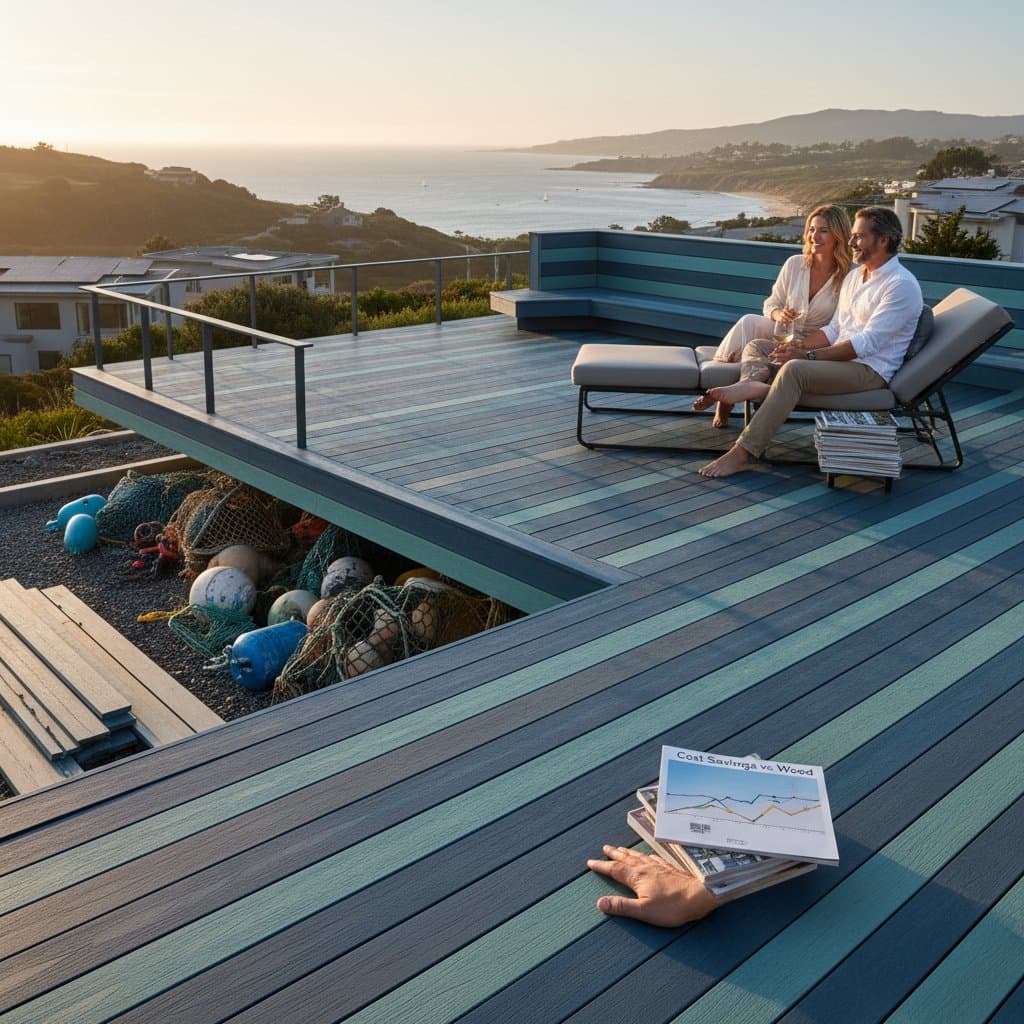
Key Points
- Ocean plastic decking transforms marine waste into durable, low-maintenance outdoor surfaces.
- Homeowners gain environmental benefits and long-term financial savings.
- Composite boards made from recycled plastics exceed traditional wood in weather resistance and longevity.
- Proper installation and maintenance ensure performance over decades with minimal effort.
Building Sustainable Outdoor Spaces
Picture a sunlit deck that stays cool underfoot, contributing to a cleaner coastline through its recycled materials. Ocean plastic decks capture this vision, blending sustainability with everyday practicality. Homeowners increasingly desire refined outdoor areas free from resource-heavy materials, and recycled composite decking provides the ideal balance.
Ocean plastic pollution represents a worldwide challenge, yet it inspires innovative solutions. By converting discarded fishing nets, bottles, and packaging into sturdy decking, this approach turns waste into a valuable construction asset. Such a circular method drives a major shift in how outdoor living spaces take shape.
Reasons Ocean Plastic Decking Excels
Traditional wood offers aesthetic charm, but it requires substantial maintenance and has a shorter lifespan in humid or coastal settings. Ocean plastic decking, made from recycled polyethylene and other reclaimed polymers, resists moisture, rot, and insect damage. It delivers a wood-like look without the ongoing tasks of sanding, staining, or sealing.
On the financial side, composite materials involve a higher initial cost, often 20 to 30 percent more than standard lumber. Over a typical 20-year period, however, maintenance savings exceed the initial premium. Homeowners avoid yearly sealing expenses, which can reach several hundred dollars. This leads to a return on investment of 60 to 80 percent, particularly when factoring in increased property resale value.
Engineering for Lasting Performance
Ocean plastic decking combines recycled plastics with cellulose fibers or mineral additives to boost rigidity and reduce thermal expansion. The manufacturing process uses high-pressure compression to produce dense, uniform boards that resist warping and fading. Advanced surface treatments provide slip resistance and an authentic wood-grain finish.
Manufacturers follow rigorous standards, including ASTM tests for structural integrity and color retention. Many products secure green building certifications due to their high post-consumer recycled content. Buyers can confirm measurable environmental impacts, which matter for homes seeking sustainability recognition.
Thriving in Harsh Climates
The strength of ocean plastic decking shines in regions with wide temperature swings or high humidity. These boards absorb minimal water, avoiding swelling and cracking even after extended exposure. In wildfire-prone areas, certain variants offer improved fire resistance for added protection.
This durability cuts overall ownership costs. Natural wood may need replacement after just ten years of heavy wear, while composite decking lasts twice as long with basic cleaning. Such reliability preserves the deck's appearance and strengthens the home's market appeal.
Promoting Health and Comfort
Ocean plastic decking offers advantages that reach beyond ecology and durability to create safer outdoor environments. Many versions omit toxic preservatives or volatile coatings, enhancing local air quality. Heat-reflective surface finishes keep decks cooler in direct sunlight, making them suitable for barefoot walking.
Families concerned about allergens or chemical exposure appreciate these features. The boards produce no splinters and prevent mold development, ensuring both convenience and safety.
Tailoring Designs to Various Budgets
Modern recycled composite boards come in a range of colors, textures, and finishes. Choices include sleek grays for contemporary looks or deep wood tones for traditional aesthetics. Different board profiles support creative patterns, like herringbone or picture-frame designs, to elevate curb appeal.
For budget-conscious projects, capped composite boards feature a recycled core protected by an outer shell. Premium options with detailed embossing or subtle color variations carry higher prices, but all maintain solid sustainability standards.
Installation and Maintenance Guidelines
Skilled homeowners might manage installation themselves, but professionals recommend hiring a deck builder experienced with composites. Proper joist spacing, ventilation, and hardware selection are vital for long-term stability. Hidden fasteners create a clean appearance while accommodating natural expansion.
Maintenance requires simple routines. A mild soap solution and soft brush usually remove dirt or algae. Avoid pressure washing, as it can damage the surface. Consistent seasonal checks keep the deck looking and performing well for years.
Market Trends and Influences
Growing awareness of marine debris fuels demand for products with proven environmental benefits. Builders and homeowners view ocean plastic decking as both a design choice and an ethical commitment. Recycling improvements allow greater use of ocean plastics, which may reduce costs through streamlined supply chains.
In markets where green features influence buying decisions, homes with sustainable outdoor elements command higher prices. A well-made composite deck can increase a property's value by several percentage points compared to wood alternatives.
Steps to Create Your Deck
Ready homeowners should evaluate these elements before starting.
- Set a budget that balances initial expenses with long-term savings.
- Research brands for verified recycled content and strong warranties.
- Hire an installer skilled in composite work.
- Plan for drainage and airflow under the deck to maximize lifespan.
By turning ocean plastics into durable outdoor features, individuals support marine restoration while improving their home's functionality and value. Each board represents waste removed from oceans, transformed into practical elegance.
Realizing Lasting Benefits
Ocean plastic decking goes beyond passing fads. It demonstrates how sustainable materials can enhance modern living in meaningful, cost-effective ways.