Key Points
- Ocean plastic countertops convert marine debris into resilient, attractive kitchen surfaces.
- These recycled composites match granite's durability and exceed it in ecological benefits.
- Local recycling networks and craftsmanship affect pricing, access, and environmental results.
- Proper upkeep and installation guarantee long-term performance and sustained advantages.
- Growing market interest makes verified ocean plastic products vital for green kitchen renovations.
From Marine Debris to Kitchen Innovation
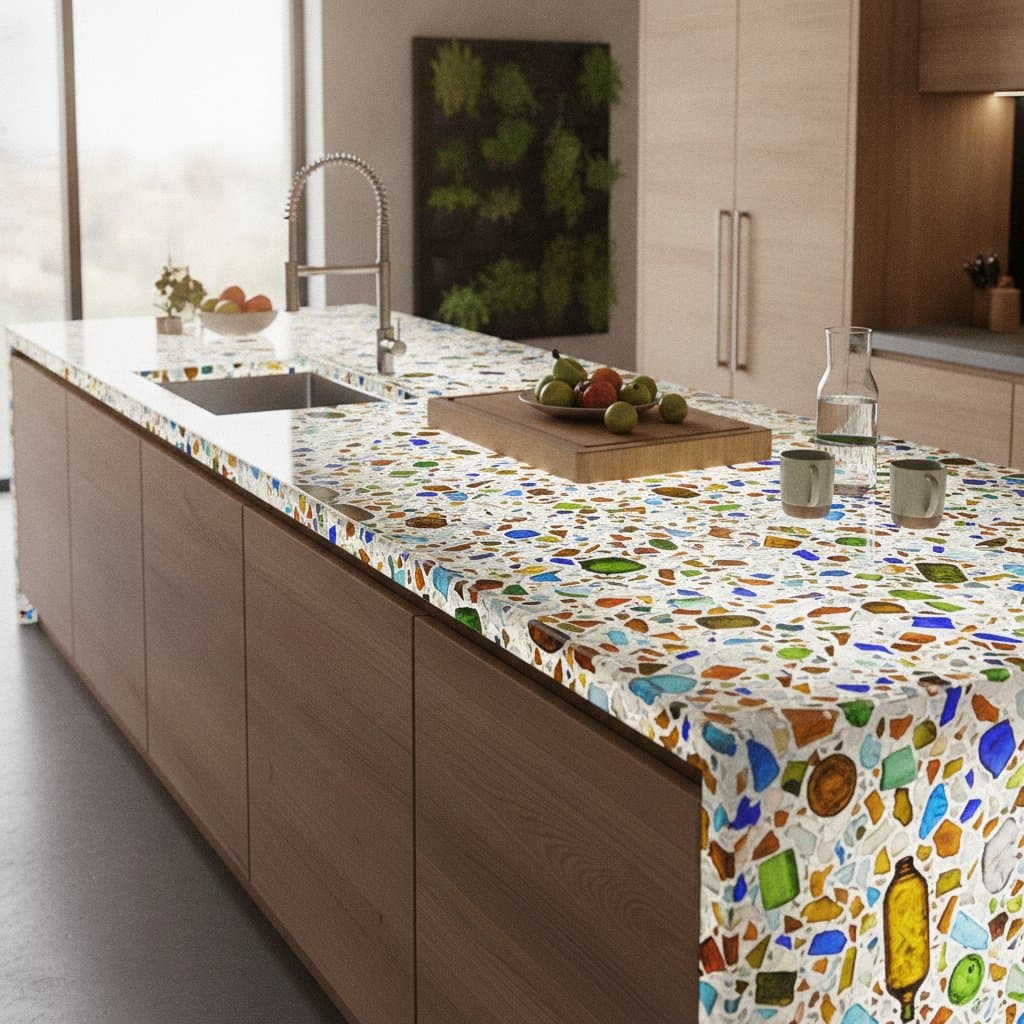
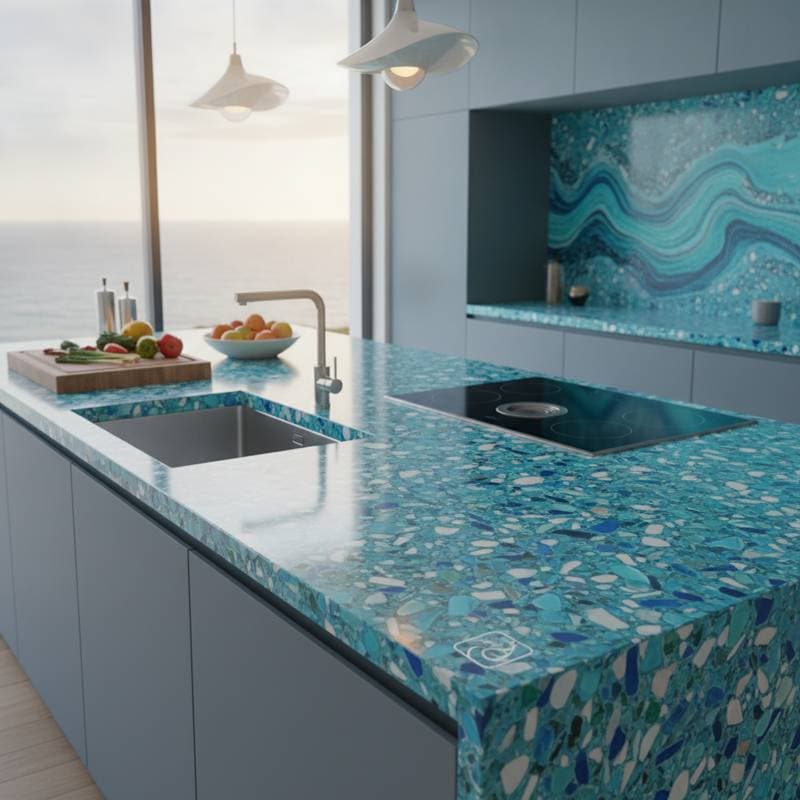
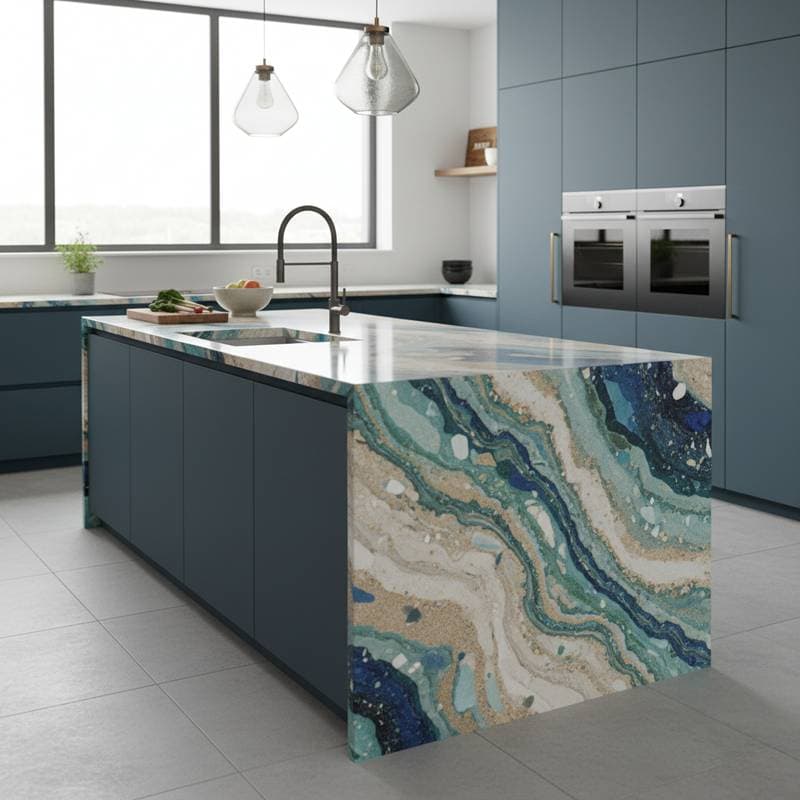
Imagine a countertop catching the light, its subtle blue and green flecks revealing a history of ocean recovery rather than waste. As a green building professional, I often guide homeowners through the challenge of integrating beauty, strength, and environmental responsibility in kitchen designs. Ocean plastic countertops initially raised doubts: could fragments from fishing nets or bottles truly form elegant, practical surfaces? The answer proves positive, with outcomes that impress through both form and function.
In areas plagued by coastal plastic accumulation, these countertops extend beyond aesthetics. They embody a commitment to ecological stewardship. Homeowners thereby contribute to marine conservation via everyday choices, converting a worldwide problem into a valuable home feature.
The Growing Problem of Ocean Plastic
Marine litter stands as a prominent global environmental concern, with millions of tons polluting oceans each year. Much of this consists of high-density polyethylene and polypropylene from packaging and everyday items. Unmanaged, these materials fragment into microplastics that infiltrate ecosystems, food supplies, and coastal zones.
Coastal communities face disruptions to tourism, fisheries, and water management from this debris. Local efforts, such as beach cleanups and river barriers, capture this waste. Engineers now redirect these collections into innovative production, creating sturdy slabs for countertops and building elements by processing plastics before full breakdown.
The Importance of Ocean Plastic Countertops
Selecting ocean plastic countertops achieves more than waste diversion. It redefines material worth in design. Every slab incorporates thousands of rescued pieces that might linger in seas for hundreds of years. Manufacturers blend these recycled plastics with mineral fillers or natural binders to yield tough, impermeable, stain-resistant products.
Environmentally, each installed square foot averts the creation of several pounds of fresh material. I advise clients to assess not just appearance but also the carbon embedded in production. Recycled options carry far less manufacturing impact than extracted stone or new synthetics.
Manufacturing Process for Ocean Plastic Countertops
-
Collection and Sorting: Plastics arrive from shoreline recoveries, fishing equipment retrievals, and processing facilities. Workers categorize them by polymer type to maintain uniform processing traits.
-
Cleaning and Shredding: Items undergo washing with eco-friendly agents, followed by reduction to uniform flakes. This removes contaminants like salts or biologics that might compromise strength.
-
Blending and Forming: Flakes combine with additives or bio-based resins, then shape into slabs via heat and compression in controlled settings.
-
Finishing Touches: After cooling, pieces receive edging, smoothing, and protective coatings. Color infusions or inclusions mimic sea glass patterns for distinctive looks.
The process emphasizes energy efficiency and low emissions, aligning with rigorous green construction criteria.
Practical Advice for Enhancing Home Sustainability
For those eyeing ocean plastic countertops, consider these key elements prior to proceeding:
-
Verify Origins: Seek certifications verifying sourcing from authenticated marine cleanup initiatives. Many brands collaborate with international organizations for full disclosure.
-
Check Makeup: Confirm at least 70 percent recycled elements to balance toughness and reliability.
-
Incorporate Design: Pair with salvaged wood cabinets or water-saving appliances to build a unified sustainable kitchen.
-
Upkeep Routines: Use gentle cleaners and soft cloths to protect the surface. Steer clear of aggressive chemicals that erode seals.
-
Hire Specialists: Experts handle cuts, joins, and bases accurately, avoiding stress fractures.
In my experience, integrating these with energy-efficient lights and air systems boosts overall room performance and savings.
Weighing Expenses Against Benefits
Potential buyers often wonder about costs relative to standard options. Installed rates typically fall between $60 and $120 per square foot, varying with local supply chains and design intricacy. This aligns with moderate quartz pricing, yet the ecological returns stand out. A single kitchen setup can redirect hundreds of pounds of plastic from disposal sites and seas.
Performance evaluations confirm equivalence to solid surfaces in resilience. They handle humidity well, repair easily, and refresh over time. With diligent care, they last over 20 years, suiting committed residents.
Sustainability researcher Jenna Ruiz notes, "Homeowners seek genuine environmental narratives in their choices. Ocean plastic countertops provide that story alongside high-end functionality." This view reflects an industry shift toward verifiable, effective green practices.
Adapting to Local Conditions
Climate variations affect material longevity. In moist seaside locales, the sealed composition resists mold and microbes. In arid interiors, inherent give absorbs temperature shifts without splitting.
Residents in cold areas benefit from underfloor heating pairings for warmth and efficiency. In hot regions, light-reflecting surfaces cut solar gain, easing cooling demands.
Standards, Certifications, and Security
Prioritize products meeting air purity benchmarks like Greenguard. Minimal-VOC joins and finishes promote indoor health. For certification pursuits such as LEED, these contribute to recycled material and creative credits.
Slabs adhere to food safety norms, allowing direct prep once treated. Review guarantees for thermal and light endurance, especially in sunny exposures.
Implementing Ocean Plastic in Your Kitchen
Adopting these countertops aligns personal actions with planetary care. Consult certified green specialists for quotes and local sourcing. Discuss preferences and explore custom embeds like shells for artistic flair.
On tighter budgets, start with high-traffic zones like islands. This tests practicality before broader application, including walls or work areas, for seamless evolution.
Post-installation, conduct periodic sustainability reviews. Such assessments uncover paths to better resource use and renewables, embedding green principles into daily life.
Advancing Coastal Health Through Design Choices
Opting for ocean plastic countertops invests in healthier waters and collective responsibility. By repurposing debris into purposeful elements, users ease planetary pressures while enriching routines. Envision crafting dishes on a canvas of reclaimed stories: that captures true eco-conscious living.
Frequently Asked Questions
What percentage of ocean plastic is used in these countertops? Most products feature 70 to 90 percent recycled marine content, blended for optimal strength.
Are they safe for food preparation? Yes, sealed surfaces meet health standards for direct contact with edibles.
How do they compare to quartz in maintenance? Both require similar gentle care, but ocean plastics repair more easily without specialized tools.
Can they handle hot pots? They resist up to 350 degrees Fahrenheit; use trivets for prolonged heat exposure.
Where can I find certified suppliers? Search for brands affiliated with ocean cleanup groups like The Ocean Cleanup or local recyclers.