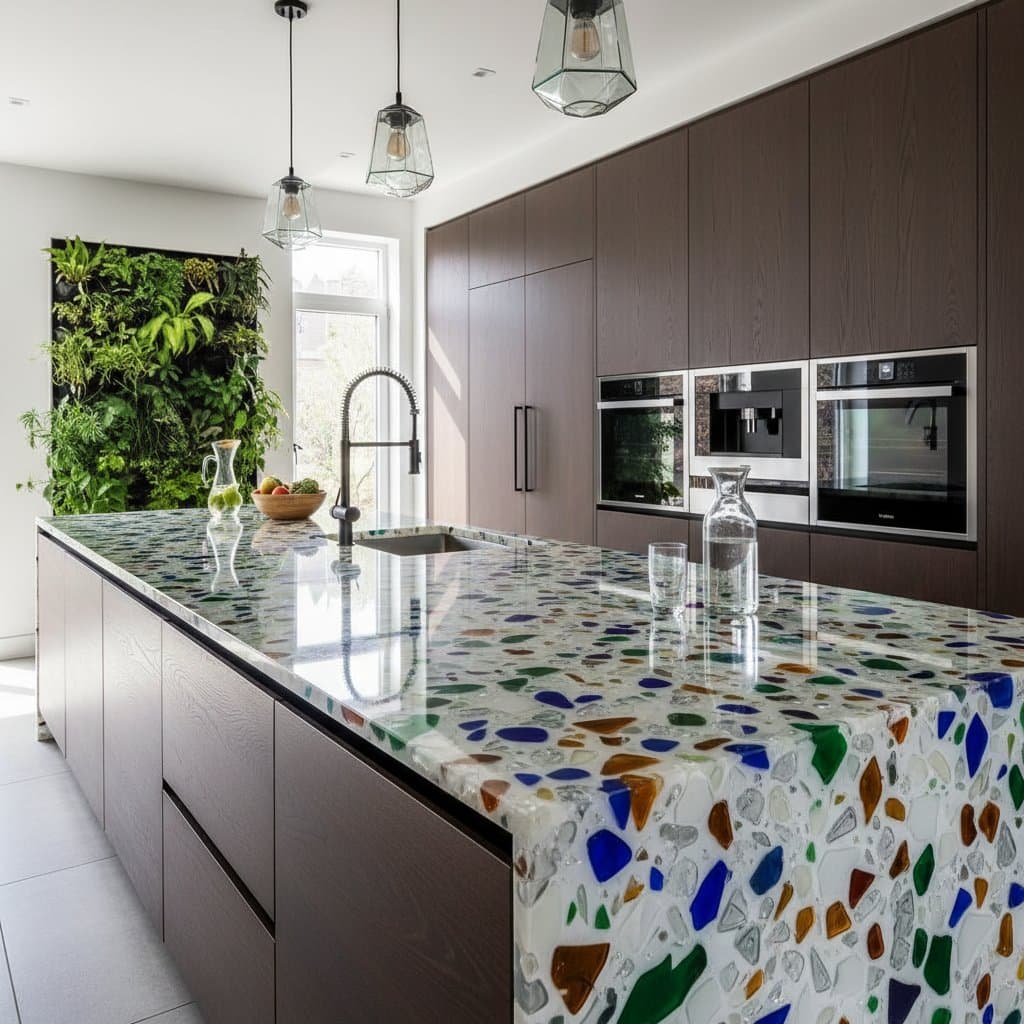
Key Points
- Recycled glass countertops integrate environmental benefits with versatile aesthetics.
- Installation costs range from $60 to $130 per square foot, offset by durability and increased home value.
- Select binders, glass ratios, and finishes based on maintenance preferences and design goals.
- These surfaces support green certifications and divert glass waste from landfills.
- Routine care ensures longevity and maintains their reflective quality.
Sustainability and Style in Harmony
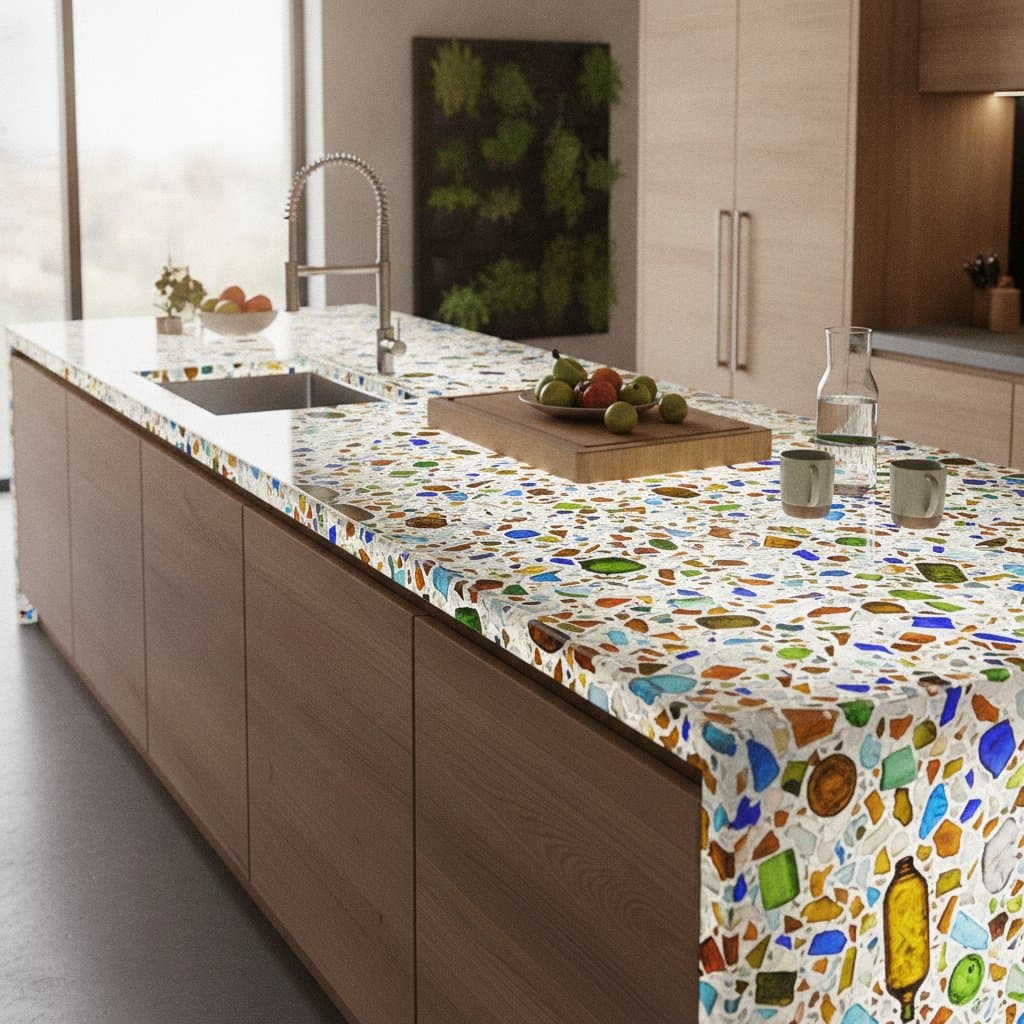
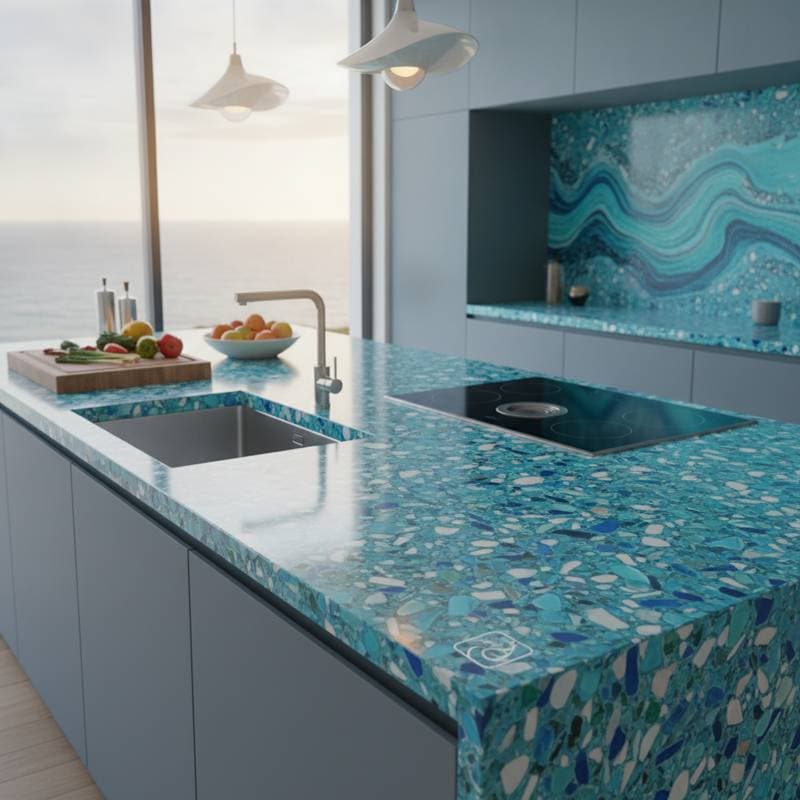
Picture sunlight dancing on a kitchen surface that gleams like embedded jewels. This effect arises from recycled glass countertops, which repurpose bottles, jars, and windows into robust, eco-friendly slabs. Homeowners achieve beauty, functionality, and reduced environmental impact through this choice.
Kitchen renovations demand attention to appearance, usability, and sustainability. Recycled glass fulfills these priorities with adaptable patterns, heat tolerance, and waste reduction. It elevates ordinary spaces into statements of responsible innovation.
The Importance of Recycled Glass Countertops
Material selections affect daily life and planetary health. Granite and quartz demand resource-heavy extraction and shipping. Recycled glass, however, utilizes post-consumer waste combined with cement or resin, minimizing mining and extending material lifecycles.
Practical benefits include mold resistance, color stability, and light-reflecting properties that brighten rooms. Nonporous finishes simplify cleaning compared to wood or laminate, supporting healthier indoor environments free from bacterial buildup or chemical emissions.
Essential Planning Factors
Evaluate these elements to match countertops to your needs in performance, expense, and visuals.
- Binder Options
Recycled glass employs cement or resin binders.
- Cement-based options yield a matte, concrete-like texture; they require sealing and may gain patina.
- Resin-based variants, using acrylic or epoxy, deliver glossy, stain-resistant finishes with minimal upkeep.
-
Glass Composition and Origin
Content levels span 60 to 85 percent recycled glass. Local sourcing from regional programs boosts eco-credentials and reflectivity. -
Color and Pattern Choices
Options include vibrant blues, subtle greens, or neutrals. Unique compositions ensure one-of-a-kind slabs, with customization available for coordination. -
Installation Requirements
Weight necessitates expert handling, sturdy cabinetry, and precise cuts for fixtures to avoid damage.
Cost and Return on Investment
Expect $60 to $130 per square foot for installed recycled glass, varying by binder and customization. Cement types lean lower, resin higher.
Comparisons reveal:
- Laminate: $20 to $50 per square foot
- Granite or quartz: $50 to $150 per square foot
- Recycled glass: $60 to $130 per square foot
Initial costs yield returns through 3 to 5 percent home value gains and decades of service. Low upkeep involves soap and water; resealing cement versions costs little over time. Environmentally, each square foot saves pounds of landfill waste, aiding LEED certifications.
Design Integration Ideas
Adapt recycled glass to modern, coastal, industrial, or classic styles.
- Modern Minimalism: Opt for white or gray resin with fine flecks; combine with steel appliances and black hardware.
- Coastal Theme: Select aqua or seafoam tones; pair with light woods and natural light.
- Industrial Look: Use cement with bold glass chunks alongside brick and metal.
- Classic Sophistication: Choose neutrals with delicate particles; match marble or brass elements.
Strategic lighting, such as under-cabinet LEDs, highlights the shimmer, turning surfaces into dynamic features.
Project Variables to Address
Account for these in your remodel:
- Cabinet Reinforcement: Essential for thick slabs.
- Fixture Positioning: Plan cutouts in advance.
- Edge Styles: Basic profiles save costs over custom.
- Local Sourcing: Reduces shipping and emissions.
- Installation Approach: Professionals handle full projects; DIY suits small pieces.
Order surplus material for repairs, as batches differ.
Broader Sustainable Advantages
Reflective qualities cut daytime lighting needs. Cement provides thermal mass for temperature regulation. Low-VOC resins limit emissions, enhancing pairings with certified woods and efficient appliances.
Production uses less energy than stone quarrying and local streams shorten transport, lowering overall impact.
Professional Insights and Steps Forward
Design experts praise recycled glass for blending opulence with ethics. Builders note reliability; designers highlight adaptability.
To proceed:
- Obtain samples for lighting evaluation.
- Confirm recycled content and VOC standards.
- Review sealing and warranties.
- Map layouts to reduce waste.
- Clarify care protocols.
These actions align form and function with sustainability.
Frequently Asked Questions
Are recycled glass countertops heat resistant?
Most tolerate moderate heat. Extreme temperatures risk thermal shock on resin types; employ trivets.
Do they stain easily?
Resin resists well; cement needs sealing against spills like wine or oil.
Can recycled glass crack or chip?
Durable yet impact-vulnerable, especially edges. Proper support minimizes issues.
How eco-friendly are they compared to quartz?
They surpass quartz by reusing waste and avoiding silica mining, shrinking footprints.
Can I install them outdoors?
Sealed cement suits exteriors; resin may fade in sun. Consult manufacturers.
Care for Longevity
Prompt spill cleanup and gentle tools preserve shine. Daily wiping with soap suffices; avoid abrasives.
Use cutting boards to prevent marks. Periodic sealing maintains cement integrity. Natural aging adds charm in cement varieties.
Embracing Renewed Spaces
Recycled glass countertops embody values of ingenuity and care. They infuse kitchens with light, resilience, and purpose.
From minor updates to comprehensive overhauls, these surfaces deliver artistry and endurance. Thoughtful selection crafts enduring narratives of transformation in daily living.