Key Points
- Recycled ocean plastic countertops deliver durability, sustainability, and contemporary style in one material.
- Installed costs range from eighty to one hundred fifty dollars per square foot, aligning with mid-range quartz and premium solid surfaces.
- These countertops remove harmful plastics from oceans and increase property value through sustainable features.
- Installation by professionals yields performance equal to conventional materials.
- Maintenance involves basic care, with color and pattern options matching popular countertop choices.
Why Sustainable Countertops Matter
Remodeling choices influence finances and the environment alike. Quarrying, transporting, and processing granite or quartz demands substantial energy. Recycled ocean plastic countertops reuse waste materials instead, which cuts down on resource extraction and emissions while safeguarding marine habitats.
In the housing market, sustainable features boost appeal. More buyers seek properties with eco-friendly elements, and kitchens often determine resale success. A countertop blending recycled materials, strength, and attractive design provides a solid return. Projects frequently recover sixty to seventy percent of costs upon resale, with extra draw for eco-minded purchasers.
Comparing Costs and Benefits
Installed recycled ocean plastic countertops cost between eighty and one hundred fifty dollars per square foot, varying by brand, finish, and fabrication details. This pricing competes with quartz and high-end solid surfaces. For those balancing expenses with enduring value, key advantages include:
- Durability: Matches quartz in hardness and resistance to daily wear.
- Maintenance: Nonporous design eliminates the need for sealing or special treatments.
- Longevity: Lasts over twenty years with routine care.
- Sustainability: Repurposes hundreds of pounds of ocean plastic per installation.
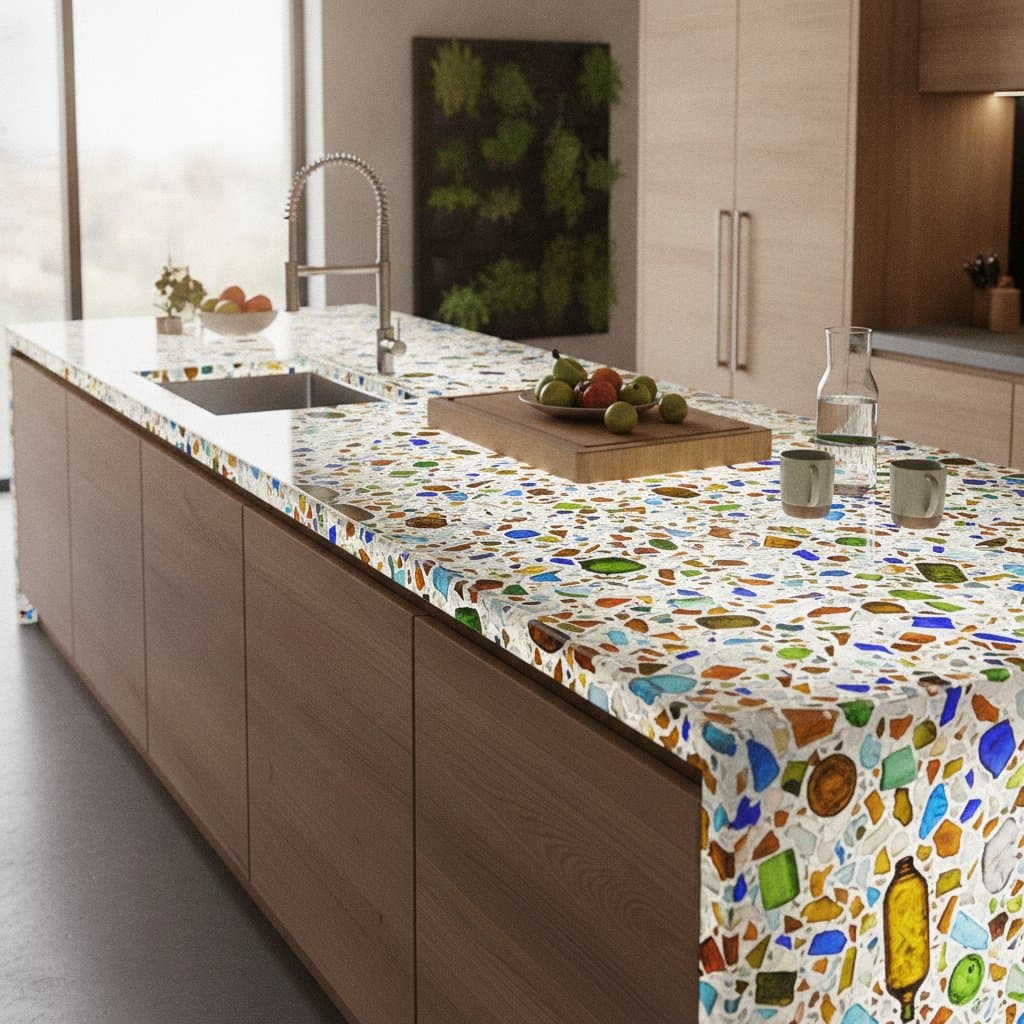
- Visual Appeal: Offers unique patterns and colors absent in natural stone.
The upfront price surpasses basic laminate or butcher block, yet lower upkeep and ecological gains balance it out. Consider reduced emissions from production and possible tax credits for green materials, and the overall return strengthens further.
Professional Insights and Performance Reality
Builders install these countertops much like engineered stone. Slabs receive cuts from diamond-tipped tools, rest on reinforced cabinets, and secure at joints with resin adhesives. Lighter than granite, the material eases cabinet loads and streamlines renovation transport.
Contractors value the uniform quality and lower cracking risk versus natural stone. Fabricators find shaping for integrated backsplashes or curved islands straightforward, which opens design options for kitchen configurations.
Industry tests confirm strong resistance to stains, UV light, and moderate heat. Avoid placing hot cookware directly on the surface, but routine kitchen tasks present no issues. Clean with mild soap and water to preserve the finish, without needing proprietary cleaners.
Design Possibilities for Every Style
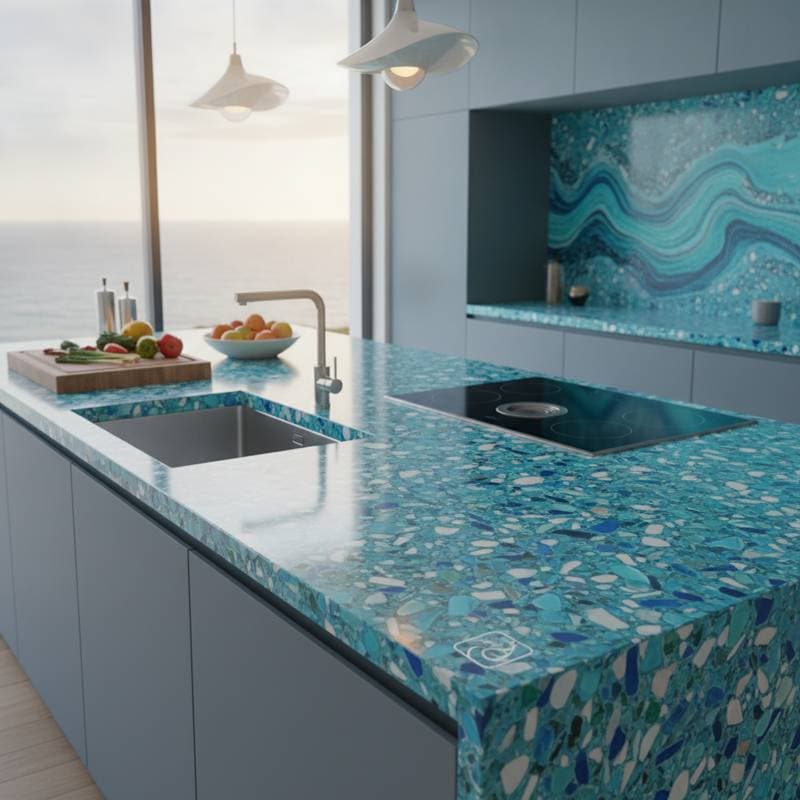
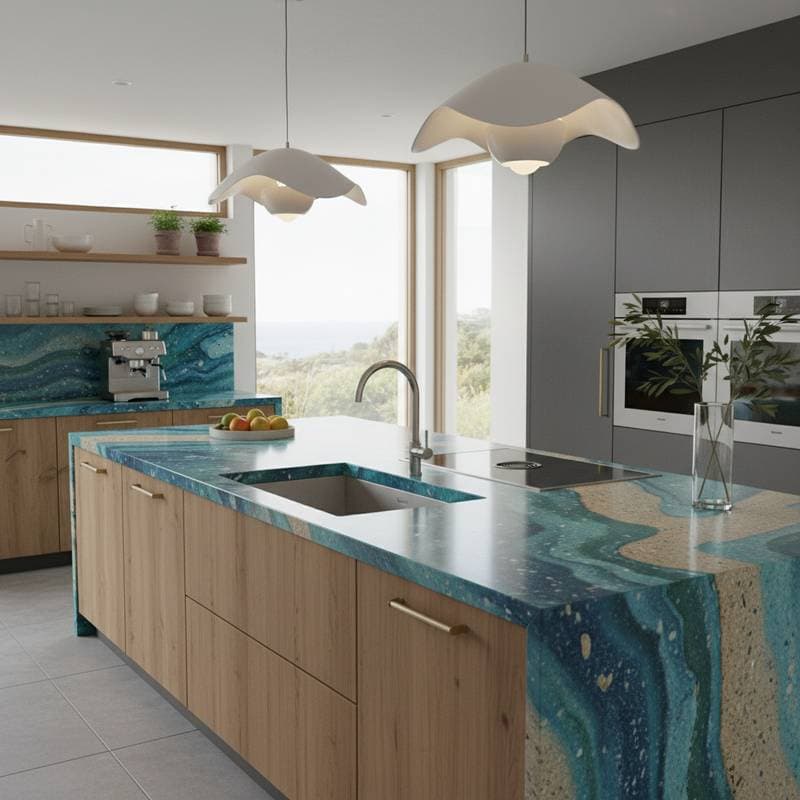
Recycled materials do not restrict design choices, contrary to some beliefs. Ocean plastic countertops suit styles from coastal modern to urban industrial. Pair vibrant blue shades with white cabinets for a fresh seaside vibe, or select subtle grays and blacks for clean, modern spaces that whisper environmental commitment.
Finishes range from glossy mirrors to matte textures resembling honed stone. Customize edge profiles as with standard materials, and integrate with recycled metals or bamboo for unified green themes.
In open layouts, use matching countertop and backsplash panels from the same recycled stock for fluid visuals. Designers sometimes add backlighting to showcase embedded plastic fragments, making sustainability a highlighted art element.
Maintenance for Longevity
These countertops stay pristine with little work. Their nonporous nature blocks bacteria and liquid penetration. Wipe daily and address spills quickly to keep the look sharp. Employ cutting boards and trivets to guard against scratches or heat damage, but otherwise, care remains basic.
Professionals can polish minor wear using common tools. Manufacturers provide refinishing options that renew shine without slab replacement, prolonging service indefinitely. Such ease underscores the material's eco and economic merits.
Common Questions from Homeowners
Are recycled ocean plastic countertops safe for food preparation?
Yes. Certified versions comply with standards for nonporous surfaces, preventing bacterial growth or chemical leaching in typical conditions.
Can these countertops handle heavy kitchen use?
Yes. They match engineered stone in enduring everyday demands and wear.
Do they discolor or fade?
Quality slabs contain UV stabilizers to retain color vibrancy in sunlit kitchens.
What if a section gets damaged?
Repairs prove easier than for natural stone. Fill and buff small chips to match the surface.
Do they really help the ocean?
Yes. Installations back waste collection efforts, diverting hundreds of pounds of plastic from oceans per kitchen.
How do they compare to recycled glass or paper composites?
Ocean plastic options weigh less, bend more readily, and resist scratches better than recycled glass. They hold uniform looks longer than paper composites.
Financing and Strategic Investment
Fund sustainable kitchen updates via home improvement loans, eco programs, or refinancing. Budget ten to fifteen percent of kitchen funds for countertops, as they deliver top visual and resale impact. Recycled selections may earn green certifications that lift property worth.
For investors and landlords, these surfaces cut upkeep expenses and provide marketing edge. Tenants favor eco-certified units, and ocean plastic countertops demonstrate responsible stewardship clearly.
Steps to Install Recycled Ocean Plastic Countertops
Start by choosing suppliers who confirm sourcing integrity. Ask for proof of recycled content levels and ties to cleanup groups.
Combine with upgrades like efficient lights, water-saving faucets, or salvaged cabinets for a full green kitchen. This setup lowers running costs and amplifies your home's sustainability message.
Opting for recycled ocean plastic countertops means more than acquiring a surface. It commits to renewal, accountability, and endurance. Every finished edge testifies that elegance and eco-responsibility rest on common ground.