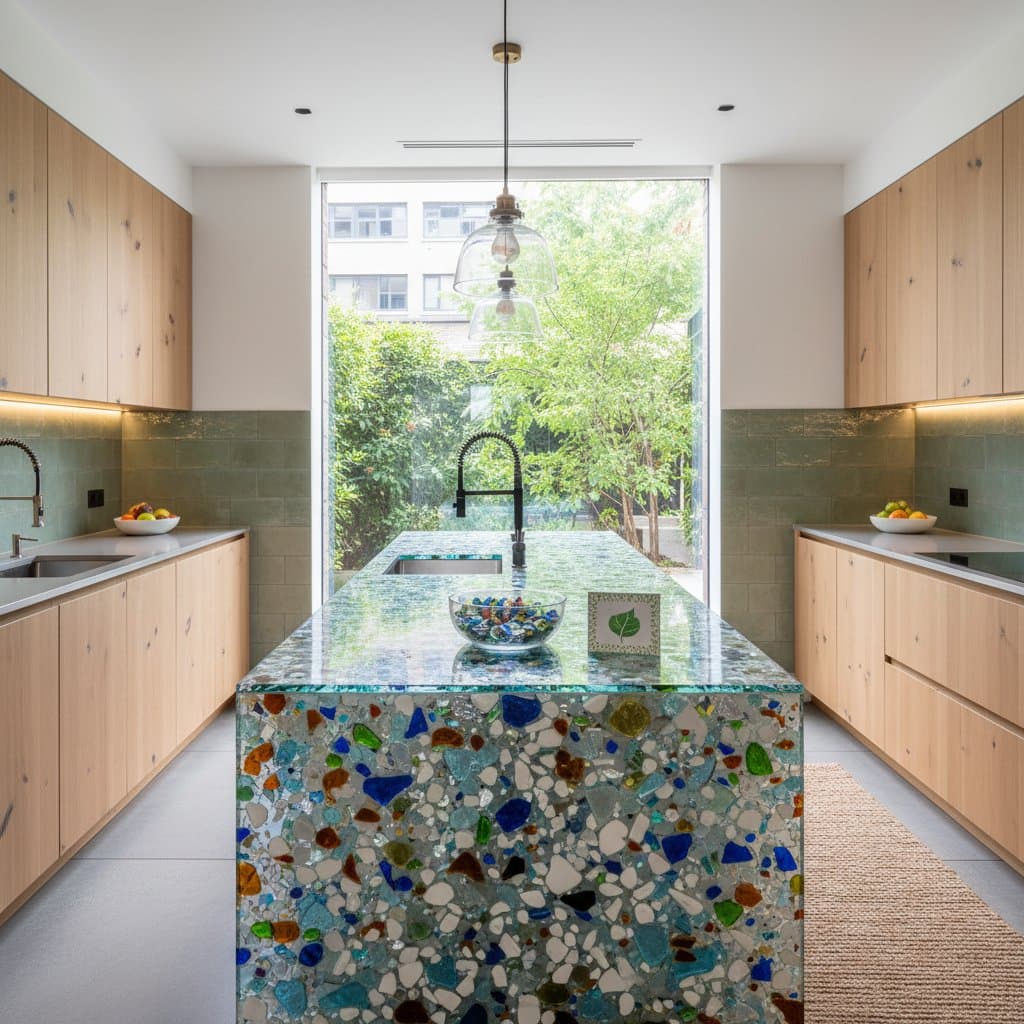
Introduction to Recycled Glass Countertops
Homeowners increasingly seek materials that align with environmental values without sacrificing design quality. Recycled glass countertops fulfill this demand by transforming waste into functional beauty. These surfaces capture attention in modern kitchens, offering a pathway to sustainability that feels both innovative and timeless.
The appeal lies in their origin story. Glass collected from bottles, jars, and other discards undergoes processing to create vibrant, speckled patterns. As eco-awareness grows, these countertops position themselves at the forefront of kitchen trends for 2026, appealing to those who prioritize planet-friendly choices.
What Makes Recycled Glass Countertops Sustainable
Recycled glass countertops derive primarily from post-consumer sources, diverting materials from landfills. Up to 90 percent of their composition comes from recycled glass, reducing the need for virgin resources. This process conserves energy, as recycling glass requires far less power than manufacturing new glass from raw silica.
Beyond resource savings, these countertops support broader ecological goals. They contribute to the circular economy by reusing materials in a closed loop, minimizing waste generation. Many products earn certifications from organizations like the Green Building Council, validating their low environmental footprint.
Production methods further enhance sustainability. Manufacturers often incorporate recycled aggregates and binders that avoid harmful chemicals. The result is a material that lowers carbon emissions compared to traditional stone or laminate options, making it a smart choice for eco-focused remodels.
Environmental Impact in Detail
Consider the waste reduction aspect. Each countertop can incorporate thousands of pounds of recycled glass, preventing it from accumulating in disposal sites. This action addresses the global challenge of glass waste, which accumulates rapidly due to packaging demands.
Energy efficiency plays a key role as well. Recycling glass emits approximately 20 percent less greenhouse gases than producing new glass. Homeowners selecting these countertops indirectly support reduced fossil fuel dependency in manufacturing.
Water conservation adds another layer. The production process uses less water than quarrying natural stone, preserving this vital resource. Overall, recycled glass countertops embody a holistic approach to sustainability, influencing positive change one kitchen at a time.
Aesthetic Versatility and Design Integration
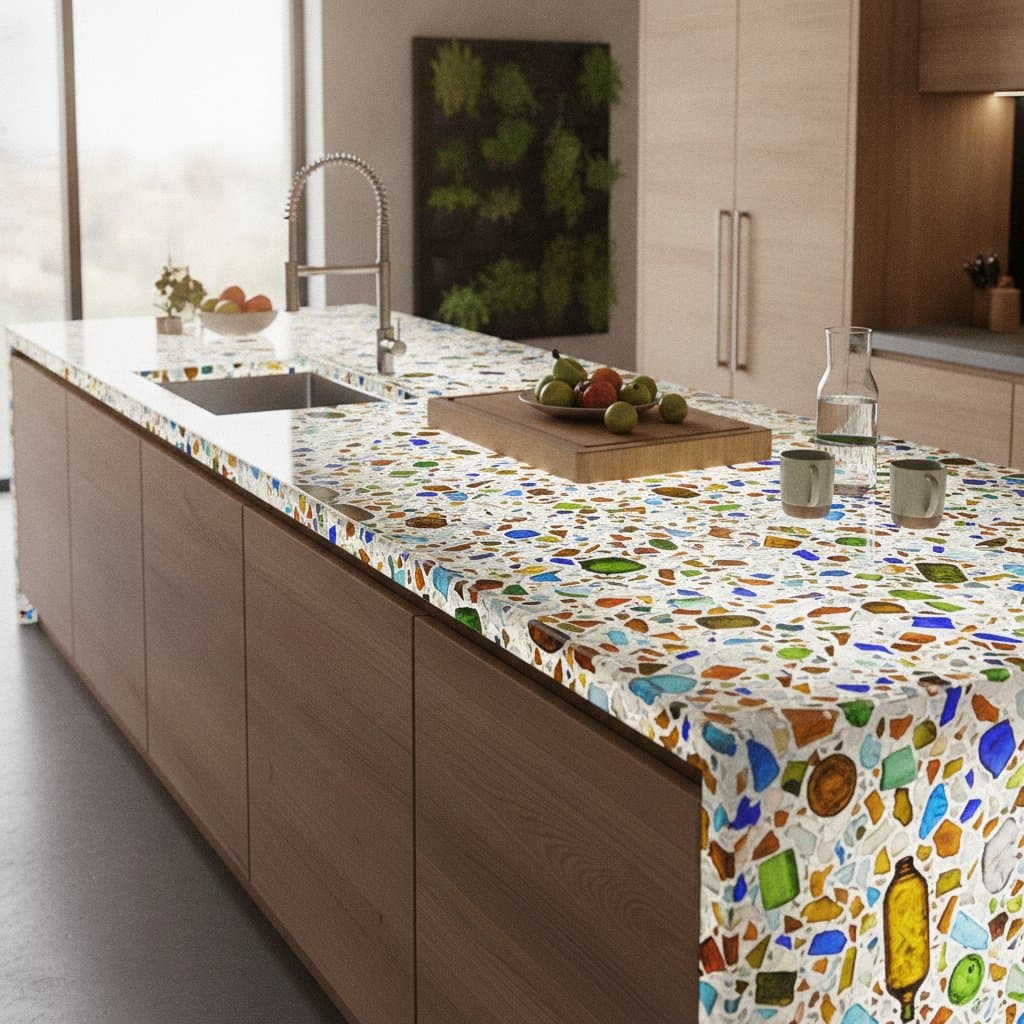
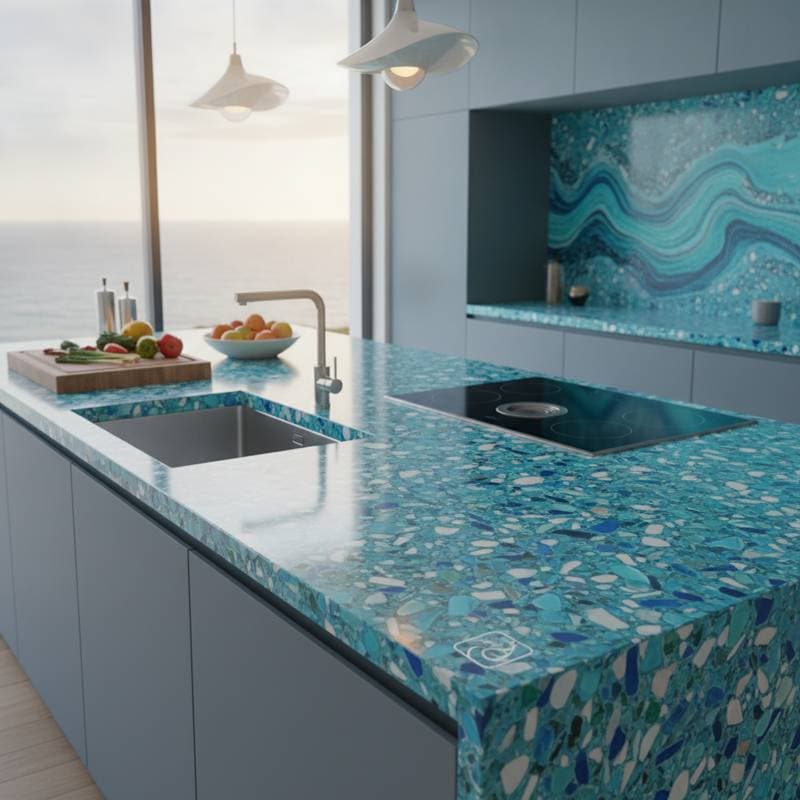
Recycled glass countertops stand out for their unique visual characteristics. The varied colors and textures from mixed glass create one-of-a-kind patterns, ranging from subtle earth tones to bold jewel hues. This natural variation ensures no two installations look identical, adding exclusivity to any space.
Customization options abound. Homeowners select glass types, sizes, and edge profiles to match specific styles, whether minimalist modern or rustic farmhouse. Translucent qualities allow light to filter through, enhancing brightness in kitchens and creating a welcoming atmosphere.
Integration with other elements proves seamless. Pair them with bamboo cabinetry or reclaimed wood accents for a cohesive eco-theme. Their reflective surfaces amplify natural light, making smaller kitchens feel more expansive and airy.
Blending with Contemporary Trends
In 2026, kitchen designs emphasize organic materials and fluid lines. Recycled glass fits perfectly, offering a glassy sheen that contrasts beautifully with matte finishes. Designers recommend it for islands or backsplashes, where its sparkle draws the eye without overwhelming the palette.
Texture plays a crucial role in modern aesthetics. The embedded glass pieces provide subtle depth, mimicking high-end terrazzo at a fraction of the cost. This versatility allows it to adapt to biophilic design principles, incorporating nature-inspired elements indoors.
Durability and Practical Performance
Strength defines recycled glass countertops. The material resists scratches, chips, and heat better than many alternatives, thanks to its dense composition. It withstands daily use, from hot pots to knife cuts, without immediate damage.
Stain resistance comes from the sealed surface, which repels liquids and foods. Unlike porous natural stone, it requires no annual resealing, simplifying upkeep. Regular cleaning with mild soap suffices, preserving its luster over years.
Longevity ensures value. These countertops maintain appearance with minimal intervention, outlasting laminates that fade or delaminate. Their non-porous nature also inhibits bacterial growth, promoting a hygienic kitchen environment.
Maintenance Tips for Longevity
To maximize performance, wipe spills promptly to prevent etching. Avoid abrasive cleaners that could dull the finish. For deeper cleans, use a soft cloth and non-toxic solutions, aligning with the eco-ethos.
Professional installation enhances durability. Ensure edges are properly finished to prevent chipping. With care, these surfaces can last decades, providing reliable service in high-traffic areas.
Cost and Installation Considerations
Initial costs for recycled glass countertops range from moderate to premium, depending on customization. Prices per square foot typically fall between those of quartz and granite, offering good value for sustainable features. Factors like glass sourcing and thickness influence the final price.
Installation mirrors standard countertop processes. Professionals measure, fabricate, and fit the pieces on-site, often completing the job in a day. Seamless joints minimize bacteria traps, ensuring a smooth workflow.
Return on investment proves strong. Energy-efficient homes with green materials attract buyers, potentially increasing resale value. Tax incentives or rebates for sustainable renovations may further offset expenses.
Steps for Selecting and Installing
- Assess your kitchen layout and traffic patterns to determine needed square footage.
- Choose glass colors that complement your cabinetry and flooring.
- Consult certified installers experienced in recycled materials for precise fitting.
- Review warranties, which often cover defects for 10 to 25 years.
Budget for accessories like supportive underlayment if integrating with existing structures. This preparation ensures a flawless outcome.
Embracing Recycled Glass for Future-Proof Kitchens
Selecting recycled glass countertops means investing in a kitchen that evolves with environmental priorities. These surfaces deliver immediate style upgrades while contributing to long-term planetary health. Homeowners gain confidence knowing their choice supports innovation in sustainable living.
The trend toward eco-materials accelerates, with recycled glass leading due to its proven balance of form and function. As 2026 approaches, it represents more than a surface; it symbolizes commitment to a cooler planet. Transform your space today and join the movement toward greener homes.