Key Points
- Recycled plastic decking is changing how homeowners think about outdoor living, offering durability, minimal maintenance, and sustainability.
- Upfront costs can be higher than wood, but long-term savings in maintenance and replacement often outweigh initial investments.
- Composite and fully recycled-plastic lumber options vary in composition, aesthetics, and performance, allowing flexibility for different climates and budgets.
- Sustainable choices like recycled plastic decking can reduce landfill waste and help create a circular materials economy.
- Planning, installation quality, and product certification are key to ensuring a resilient and beautiful deck that lasts for decades.
Why Recycled Plastic Decking Matters
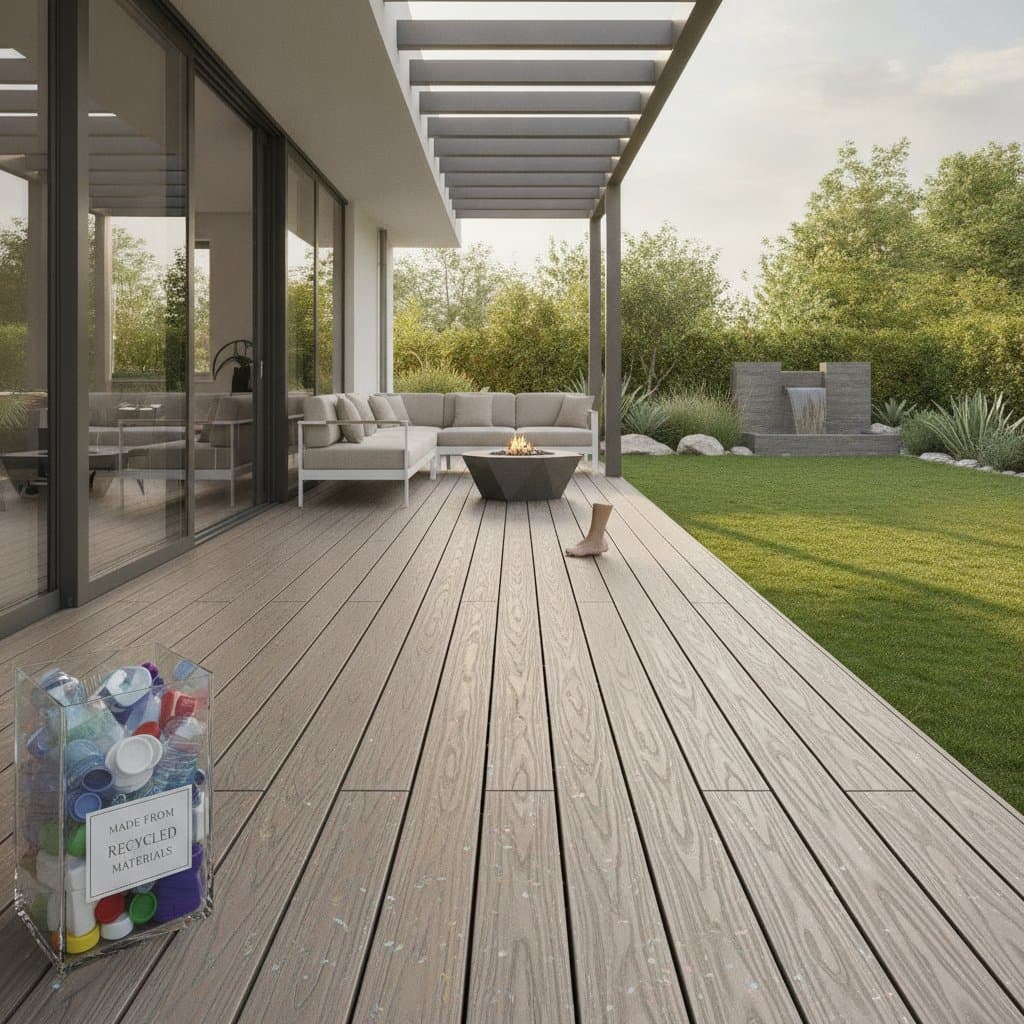
A traditional wood deck may look charming at first, but it often becomes a maintenance burden. Recycled plastic decking changes the equation by offering incredible durability and weather resistance. These boards do not absorb moisture, resist insects, and hold color far longer than natural wood.
From a financial perspective, the math is compelling. While a wood deck might cost less to build initially, maintenance expenses add up quickly. Cleaning, staining, and replacing warped boards can easily double the lifetime cost of a deck. Recycled plastic or composite lumber, on the other hand, usually costs 30 to 50 percent more upfront, but maintenance costs are minimal. Over a 20-year period, homeowners often see total savings of 25 to 40 percent compared with traditional lumber.
Environmentally, the benefits are equally strong. Many decking products use post-consumer waste such as milk jugs, detergent containers, and shopping bags. That keeps tons of plastic out of landfills and reduces demand for virgin materials. Choosing recycled plastic decking is a small but tangible step toward reducing global plastic waste.
Cost Breakdown and ROI Analysis
Pricing varies widely depending on product quality, design complexity, and local labor rates, but the following general ranges apply:
- Material Costs: $5 to $12 per square foot for recycled plastic or composite boards.
- Framing and Installation: $8 to $15 per square foot depending on design and site conditions.
- Total Installed Cost: $13 to $27 per square foot on average.
While that may sound steep compared to pressure-treated wood at $8 to $15 per square foot, the lifetime value tells a different story. Wood decks often require refinishing every two or three years, costing hundreds of dollars each time. Over two decades, maintenance can exceed the initial construction cost.
Recycled plastic decking, by contrast, requires only basic cleaning with soap and water. Many homeowners report recouping their investment within 7 to 10 years through avoided maintenance and replacement costs. Resale data also indicates that well-designed composite decks can add 60 to 70 percent of their cost to home value, depending on market conditions and property type.
Sustainable Features and Efficiency Gains
Beyond the direct recycling benefits, recycled plastic decking contributes to a more sustainable lifestyle in several ways.
- Longevity: A well-maintained deck can last 40 years or more without replacement, reducing resource consumption.
- Reduced Chemical Use: No staining or sealing means fewer volatile organic compounds released into the air.
- Recyclability: Many boards can be recycled again at the end of their life, creating a circular use cycle.
- Energy Efficiency: Plastic decking reflects more sunlight than dark-stained wood, which can help reduce heat absorption and lower cooling needs for adjacent indoor spaces.
For homeowners pursuing green building certifications, recycled plastic decks can help earn points under programs that recognize recycled content, durability, and low maintenance.
Frequently Asked Questions
What is the difference between composite and recycled plastic decking?
Composite decking combines recycled plastic with wood fibers for a natural look. Fully recycled plastic decking uses only plastic, offering maximum moisture resistance and minimal expansion over time.
Can I install recycled plastic decking myself?
Yes, many homeowners handle installation as a DIY project, but professional installation ensures proper spacing, joist support, and fastening. Mistakes in expansion gaps or alignment can compromise appearance and longevity.
Does recycled plastic decking fade or stain?
High-quality products use UV inhibitors and pigments that resist fading. Stains from food or drink can be cleaned with mild detergent, while deep scratches can often be sanded lightly.
Is recycled plastic decking slippery when wet?
Most boards have textured surfaces for slip resistance. Choosing a product with embossed grain or matte finish improves traction in wet conditions.
Can recycled plastic decking handle extreme temperatures?
Yes, though it expands slightly in heat and contracts in cold. Proper installation spacing and fastening systems accommodate this movement.
Maintaining Your Investment
Once your recycled plastic deck is installed, the upkeep is refreshingly simple. A seasonal rinse with mild soap and water is usually enough to remove dirt and pollen. Avoid harsh solvents or pressure washers that can damage the surface finish. Check fasteners occasionally to ensure boards remain secure, especially after freeze-thaw cycles.