Key Points
- Recycled shingles divert landfill waste and lower production emissions relative to conventional asphalt shingles.
- They generate long-term savings via enhanced durability, improved energy efficiency, and minimal maintenance needs.
- Homeowners benefit from returns through reduced energy expenses and elevated property values.
- Options exist across various price ranges, ensuring sustainable roofing suits different financial situations.
Integrating Sustainability into Roofing
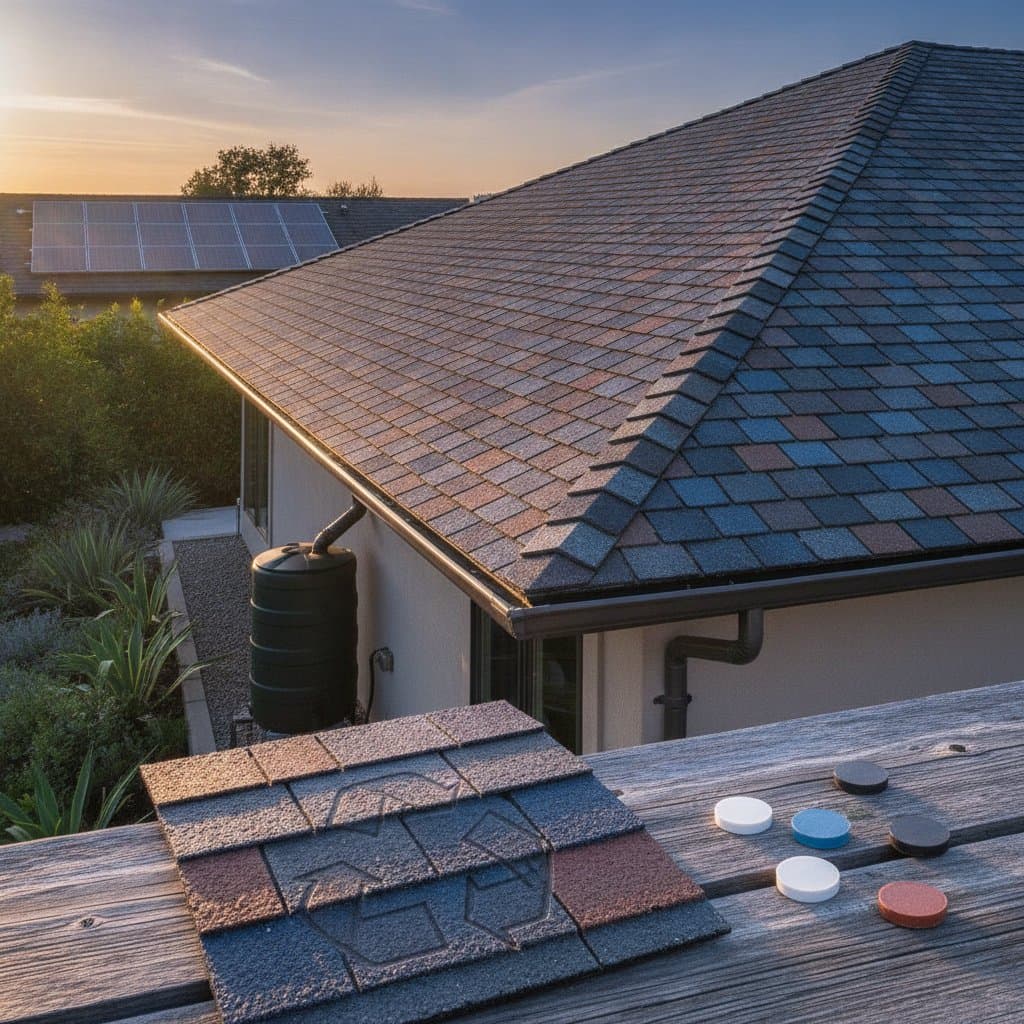
Picture yourself in the driveway, gazing at a roof that supports both your finances and the environment. It appears as refined as premium slate or architectural asphalt, yet it utilizes repurposed plastic and rubber diverted from landfills. Recycled shingles fulfill this vision, altering homeowner perspectives on roofing materials.
Every roof has a finite lifespan. The decision now involves selecting protection for the home that also safeguards the planet. Recycled shingles achieve this balance by converting waste into reliable, enduring coverage.
The Importance of Recycled Roofing
Standard asphalt shingles prevail in many markets due to their low initial cost, though they involve environmental and durability drawbacks. Their manufacture produces considerable carbon emissions, and disposal adds to landfill accumulation. Recycled shingles break this pattern by incorporating post-consumer and post-industrial elements, such as plastics and rubber from common items.
Financially, the advantages of recycled shingles surpass their ecological profile. Manufacturers indicate that recycled composite shingles endure two to three times longer than standard asphalt varieties. This longevity results in fewer replacements during a home's existence, thereby decreasing overall material and labor expenditures.
Evaluating Costs and Investment Returns
Upfront costs for installing recycled shingles typically range from 10 to 20 percent above those for traditional asphalt. However, their extended service life shifts the equation. With durability spanning 40 to 60 years, owners avoid frequent replacement expenses.
Energy efficiency further bolsters the return. Reflective surfaces and insulating qualities in these shingles stabilize interior temperatures, potentially cutting heating and cooling bills by 15 to 25 percent each year, based on regional weather and utility prices. Combined with possible insurance reductions for superior fire and impact ratings, the economic rationale solidifies.
Performance Features and Technical Strengths
Engineers design recycled shingles to endure severe conditions, such as high winds, hail, and temperature fluctuations. Their composite makeup frequently achieves or surpasses Class 4 impact resistance and Class A fire standards. Such capabilities lead to reduced repair needs and extended maintenance intervals.
Resistance to moisture stands out as a primary benefit. Unlike traditional asphalt, which may distort or shed granules, recycled composites retain form and strength in damp or seaside settings. Fade-resistant coatings ensure colors remain vibrant for decades, enhancing both visual appeal and protective function.
Benefits for the Environment and Health
Installing a roof from recycled materials prevents thousands of pounds of waste from entering landfills. Production demands less energy than creating new asphalt or metal alternatives, slashing greenhouse gas emissions by up to 60 percent.
Certain products include extras like solar-reflective particles or built-in water-harvesting features, aiding in energy and resource conservation. Formulations free of volatile organic compounds promote better indoor air and resident well-being.
Industry Trends and Quality Certifications
Sustainable materials with certifications now set the standard for excellence in construction. Recycled shingles often feature validations like Energy Star or LEED alignment, confirming genuine performance over promotional assertions.
Professionals in building and renovation regard eco-roofing as a competitive edge. Properties with these materials sell more quickly and at premium prices in areas where buyers prioritize resilience and efficiency. This approach yields savings in operations and bolsters asset worth over time.
Choosing Suitable Recycled Shingles
Homeowners assessing recycled shingles should examine composition, warranty terms, and visual compatibility.
- Composition: Options may combine recycled rubber and plastic for pliability, or incorporate reclaimed cellulose and glass fibers for firmness.
- Warranty: Seek guarantees covering at least 40 years for assured longevity.
- Appearance: Styles mimic slate, wood shake, or tile to align with local designs or building specifications.
Expert installation remains essential. Although lighter than many conventional types, proper underlayment and airflow optimize durability and effectiveness.
Steps to Adopt Recycled Shingles
Adopting recycled shingles involves preparation yet yields tangible gains. Obtain estimates from contractors experienced in green materials to begin.
Financing through eco-focused loans or efficiency rebates can ease initial outlays. Sustained lower utility costs, less upkeep, and improved marketability affirm the choice as wise for ecology and economy.
Recycled shingles prove that sustainable decisions integrate seamlessly into practical, attractive, and profitable home improvements.