Understanding Hempcrete's Role in Sustainable Construction
Sustainable construction often evokes images of solar panels or recycled materials, yet hempcrete stands out as a bio-based option with significant potential. This material serves as both insulation and a structural infill, sequestering carbon, regulating indoor humidity, and reducing energy costs for heating and cooling. As discussions on eco-friendly building intensify, hempcrete emerges as a key solution for creating healthier, more resilient homes.
Composition and Carbon Sequestration Process
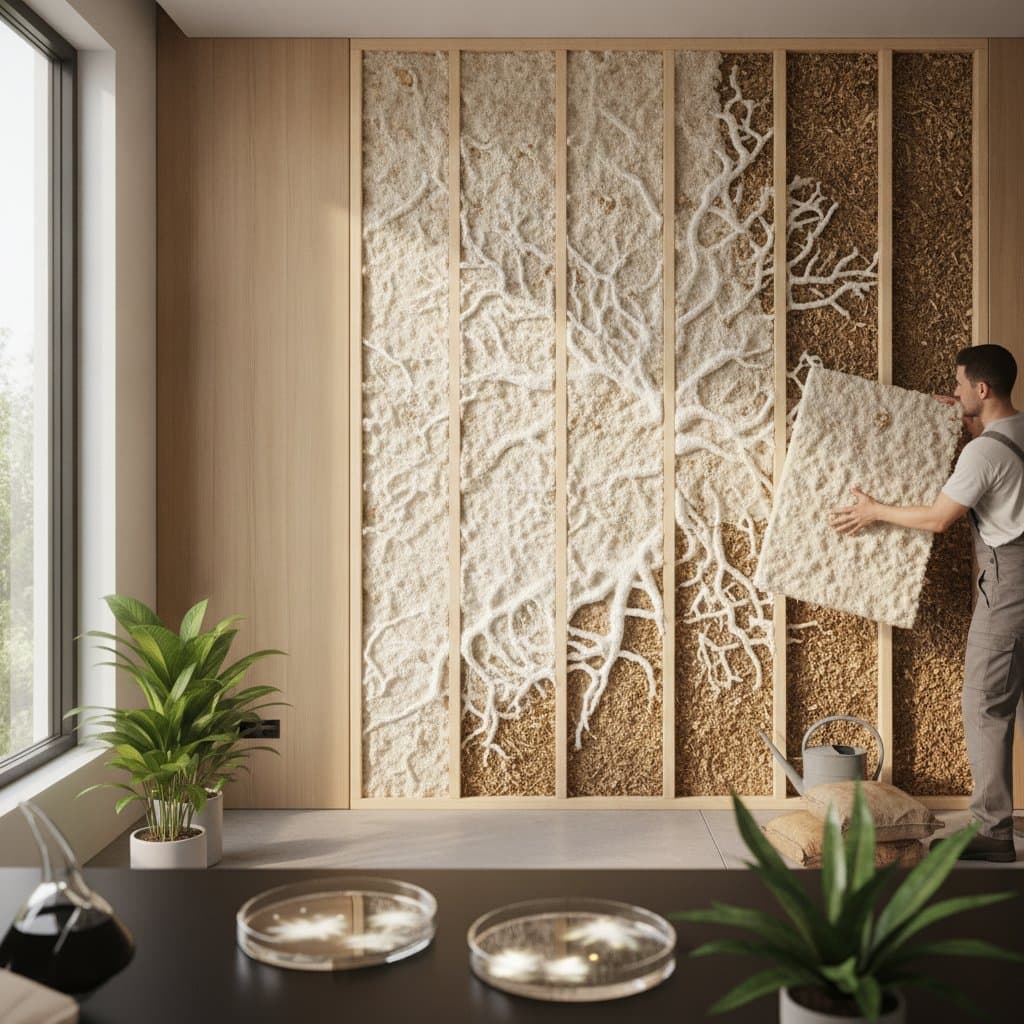
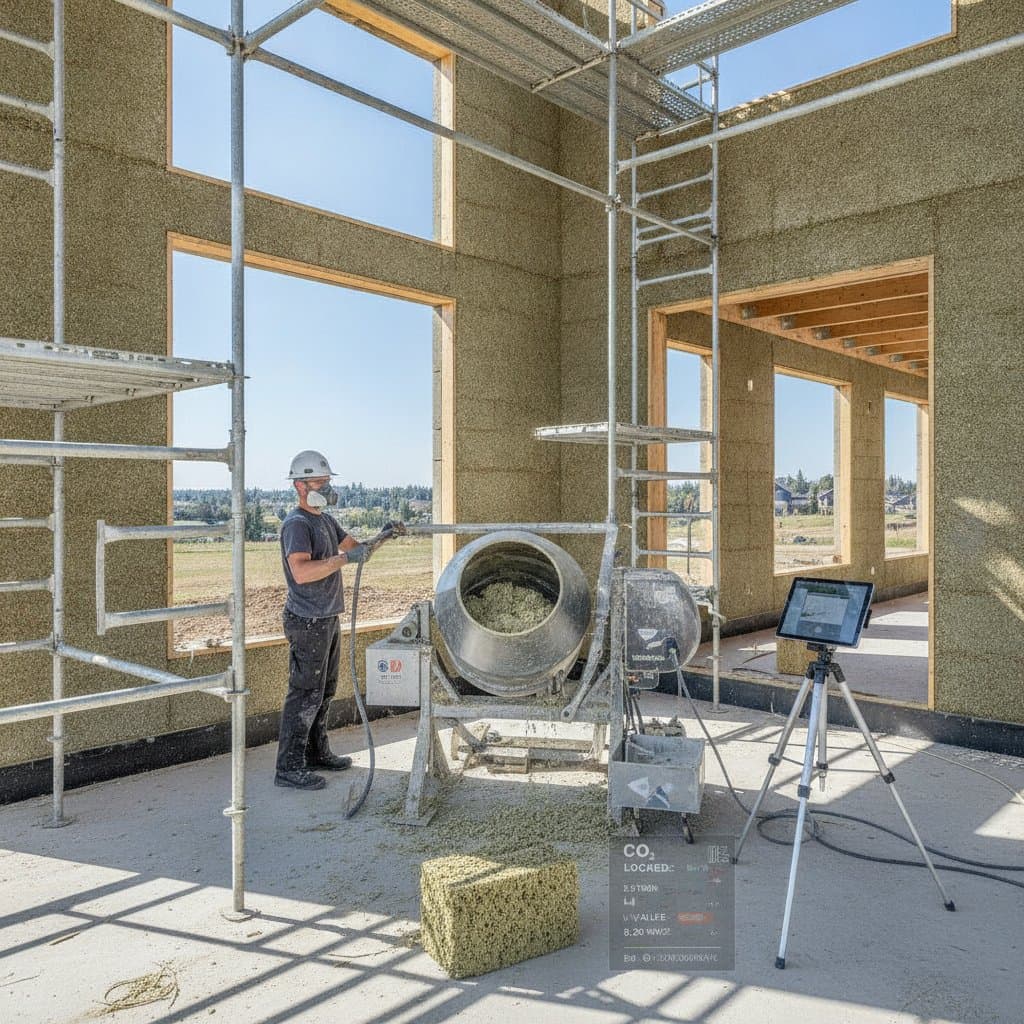
Hempcrete consists of three basic components: the inner woody core of the hemp plant, called hurd; a lime-based binder; and water. These elements mix to form a lightweight, porous substance that solidifies into a durable wall upon curing. In contrast to traditional concrete, whose cement production emits substantial carbon dioxide, hempcrete leverages the hemp plant's growth to capture atmospheric carbon.
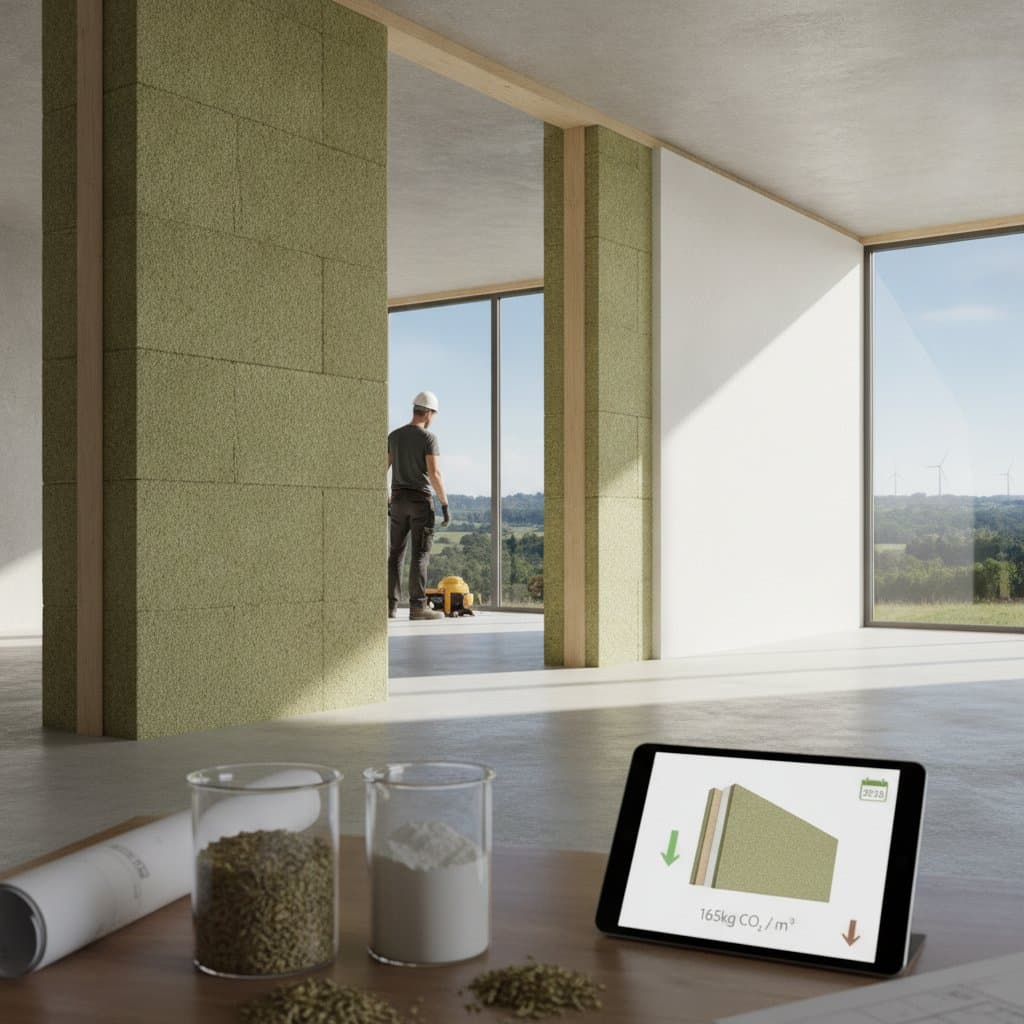
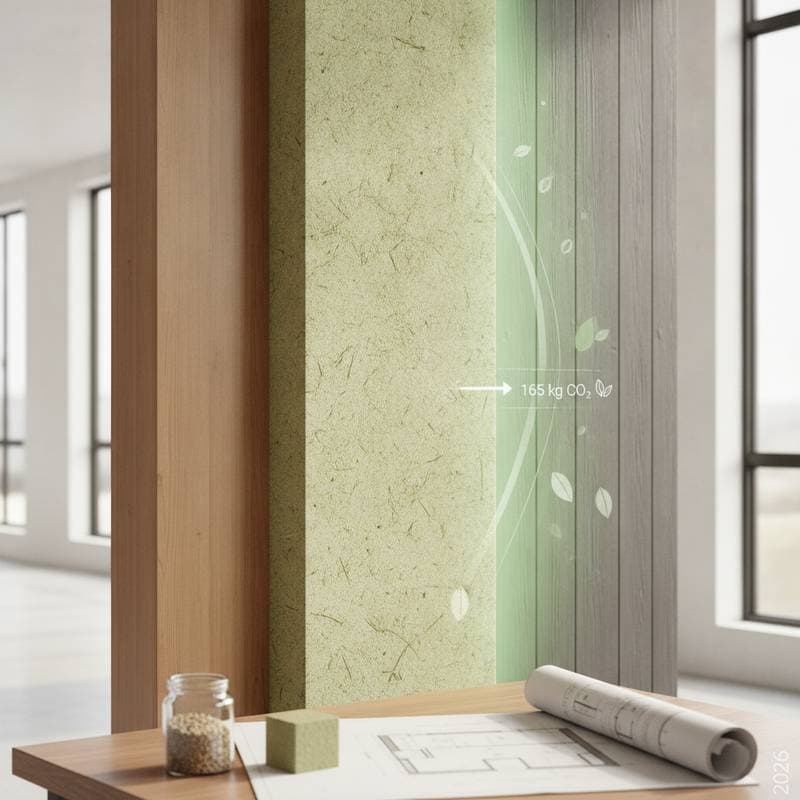
Research from sustainable building groups indicates that each cubic meter of hempcrete sequesters 100 to 165 kilograms of carbon. The hemp absorbs carbon dioxide during its rapid growth, storing it in the plant's cellulose fibers. Upon mixing with lime, this carbon remains locked in place throughout the building's lifespan, while the lime binder absorbs additional carbon during curing, enhancing the overall effect.
This process results in a material that mitigates emissions and actively removes carbon, a rare combination among construction options.
Performance Comparison with Standard Materials
Evaluating hempcrete requires examining it alongside prevalent construction choices.
| Material | Carbon Footprint (kg CO₂/m³) | Thermal Conductivity (W/m·K) | Moisture Regulation | Typical Lifespan |
|---|---|---|---|---|
| Concrete | +300 to +400 | 1.7 | Poor | 50-100 years |
| Brick | +250 | 0.8 | Moderate | 75-100 years |
| Fiberglass Insulation | +50 | 0.04 | Poor | 20-30 years |
| Hempcrete | -100 to -165 | 0.06 - 0.1 | Excellent | 100+ years |
These figures highlight hempcrete's advantages. It delivers effective insulation with breathability, addressing limitations in conventional materials. The porous design permits vapor passage, which minimizes condensation and mold risks.
Hempcrete maintains indoor humidity at 50 to 60 percent, optimal for health, reducing allergens and ensuring even temperatures.
Practical Applications in Construction
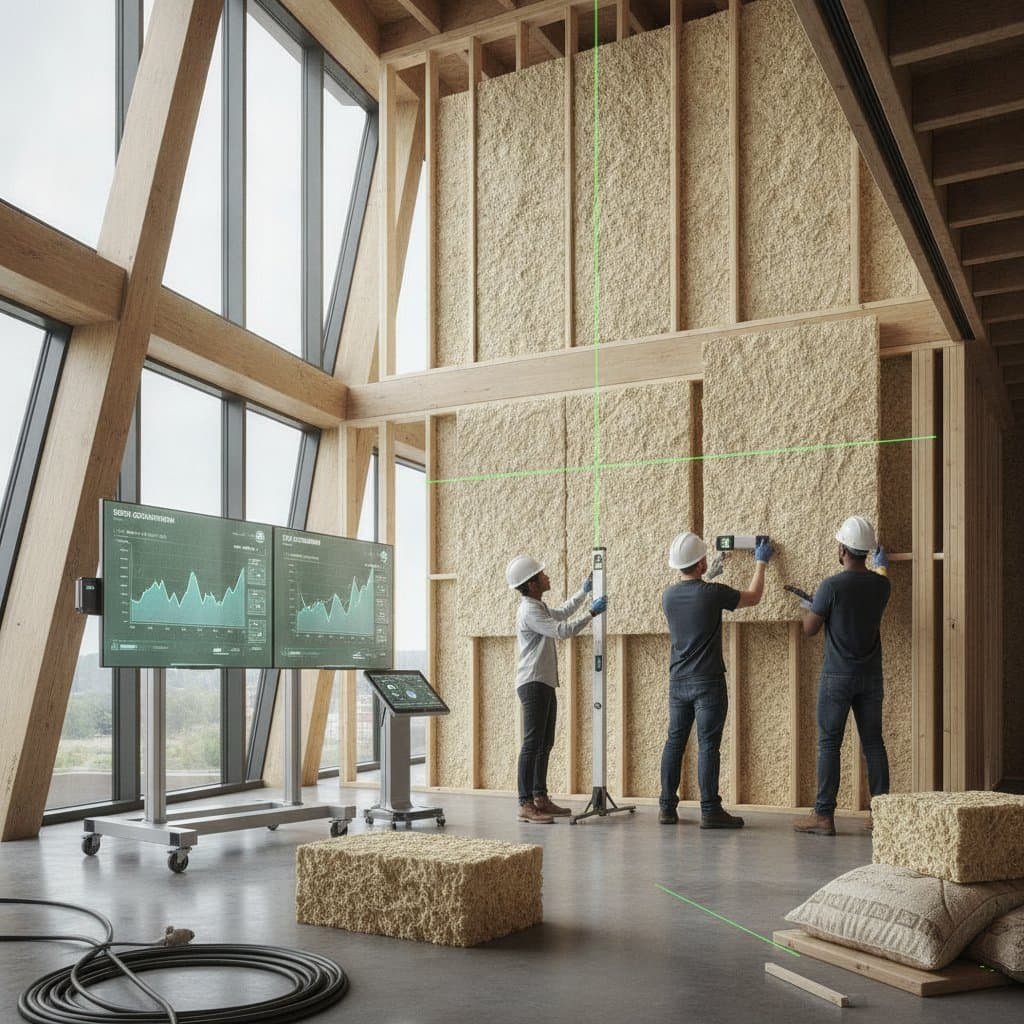
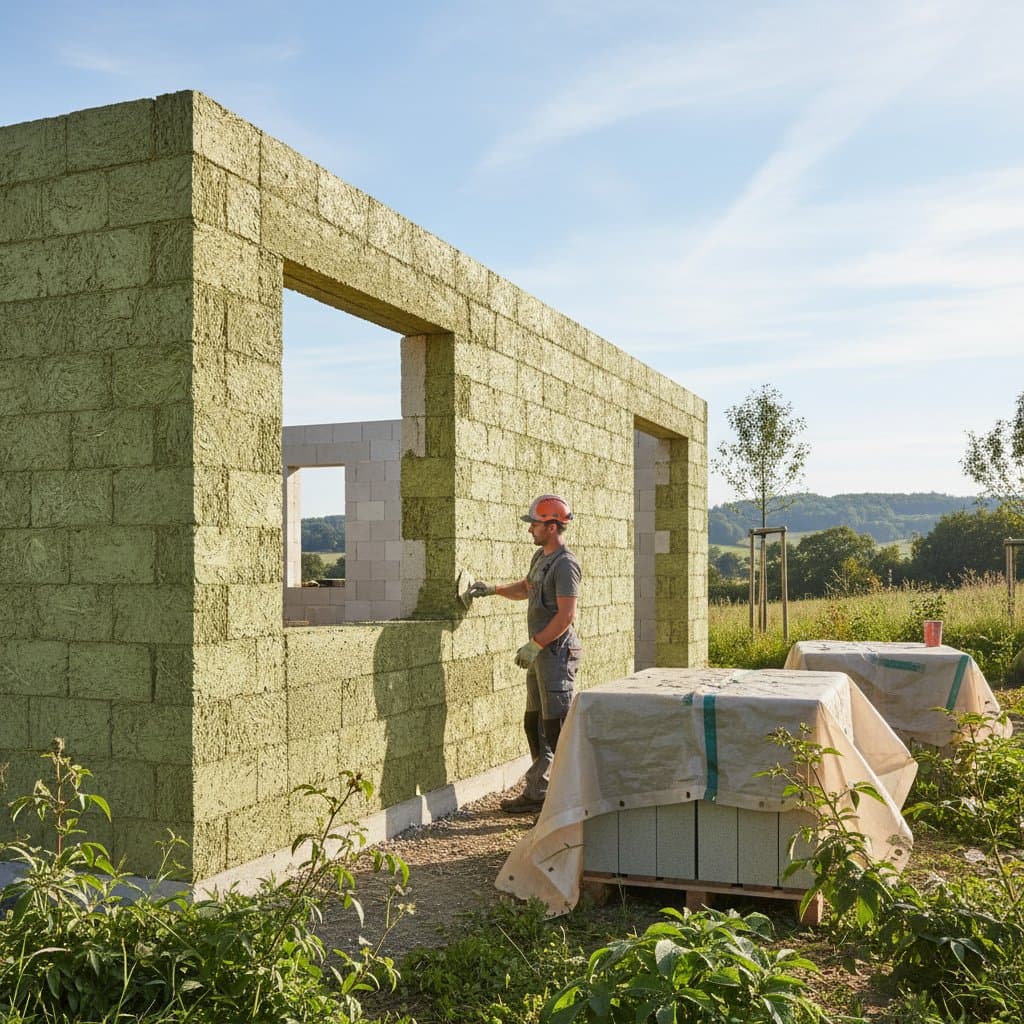
Hempcrete adapts to various project needs and budgets. Builders commonly apply it as infill within timber frames, pouring or spraying the mix into cavities for seamless insulation without thermal breaks. This cast-in-place method eliminates energy loss points found in many standard builds.
For expedited timelines, pre-cast blocks or panels offer an alternative, produced off-site for precise assembly. As a non-load-bearing material, hempcrete pairs with wooden or steel frames, providing versatility and a reduced environmental impact. Installation demands basic tools and limited safety measures, given the absence of hazardous substances.
Experienced builders note that mastering the curing process simplifies the work. The lime binds gradually with moisture, strengthening the walls over weeks and contributing to exceptional longevity.
Enhancing Energy Efficiency
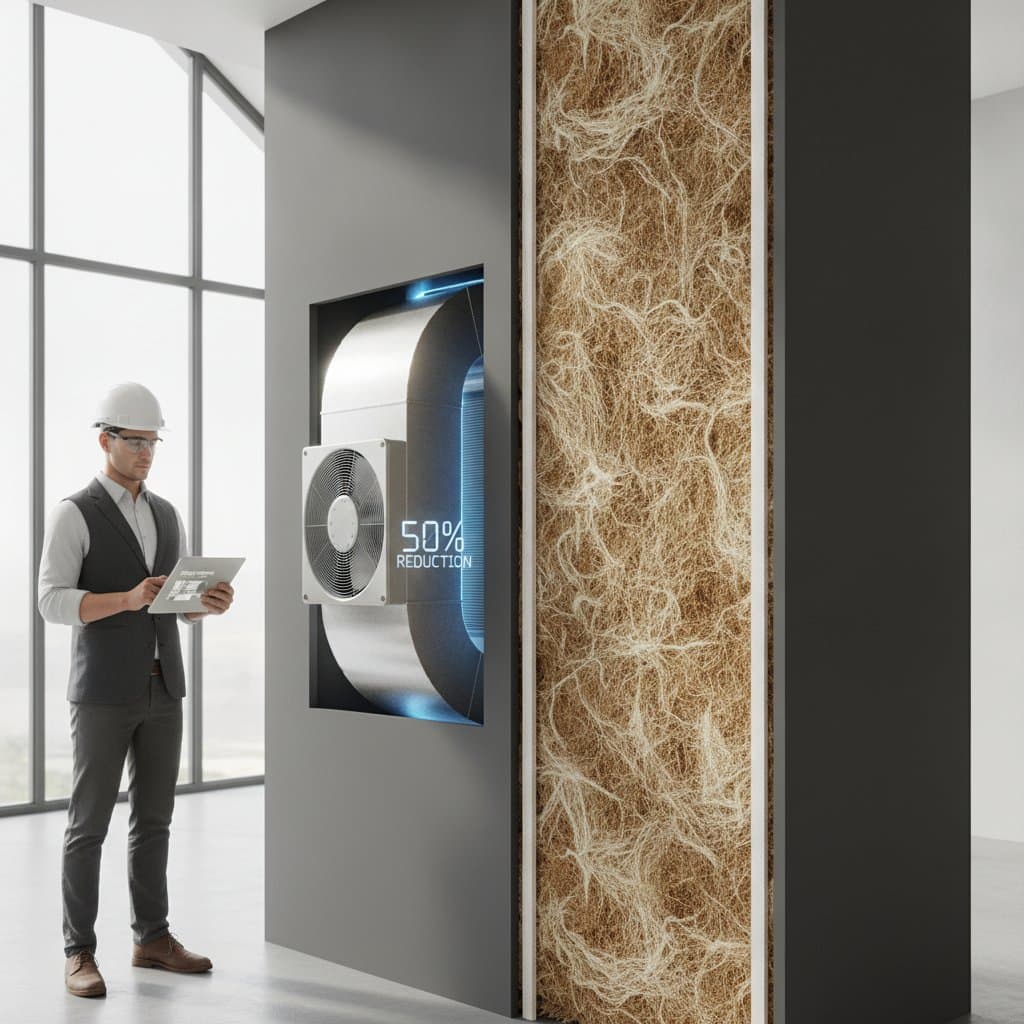
Hempcrete excels in thermal performance due to its cellular structure, which captures air for superior insulation. In regions with extreme temperature swings, these walls cut heating and cooling demands by 30 to 50 percent relative to typical constructions.
The high thermal mass allows slow heat absorption and release. It captures daytime solar warmth and dispenses it at night, fostering natural equilibrium and less reliance on mechanical systems.
Residents report a stable, draft-free interior climate. Breathable properties avert problems like moisture buildup or stale air in sealed structures.
Promoting Healthier Indoor Environments
Many insulations release volatile organic compounds from synthetic additives. Hempcrete eliminates such concerns, with its lime binder deterring mold, pests, and bacteria, and the hemp hurd fostering a balanced pH for clean air.
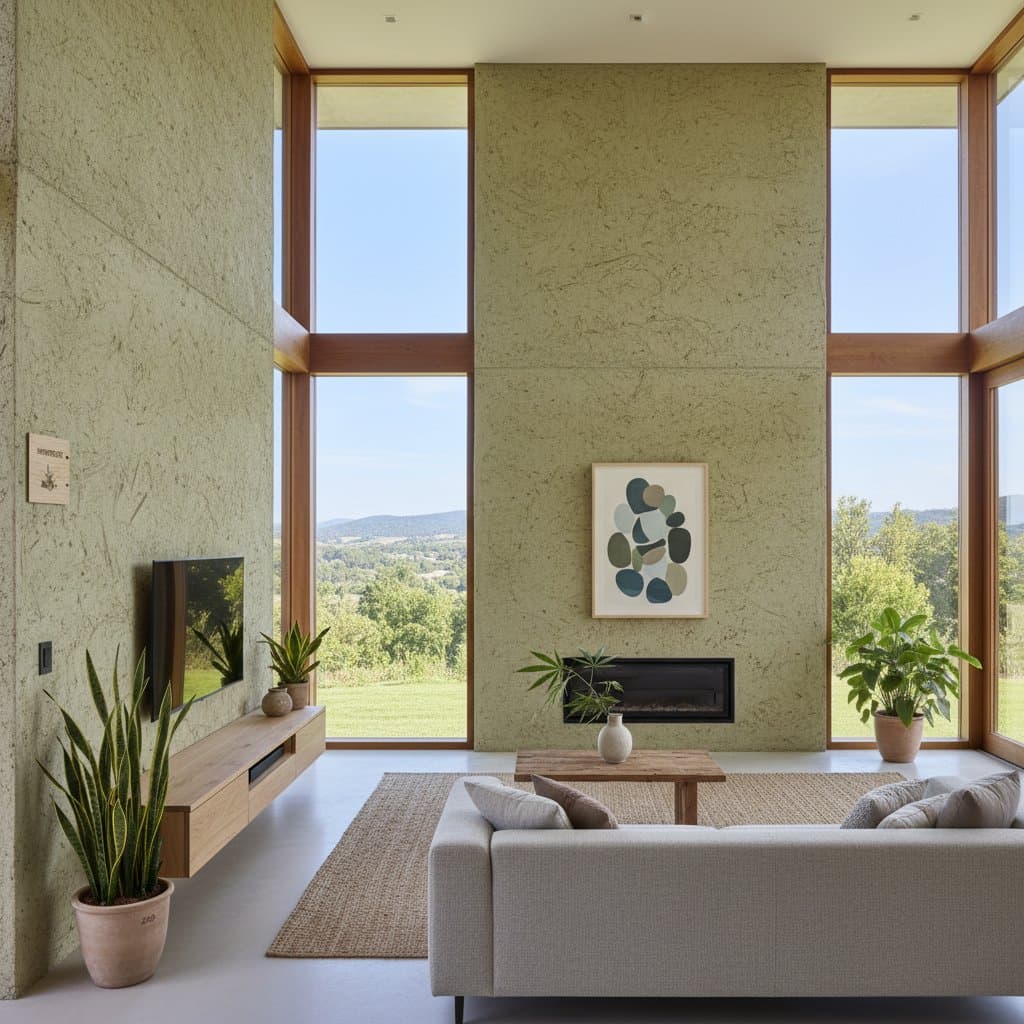
Individuals with allergies benefit from this setup, as it curbs maintenance needs by avoiding excess moisture. Paired with clay or lime plasters, it forms a dynamic surface that manages humidity and purifies air continuously.
Building biologists emphasize how hempcrete's humidity control limits dust mites and spores, leading to enhanced occupant comfort and health.
Economic Considerations
Initial hempcrete projects cost 10 to 25 percent more than conventional ones, due to specialized binders, hemp supply constraints, and skilled labor requirements. These factors elevate upfront expenses.
Over time, benefits accrue through energy reductions, potentially saving hundreds of dollars yearly on utilities. Its durability minimizes repairs, lowering total ownership costs.
Analyses from green building research project payback in 7 to 10 years, varying by location and rates. Post-recovery, ongoing savings persist alongside a negative carbon profile.
Green incentives, including tax credits and grants for low-emission materials, further bolster affordability in qualifying areas.
Broader Environmental Benefits
Hempcrete's carbon-negative profile stems from hemp's efficient carbon uptake during growth. Processing into hurd and binding with lime secures this carbon permanently.
Lime production emits some carbon, yet the net effect stays negative. Lifecycle assessments reveal hempcrete offsetting emissions from elements like windows or roofs.
Widespread use in communities could aid global emission targets. One hempcrete home sequesters tons of carbon, akin to neutralizing several cars' annual output.
At demolition, crushed hempcrete enriches soil as a nutrient source, embodying full-cycle sustainability uncommon in building products.
Overcoming Adoption Barriers
Hempcrete encounters hurdles in widespread use. Building codes frequently omit it, necessitating variances for approval.
Supply issues persist, as hemp farming grows but processing lags, affecting availability and pricing. This infrastructure gap prolongs projects.
Training gaps affect professionals, who must learn handling specifics to avoid errors in curing or moisture management.
Progress accelerates through educational programs from institutions and groups. As expertise spreads, expenses decline and codes adapt.
Emerging Innovations and Outlook
Carbon-neutral trends position hempcrete for expansion. Developers test it in taller structures, while prefabrication integrates it into modular designs.
Ongoing research develops composites with additional fibers for improved strength or faster setting, broadening uses to floors and roofs.
Hempcrete aligns with demands for eco-housing by combining environmental gains with superior livability, rooted in refined natural methods.
Steps to Incorporate Hempcrete
For new constructions or renovations, engage specialists in bio-materials to evaluate fit for your site, style, and finances.
Source local hurd and lime to cut transport impacts and ensure quality. Consider pre-cast options for efficiency or on-site casting for tailored results.
This approach yields enduring, low-impact structures that enhance daily life while supporting planetary health.