Geothermal Retrofits Reduce Home Energy Costs by Up to 60 Percent
- Complete a professional energy audit to identify insulation and sealing gaps.
- Assess site geology and available space for loop installation.
- Select the appropriate closed or open loop configuration.
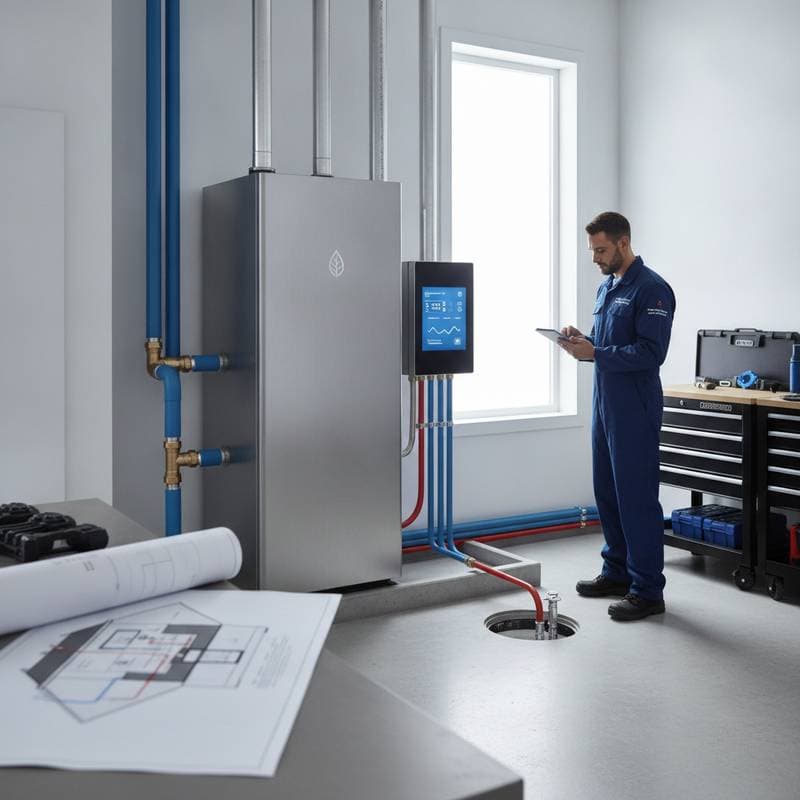
- Integrate the heat pump with existing ductwork or hydronic systems.
- Apply for permits and available rebates to lower initial expenses.
- Schedule routine filter changes and annual inspections.
Natural Comfort Through Ground Source Technology
A geothermal HVAC retrofit draws stable thermal energy from the soil to heat and cool a home. Homeowners experience steady indoor temperatures without the swings common to conventional furnaces and air conditioners. The system operates quietly and eliminates on site combustion.
Ground temperatures remain between 45 and 75 degrees Fahrenheit year round. This consistency allows the heat pump to transfer heat rather than generate it. As a result, heating and cooling expenses often drop by 40 to 70 percent.
Limitations of Standard HVAC Systems
Most existing homes rely on equipment that reacts to outdoor air temperature swings. Furnaces burn fuel while air conditioners consume electricity to counteract heat. Both approaches lead to frequent cycling and excess energy use.
In regions with extreme winters or humid summers these systems can consume 30 to 50 percent more energy than necessary. Geothermal retrofits replace that cycle with a stable underground heat source.
Core Advantages of a Retrofit
Homeowners gain several measurable benefits. Energy bills decline sharply. Equipment lasts longer because ground loops exceed 50 years of service. Indoor air quality improves without combustion byproducts. Operation remains nearly silent.
Carbon emissions fall by up to 70 percent. The property becomes less vulnerable to fuel price changes.
Planning Steps for Success
Perform an Energy Audit First
An audit reveals opportunities to tighten the building envelope. Added insulation and air sealing can reduce total energy demand by another 15 to 25 percent before the geothermal unit is installed.
Evaluate Soil and Lot Conditions
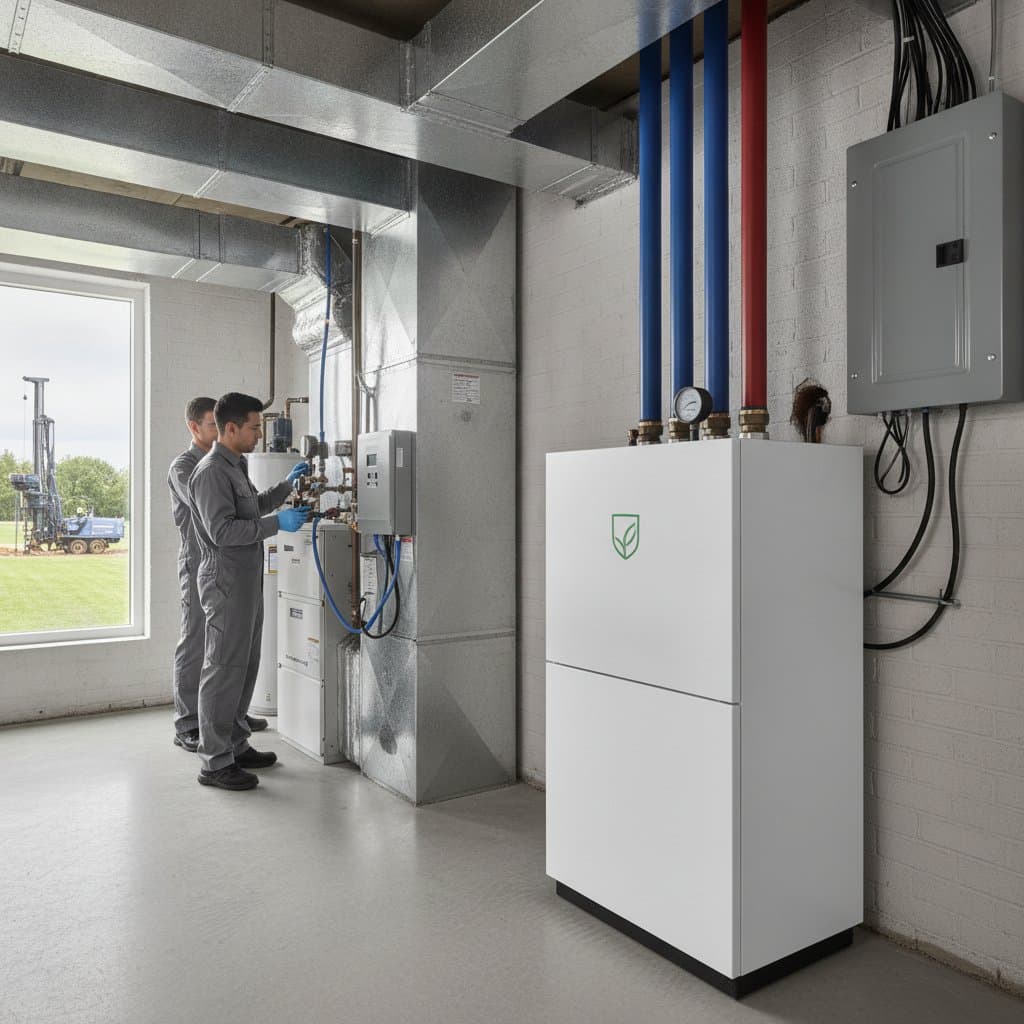
Vertical boreholes suit small urban lots. Horizontal loops work well on larger rural properties. A qualified installer tests soil conductivity and groundwater depth to confirm the best design.
Match System Type to Site Constraints
Closed loop horizontal systems require trenches roughly six feet deep. Vertical systems use boreholes between 150 and 300 feet. Open loop designs draw groundwater directly where local conditions permit.
Connect to Existing Distribution
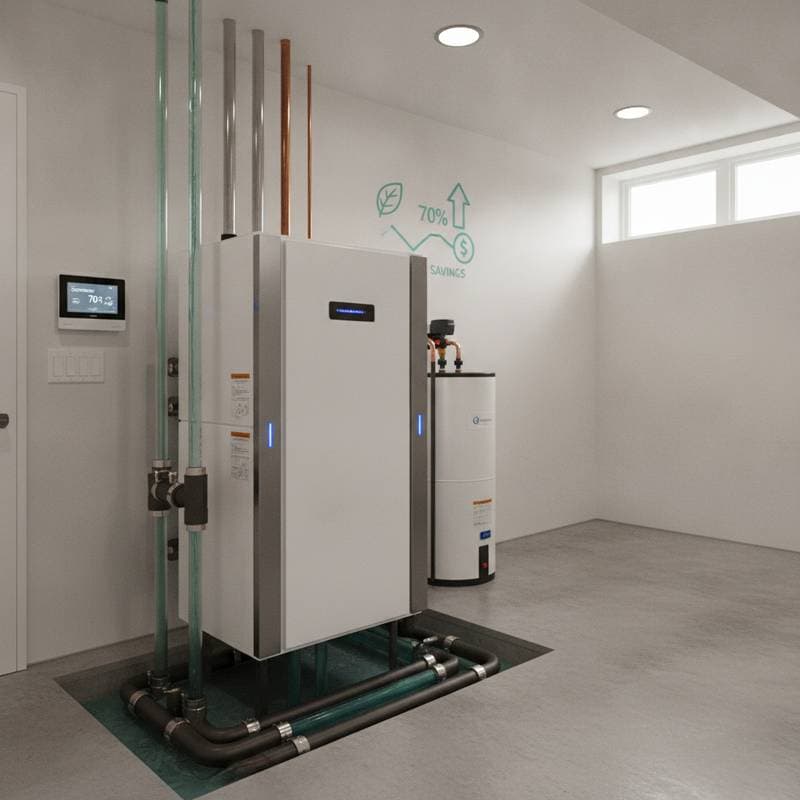
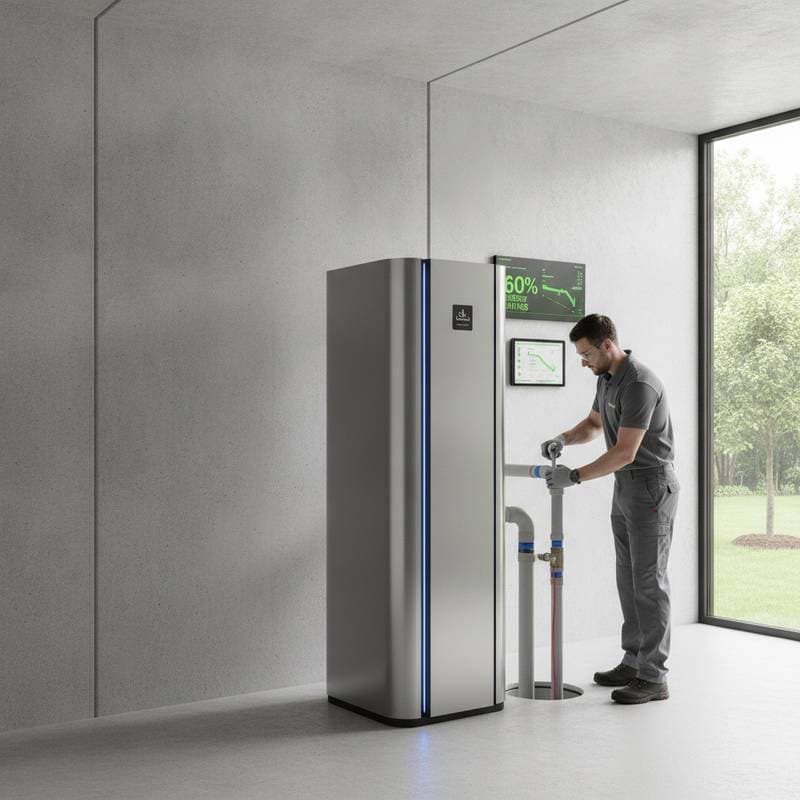
Many retrofits reuse current ductwork or radiant piping. The new heat pump replaces both the furnace and air conditioner. Leaky ducts should be sealed or replaced to protect efficiency.
Secure Permits and Incentives
Local codes govern drilling activities. Utility rebates and federal tax credits can offset 20 to 40 percent of project costs and shorten payback periods.
Daily Practices That Protect Performance
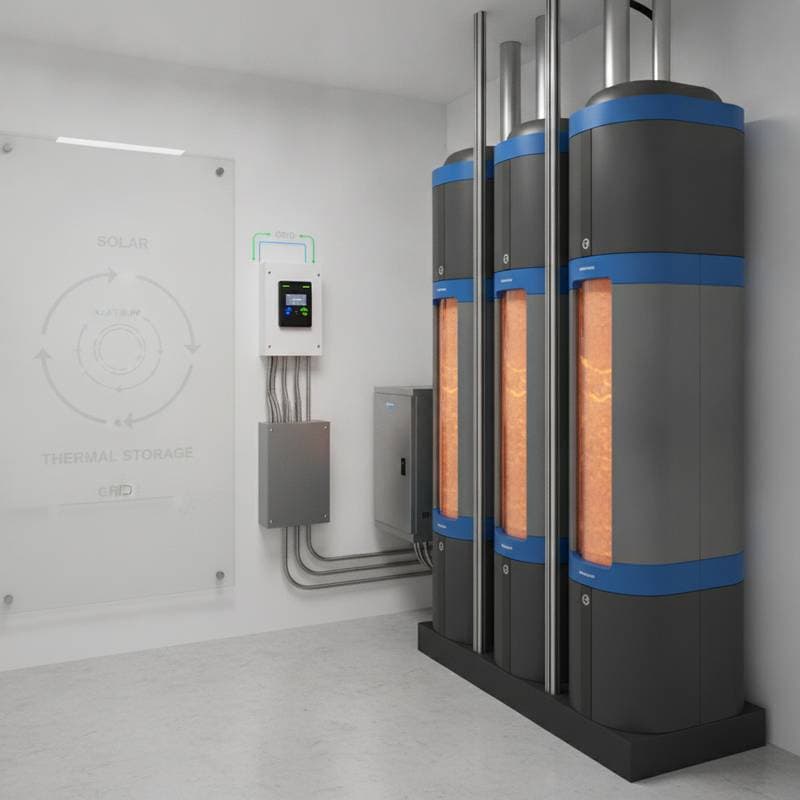
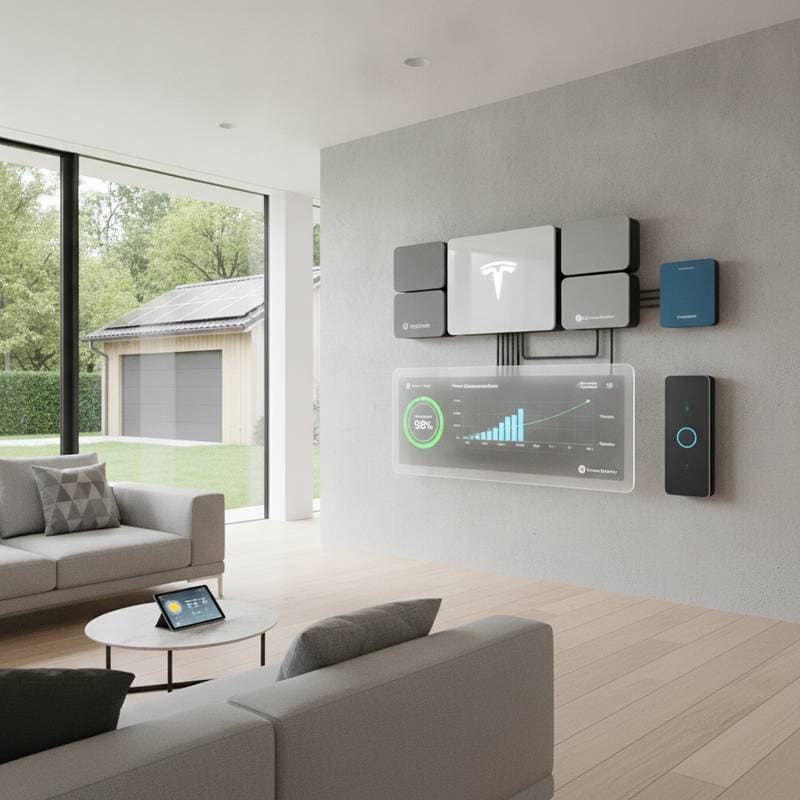
A smart thermostat with automated scheduling trims another 10 to 15 percent from energy use. Zoning dampers direct conditioned air only to occupied rooms. Filters changed every three months maintain airflow. Pairing the system with rooftop solar moves the home closer to net zero operation.
Financial Outlook
Installed costs range from 18,000 to 35,000 dollars depending on home size and loop type. Most owners recover that investment within five to eight years through utility savings. After payback, operating costs remain low because the primary energy source is free ground heat.
Environmental and Daily Quality Gains
Eliminating on site fuel combustion cuts household carbon output measurably. Indoor temperatures stay even without drafts. The absence of an outdoor compressor removes noise and visual clutter from the yard.
Addressing Typical Concerns
Modern drilling rigs complete most residential projects in under two weeks. Maintenance visits focus on fluid pressure and thermostat settings rather than frequent part replacements. Performance holds steady in cold climates because the ground temperature does not drop with the air temperature.
Next Actions for Homeowners
Gather recent utility statements and note any rooms that feel uneven. Contact a certified installer for a site assessment. Review current rebate programs before finalizing the design. Monitor energy data after startup to confirm expected savings.