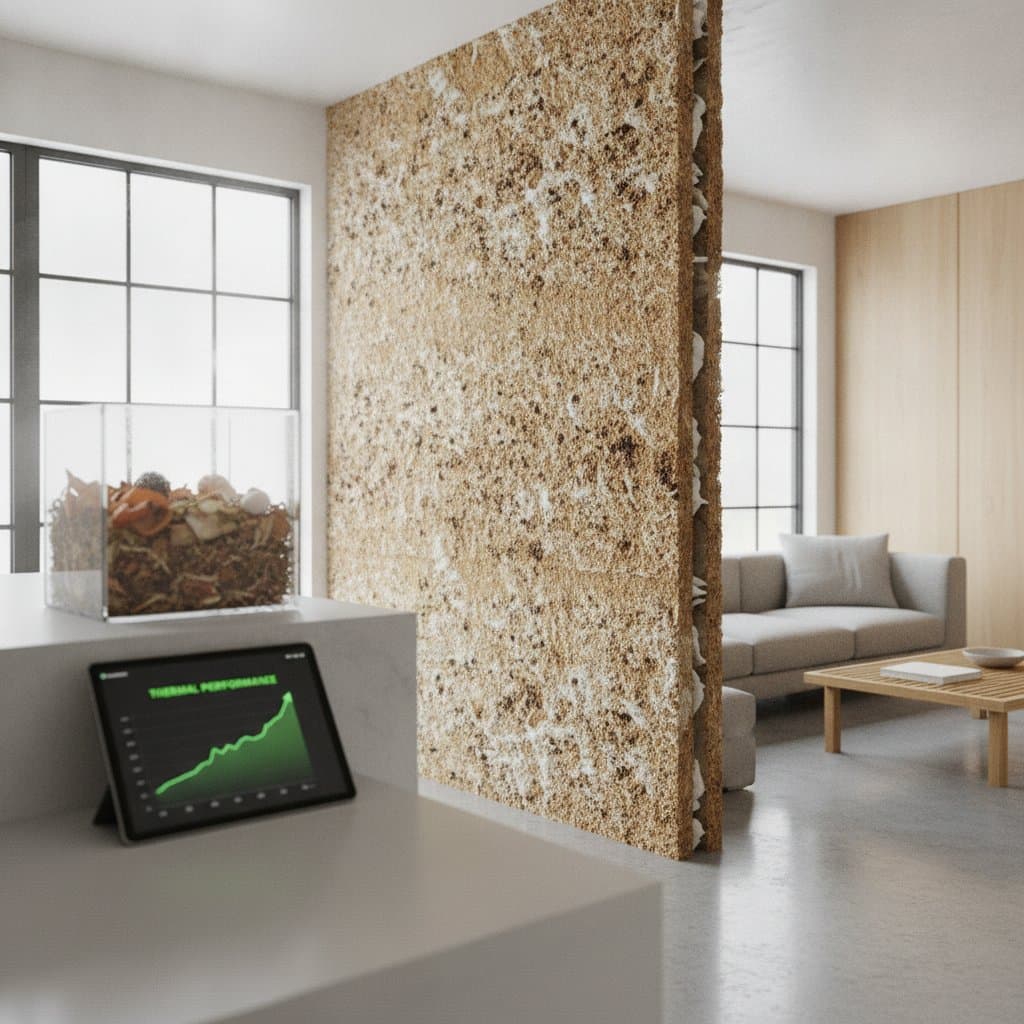
Grow Your Own Mycelium Insulation for Greener Homes
When you imagine insulation, fluffy fiberglass batts or rigid foam boards probably come to mind. Yet insulation can grow naturally on a kitchen counter from materials otherwise destined for waste. Mycelium insulation, formed from the root-like structure of fungi, provides a living and renewable option that shifts how builders approach sustainability.
Core Characteristics
- Mycelium insulation develops from fungal networks that colonize organic waste and produce a lightweight yet durable panel.
- Thermal performance reaches levels comparable to fiberglass, typically delivering an R-value of 3.5 to 4 per inch.
- The finished material remains fully compostable and free of synthetic binders or petrochemical additives.
- Home cultivation lowers material costs by as much as 70 percent relative to purchased bio-based panels.
- Natural resistance to fire and mold improves safety without added chemicals.
Mycelium Structure and Performance
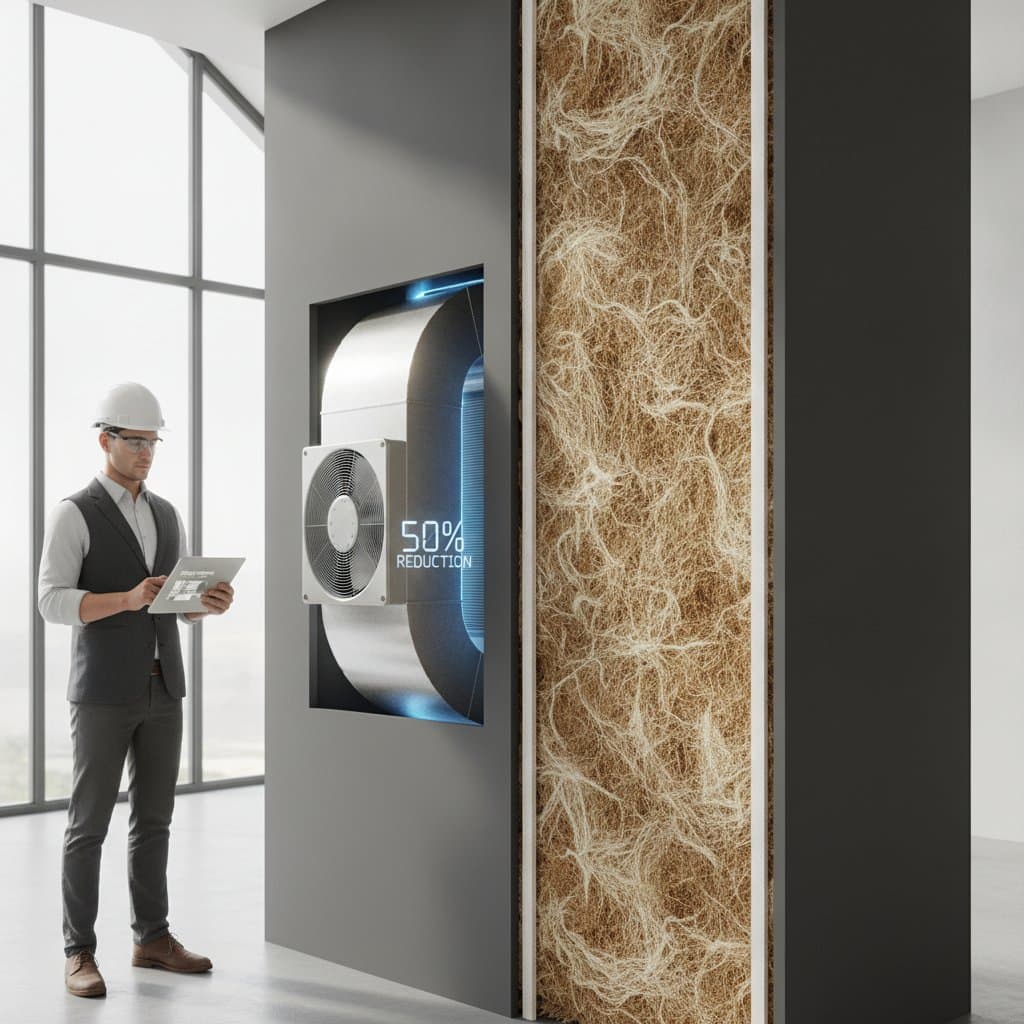
Mycelium consists of branching filaments called hyphae that form the vegetative body of a fungus. When these filaments receive a food source such as sterilized straw or sawdust, they bind the particles into a dense, foam-like block. After drying, the block becomes rigid, light, and capable of supporting modest structural loads.
The cellular arrangement traps numerous air pockets that slow heat movement. Because the material contains no synthetic resins, it releases no volatile organic compounds during or after installation. Its chitin-rich cell walls also deter ignition and microbial growth, which reduces the need for flame retardants or preservatives.
Reasons Homeowners Choose This Approach
Bio-based insulation appeals to those who want to lower the embodied carbon of their projects. Embodied carbon measures the greenhouse gases released during material production and transport. Mycelium insulation avoids fossil-fuel feedstocks and grows from local waste streams, which keeps its footprint minimal.
Production can occur on site, which removes shipping emissions and supports small-scale builders. A single household setup can generate several square feet of usable panels within one week under stable conditions.
Practical Advantages
- End-of-life composting returns nutrients to soil instead of adding to landfill volume.
- Absence of synthetic components eliminates off-gassing of formaldehyde and similar irritants.
- The material buffers indoor humidity by absorbing and releasing moisture as conditions change.
- Fire and mold resistance arise naturally from the biology of the fungus.
Cultivation Steps
Successful growth requires basic sterile technique and consistent environmental control. The following sequence produces panels suitable for interior walls or sheds.
Required Inputs
- Oyster mushroom spawn provides rapid colonization.
- Pasteurized agricultural waste such as straw or hemp hurds serves as the substrate.
- Rigid molds define panel thickness and shape.
- Clean containers and gloves limit contamination risk.
- A spray bottle maintains surface moisture during incubation.
Process Outline
- Heat the substrate with water to pasteurization temperature, then drain until it reaches a moist but not wet consistency.
- Combine the cooled substrate with spawn in a clean workspace and pack the mixture into molds.
- Hold the filled molds in a dark space at 70 to 75 degrees Fahrenheit with moderate humidity for five to seven days.
- Remove the colonized block and dry it slowly with airflow or low heat until weight stabilizes.
- Trim the dried panel to fit between studs or use it as an acoustic layer.
Performance Comparison
| Material Type | R-Value per Inch | Fire Resistance | Compostable | Embodied Carbon | Cost (per sq. ft.) |
|---|---|---|---|---|---|
| Fiberglass | 2.9 - 3.8 | Moderate | No | High | 1.00 - 1.50 |
| Foam Board | 3.5 - 5.0 | Low | No | High | 1.20 - 2.00 |
| Cellulose | 3.2 - 3.8 | Moderate | Yes | Medium | 0.80 - 1.20 |
| Mycelium | 3.5 - 4.0 | High | Yes | Low | 0.40 - 0.80 (DIY) |
Mycelium panels deliver balanced results across thermal, safety, and environmental metrics. While foam may exceed it in raw R-value, the combined benefits of low cost, compostability, and absence of toxins favor mycelium for many renovation projects.
Managing Common Issues
Contamination appears most often when tools or surfaces carry competing organisms. Sterilize all equipment and work in a draft-free area to reduce this risk. Excess moisture encourages bacterial growth, so monitor humidity with a simple meter and adjust misting accordingly.
Drying too quickly with high heat can cause surface cracks. Allow panels to lose moisture gradually over several days in a well-ventilated room.
Scale Production for Larger Projects
Once a small batch succeeds, multiple molds or modular trays increase output without added complexity. Local makerspaces often provide shared sterilization equipment that improves consistency across batches. Community groups can coordinate production to supply several households from one controlled workspace.
Begin Your Experiment
Test the method first on a small outbuilding or interior partition. Record temperature and humidity readings over several weeks to observe real-world behavior. Refinements gained from these trials translate directly into larger, more reliable installations that support both comfort and resource conservation.