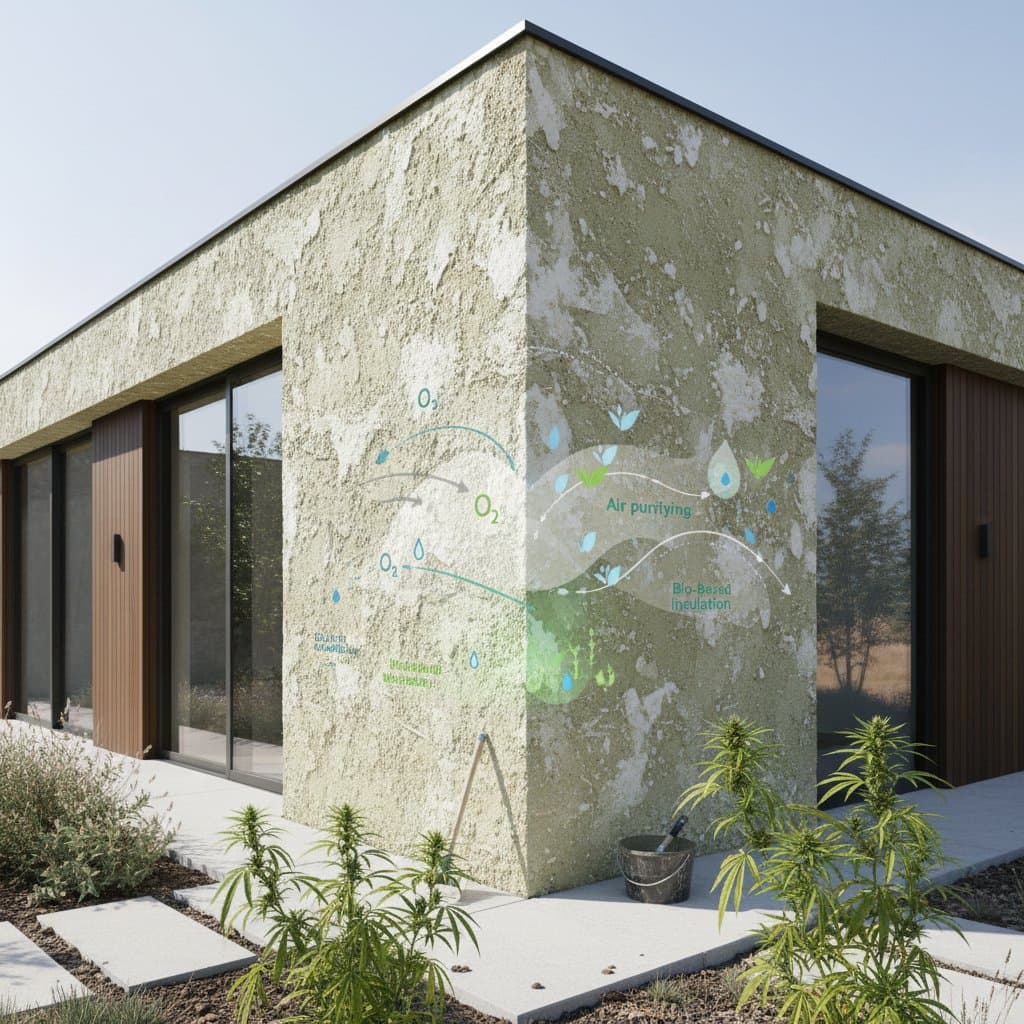
Key Points
- Hempcrete combines hemp hurd, lime, and water to create a carbon-sequestering wall material.
- It provides high thermal insulation, moisture regulation, and durability while storing more carbon than it emits during production.
- Although initial costs exceed those of traditional insulation, lifecycle savings and performance advantages yield favorable returns.
- The material fits both new construction and retrofits, adapting to various climates and regulatory environments.
- Professional installation ensures structural integrity and compliance with building codes.
The Opportunity Hidden in Your Walls
Consider a wall that regulates temperature naturally, manages humidity, and sequesters carbon from the atmosphere. This scenario represents reality through hempcrete, a bio-based material that integrates agricultural heritage with contemporary environmental priorities. As builders seek methods to minimize ecological footprints while preserving comfort and efficiency, hempcrete stands out as a viable choice.
Escalating material prices and stricter environmental standards compel a reevaluation of wall construction practices. Conventional concrete and insulation release substantial greenhouse gases in production, contributing to high embodied carbon. Hempcrete counters this by employing plant-derived components that capture carbon during cultivation, resulting in a potentially carbon-negative system over its lifespan.
How Hempcrete Works
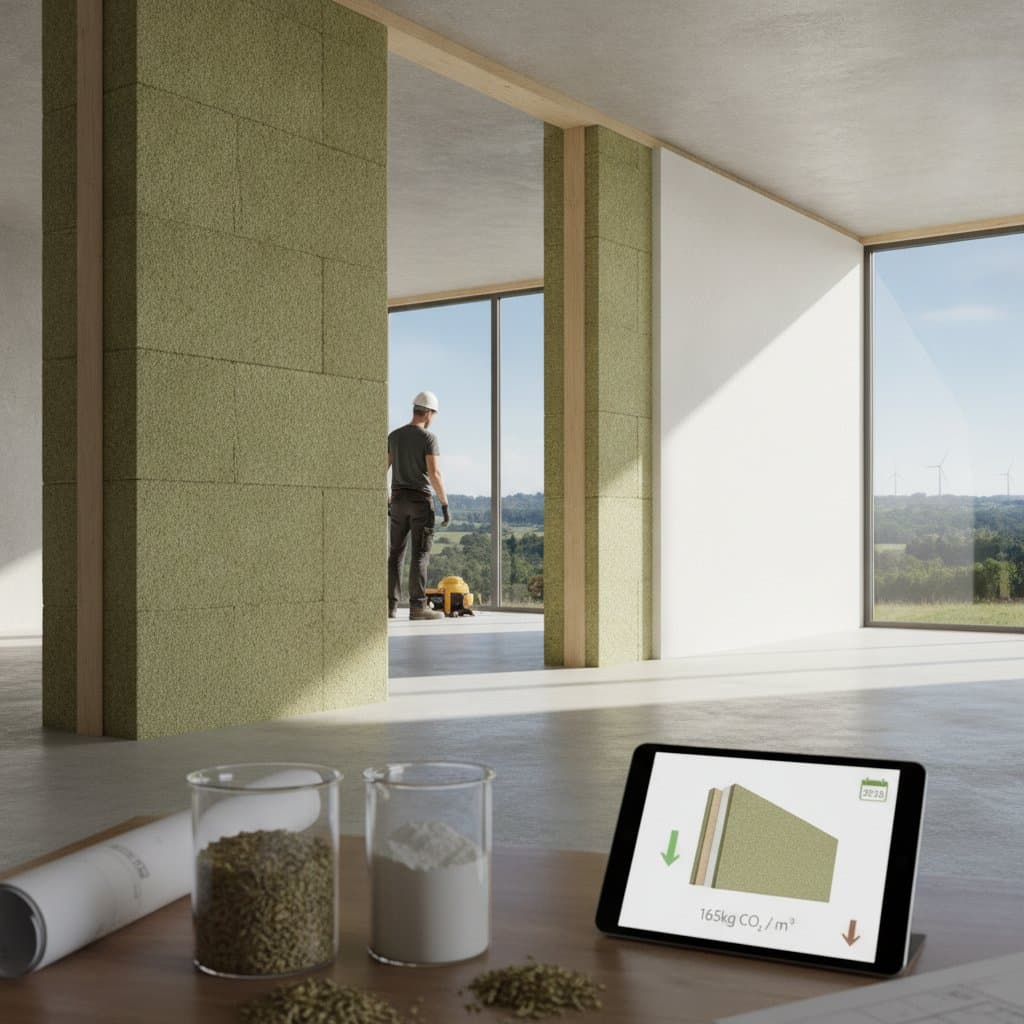
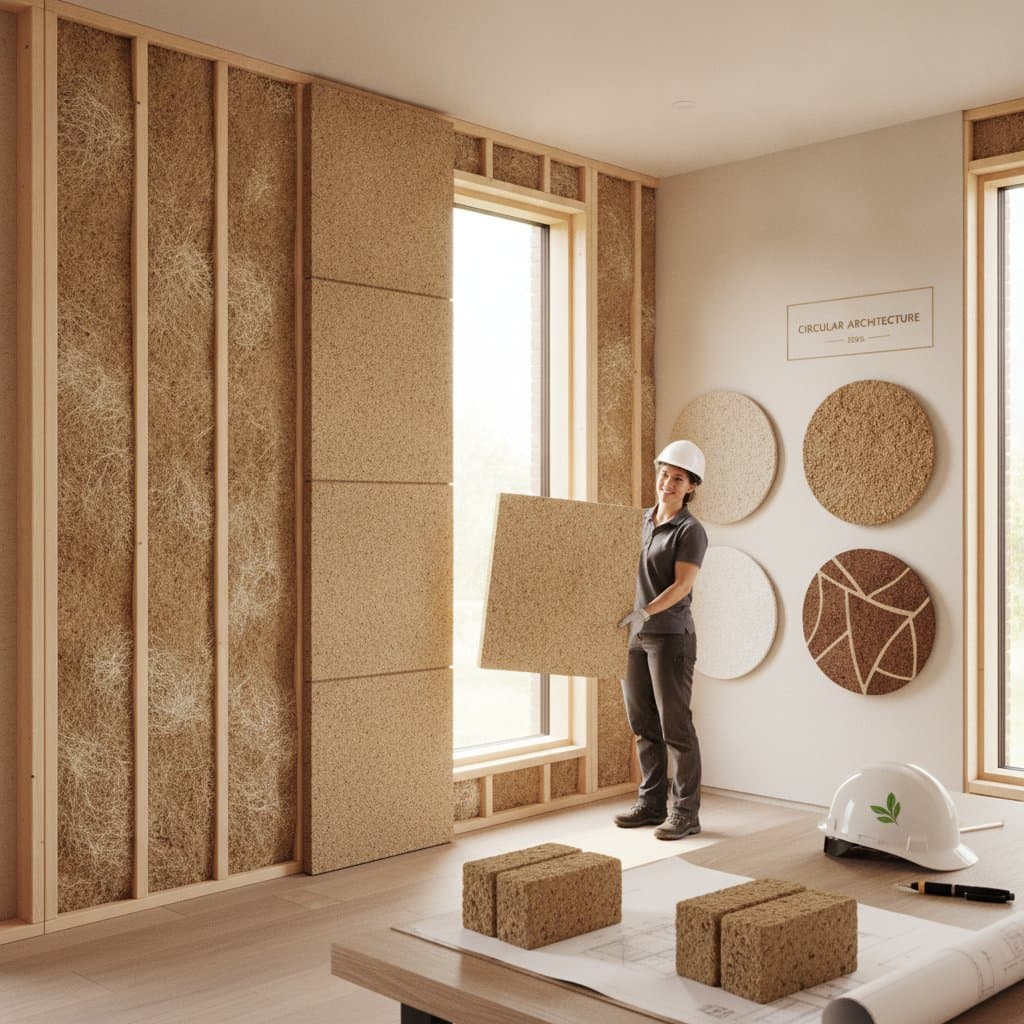
Hempcrete results from mixing the inner woody core of the hemp plant, called hurd, with a lime-based binder and water. The mixture yields a lightweight, porous substance cast into walls or used as infill within structural frames. Hempcrete does not bear loads; it depends on timber, steel, or similar framing for support.
The Science Behind Carbon Sequestration
Hemp plants absorb carbon dioxide rapidly during growth, incorporating it into their fibers. In hempcrete form, this carbon stays locked within the material. The lime binder absorbs additional carbon during curing, reverting to limestone-like compounds. Studies show that one cubic meter of hempcrete sequesters up to 150 kilograms of carbon dioxide, varying by mix and curing. This process positions hempcrete ahead of traditional materials, which generate significant emissions in manufacturing.
Thermal Comfort and Energy Efficiency
The cellular makeup of hempcrete creates air pockets for effective insulation. Thermal conductivity typically measures 0.05 to 0.10 watts per meter-kelvin, performing well in diverse climates. It also controls humidity by absorbing excess moisture in damp conditions and releasing it in dry ones, fostering consistent indoor environments and easing demands on HVAC systems.
Buildings with hempcrete walls achieve 30 to 60 percent reductions in heating and cooling costs compared to standard assemblies. These efficiencies can recoup higher upfront expenses within 20 years. For those prioritizing sustainability, hempcrete aligns financial and ecological objectives.
Durability and Maintenance
Hempcrete excels in longevity, forming a mineralized structure resistant to mold, pests, and fire upon curing. Lime repels insects and curbs fungal development, while vapor permeability avoids internal condensation. Well-built hempcrete walls endure like masonry, needing little upkeep.
Its light weight eases foundation loads, cutting long-term repair expenses. Paired with lime plaster finishes, hempcrete retains strength and appearance, requiring only periodic surface treatments.
Cost, Value, and Return on Investment
Hempcrete installation costs 10 to 20 percent more than conventional systems initially. Lifecycle assessments reveal savings from lower energy use, better air quality, and reduced maintenance. Payback often occurs in 7 to 12 years, influenced by location, energy rates, and design.
Key Financial Considerations
- Material Cost Range: $180 to $250 per cubic meter for the hempcrete mixture
- Labor and Installation: 30 to 40 percent of total wall assembly expenses
- Energy Savings: 30 to 60 percent decrease in heating and cooling costs
- Resale Value Impact: Properties featuring sustainable elements fetch 5 to 10 percent premiums in green markets
Regional factors and contractor skills affect these figures, but they highlight hempcrete as a strategic investment.
Health and Wellness Benefits
Indoor air quality profoundly affects occupant health. Hempcrete promotes balanced temperatures and humidity, minimizing allergens and irritants. Its non-toxic, breathable composition eliminates off-gassing from synthetic alternatives, yielding purer air and stable conditions.
Research indicates that humidity levels of 40 to 60 percent curb pathogens and enhance comfort. Hempcrete sustains this range passively, benefiting families seeking healthier living spaces beyond mere efficiency.
Construction and Installation Realities
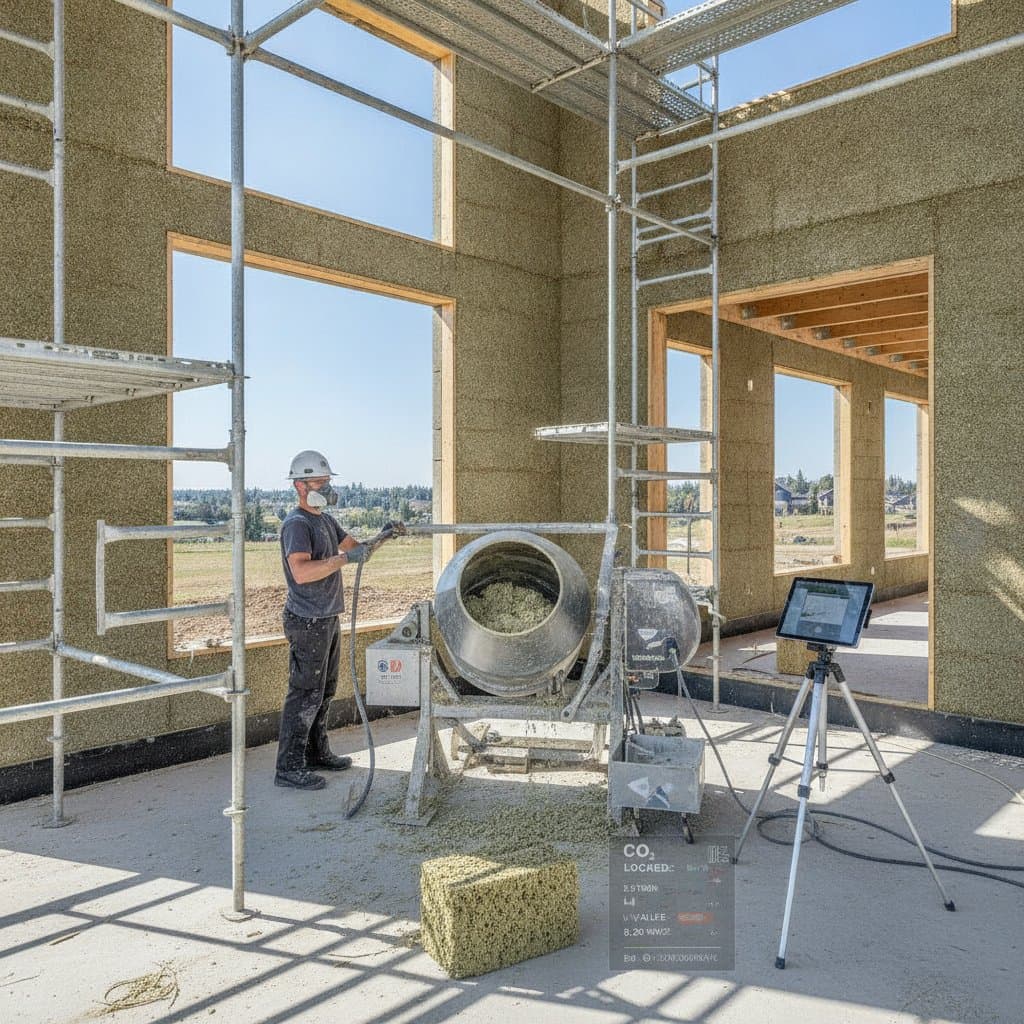
On-site mixing suits hempcrete, but experts in bio-materials ensure best results through precise ratios, curing, and moisture control. Precast blocks or panels accelerate projects in areas with reliable supplies.
Framing and finishes must complement hempcretes moisture behavior; breathable paints and no plastic barriers prove essential. Code adherence demands engineer input for major builds.
Integration with Other Systems
Hempcrete thrives in comprehensive designs, amplified by efficient windows, solar setups, and natural ventilation. For renovations, begin with walls, then advance to roofs, windows, and HVAC for full optimization.
Regional and Climate Adaptability
Hempcrete adapts to varied conditions: it combats mold in humid areas and conserves heat in arid or cold ones. Local sourcing cuts transport emissions and bolsters agriculture.
Code variations necessitate supplier checks and certifications. Collaborate with professionals early to secure approvals and prevent delays.
Common Misconceptions
Myth 1: Hempcrete derives from illegal cannabis.
Industrial hemp for construction has trace psychoactive elements and qualifies for legal farming under licenses.
Myth 2: Hempcrete retains a plant-like odor.
Cured material remains scent-free, as lime neutralizes organics.
Myth 3: Hempcrete lacks strength.
Framed properly, it withstands residential stresses reliably.
Myth 4: Hempcrete demands intensive upkeep.
Routine limewash or cleaning suffices for preservation.
Steps to Incorporate Hempcrete
Evaluate your project goals, whether new builds or upgrades. Engage architects versed in bio-materials for cost and feasibility reviews. Obtain samples, confirm supplier data, and proceed with certified installation to realize hempcretes benefits.