Key Points
- Recycled ocean plastic stands out as a top choice for eco-friendly kitchen renovations, blending innovation with environmental responsibility.
- These countertops deliver modern aesthetics alongside significant ecological benefits, converting ocean debris into robust, visually appealing surfaces.
- Property owners benefit from affordable options, exceptional longevity, and a compelling narrative that elevates resale potential.
- Selecting ocean-recovered materials aids marine restoration initiatives and diminishes reliance on new plastics and resource-heavy alternatives such as stone or concrete.
The Importance of Ocean Plastic Materials
Plastic pollution in oceans compels designers, producers, and residents to reconsider material origins and reuse strategies. Annually, vast quantities of plastic infiltrate marine environments, fragmenting into microplastics that harm marine life, wildlife, and human well-being. Repurposing this plastic for sturdy construction elements shifts it from a planetary burden to a viable, renewable asset.
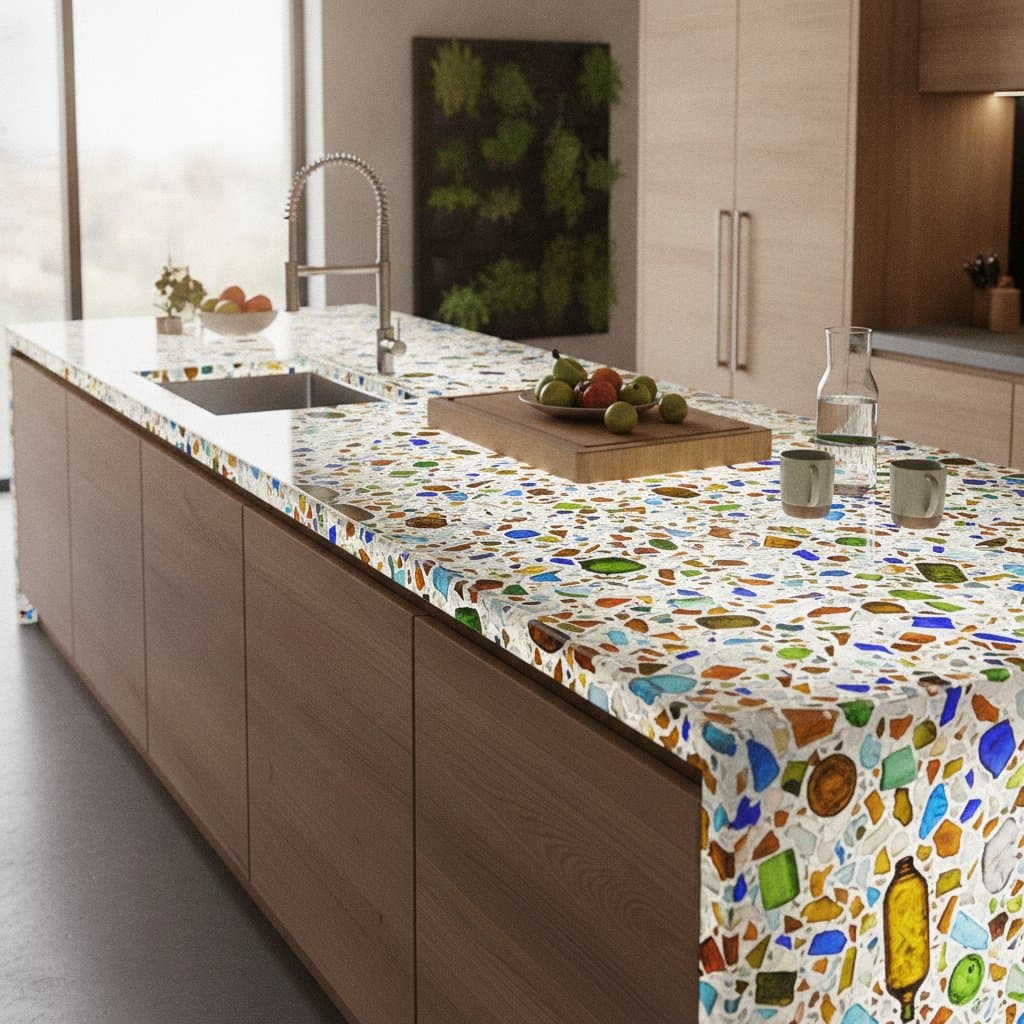
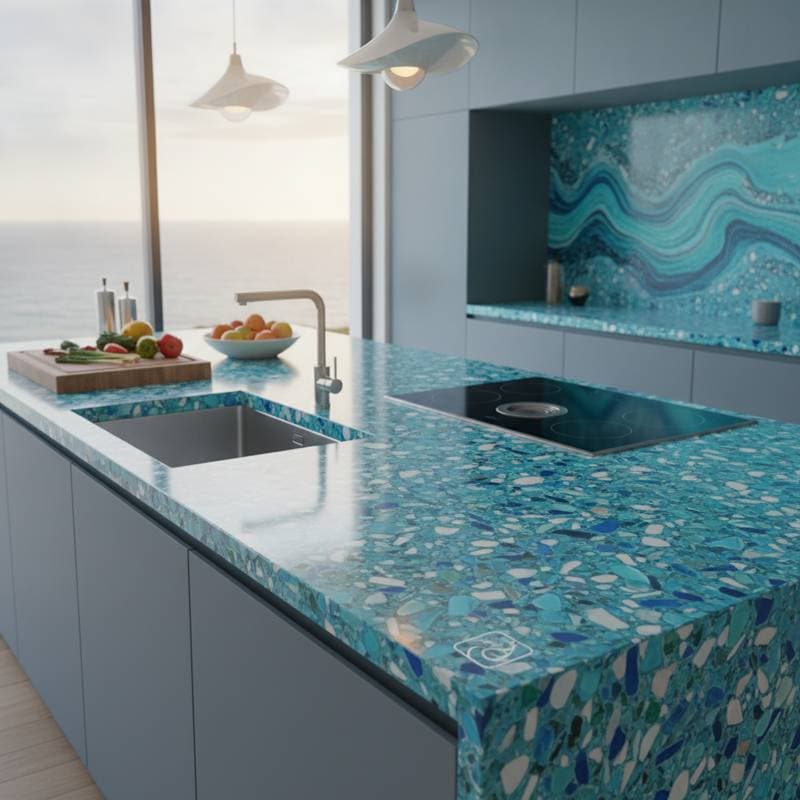
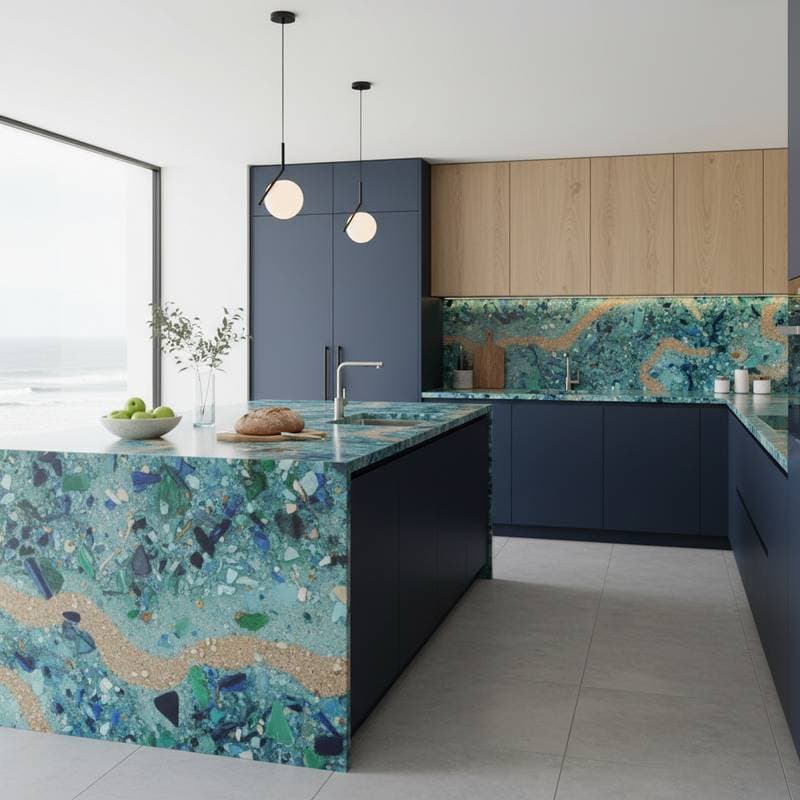
Manufacturers create recycled ocean plastic countertops by gathering, categorizing, cleansing, and compressing assorted recovered plastics, frequently combined with mineral additives or bio-based resins. This process yields a solid composite resembling stone in appearance and texture, yet with superior adaptability and reduced mass. Numerous products boast over 70 percent recycled content, while others approach full utilization of reclaimed plastic.
Beyond their sustainability story, these surfaces meet everyday functional needs. They withstand humidity, spills, and fractures, rendering them suitable for demanding areas like kitchens. Their diminished carbon emissions relative to quartz or granite appeal to buyers who prioritize green practices without sacrificing strength or sophistication.
Economic Factors and Return on Investment
Sustainable options thrive when they align with financial realities. Recycled ocean plastic countertops span from accessible to upscale pricing, influenced by slab thickness, surface treatment, and manufacturer. Installation costs generally position them between standard quartz and luxury granite levels.
Several elements drive enduring return on investment:
- Durability: These surfaces endure for decades under routine care, minimizing future expenses.
- Market Appeal: Eco-features draw discerning purchasers ready to invest more in thoughtfully constructed properties.
- Efficiency Gains: Certain composites improve light reflection, potentially lowering energy use for illumination.
- Maintenance Economy: Simplified care routines cut costs on protective treatments and specialized cleaners.
Market research indicates that green kitchen enhancements often recoup 60 to 80 percent of costs upon resale, varying by execution and location. Although specifics differ, the pattern shows eco-materials as valuable both ethically and economically.
Installation and Care Instructions
Installing recycled plastic composites mirrors procedures for quartz or solid-surface options. Specialists shape and finish slabs with conventional tools, benefiting from the material's lighter weight for simpler transport and manipulation. Experts advise professional fitting for expansive or intricate designs to achieve tight seams and adequate underpinning.
Daily upkeep involves gentle soap and water solutions. Harsh abrasives damage the finish, so users avoid them to sustain gloss. A key advantage lies in the ability to polish out minor scratches, promoting longevity and reducing the need for wholesale replacements.
During renovation planning, align countertop choices with cabinets, fixtures, and floors. The distinctive veining in recycled ocean plastic calls for harmonious pairings that accentuate its inherent patterns without overwhelming the space.
Material Comparison Overview
Homeowners assessing countertops frequently weigh recycled ocean plastic against quartz, granite, and concrete. While each material has merits, recycled composites excel in harmonizing environmental and practical attributes.
- Quartz: Provides uniform hues and resilience, though it depends on extractive mining and energy-intensive fabrication.
- Granite: Delivers natural allure, but its density, permeability, and quarrying process pose challenges.
- Concrete: Allows personalization, yet risks fissures and demands ongoing sealing.
- Recycled Ocean Plastic: Features low weight, ease of repair, one-of-a-kind visuals, and creation from upcycled sources rather than fresh mining.
Such evaluations explain the growing preference among professionals for ocean plastic in homes and businesses. It matches rivals in capability while slashing ecological demands.
Answering Frequent Inquiries
Do recycled plastic countertops handle heat well?
They resist moderate temperatures, though placing hot cookware on protective pads prevents any potential surface stress.
Will they lose color or develop stains over time?
Premium formulations include UV protectants to preserve vibrancy in sunlit or well-lit kitchens.
Are they compatible with undermount sinks?
Yes, installers can adhere sinks securely for a clean, bacteria-resistant edge.
Can custom shades be ordered?
Suppliers provide tailored mixes, and some allow customer-supplied recycled plastics for a custom backstory.
How do they stack up against bamboo or recycled glass environmentally?
Bamboo grows quickly and glass adds visual depth, but ocean plastic uniquely tackles sea pollution head-on.
Steps to Incorporate Ocean Plastic Countertops
Homeowners pursuing green upgrades find recycled ocean plastic countertops deliver prompt and sustained advantages. Begin by engaging regional installers experienced with accredited providers. Examine physical samples to assess tones and textures in your home's lighting.
Verify certifications for recycled composition and seek guidance on ongoing maintenance. This approach ensures a seamless integration that enhances both style and planetary health.