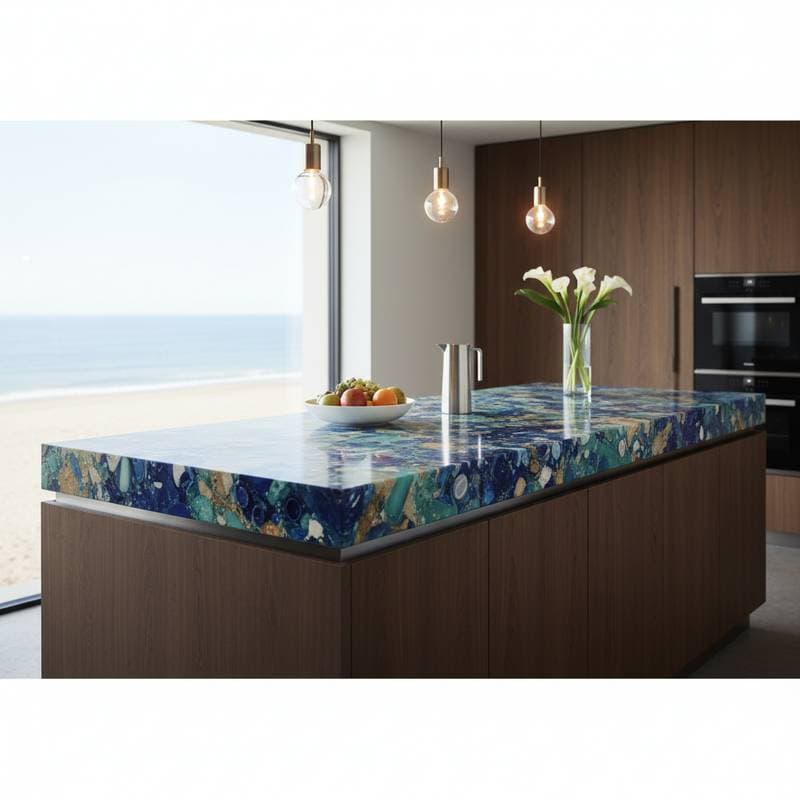
Key Points
- Ocean plastic countertops emerge as a fashionable, robust, and environmentally responsible option for surfaces.
- These materials repurpose ocean debris into visually appealing, practical products ideal for kitchens, bathrooms, and commercial environments.
- Prices typically fall between $55 and $120 per square foot, influenced by design intricacy and material grade.
- Correct installation promotes extended durability, lowers ongoing maintenance expenses, and lessens ecological footprint.
- As public knowledge of ocean pollution increases, these countertops serve as a wise choice for property owners committed to green living.
The Challenge of Marine Plastic Pollution
Marine plastic pollution stands as a critical environmental issue today. Each year, millions of tons of plastic enter the oceans, harming marine life, disrupting fisheries, and degrading water purity. This waste resists natural breakdown, persisting in ecosystems for hundreds of years without intervention. Conventional recycling methods face difficulties in retrieving ocean plastics due to factors like contamination, material wear, and the expansive nature of collection areas.
Property owners frequently wonder whether personal decisions can influence broader environmental outcomes. The response confirms that individual actions matter significantly. Each square foot of ocean plastic countertop redirects approximately ten pounds of plastic away from oceans and shorelines. Thus, a simple home renovation can play a direct role in preserving marine health. The effectiveness depends on ethical sourcing, precise processing, and seamless incorporation into living spaces.
The Manufacturing Process for Ocean Plastic Countertops
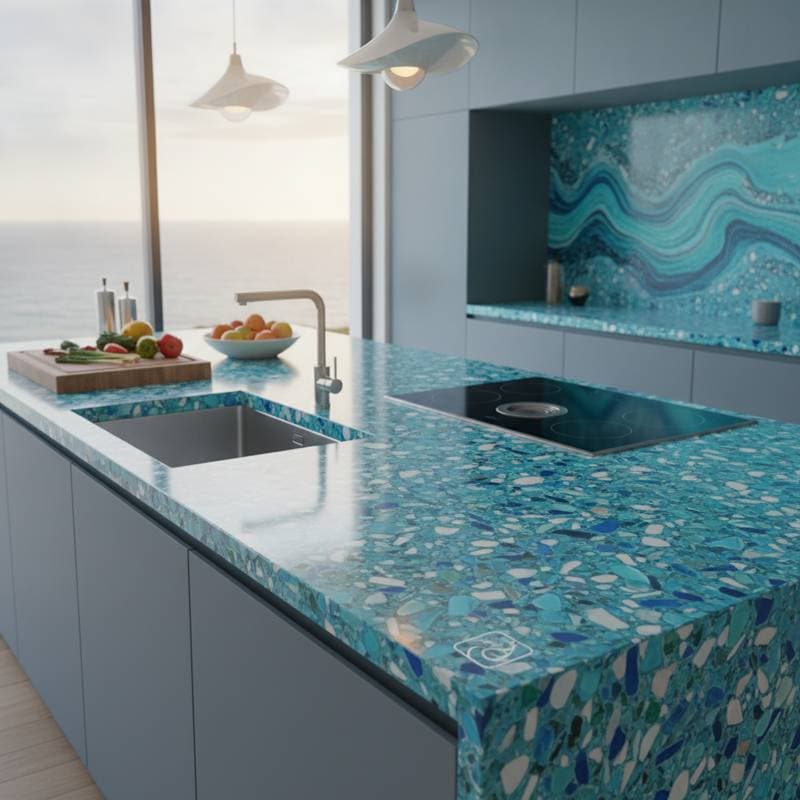
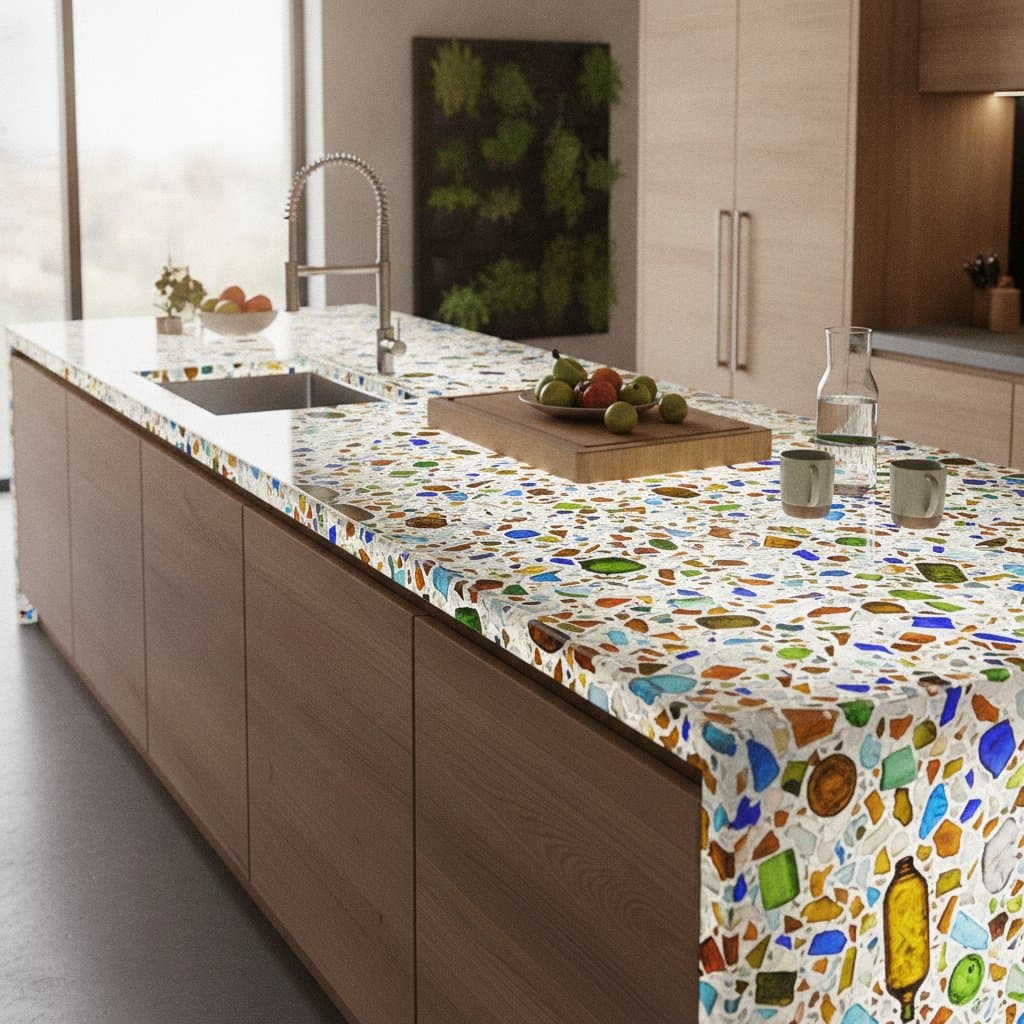
Creating ocean plastic countertops involves a sophisticated combination of technical precision and creative design. Workers collect plastics from marine environments, then sort them by hue and polymer composition. The materials undergo thorough cleaning, shredding, and melting into specialized resin compounds. This blend compresses into flat sheets or pours into custom molds to produce solid slabs. The final product features inherent color flecks and textures that highlight its recycled heritage, setting it apart from conventional options.
Manufacturers frequently integrate renewable energy sources during production to cut down on carbon outputs relative to standard methods. Certain companies collaborate with verified ocean cleanup initiatives to guarantee traceable origins, providing clear documentation that resonates with sustainability-focused buyers. For instance, slabs might incorporate up to 90 percent post-consumer ocean plastic, verified through independent audits, ensuring both quality and impact.
Strategies to Enhance Home Sustainability
Integrating ocean plastic countertops with complementary eco-upgrades amplifies overall home efficiency. Consider these targeted pairings to maximize benefits.
- Incorporate Low-Flow Fixtures: Install faucets and showerheads that limit water usage to under 1.5 gallons per minute, conserving resources in high-traffic areas.
- Install LED Task Lighting: Select bulbs with 800 lumens output and warm color temperatures to highlight the subtle patterns in recycled surfaces while saving up to 75 percent on energy.
- Opt for Reclaimed Cabinetry: Source wood from salvaged structures or certified forests to extend the sustainable narrative throughout the room.
- Use Low-VOC Adhesives: Choose sealants emitting less than 50 grams of volatile compounds per liter to safeguard indoor air and occupant health.
In my experience as a green building consultant, clients who layer such enhancements achieve compounded savings in utilities and maintenance. These combinations not only reduce immediate resource consumption but also build long-term resilience against environmental shifts.
Broader Environmental and Social Benefits
Each ocean plastic countertop embodies a narrative of ecological restoration. Producers often ally with shoreline communities to create employment in cleanup efforts and deliver training in recycling practices. Purchases from these brands channel funds into habitat protection and waste management programs, fostering both planetary and human well-being. For example, one leading supplier allocates five percent of sales to reef rehabilitation projects in the Pacific, directly tying consumer choices to tangible conservation outcomes.
Within frameworks like LEED or WELL certifications, these materials earn points in the Materials and Resources section. Projects incorporating at least 20 percent recycled content qualify for credits related to sustainable sourcing and pollution prevention. As an advisor in sustainable construction, I recommend tracking material specifications meticulously. Such documentation supports applications for rebates or incentives, turning eco-investments into financial advantages.
Adapting Installation to Local Conditions
Local weather patterns influence the performance of ocean plastic countertops. In humid coastal zones, select adhesives rated for 95 percent relative humidity and ensure adequate airflow to avoid material swelling. For regions with harsh winters, incorporate expansion joints or thermal insulators between slabs to handle contraction from temperatures below freezing.
Consult with experienced installers early to address these variables. Preparation proves essential, as it safeguards against common pitfalls like uneven settling or color fading from UV exposure. By anticipating site-specific challenges, owners secure a installation that endures for decades with minimal intervention.
Steps to Adopt Ocean Plastic Countertops
To incorporate ocean plastic countertops into your space, begin with thorough supplier evaluation. Seek providers offering certifications for recycled content and partnerships with cleanup organizations. Review sample slabs in person to assess texture and color consistency against your design vision.
Next, engage a certified green contractor for a site assessment. They evaluate compatibility with current infrastructure, estimate precise costs including labor at $20 to $40 per square foot, and outline a phased timeline from measurement to final sealing. This approach ensures alignment with your budget and aesthetic goals while maximizing environmental contributions.
Frequently Asked Questions
What is the expected lifespan of ocean plastic countertops?
These surfaces typically last 20 to 30 years with proper care, resisting scratches, heat up to 350 degrees Fahrenheit, and stains better than many natural stones.
Are ocean plastic countertops suitable for outdoor use?
Yes, select UV-stabilized variants for patios or outdoor kitchens, where they withstand weathering without significant degradation.
How do these countertops compare to quartz in terms of maintenance?
Both require similar sealing every one to two years, but ocean plastic options avoid the need for polishing and handle acidic spills more effectively.
Can ocean plastic countertops be customized?
Manufacturers offer edging profiles like bullnose or mitered edges, plus inlays for integrated sinks, tailored to specific dimensions up to 10 feet long.