Key Points
- Ocean plastic countertops convert marine pollution into resilient, attractive kitchen surfaces.
- They provide an environmentally sound option compared to conventional stone or laminate.
- Although costs differ, their enduring quality and minimal upkeep offset the initial expense.
- Every slab embodies efforts in ocean cleanup and ethical material utilization.
- This material adapts to diverse aesthetics, including coastal contemporary and industrial elegance.
When Trash Becomes Treasure
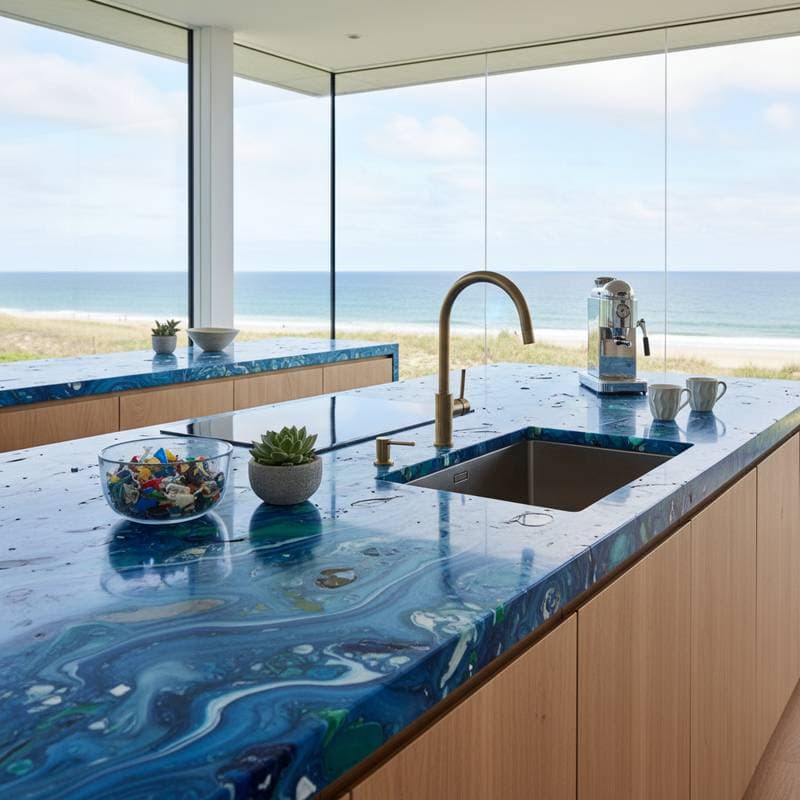
Imagine preparing a meal on a surface that originated as ocean debris. This scenario moves beyond speculative fiction into practical kitchen innovation. Ocean plastic countertops redefine sustainable home design by converting recovered marine waste into refined, robust materials that compete with quartz and granite in appearance and durability.
The transformation of a discarded plastic bottle into a functional kitchen element combines poetry with utility. Such advancements demonstrate that progress involves reimagining existing resources rather than solely developing novel ones.
Why This Material Matters
Contemporary homeowners seek renovations that extend beyond visual appeal. Selecting recycled options, particularly those derived from ocean plastic, mitigates pollution, preserves resources, and expresses commitment to environmental stewardship. The kitchen serves as a central space to embody these principles visibly and concretely.
Financially, sustainable choices yield returns. Real estate experts observe that green enhancements boost marketability. Prospective buyers prioritize properties reflecting ecological mindfulness, and these surfaces fulfill that preference. Consequently, the kitchen achieves aesthetic excellence, reliable function, and narrative depth.
Key Considerations for Planning
Prior to embarking on an ocean plastic countertop installation, evaluate the material's distinctive attributes.
- Material Composition: These countertops consist of retrieved marine litter, frequently blended with recycled resin. Certain variants rely solely on plastic, whereas others integrate elements such as pulverized shell or glass to enhance texture.
- Performance: The surfaces withstand wear, repel stains, and weigh less than natural stone. Unlike marble, they resist etching, although direct knife contact may cause scratches.
- Maintenance: Routine care involves mild soap and water. Avoid harsh chemicals, which might diminish the finish.
- Installation: Engage professionals for optimal results. Precise cutting and seam sealing are essential for sustained efficacy.
- Certifications: Reputable producers obtain validations like Cradle to Cradle or GreenGuard, verifying compliance with ecological and indoor air quality criteria.
View countertops as dual-purpose: a stylistic declaration and an ethical commitment. Initial investigation guarantees alignment with performance expectations and personal principles.
Cost Breakdown and ROI Analysis
Ocean plastic countertop prices fluctuate based on intricacy and manufacturer. Typical ranges include:
- Budget Range: 60 to 90 dollars per square foot, including installation.
- Mid-Range: 90 to 130 dollars per square foot for bespoke hues or embedded elements.
- High-End: Up to 180 dollars per square foot for superior coatings or exclusive patterns.
These figures align with quartz or premium recycled glass alternatives. Initial outlay exceeds laminate, yet benefits in resilience, ease of care, and enduring attractiveness justify the expenditure.
Market data indicates that eco-friendly features, paired with upgrades like efficient appliances or LED illumination, may increase resale value by 3 to 5 percent. The material's provenance appeals to discerning purchasers, distinguishing properties in saturated markets.
Design and Layout Ideas
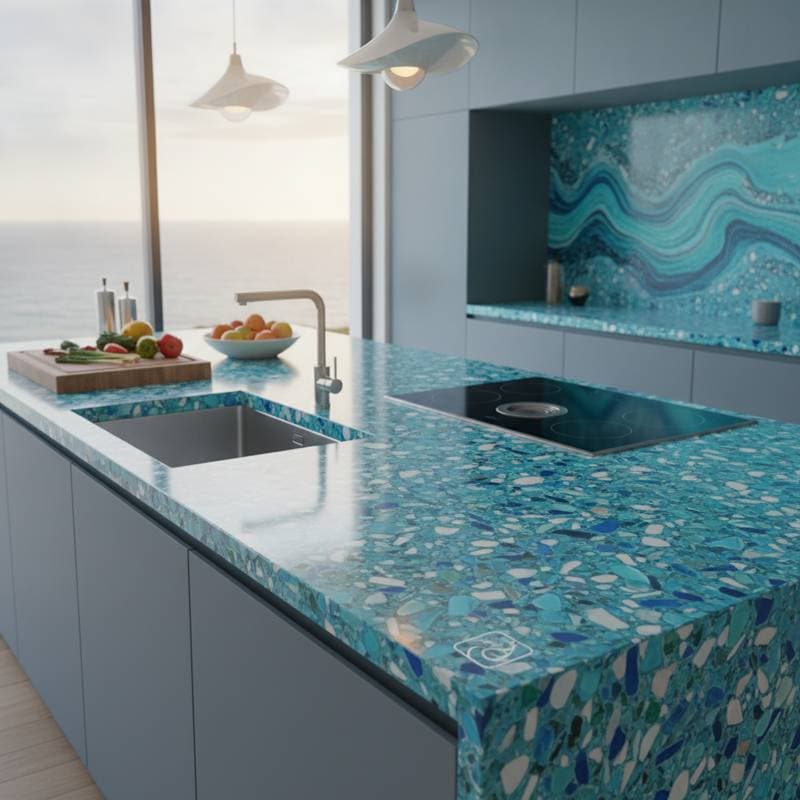
The allure of ocean plastic countertops stems from their inherent variability. Slabs exhibit distinct mottling from sourced plastics, evoking turquoise specks, profound indigos, or muted whites akin to sea glass.
Consider these approaches to accentuate their qualities:
- Coastal Modern: Combine pale blue or verdant tops with crisp white cabinets and pale timber flooring for an airy ambiance.
- Industrial Style: Select shadowed slabs with pronounced grain, paired with satin black hardware and cement details.
- Contemporary Minimalism: Position the surface as focal point against subdued cabinets in slate or beige shades.
- Eclectic Fusion: Integrate salvaged wood racks with ocean plastic for a multifaceted, narrative-rich space.
Strategic illumination enhances impact. Cabinet-mounted LED fixtures illuminate texture and nuance, simulating aquatic light refraction.
Factors Influencing the Project
Multiple elements shape installation outcomes and expenses:
- Supply Availability: Dependent on waste collection, output varies, potentially extending timelines beyond those of standard stone.
- Customization Level: Options for hue selection or opacity adjustment elevate costs.
- Labor Expertise: Seek installers versed in recycled plastics to achieve superior execution.
- Geographic Factors: Transport distances affect pricing; regional providers minimize expenses and emissions.
Align these aspects with project objectives to define feasible parameters.
Sustainable Features and Efficiency Gains
Ocean plastic countertops excel in minimizing ecological impact. They redirect long-lasting waste from oceans into functional items, curbing persistent marine contamination.
Relative to quarried stone's extractive processes or quartz's energy-heavy production, these surfaces embody reduced energy use from creation through deployment.
Additionally, they promote superior indoor environments. Low-volatile organic compound formulations prevent off-gassing common in synthetics, benefiting health-conscious households.
Their reduced mass eases handling, cuts transport emissions, and alleviates cabinet strain, prolonging overall kitchen longevity.
Practical Tips for Maximizing Longevity
- Employ cutting boards to prevent abrasions.
- Address spills promptly to avoid deposits.
- Protect against direct heat from cookware with trivets.
- Apply manufacturer-recommended treatments annually as needed.
- Use gentle cloths for cleaning to retain luster.
Adopting these practices sustains both aesthetics and durability.
Frequently Asked Questions
Are ocean plastic countertops food-safe?
Yes, sealed and finished products typically hold food-safety certifications. Verify details with the producer.
Do they look like regular plastic?
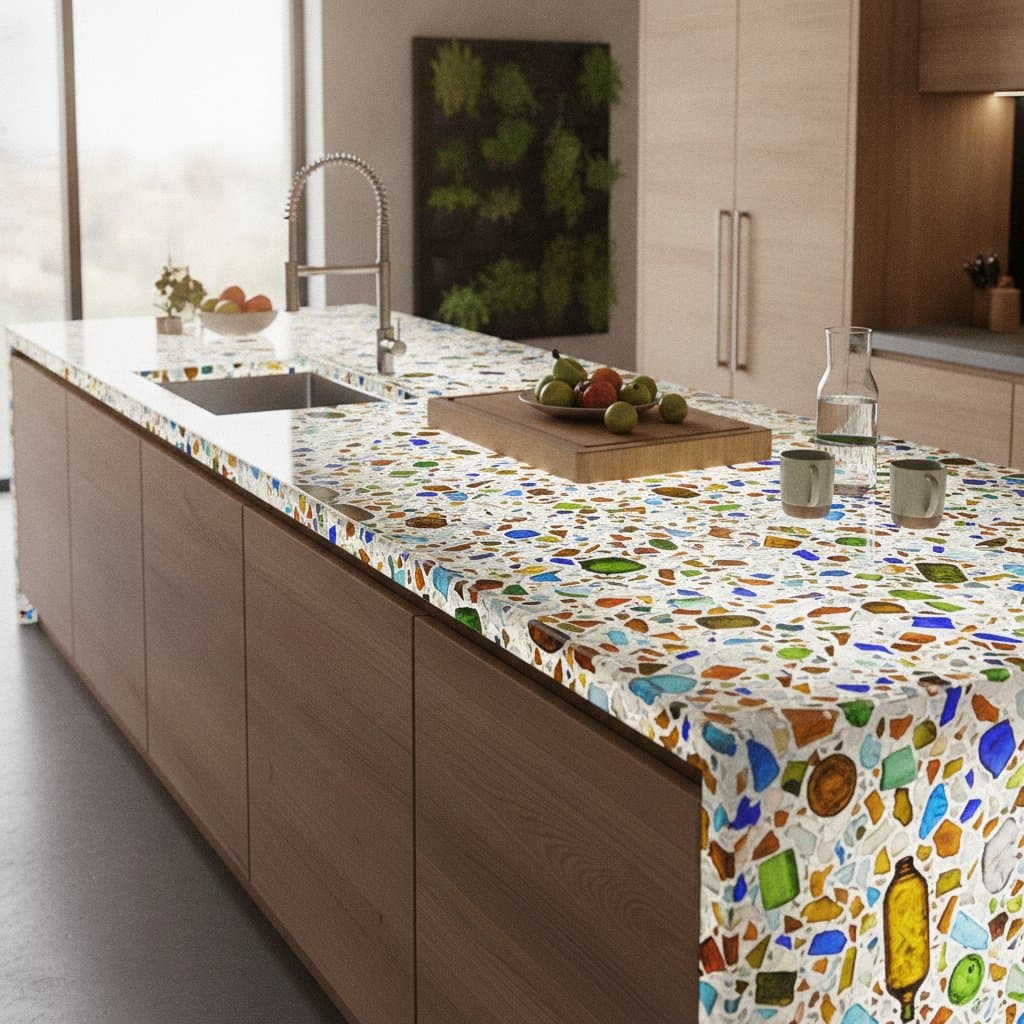
No. Finishes emulate terrazzo or composite stone, with patterns inspired by oceanic themes that echo natural substances.
Can they be recycled again at the end of their life?
Many qualify for reprocessing into fresh slabs or items, contingent on regional facilities.
How do they compare in strength to stone?
Softer than granite yet crack-resistant, they match engineered stone for typical domestic applications.
Are there any downsides?
Heat sensitivity poses a challenge; extreme temperatures risk deformation, necessitating protective measures.
Can I install them myself?
Smaller elements like backsplashes suit DIY, but comprehensive countertops demand specialized tools and expertise.
Steps to Integrate Ocean Plastic in Your Kitchen
Incorporating ocean plastic countertops transcends aesthetics; it embodies proactive stewardship. Start by surveying providers, obtaining material samples, and inquiring about validations and care protocols.
This approach fosters informed decisions that harmonize design aspirations with environmental priorities. Ultimately, these surfaces illustrate harmonious integration of form, function, and forward-thinking values, originating from oceanic origins to enrich domestic spaces.