Ocean Plastic Countertops: Beauty From Marine Waste
Key Considerations
- Recycled ocean plastic countertops deliver sustainability, durability, and distinctive aesthetics.
- These surfaces convert marine debris into functional, long-lasting kitchen elements.
- Certified sourcing and professional installation support safety and green building compliance.
- Mid-range pricing yields savings through reduced maintenance and environmental gains.
From Marine Debris to Functional Surfaces
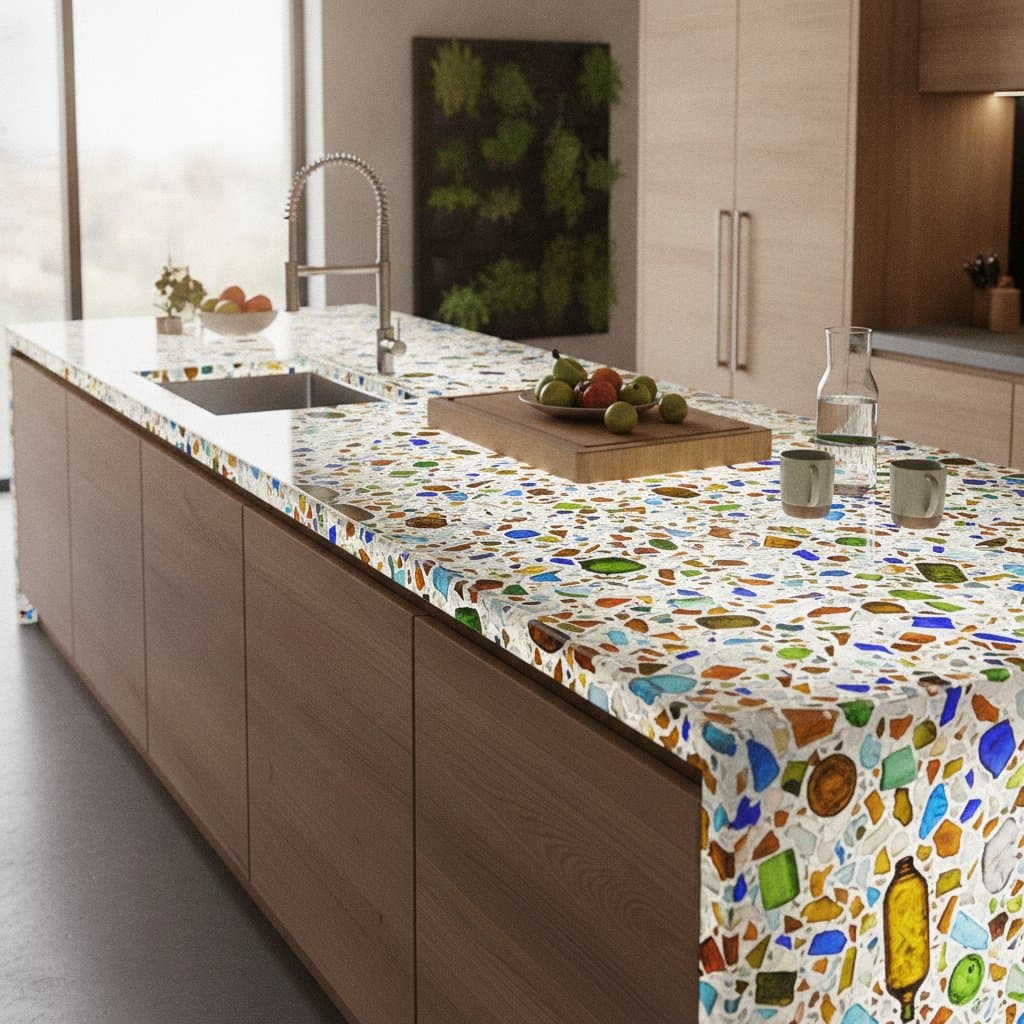
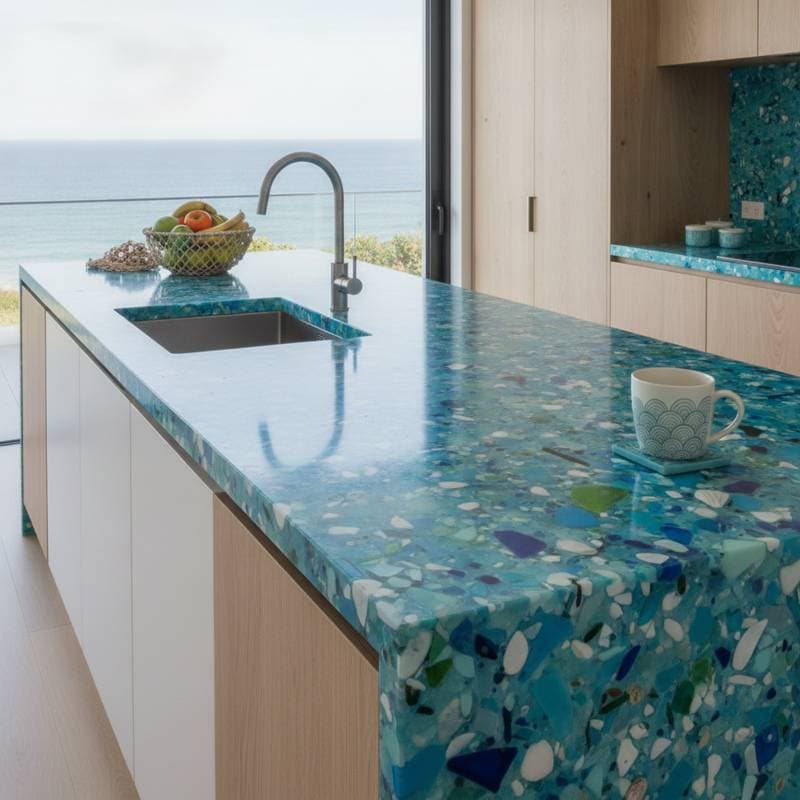
Homeowners often seek kitchen materials that balance environmental responsibility with visual appeal. Recycled ocean plastic countertops address this need by converting collected marine waste into nonporous, resilient work surfaces. Morning light reveals subtle color variations that reflect the origins of the material while providing a practical area for daily tasks.
Coastal regions have collected plastic debris for years. Manufacturers now process this waste with binding resins to create surfaces that perform comparably to traditional stone options. The approach reduces ocean pollution and supplies a material suited to humid environments where corrosion resistance matters.
Addressing Waste and Material Limitations
Plastic accumulation in oceans disrupts marine habitats and adds to landfill volumes. Conventional countertop choices such as granite require resource extraction and extended shipping, increasing overall emissions. In areas with high humidity, these options can also show accelerated wear.
Recycled ocean plastic surfaces counter these issues. Industry figures indicate that one square foot incorporates the equivalent of up to one thousand plastic bottles, diverting material from disposal while supplying a moisture-resistant finish.
Production and Performance Benefits
The manufacturing process blends post-consumer plastics gathered from coastal cleanups with low-emission resins. The finished product remains nonporous, which prevents staining and supports straightforward cleaning. Traceable supply chains allow verification of recycled content percentages that range from sixty to ninety percent.
Selection of suppliers with documented environmental certifications helps confirm material safety and indoor air quality standards. This documentation also supports eligibility for regional building incentives tied to sustainable renovations.
Practical Steps for Installation and Use
- Select manufacturers that supply LEED-compatible records and low-VOC resins.
- Request detailed composition reports to confirm recycled content levels and qualify for green building credits.
- Engage fabricators experienced with composite materials to achieve precise cuts and secure joints.
- Clean surfaces regularly with mild soap solutions and avoid abrasive agents that could affect the resin layer.
- Combine the countertops with complementary elements such as reclaimed cabinetry or efficient fixtures to strengthen overall project sustainability.
Design Options and Daily Experience
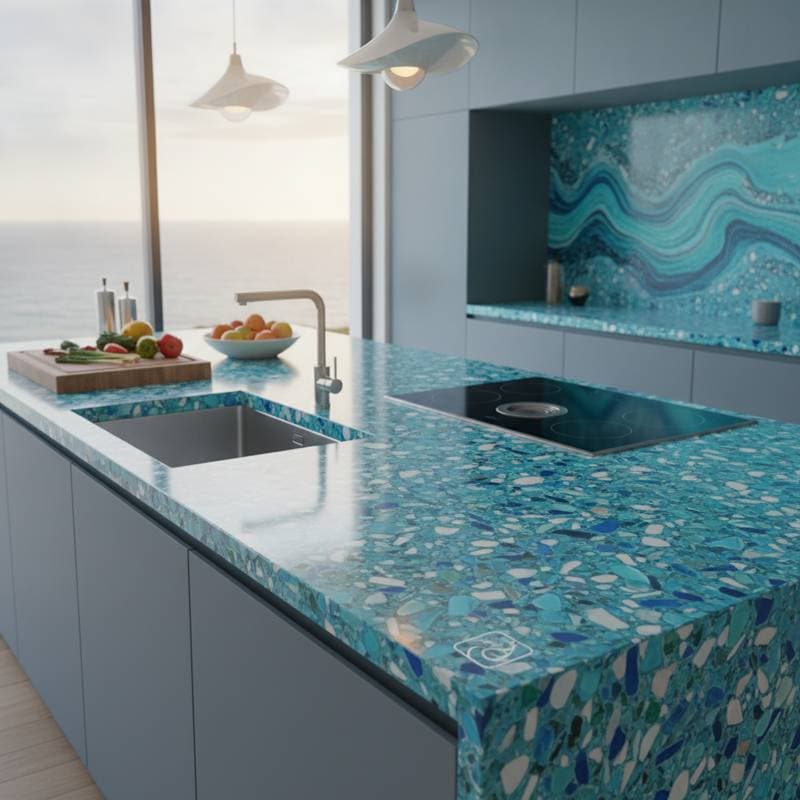
Available finishes range from translucent styles that highlight embedded plastic fragments to matte surfaces suited to minimalist settings. Color selections include soft aqua tones derived from fishing nets and bottle caps. These variations allow coordination with existing cabinetry and lighting while prompting discussion about material reuse.
Cost, Longevity, and Maintenance Factors
Installed pricing falls between sixty and one hundred twenty dollars per square foot. This range aligns with mid- to upper-tier quartz selections yet includes measurable contributions to ocean recovery programs. The material withstands moisture and ultraviolet exposure without requiring periodic sealing, supporting service lives beyond twenty-five years under routine care.
Lower processing energy compared with quarried stone reduces the renovation carbon impact. Local code reviews can identify rebates for recycled-content products that offset initial expenses.
Certification Alignment and Project Completion
Recycled ocean plastic countertops contribute toward credits in systems such as LEED under the materials category when accompanied by supplier documentation. Consultation with fabricators familiar with composite substrates ensures proper support and finishing details.
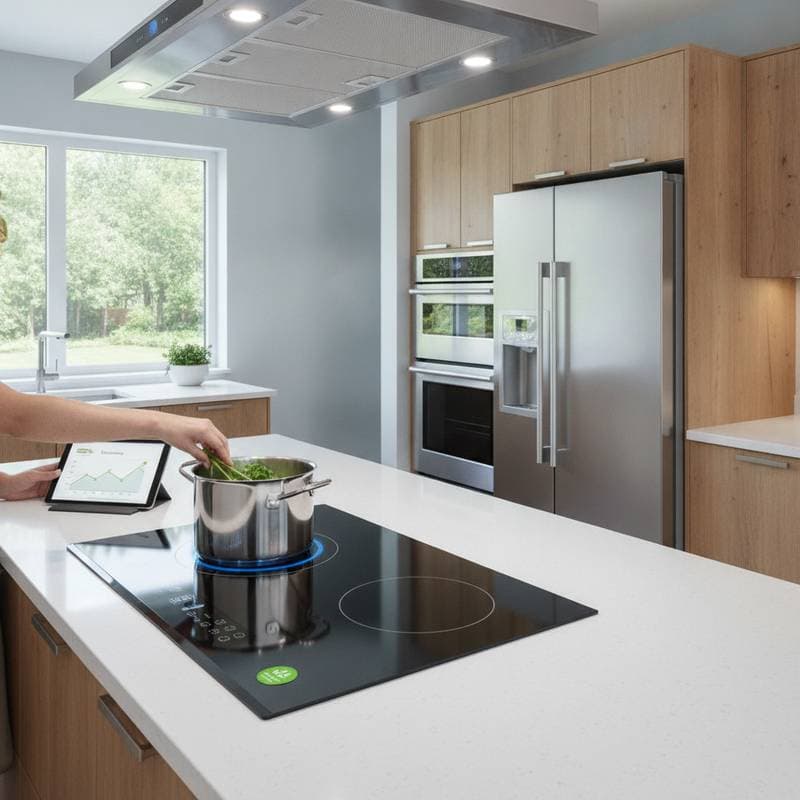
A pre-installation review of related home systems, including lighting and ventilation, identifies further efficiency opportunities that complement the new surfaces.
Ongoing Value in Daily Use
The countertop serves as a consistent reference to material recovery each time it is used. At the end of its service life, the product can reenter recycling streams, extending the circular process. This outcome supports both household function and broader resource conservation goals.