Key Points
- Combining rooftop gardening with solar panels creates an agrivoltaic system that produces both food and renewable energy.
- Strategic design can improve panel efficiency while providing ideal growing conditions for certain crops.
- Proper planning, structural evaluation, and irrigation management are essential for successful rooftop agriculture.
- Homeowners can expect a payback window that reflects both energy savings and food production value.
- Scalable solutions exist for budgets ranging from small-scale planters to full structural retrofits.
The Universal Challenge
Across cities and suburbs alike, homeowners face a familiar dilemma. Roofs absorb sunlight that could generate electricity or sustain food, yet most of that valuable space sits unused. The question is no longer whether roofs can multitask, but how to make them productive in ways that are financially, environmentally, and aesthetically rewarding.
Why This Matters
Rooftop agrivoltaic systems combine two powerful sustainability goals. They reduce household energy costs through solar generation and create hyper-local food sources that cut transportation emissions. The combination strengthens building efficiency, enhances property value, and contributes to community resilience. With energy prices fluctuating and urban green space limited, turning a roof into a dual-purpose asset is both a smart investment and a personal contribution to environmental progress.
How Agrivoltaic Roofs Work
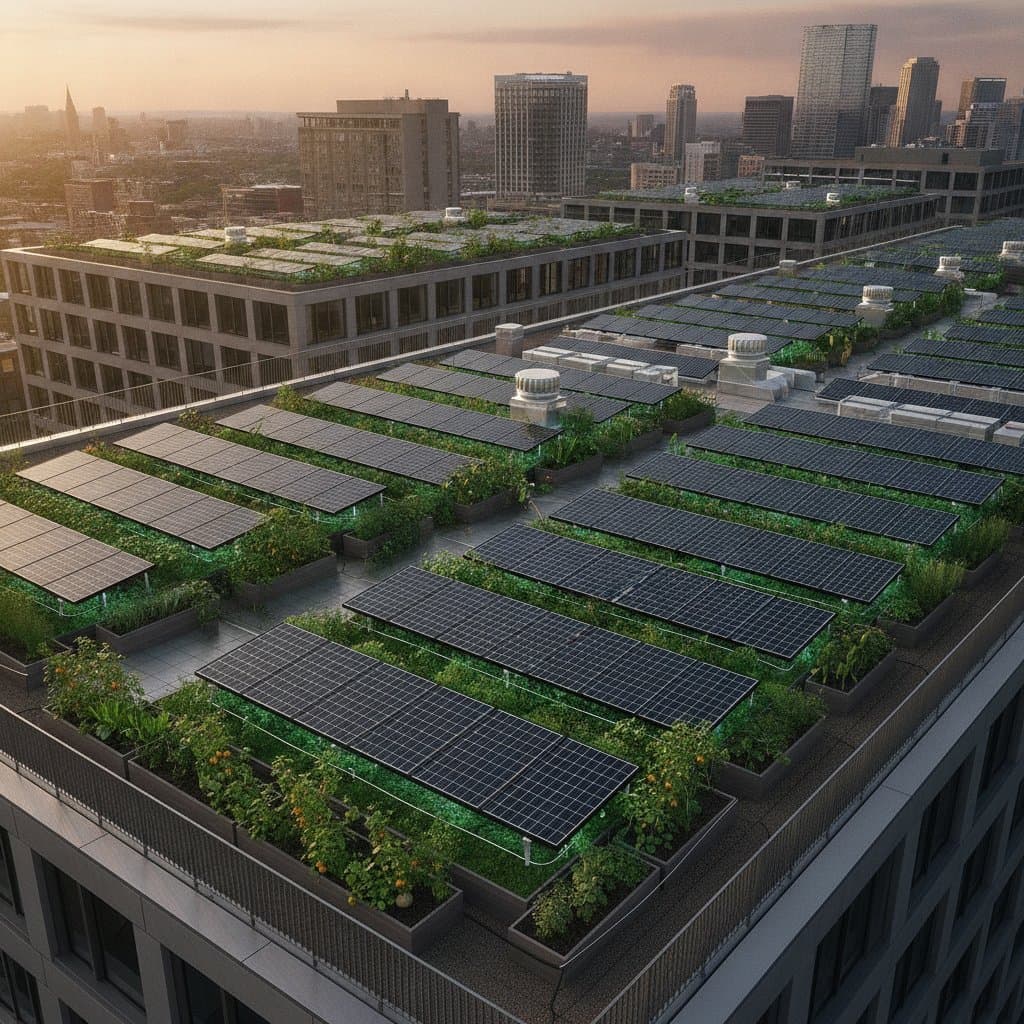
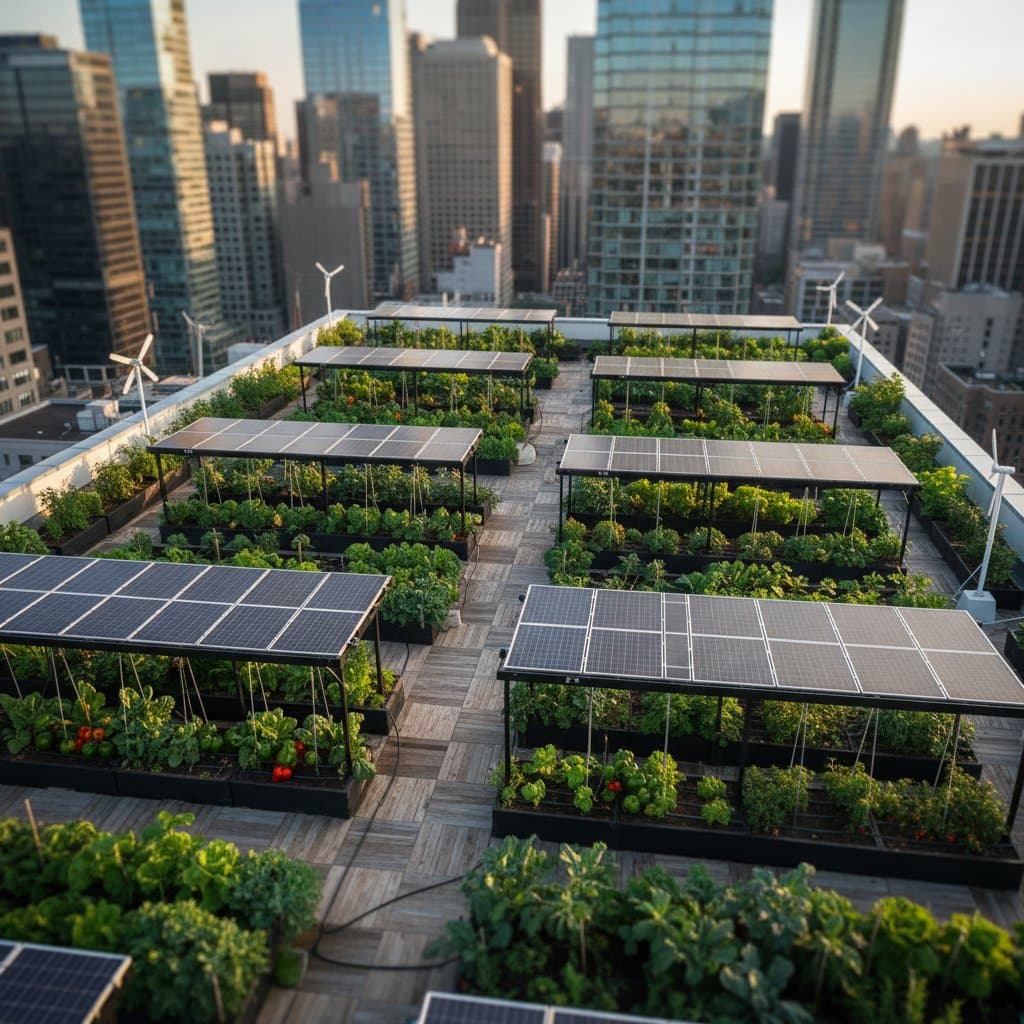
An agrivoltaic roof integrates solar panels with a rooftop garden. The panels are elevated or spaced to allow sunlight to reach the plants below, while the vegetation helps regulate microclimate conditions around the panels. This synergy can increase solar efficiency by up to ten percent, since the cooler ambient temperatureplants reduces panel heat stress.
At the same time, the partial shading from panels reduces water loss from soil, allowing crops that prefer filtered light to thrive. Leafy greens, herbs, peppers, and strawberries often perform well under these conditions. The result is a self-reinforcing system where energy production and food cultivation complement rather than compete with each other.
Designing for Dual Productivity
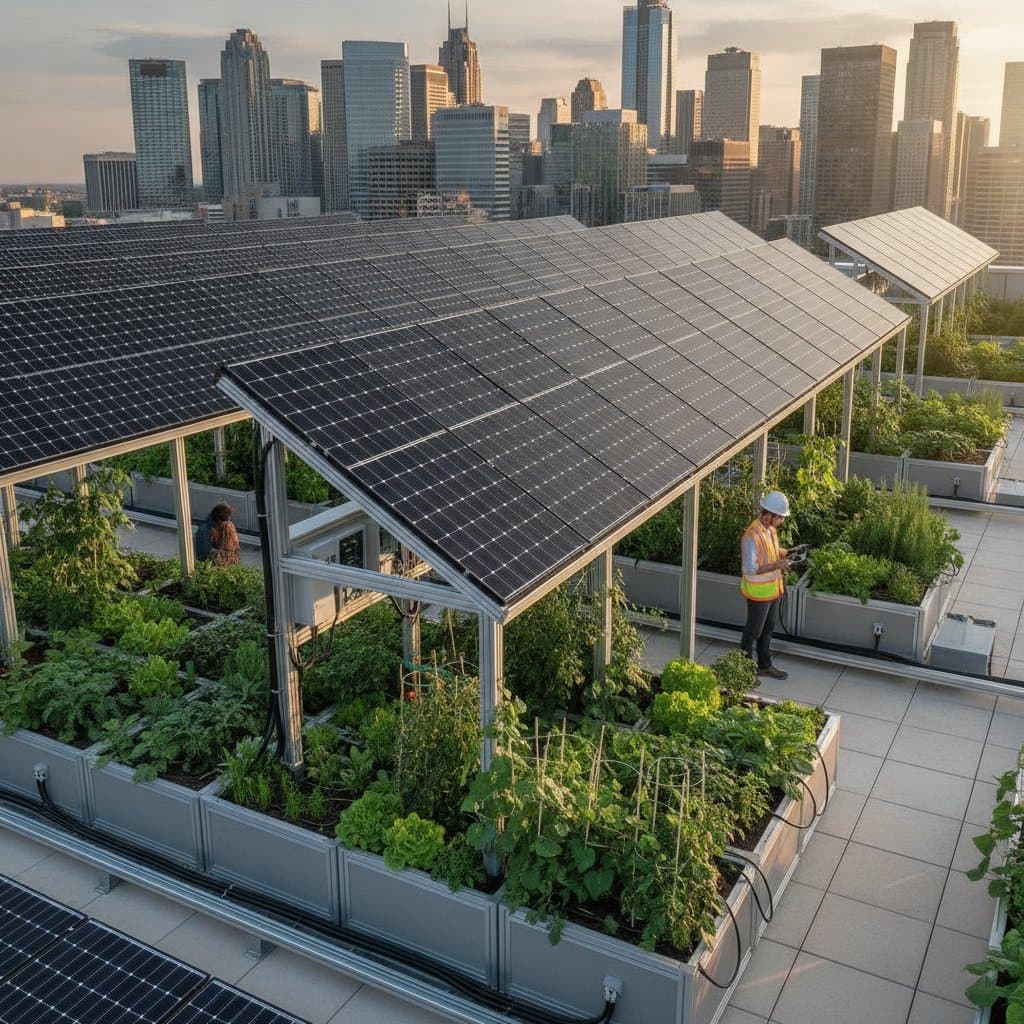
The foundation of a successful rooftop agrivoltaic design lies in balance. The angle and spacing of solar panels must match sunlight requirements for both energy yield and crop growth.
Key design considerations include:
- Panel Elevation: Panels should be raised at least several feet above the roof surface to allow air circulation and human access for gardening.
- Light Distribution: Semi-transparent or bifacial panels can admit diffused light, improving plant performance beneath them.
- Drainage and Irrigation: Lightweight growing media combined with drip irrigation systems help control water use and prevent roof loading issues.
- Structural Load: A professional structural engineer should verify that the roof can safely support added weight from soil, planters, and water storage.
Material and System Choices
Modular planters and thin-film solar panels are popular choices for retrofits because they reduce weight and simplify installation. For new builds, integrated systems can be designed with structural reinforcement, reflective membranes, and optimized panel tilt angles. Many installers now offer hybrid systems that include both photovoltaic arrays and raised-bed frames engineered for rooftop use.
The Cost Equation
Upfront costs vary widely depending on roof size, panel type, and garden complexity. A small retrofit with lightweight planters and standard solar panels might cost between fifteen and thirty thousand dollars. More advanced installations with structural modifications, high-efficiency panels, and automated irrigation can exceed fifty thousand dollars.
Yet the returns are tangible:
- Energy Savings: Home solar systems typically reduce monthly energy bills by 40 to 70 percent depending on system size.
- Food Production: Even modest rooftop gardens can yield a few hundred pounds of produce annually, translating into hundreds of dollars in grocery savings.
- Property Value: Studies indicate that homes with solar installations command resale premiums averaging four to eight percent, and green roof features can add further appeal.
When both energy and food production are considered, total return on investment can reach 8 to 12 percent annually over the system’s lifetime, with full payback often within a decade depending on local energy costs and available incentives.
Environmental and Lifestyle Gains
Beyond financial return, agrivoltaic roofs deliver measurable environmental and personal wellness benefits. The vegetation layer improves building insulation, reducing heating and cooling loads. The combination of plants and panels can lower rooftop surface temperature by as much as twenty degrees compared to conventional roofs, which helps mitigate urban heat effects.
From a health perspective, growing food where you live encourages physical activity, reduces exposure to pesticides, and promotes fresher, nutrient-rich diets. For families, rooftop gardening becomes both educational and therapeutic, turning energy infrastructure into an interactive living space.
Regional and Climate Adaptation
While the concept works across many regions, local climate and building conditions influence system design. In hot, arid areas, shade-loving crops beneath panels reduce irrigation demand. In cooler climates, panels can shield delicate greens from frost and wind. Flat roofs offer the most flexibility, but pitched roofs can also host smaller modular systems attached along the ridge or in stepped terraces.
Homeowners should consult both solar and horticultural professionals familiar with regional weather patterns and local building codes to tailor the design. Some municipalities even offer incentives for combining renewable energy with green infrastructure, recognizing the combined benefits for stormwater management and emissions reduction.
Maintenance and Practical Care
Ongoing maintenance is simpler than many expect. Solar panels require occasional cleaning to remove dust and debris, while garden maintenance follows typical seasonal cycles. Automated irrigation systems with moisture sensors can keep water use efficient. Regular inspection of drainage systems and roof membranes prevents leaks or weight accumulation.
Maintenance checklist:
- Inspect panel mounts and waterproofing twice yearly.
- Clean panels with soft brushes and water to maintain efficiency.
- Prune plants to prevent shading or overgrowth.
- Rotate crops to maintain soil health.
- Monitor structural load during heavy rain or snow.
By following these steps, homeowners can ensure that energy generation and food cultivation remain in harmony without compromising roof integrity.
Common Questions
Will vegetation damage the roof?
Not if designed correctly. Quality waterproof membranes, root barriers, and drainage layers protect underlying structures.
Do plants reduce solar performance?
No. In most cases, vegetation improves performance by cooling the environment around the panels.
What crops are best?
Lettuce, kale, basil, peppers, and strawberries perform well under partial shade. Root vegetables require deeper beds and may be better suited for raised planters.
Can I retrofit an existing solar roof?
Yes. Modular planter systems can be added without disturbing panel mounts, as long as structural load capacity is confirmed.
How do I handle irrigation?
Drip systems connected to rooftop rainwater collection or graywater reuse setups maximize sustainability and reduce reliance on municipal water.
Making It Happen
Transforming your roof into a productive agrivoltaic system begins with a clear plan. Start by assessing structural capacity, then consult both a solar installer and a green roof specialist who can coordinate design integration. Seek local incentives or community grants that reward sustainable building improvements.
Begin with a pilot section if budget is limited. Even a few panels paired with planters can demonstrate performance benefits and provide data for future expansion.
The real opportunity lies in viewing the roof not as wasted space but as a living system. By merging renewable energy with edible landscapes, you create a home that generates power, sustains life, and contributes to environmental balance.