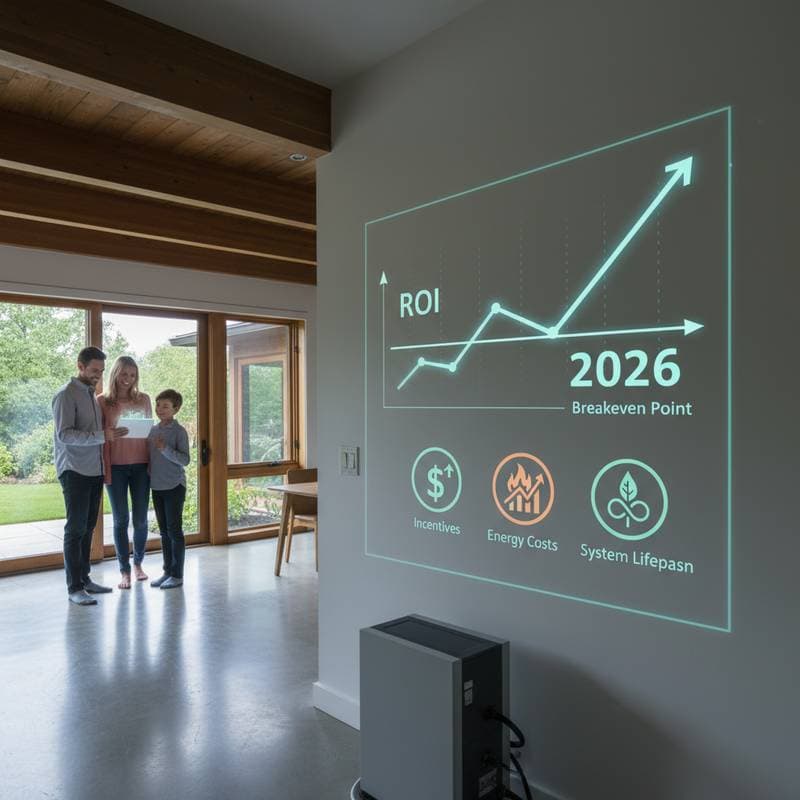
Why 2026 Marks the Breakeven Point for Geothermal Investments
Homeowners often associate geothermal heat pumps with intricate underground piping and question the timeline for financial recovery. The reality shows that breakeven arrives faster than anticipated. Projections indicate that for most installations, full cost recovery aligns with 2026, driven by efficiency gains and supportive policies.
Essential Factors Influencing Geothermal Returns
- Geothermal systems typically recover costs in 8 to 10 years, with enhancements in efficiency and tax incentives reducing this period further.
- Annual energy savings average 30 percent to 65 percent relative to traditional heating and cooling options.
- Increasing electricity and fuel prices enhance cost-effectiveness, improving return on investment forecasts.
- Federal and local incentives lower initial expenses by 25 percent to 40 percent, hastening payback schedules.
- Transition to low-carbon solutions positions geothermal as an appreciating asset over time.
Breaking Down the Geothermal Return on Investment
Geothermal economics hinge on installation expenses, operational savings, and available incentives. Residential systems range from $20,000 to $35,000, varying by home size, soil type, and loop design. Although the upfront investment appears substantial, operational costs decrease significantly post-installation.
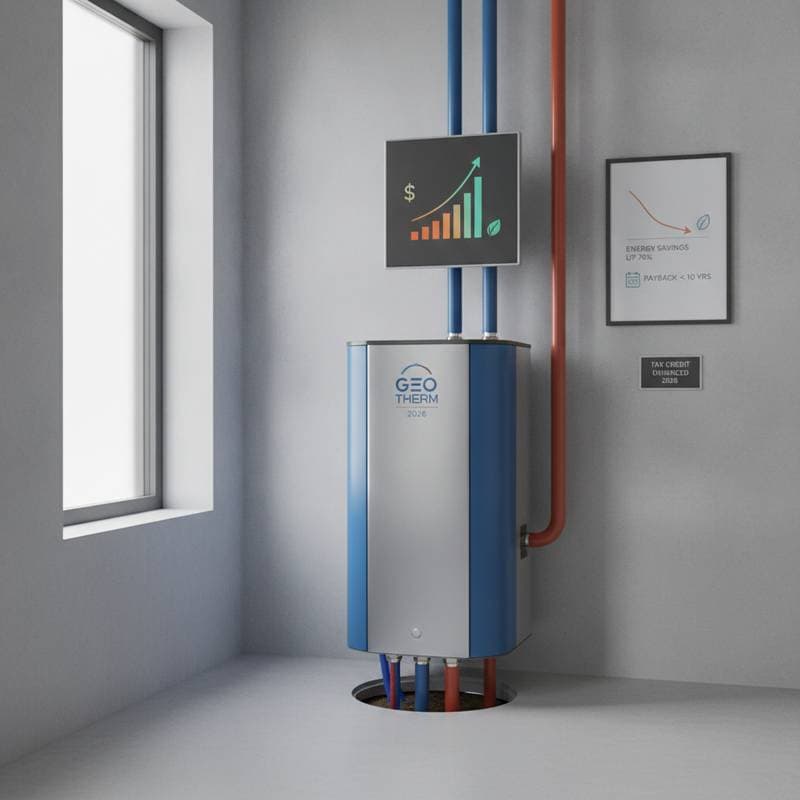
U.S. Department of Energy data indicates that geothermal reduces heating expenses by up to 70 percent and cooling by nearly 50 percent. Homeowners reliant on propane or heating oil realize the quickest returns due to elevated fuel prices. Those converting from natural gas still secure notable savings, albeit with a slightly extended breakeven horizon.
Energy price inflation sharpens the equation. Each percentage rise in utility rates shortens payback, transforming a former 10-year recovery into 7 to 8 years for the same setup.
Incentives Accelerating Financial Recovery
Government initiatives and utility rebates serve as primary drivers for faster geothermal returns. Federal tax credits offset a large share of initial costs, while state programs provide supplementary rebates or favorable financing.
For a $30,000 system, incentives totaling 35 percent eliminate more than $10,000 from the outset, aligning breakeven with 2026 for recent installations. Analysts forecast a surge in adoption within the next two years as financial and environmental benefits converge on achievable timelines.
Geothermal Returns Compared to Conventional Systems
| System Type | Average Installation Cost | Annual Energy Savings | Typical Payback Period |
|---|---|---|---|
| Geothermal Heat Pump | $25,000 - $35,000 | 45% - 65% | 7 - 10 years |
| Air-Source Heat Pump | $10,000 - $15,000 | 20% - 35% | 10 - 15 years |
| Natural Gas Furnace + AC | $8,000 - $12,000 | 0% (baseline) | None |
These comparisons highlight that despite higher entry costs, geothermal excels in long-term performance. Across a 25-year lifespan, a well-maintained system yields savings surpassing $60,000 versus standard alternatives.
Practical Examples of Geothermal Payback
Imagine a 2,500-square-foot home in a temperate region with annual natural gas and electricity bills of $3,200. Post-geothermal installation, expenses fall to approximately $1,400, yielding $1,800 in yearly savings. Incentives trimming the cost to $22,000 result in payback after slightly more than 12 years based on cash flow alone.
Incorporating utility rate increases and rebates shortens this to under 9 years. For systems installed now, breakeven lands around 2026. Beyond that point, each year delivers net gains through eliminated energy expenditures.
Benefits of Durability and Low Maintenance
Geothermal setups shield most components underground, safeguarding against weather exposure unlike surface-mounted air-source units. Ground loops endure beyond 50 years, and indoor pumps function efficiently for 20 to 25 years. Routine care involves filter changes and occasional fluid inspections.
Such dependability bolsters the investment case. Reduced repairs and extended service life minimize ownership expenses, amplifying efficiency-driven savings.
Industry Trends Supporting Geothermal Growth
Geothermal benefits from evolving market dynamics. Developers incorporate ground-source systems in new constructions amid stricter energy regulations. Appraisers value these features, with research indicating resale premiums of 3 percent to 6 percent.
As production scales and installer skills advance, system prices trend downward. Paired with ongoing incentives and growing recognition, the economic threshold for geothermal shifts earlier than expected.
Steps to Evaluate and Install Geothermal
To assess geothermal suitability, consult a certified professional for a precise heat load assessment. Request a comprehensive projection encompassing incentives, regional energy rates, and site-specific soil factors. Obtain several bids to evaluate loop configurations, noting that horizontal loops often prove more economical than vertical when yard space permits.
Geothermal aligns financial prudence with environmental stewardship. As standards evolve and costs vary, ground-source solutions solidify their position as a forward-thinking choice.