Key Points
- Hempcrete gains popularity among builders for integrating sustainability, energy performance, and durability into a single wall system.
- This material provides superior insulation, effective moisture control, and significant carbon storage, attracting eco-conscious homeowners and developers seeking long-term savings.
- Construction teams value hempcrete for its straightforward application, non-toxic composition, and natural ability to moderate indoor climates.
- Although initial costs exceed those of traditional framing and insulation by a modest margin, the reductions in energy consumption and maintenance yield substantial long-term benefits.
A New Kind of Wall Revolution
Picture entering a home where the air maintains a natural balance, the walls regulate humidity effortlessly, and temperatures remain consistent without heavy reliance on heating or cooling systems. This level of comfort arises not from advanced mechanical equipment but from the inherent properties of hempcrete walls. Builders frequently report such outcomes upon completing projects with this material, which has transitioned from experimental use in specialized sustainable initiatives to a viable option in mainstream construction.
Builders increasingly seek solutions to comply with rigorous efficiency standards, minimize embodied carbon, and provide healthier living environments. Hempcrete emerges as a practical choice for creating resilient building envelopes that align with these demands.
Why Hempcrete Matters
Environmental and Financial Value
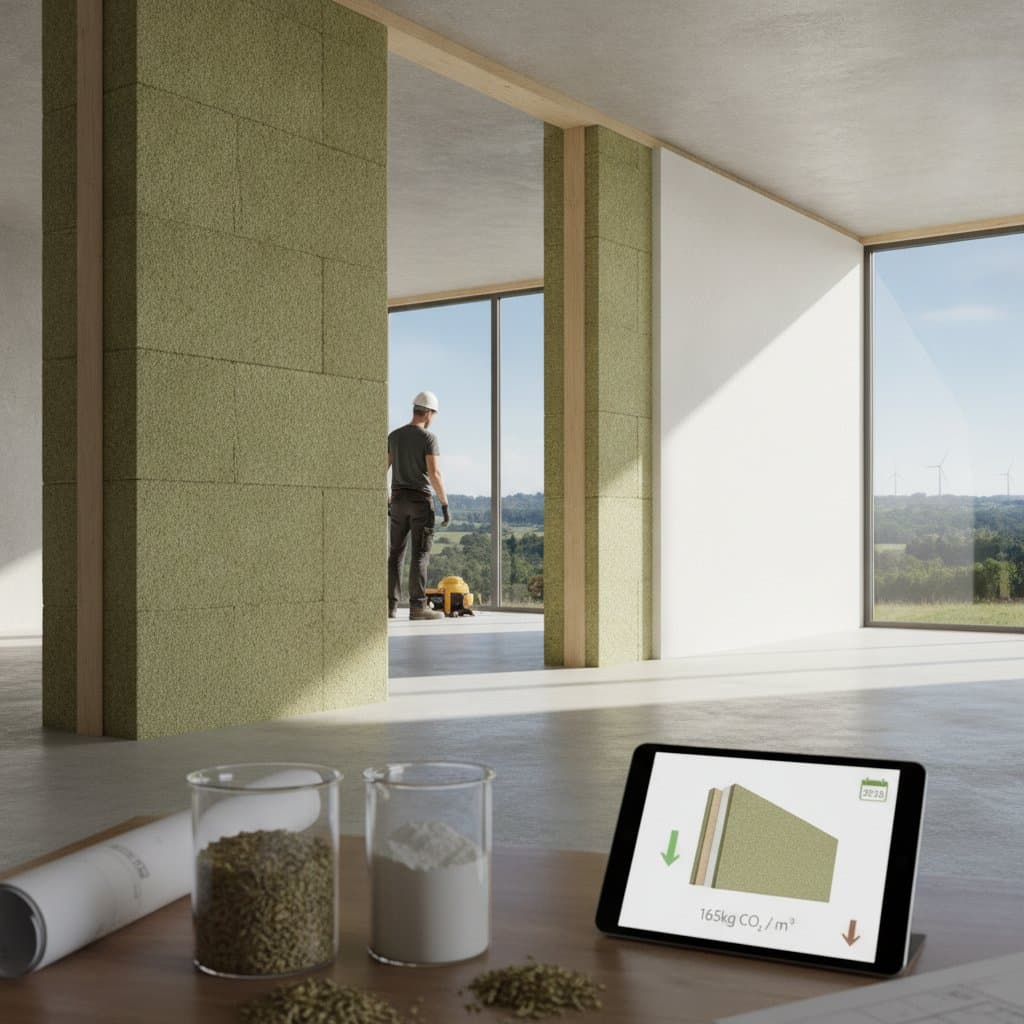
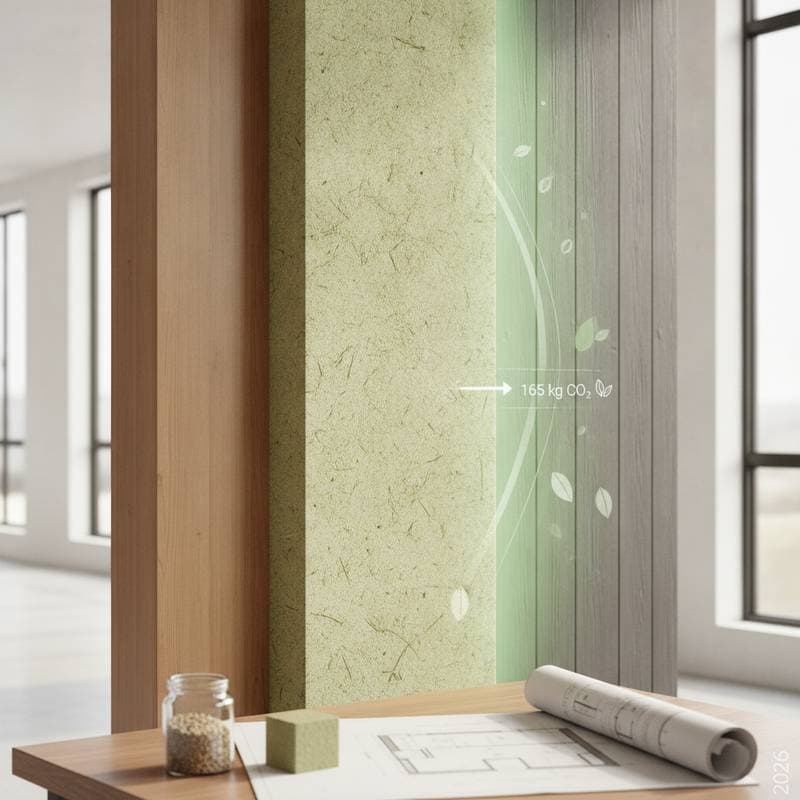
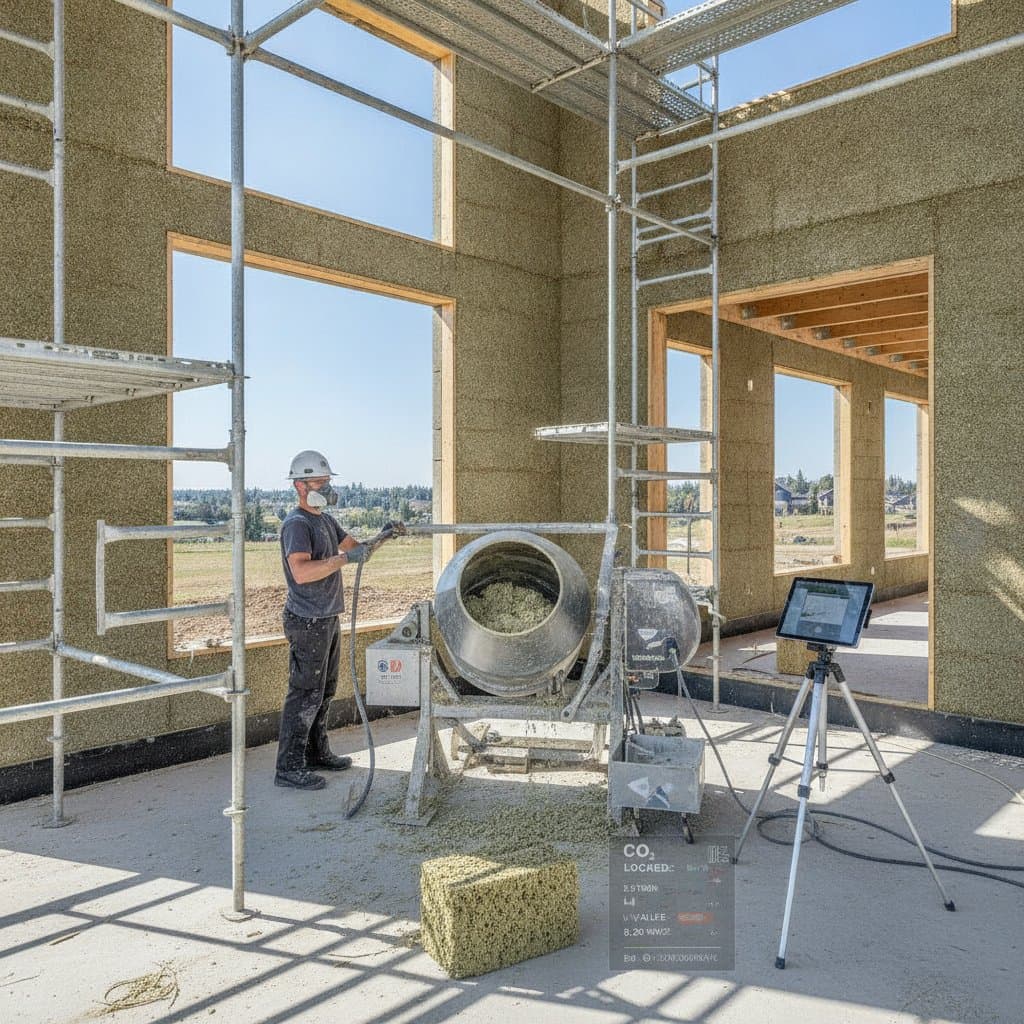
Hempcrete consists of three basic components: the inner woody core of the hemp plant, called hurd; a lime-based binder; and water. These elements combine to form a lightweight, porous mixture that solidifies into a durable wall system. The hemp absorbs carbon dioxide during its growth phase, while the lime binder sequesters additional carbon as the material cures, resulting in a product that captures more carbon than it releases in manufacturing.
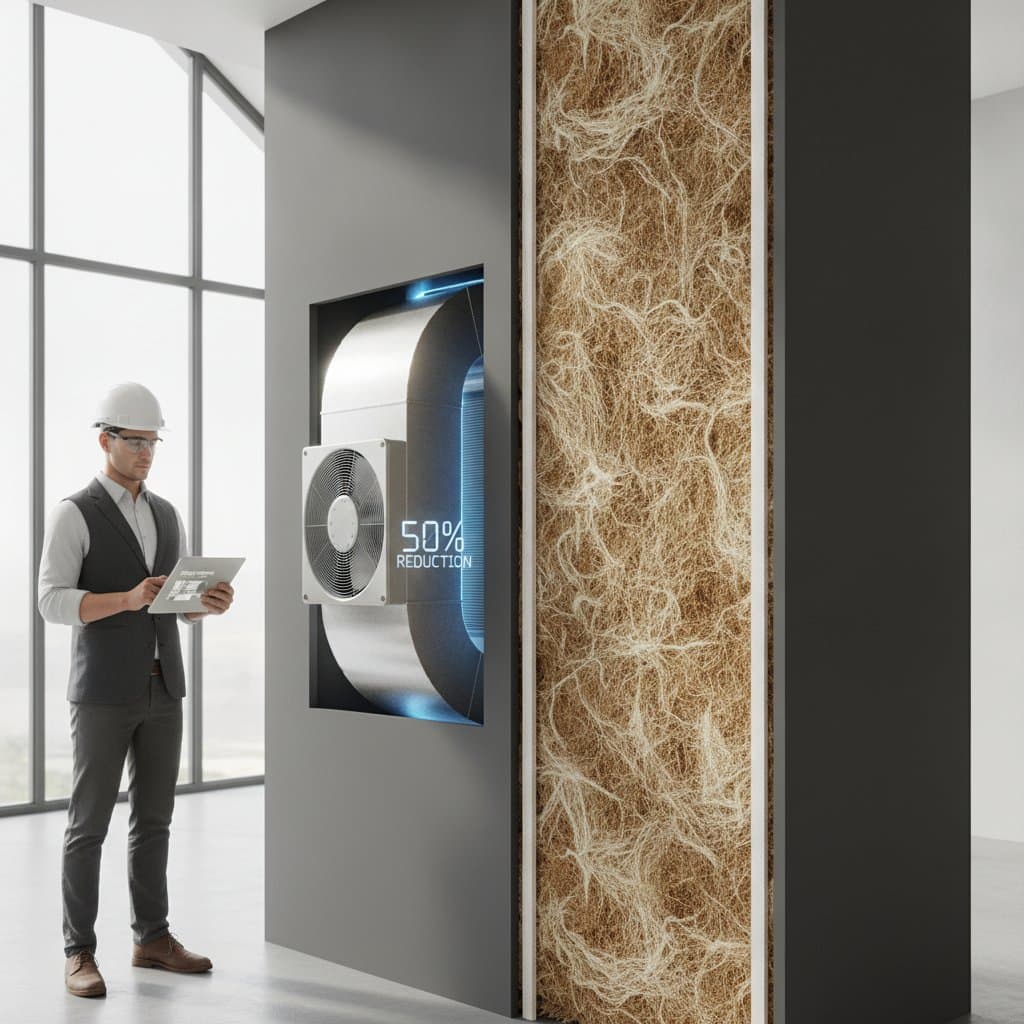
Financially, hempcrete appeals to homeowners and developers through its capacity to lower ongoing expenses. The material's thermal mass stabilizes indoor temperatures, potentially decreasing heating and cooling needs by 30 to 50 percent relative to standard setups. In areas with pronounced seasonal variations, these efficiencies lead to meaningful reductions in utility bills over the building's lifespan.
Healthier Homes, Happier Occupants
Hempcrete enhances indoor air quality in ways that synthetic alternatives cannot match. It lacks volatile organic compounds and promotes breathability, which helps control humidity and prevents issues like condensation and mold. For residents focused on health, these attributes transform the home into a space that supports well-being as a core feature rather than an afterthought.
Key Considerations for Planning
Hempcrete functions as an infill for insulation and enclosure rather than a load-bearing element, so it installs around a timber or steel frame. Understanding its integration into overall building plans proves essential for successful outcomes.
Consider these planning aspects:
- Framing Compatibility: Standard stud framing suits hempcrete, yet adjustments to stud spacing and wall design accommodate the material's thickness and curing process.
- Moisture Management: The material's vapor permeability excels when paired with permeable finishes, such as lime plaster, avoiding barriers like non-breathable paints that could trap moisture.
- Local Regulations: Building codes differ by region; some approve hempcrete outright, while others necessitate performance tests or engineering reports for approval.
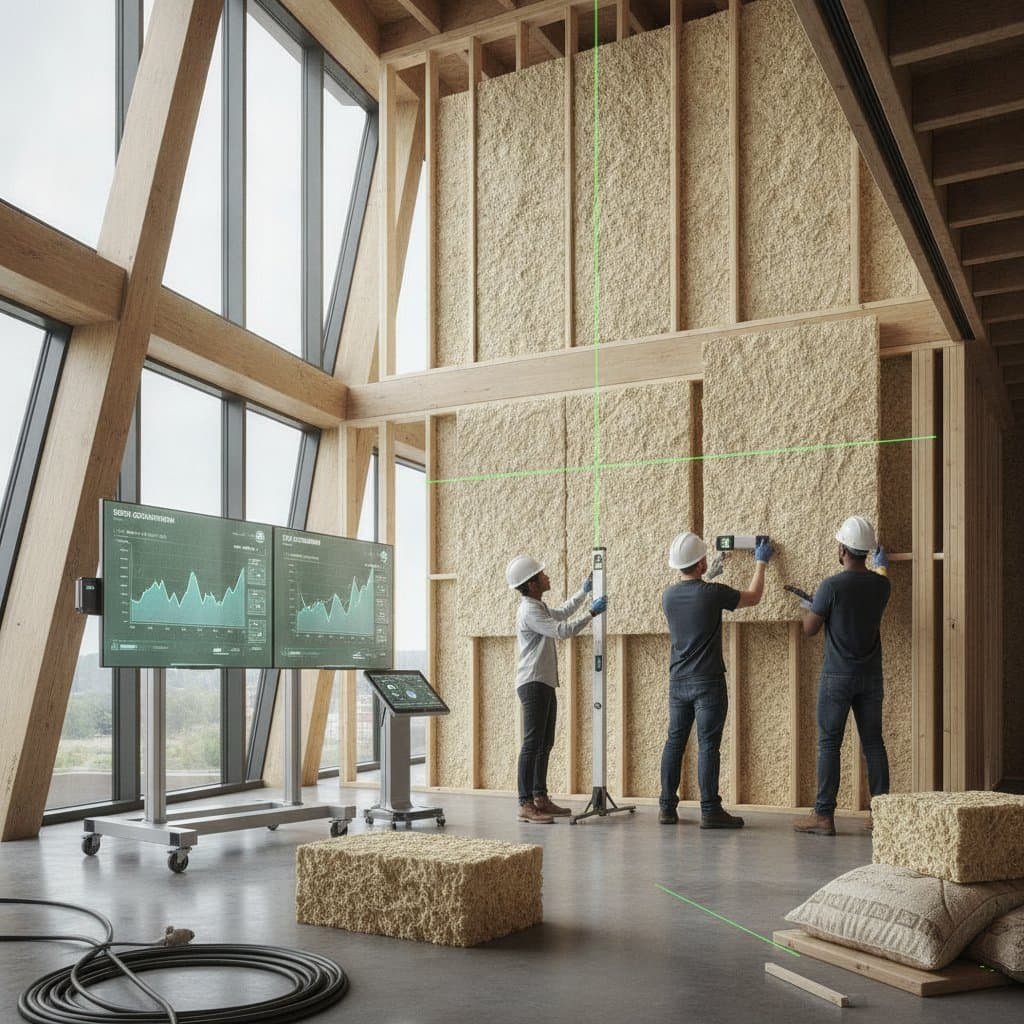
- Skill and Labor: The installation process includes mixing the hemp-lime blend and tamping it into forms or stacking pre-formed blocks. Crews benefit from training on handling and curing techniques to ensure optimal results.
Incorporating hempcrete during initial design phases allows builders to optimize performance, appearance, and budget, avoiding expensive modifications later.
Cost Breakdown and ROI Analysis
Sustainable materials prompt scrutiny of expenses, and hempcrete walls typically cost between $130 and $200 per square foot of finished surface, influenced by regional factors, labor, and wall dimensions. This represents a 10 to 20 percent premium over conventional framed walls with fiberglass insulation.
The initial investment recoups through several channels:
- Energy Savings: Diminished heating and cooling requirements cut yearly bills by several hundred dollars.
- Maintenance: Resistance to pests, mold, and deterioration minimizes repair needs.
- Durability: The lime component strengthens progressively, outlasting many traditional insulations.
- Resale Value: Alignment with green standards like LEED or passive house designs can increase property worth by 5 to 10 percent.
Accounting for full lifecycle expenses, hempcrete achieves positive returns within 8 to 12 years, varying with local energy prices and weather patterns.
Design and Layout Ideas
Hempcrete adapts to various installation methods, each tailored to specific project needs.
- Cast in Place: This technique suits bespoke residences, enabling precise control of wall thickness for enhanced insulation. Workers pour the mixture between temporary forms around the structural frame.
- Prefabricated Panels: Common in multi-unit projects, these off-site cured units speed assembly and limit exposure to site conditions.
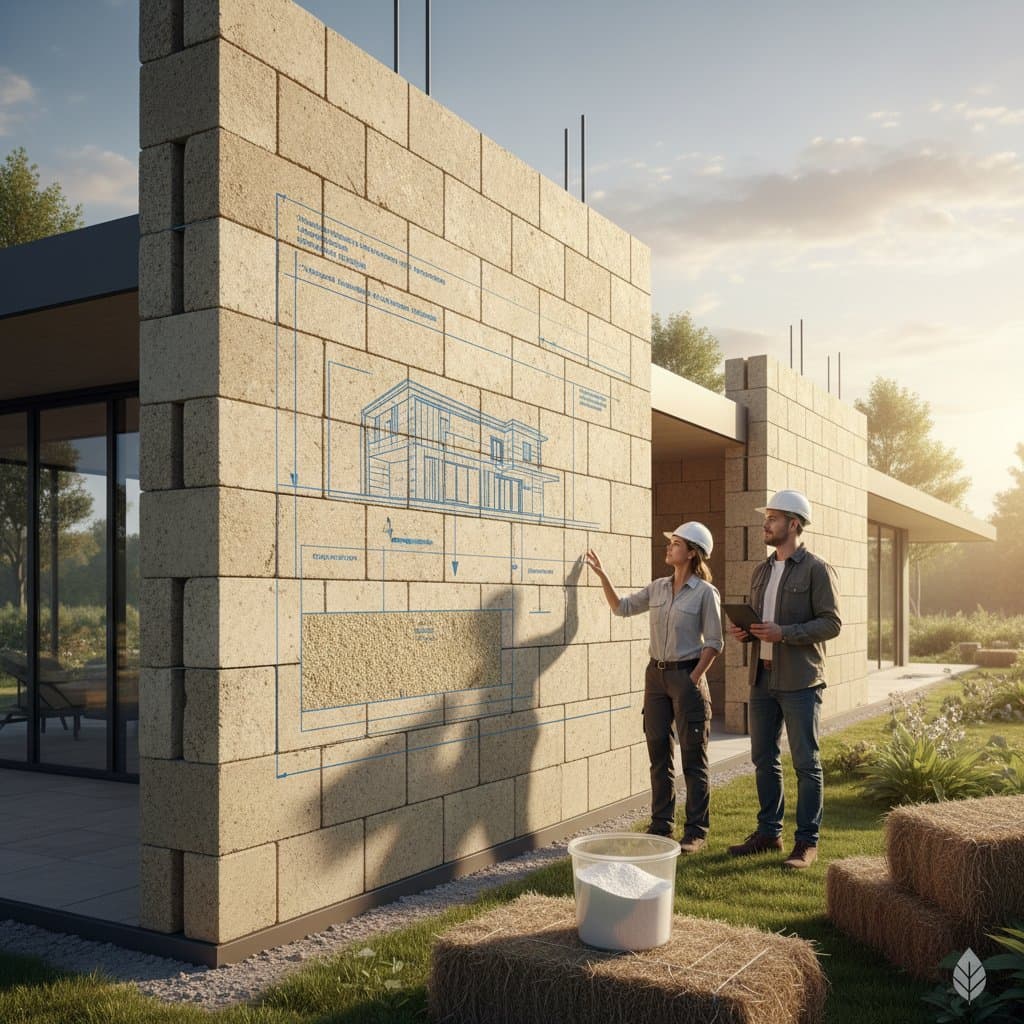
- Blocks or Bricks: Modular pieces stack like traditional masonry before receiving a lime plaster coat, ideal for updates or compact constructions.
Design-wise, hempcrete's subtle texture complements materials like wood or concrete, supporting styles from traditional to contemporary while delivering warmth and tactile appeal.
Sustainable Features and Efficiency Gains
Hempcrete's advantages extend across thermal, acoustic, and ecological dimensions, reinforcing its role in resilient construction.
Energy Efficiency
The material's R-value, indicating thermal resistance, ranges from R-2 to R-3 per inch based on density. Paired with thermal mass, it evens out temperature swings, fostering steady comfort with reduced equipment use.
Moisture and Air Quality
Hempcrete permits vapor diffusion while repelling liquid water, naturally balancing indoor humidity. This prevents extremes of dampness or aridity, often leaving spaces feeling invigorated and inviting.
Fire and Pest Resistance
The lime content confers strong fire resistance, commonly reaching two-hour ratings without extras. Its mineral base also repels insects and rodents, bolstering long-term integrity.
Environmental Impact
Hemp thrives with minimal water, enriches soil, and sequesters carbon swiftly. As a result, hempcrete not only lowers emissions but actively counters them through its production cycle.
Factors Influencing the Project
Project success hinges on several elements that affect hempcrete's effectiveness and economics:
- Climate Zone: It excels in temperate to cold areas, with modifications enabling use in hotter locales.
- Wall Thickness: Greater depth boosts insulation at the expense of higher costs; residential applications often employ 10 to 16 inches.
- Finish Selection: Vapor-open options like lime or clay plasters, though costlier than drywall, preserve the material's regulatory benefits.
- Supply Chain: Sourcing hurd and binders locally reduces transport impacts and expenses.
Tailoring to these variables refines budgets and outcomes from the outset.
Expert Validation and Actionable Takeaways
Experts highlight hempcrete's uncomplicated nature as a key advantage. Engineers note its reliable curing, architects praise its organic look, and builders commend its user-friendly application.
For those exploring hempcrete, these steps facilitate implementation:
- Consult specialists in bio-based materials during early planning.
- Obtain supplier-provided performance metrics to address code requirements.
- Allocate time for curing, typically weeks, prior to finishing.
- Integrate passive elements, such as oriented glazing or shading, to amplify thermal advantages.
Frequently Asked Questions
Is hempcrete legal everywhere? Regulations vary; certain regions approve it directly, others via alternative provisions with supporting engineering data.
Can hempcrete be used in renovations? Absolutely, as infill for existing walls or in retrofits, particularly benefiting older breathable structures.
Does hempcrete attract pests or mold? The alkaline lime environment inhibits both effectively.
How does it compare to traditional insulation like fiberglass or spray foam? While fiberglass and foam offer denser insulation per inch, they depend on petroleum derivatives; hempcrete provides reduced carbon footprint, superior moisture handling, and cleaner air.
Is it suitable for humid climates? Yes, with appropriate breathable detailing to leverage its humidity control without impermeable barriers.
Steps to Integrate Hempcrete in Your Build
Adopting hempcrete positions a project for enduring efficiency and environmental gains. Builders who prioritize its unique properties create structures that perform reliably, enhance occupant health, and contribute positively to climate goals. Start by evaluating site-specific needs and partnering with informed teams to realize these benefits in practice.