Key Points
- Geothermal HVAC systems reach an average return on investment in about seven years.
- Homeowners reduce heating and cooling costs by 40 to 70 percent compared with conventional systems.
- Federal and local incentives offset up to 30 percent of installation costs.
- Indoor components last more than 25 years while underground loops exceed 50 years.
- Maintenance stays minimal and adds to lifetime savings.
Ground Source Efficiency in Practice
Homeowners can cut utility bills in half while keeping indoor temperatures steady throughout the year. Geothermal HVAC systems draw on the stable temperature of the ground to move heat rather than generate it. This approach replaces combustion or heavy electric resistance with simple energy transfer between earth and living space.
Earlier high installation costs slowed adoption. Improved drilling methods and expanded incentives have shortened payback periods. Many households now recover their full investment in roughly seven years, which positions geothermal among the strongest energy upgrades available today.
System Operation
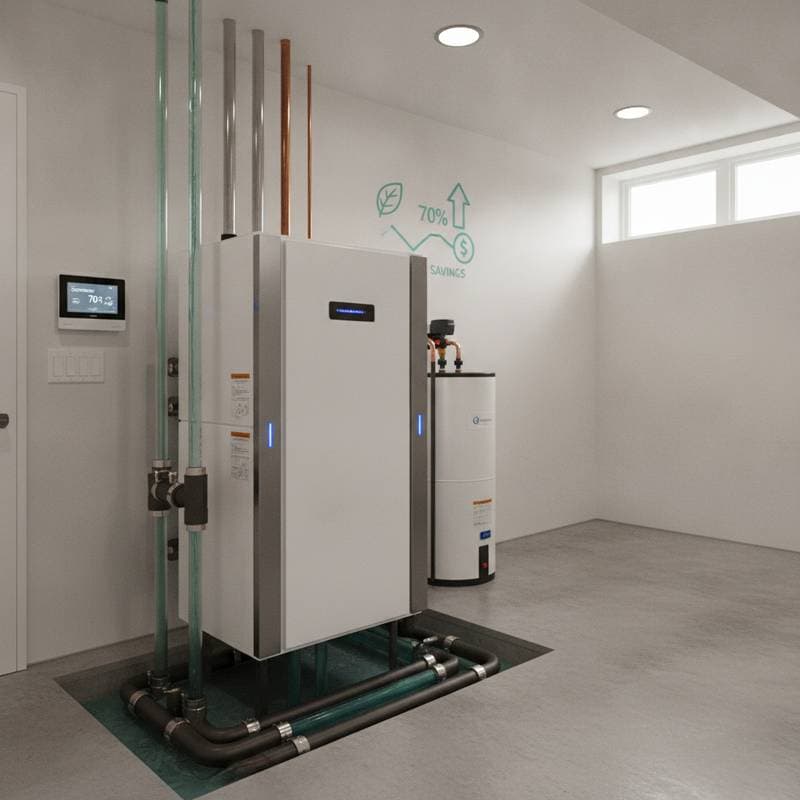
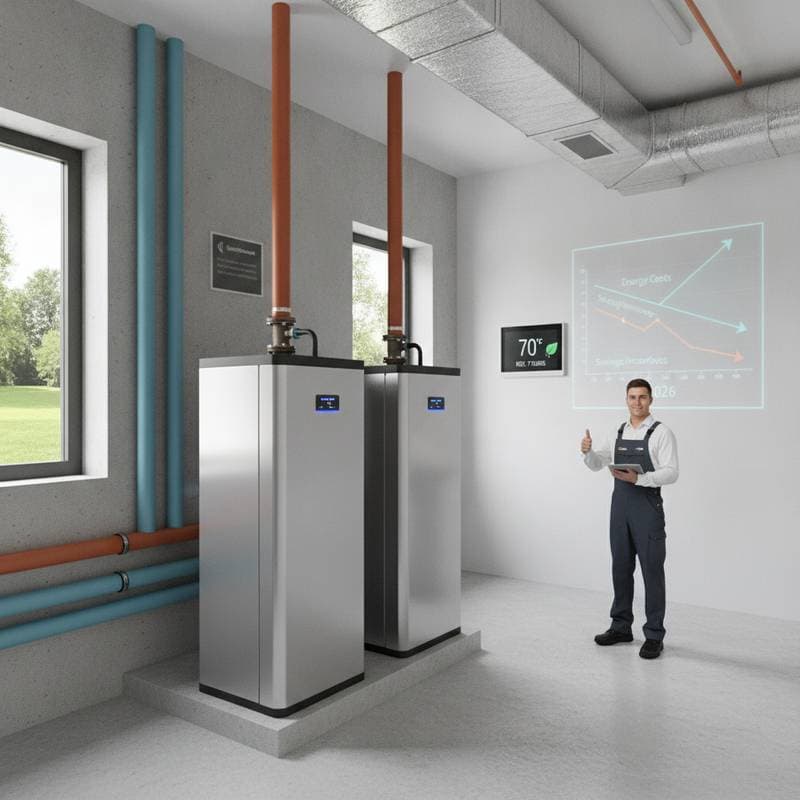
A network of underground pipes, called ground loops, circulates a water-based fluid. In winter the fluid collects heat from the soil and carries it indoors. In summer the process reverses and excess heat moves back into the ground. An indoor heat pump then distributes the energy through air or water delivery.
Earth temperature remains nearly constant below the frost line. This stability allows geothermal units to reach efficiency levels of 300 to 600 percent, according to Department of Energy data. Each kilowatt of electricity consumed therefore supplies three to six kilowatts of heating or cooling output.
Cost Comparison
A complete residential installation typically costs between 20,000 and 35,000 dollars. Soil type, home size, and loop layout determine the final figure. Although the initial outlay exceeds that of air source or combustion systems, lower operating expenses close the gap quickly.
| System Type | Average Install Cost | Annual Operating Cost | Average Lifespan | Typical Savings |
|---|---|---|---|---|
| Geothermal Heat Pump | 20,000-35,000 | 500-900 | 25+ years | 40-70% lower bills |
| Air-Source Heat Pump | 10,000-18,000 | 1,200-1,800 | 15 years | 20-30% lower bills |
| Gas Furnace and AC | 8,000-15,000 | 1,800-2,500 | 15 years | Baseline |
Without incentives, most homes recover costs within seven to ten years. Available tax credits and rebates compress that timeline further.
Available Incentives
A federal tax credit covers 30 percent of qualified system costs. State and utility rebates add between 1,000 and 5,000 dollars per project. Energy efficient mortgages allow owners to finance the balance and often see monthly energy savings exceed the added loan payment.
These tools convert geothermal from a premium option into a practical choice for a wider range of households.
Comfort and Environmental Benefits
Indoor units run quietly and require no outdoor condenser. The absence of combustion eliminates on site emissions and reduces household greenhouse gases by as much as 50 percent. Stable temperatures and precise humidity control replace the drafts and dry air common with forced air furnaces.
Advanced filtration integrates easily, which benefits households with allergies.
Site Evaluation and Installation
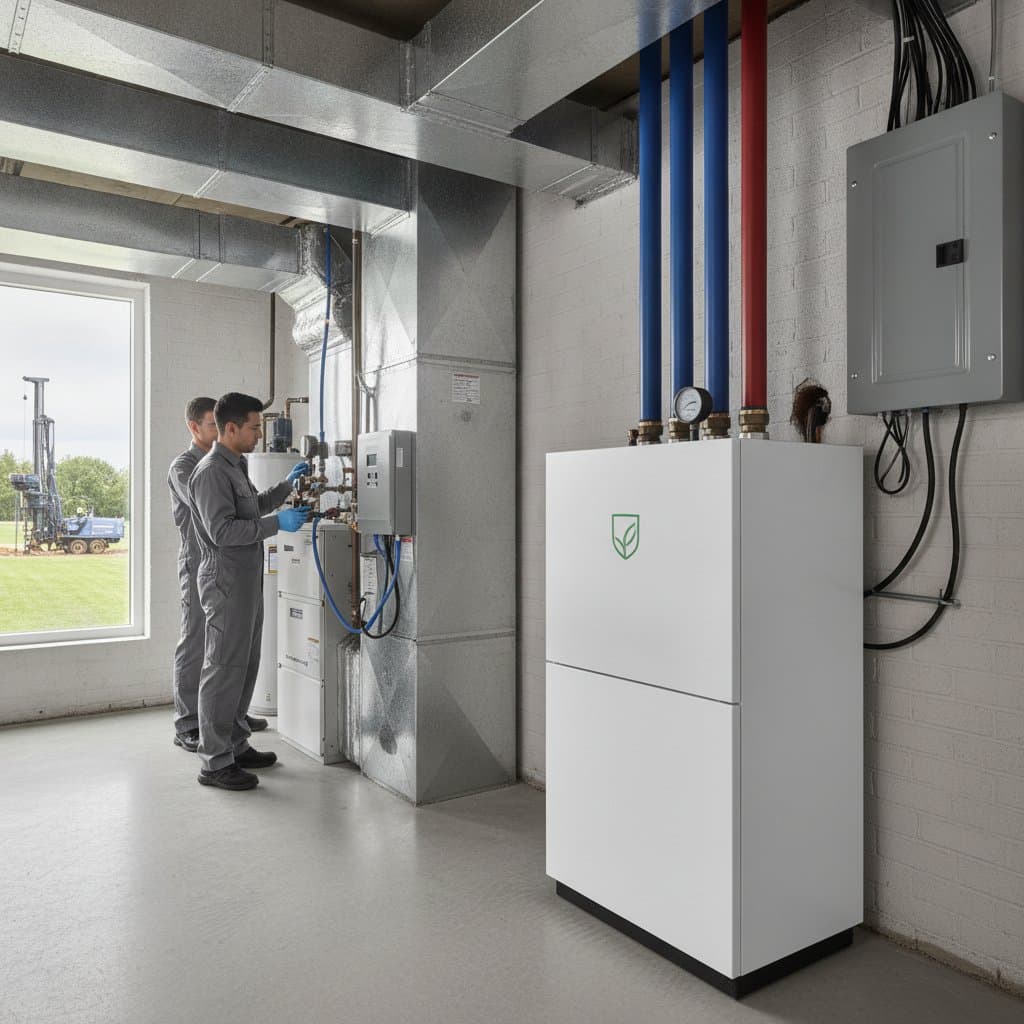
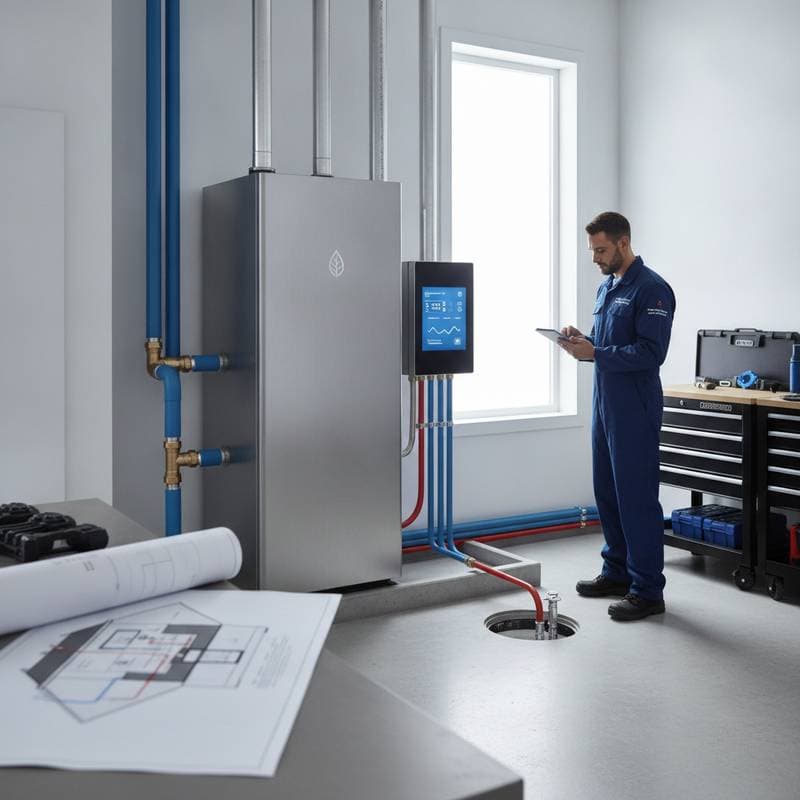
Horizontal loops suit properties with open yard space. Vertical loops fit smaller lots through deeper drilling. A qualified contractor performs a heat load calculation, tests soil conductivity, and selects the proper loop length and configuration.
After installation, ground loops need almost no attention. Annual checks of the indoor unit cover filter replacement and fluid levels. The sealed design and lack of weather exposure reduce mechanical wear.
Documented Performance
Homeowners replacing oil or electric resistance heat report annual savings above 60 percent in heating costs. Those switching from conventional air conditioning see total energy use drop by half. Comfort gains appear first, yet financial returns often become the larger surprise once utility bills arrive.
Property Value Impact
Certified appraisals show homes equipped with geothermal systems sell for 3 to 5 percent more than similar properties without them. The underground loops remain serviceable for 50 years or longer, so future equipment swaps cost less because the ground infrastructure stays in place.
Planning Your Geothermal Upgrade
An energy audit identifies insulation gaps and confirms system sizing before work begins. Working with licensed installers who verify soil conditions and loop design protects both performance and incentive eligibility. The resulting system delivers steady comfort, lower operating costs, and measurable environmental gains for decades.