Why Recycled Decks Lead Outdoor Living Trends
Imagine stepping onto a deck that absorbs the sun's warmth without splintering or fading. The source of that decking material influences its performance and your environmental footprint. As homeowners prioritize sustainable choices, recycled decks emerge as the preferred option for creating resilient outdoor retreats.
Essential Advantages
- Recycled plastic decking diverts landfill-bound materials, conserving resources and curbing pollution.
- Composite boards from recycled plastics and wood fibers endure up to three times longer than untreated wood.
- Owners achieve 35 to 50 percent savings in maintenance over the deck's lifespan compared to wood alternatives.
- Industry reports indicate recycled decking expands at twice the pace of standard wood products.
- Producers enhance hues, grains, and functionality, ensuring recycled decks match wood's visual charm while exceeding its sustainability.
The Rise of Eco-Conscious Outdoor Design
Outdoor areas now serve as vital extensions of living spaces, fostering leisure, gatherings, and stewardship. Heightened climate consciousness drives demand for materials that deliver reliability alongside ethical sourcing. Recycled decking aligns seamlessly with these priorities.
Research from building associations reveals that over 60 percent of consumers factor sustainability into renovation plans. This trend spans beyond dedicated environmentalists, signaling a societal pivot toward choices that prove both sensible and inspiring.
Landscapers observe parallel shifts among clients, who seek decks that lessen ecological harm and simplify care. Recycled options fulfill these needs through blends of post-consumer plastics, like discarded bottles and containers, with recovered wood fibers. The outcome yields a robust, visually pleasing platform that outperforms conventional lumber in diverse settings.
Unique Features of Recycled Decking
Standard woods such as cedar or treated pine demand ongoing treatments to combat wear. These routines inflate costs and burden the environment. Recycled decking addresses these challenges via advanced engineering and composition.
Material Makeup and Strength
Typical recycled decks incorporate:
- Recycled polyethylene or polypropylene to fend off water and rot.
- Salvaged wood fibers for authentic feel and solidity.
- UV inhibitors and pigments to preserve vibrancy against sunlight.
Such formulations prevent twisting, cracking, and pest intrusion. Lab evaluations show recycled composites resist moisture 70 percent more effectively than wood, enabling sustained use in wet or seaside locales with minimal intervention.
Ecological Gains
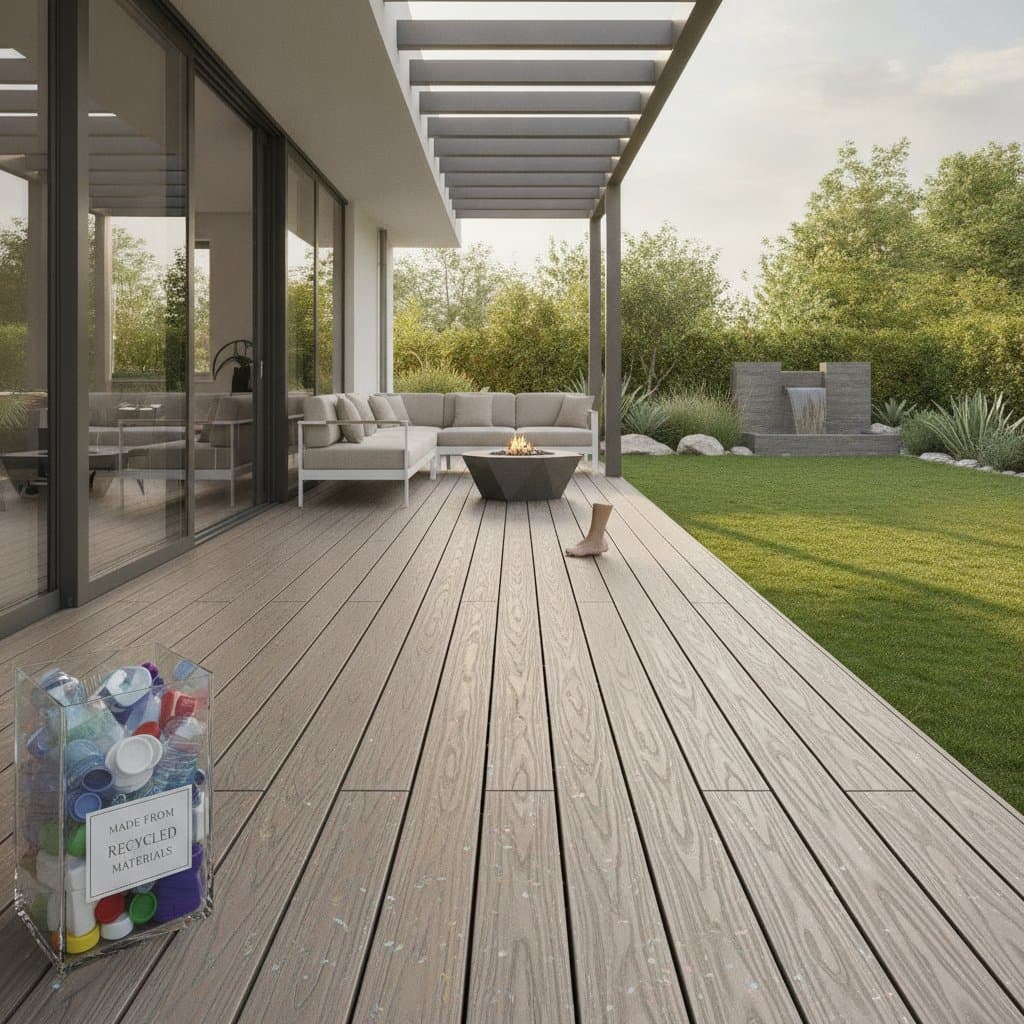
The green impact stands out prominently. A 500-square-foot recycled deck repurposes about 140,000 plastic bags or equivalents, keeping them from waste sites. Production processes also consume less energy than sourcing new timber, cutting lifecycle emissions.
Numerous companies engage in circular recycling, reclaiming factory offcuts and used plastics to produce fresh boards. This method minimizes refuse, upholds quality, and tracks origins for transparency.
Recycled Versus Traditional Decking: A Direct Comparison
Direct evaluation clarifies recycled decking's edge in design conversations.
| Feature | Recycled Composite Decking | Traditional Wood Decking |
|---|---|---|
| Durability | Shields against rot, pests, and dampness | Susceptible to breakdown, bugs, and bends |
| Maintenance | Basic cleaning suffices | Needs yearly coatings and varnishes |
| Lifespan | Averages 25 to 30 years | Ranges 10 to 15 years with upkeep |
| Environmental Impact | Recycles waste and spares trees | Involves harvesting and preservatives |
| Long-Term Cost | Declines with low care needs | Escalates from repairs and renewals |
Upfront, recycled materials cost 10 to 20 percent more per square foot than basic woods. However, lifetime returns reach 120 to 150 percent higher, driven by slashed upkeep and extended durability.
Aesthetic Flexibility and Contemporary Appeal
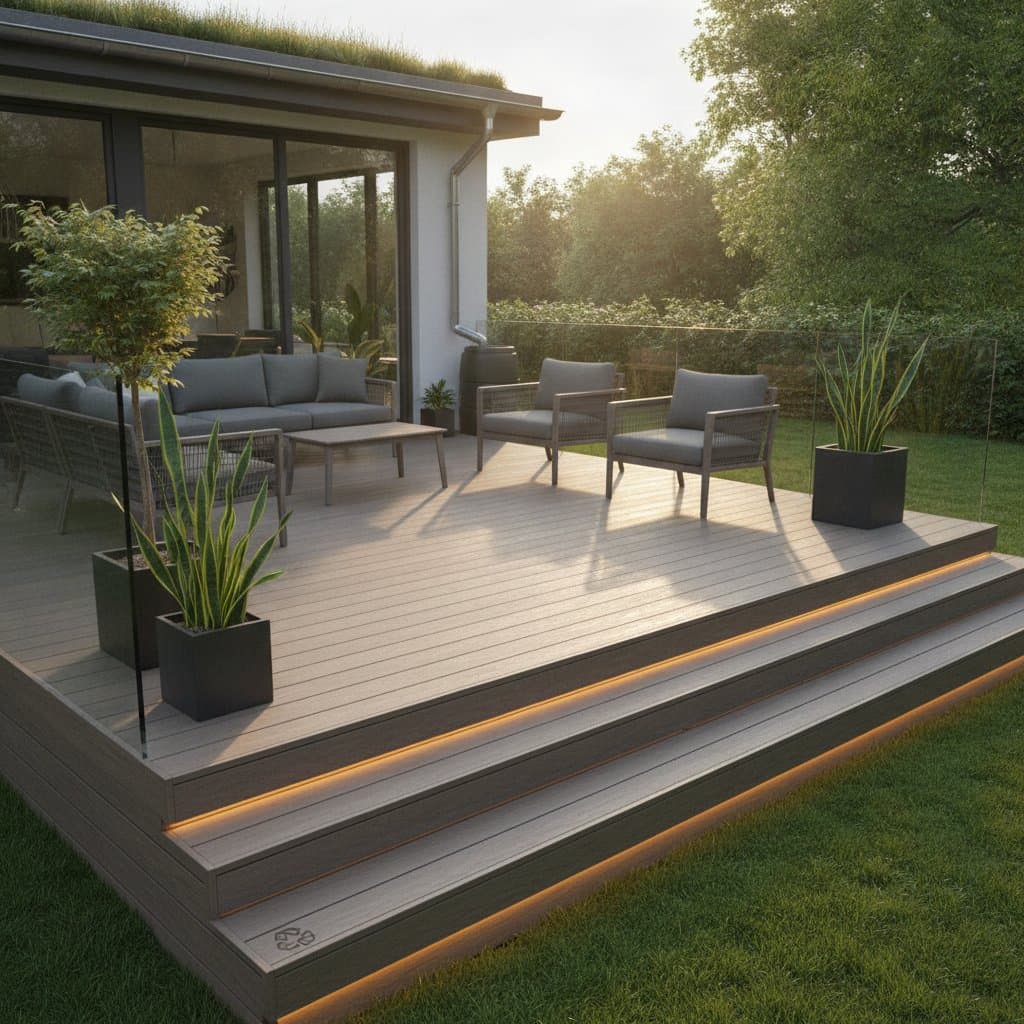
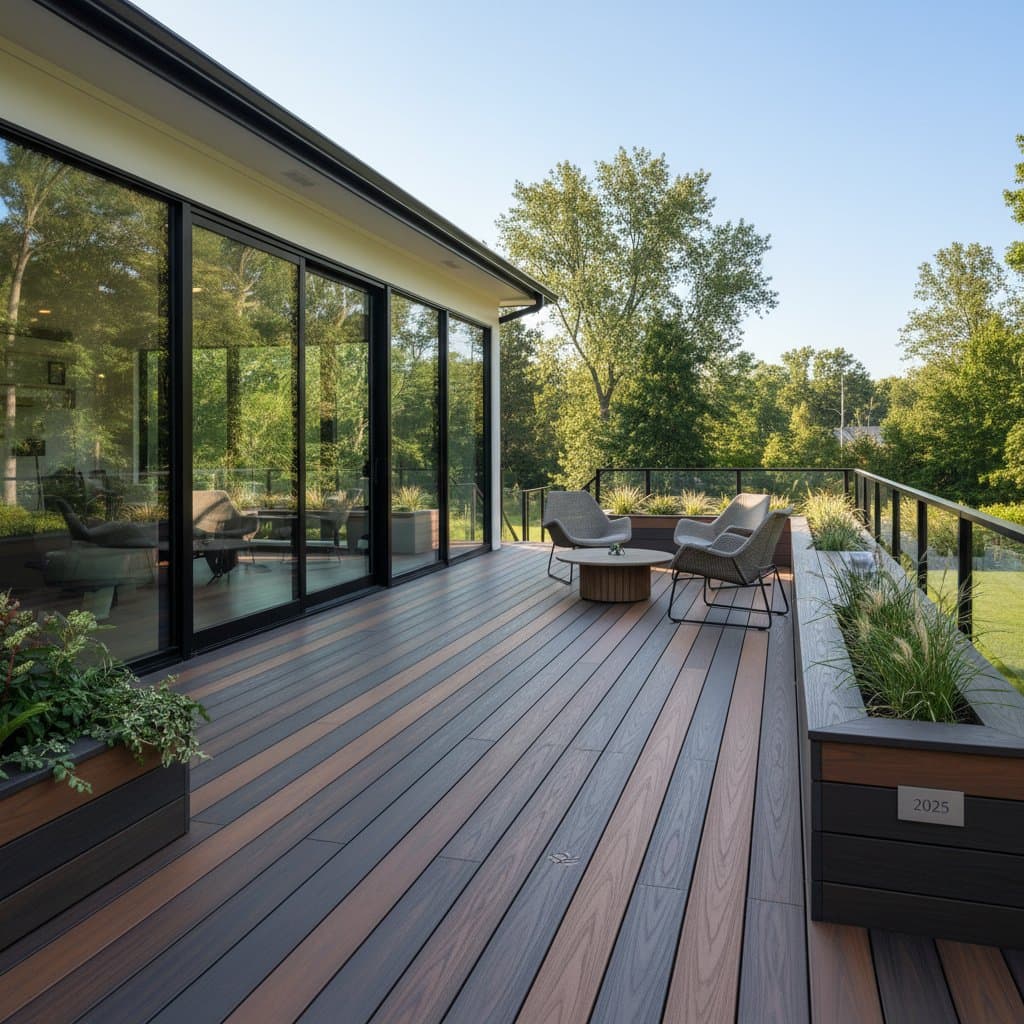
Past recycled decks drew flak for narrow palettes and synthetic looks. Modern versions dispel those notions with expansive shades, from soft grays to deep reds, and grains that replicate wood convincingly.
Architects value the adaptability; boards shape easily without fracturing, supporting intricate layouts. Integrate fixtures like lights or benches effortlessly. Fade-resistant properties ensure lasting elegance without refreshes.
Improved thermal management benefits sun-exposed sites. Certain lines stay 20 degrees cooler than prior composites, enhancing comfort for bare feet on warm afternoons.
Surface and Finish Advancements
Co-extrusion techniques apply durable caps that boost stain-proofing and hue stability, while varying sheen and tactility. Premium variants add recycled minerals for robustness and sheen.
These materials suit diverse home styles, from sleek contemporary to warm traditional, all while upholding green principles.
Practical Aspects of Installation and Upkeep
Simplicity in maintenance draws many to recycled decking. Composites skip the sanding and sealing wood requires, relying instead on straightforward cleansing.
Setup Essentials
Installers favor the uniform sizing and alignment of composite boards, which streamline assembly and cut scraps. Concealed clips yield seamless, fastener-free finishes and accommodate natural shifts without damage.
For your build, select rust-proof hardware and treated bases or steel supports to match the boards' moisture tolerance and secure the framework.
Care Guidelines
Routine sweeps clear debris, particularly in moist spots. Tackle marks with a soft tool and neutral solution to revive the surface. Steer clear of abrasives that might harm coatings.
This regimen spares time and avoids wood's chemical dependencies. Within a decade, savings tally hundreds of hours and substantial funds.
Sustainability in a Larger Framework
Beyond economics and style, recycled decking empowers participation in resource cycles. Each installation prolongs plastic utility and eases timber pressure.
Analysts project that broad use could slash plastic discard by thousands of tons yearly. Rising calls for verifiable chains propel firms toward rigorous eco-certifications.
Insights from Specialists
Sustainability expert Laura Green notes how recycled decking spurs industry progress. "Homeowners opting for composites signal suppliers to emphasize recovery and optimization," she states.
Builder Mike Alvarez, focused on green builds, defaults to these materials. "The aesthetics appeal, but enduring low maintenance seals the deal," he shares. "No annual refinishing changes everything."
Forward-Looking Developments
Innovation propels recycled decking ahead. Blends now mix plastics with bamboo or agricultural byproducts for enhanced resilience and green profiles. Bio-resins from plants cut fossil dependencies further.
Intelligent integrations appear, such as app-linked sensors for humidity or solar accents, merging tech with eco-responsibility.
Applications Beyond Decks
Recycled composites extend to rails, covers, and seating, enabling unified outdoor schemes with uniform traits.
As knowledge grows, these products shift to everyday essentials. Retailers spotlight them for green merits and lasting worth.
Steps to Select and Build Your Recycled Deck
Start by evaluating your space's size, climate, and style goals. Consult local pros for site assessments and material matches. Review warranties, typically 25 years, to confirm quality.
Budget for initial outlay but factor in upkeep savings. Source from certified suppliers to verify recycled content. With planning, your deck delivers decades of joy, sustainability, and ease.