Why Recycled Decks Save Money and Increase Home Value
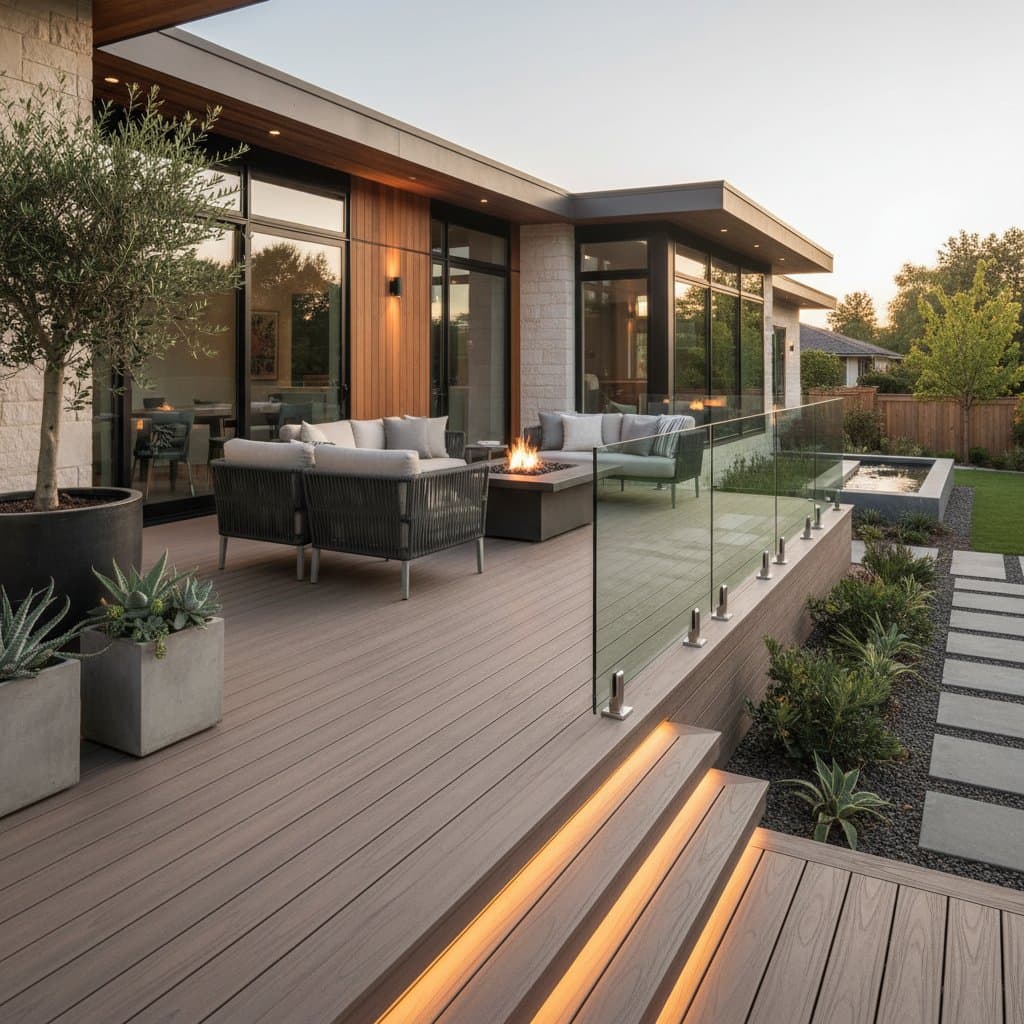
Homeowners seek outdoor spaces that combine comfort, beauty, and longevity. Recycled and composite decking realizes this goal while advancing environmental stewardship and providing economic benefits. Design and construction experts favor these materials for their exceptional performance and flexible design options.
Key Benefits
Recycled and composite decking accounts for more than 65 percent of new residential deck installations. Maintenance costs decrease by up to 70 percent relative to traditional wood decks. Major manufacturers integrate over 90 percent recycled components, including plastics and reclaimed wood fibers.
These decks deliver an average 72 percent return on investment at the time of home sale, matching or surpassing natural wood alternatives. Built-in features such as slip-resistant surfaces, UV protection, and customizable patterns make them ideal for modern outdoor settings.
Shifting to Smarter Outdoor Materials
Outdoor living evolves from simple patios to fully functional extensions of the home for year-round enjoyment. As spending on exterior improvements rises, demand grows for materials that offer visual appeal alongside environmental benefits. Recycled decking meets these demands with dependable performance and no ecological trade-offs.
Statistics from the North American Deck and Railing Association show double-digit growth in composite and recycled materials across recent market cycles. This surge arises from greater consumer awareness, improved production methods, and escalating costs for high-end hardwoods.
Moving Away from Traditional Wood
Wood decks provide timeless charm, but they demand substantial ongoing care. Activities like sanding, staining, and sealing require considerable time and expense. In contrast, recycled composite decking resists moisture, rot, and insects, removing the need for chemical treatments.
Studies from the Sustainable Building Materials Council indicate that wood deck owners spend about 500 dollars annually on maintenance, compared to less than 150 dollars for composites. Over ten years, this difference translates to savings greater than 3,500 dollars.
Environmental Impact at the Core
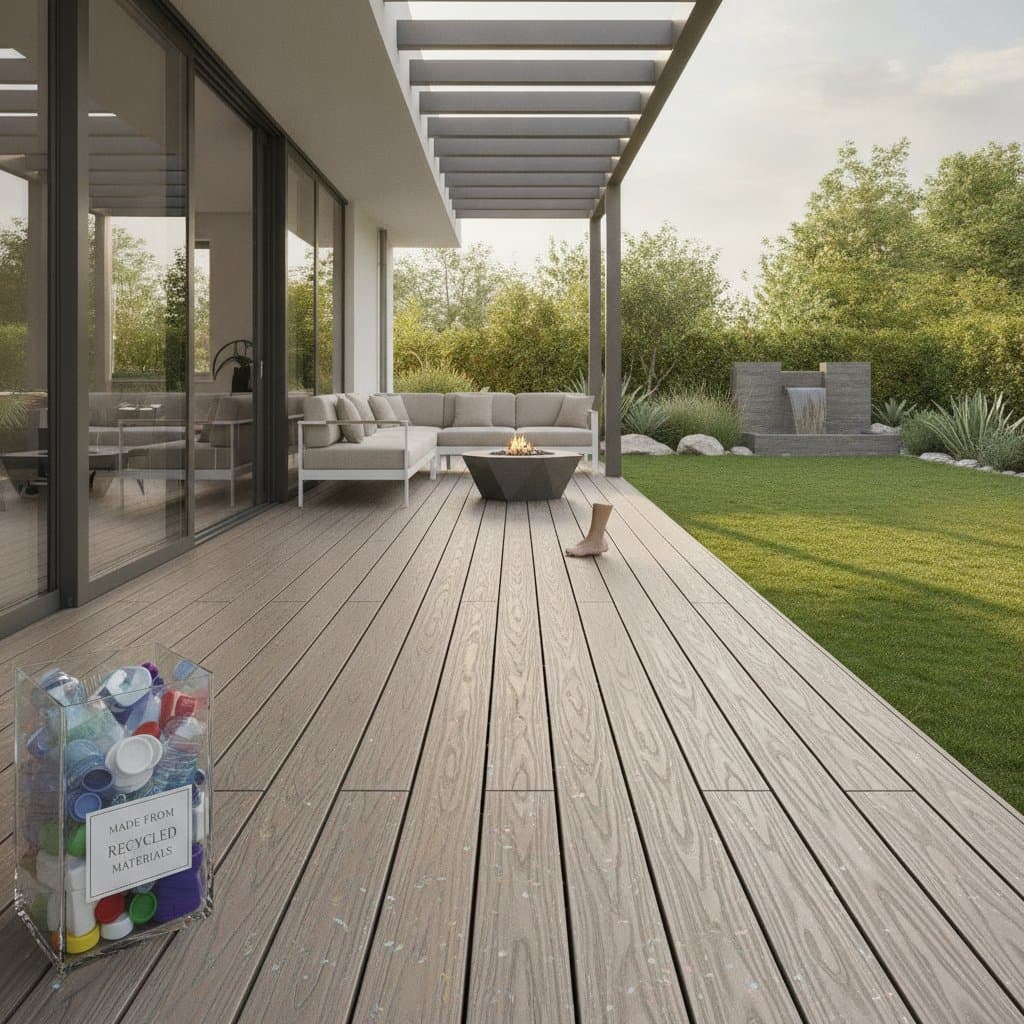
Recycled decking rises in popularity by transforming waste into valuable resources. Manufacturers blend reclaimed wood fibers with recycled plastics sourced from everyday items, such as grocery bags, detergent bottles, and milk jugs.
Building a 500-square-foot deck using composites keeps more than 140,000 plastic bags out of landfills. In addition to reducing waste, these decks ease pressure on forests by decreasing dependence on virgin timber.
Comparing Materials
A side-by-side evaluation of recycled decking and other options highlights its advantages for outdoor projects.
| Material Type | Average Lifespan | Maintenance Level | Recycled Content | Estimated Cost per Square Foot |
|---|---|---|---|---|
| Pressure-Treated Wood | 10–15 years | High | 0% | $2–$5 |
| Cedar or Redwood | 15–20 years | Moderate | 0% | $4–$7 |
| Composite (Recycled Plastic + Wood Fiber) | 25–30 years | Low | 90–95% | $6–$12 |
| 100% Recycled Plastic | 30–35 years | Very Low | 100% | $7–$13 |
Upfront costs for composites or all-recycled plastics surpass those of wood, yet total lifetime expenses fall due to reduced maintenance and greater durability.
Design Flexibility in Action
Sustainability pairs with style, as manufacturers offer a wide array of colors and textures that replicate wood grains. These choices prevent the fading and splintering common in natural woods.
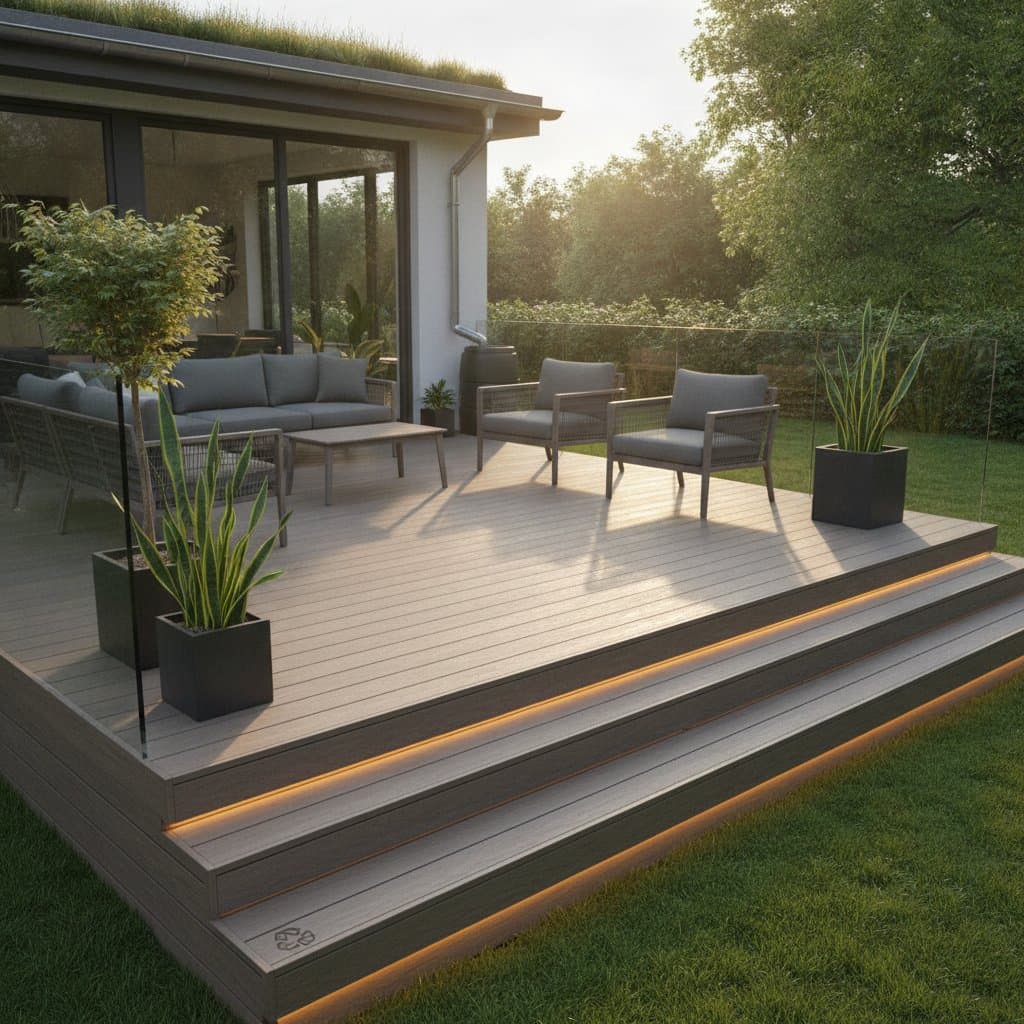
Professionals appreciate the consistent coloring, which enables creative designs like bordered patterns, angled installations, or integrated lighting. Resistance to warping maintains the deck's appearance through years of exposure to weather.
Advances Powering Better Decking
Modern composite and recycled decking improves on past generations through sophisticated engineering. Enhancements boost durability, safety, and shielding properties.
Multi-Layer Builds and Shielding Finishes
High-end boards use coextrusion to fuse several material layers during manufacturing. This creates a tough outer shell that repels water and fading, protecting the core from UV rays.
Innovators add textured finishes for better traction in wet areas, perfect for areas near pools or water edges.
Cooling Effects and Enduring Hues
Earlier issues with heat buildup in recycled decking fade thanks to light-reflecting additives. New polymer blends lock in colors for decades, eliminating the requirement for repainting.
Full-Cycle Sustainability
Many manufacturers now reclaim old composite boards to produce new ones, creating a circular process. This approach minimizes waste and extends material life. Some companies offer pickup services to ensure end-of-use materials avoid landfills.
Fitting Modern Lifestyles
The rise of outdoor kitchens, covered lounges, and multi-use patios changes what decks must deliver. Recycled materials shine in these applications with their strength, ease of care, and adaptability.
Durability for Everyday Demands
Families with busy routines gain from surfaces that handle scuffs and stains. Entertainers prefer the quick cleaning and even finish for hosting events.
These decks bear heavy weights, foot traffic, and mishaps without showing wear.
Handling Diverse Climates
Recycled decking resists swelling or cracking from moisture, unlike wood. It endures freezes, high humidity, and intense sun without issues. This adaptability serves various geographic needs.
Value and Appeal in the Market
Recycled decks stand out among upgrades for recouping costs. Experts note that eco-friendly selections convey quality and forward-thinking to buyers. A well-installed composite deck enhances curb appeal and attracts sustainability-minded prospects.
Steps to Choose the Right Decking
Homeowners considering recycled or composite decking can follow these practical steps.
-
Evaluate Brands and Warranties
Focus on companies that extend coverage for both structure and looks. Reputable brands share detailed testing data. -
Check Recycled Content Certifications
Look for approvals from groups like GreenCircle or UL Environment to verify recycled amounts. Higher percentages amplify environmental gains. -
Examine Installation Requirements
These materials may need special fasteners or hidden clips. Hire contractors skilled in proper drainage setup. -
Consider Thermal Expansion and Ventilation
Materials expand slightly with temperature changes. Include sufficient spacing and under-deck airflow to prevent moisture buildup and stress. -
Integrate Features Early
Design in elements like lighting, railings, and patterns before construction. This planning creates a cohesive outcome.
Launching Your Deck Project
Choosing recycled decking represents a smart investment in convenience, longevity, and progress. It provides a surface free from rot and regular upkeep, while supporting resource-smart building practices.
Homeowners gain back hours once spent on chores. Designers unlock lasting color options and layouts. The larger effect includes lighter loads on landfills and preserved natural resources.
Start by reaching out to local suppliers or certified experts. Review samples, review warranties, and ask about recycling programs. Seeing how beauty, utility, and responsibility combine reveals why recycled decking shapes tomorrow's outdoor spaces.