Key Points
- Geothermal retrofits reduce home energy bills by 40 to 70 percent when professionals design and install them correctly.
- The ground below a property holds a stable temperature throughout the year, providing a renewable resource for heating and cooling.
- Upgrading an existing HVAC system with a ground source heat pump qualifies for local rebates and federal tax credits.
- Upfront costs range from $18,000 to $35,000, with payback periods of five to eight years through energy savings and lower maintenance expenses.
- Experts emphasize professional design, soil testing, and precise sizing to maximize efficiency and indoor comfort.
Envision Comfort Sourced from the Ground
In my role as a green building professional, I have observed many homeowners struggle with rising utility bills, fluctuating fuel prices, and underperforming HVAC systems. Imagine entering a home where temperatures remain steady, air quality stays fresh, and equipment operates with minimal noise. Underfoot, a reliable system extracts consistent energy from the earth. This scenario represents the potential of a geothermal retrofit, which many homeowners can achieve more readily than they might think.
Homes in regions with significant seasonal temperature variations rely on traditional heating and cooling units that battle extreme outdoor conditions. Geothermal systems access the steady underground temperature, often between 50 and 60 degrees Fahrenheit across most areas, to provide efficient comfort all year. By integrating a ground source heat pump into an existing HVAC setup, homeowners lower energy consumption, enhance indoor stability, and prepare their property for future environmental demands.
Reasons Homeowners Choose Geothermal Retrofits
Energy costs rank among the highest recurring expenses for households, especially in areas requiring intensive heating or cooling. Conventional air-source systems lose effectiveness when outdoor temperatures deviate sharply from desired indoor levels. During harsh winters or humid summers, these units consume more electricity or fuel to sustain comfort.
Geothermal technology addresses this issue by leveraging the consistent subsurface temperature. This approach enables systems to deliver three to five times the efficiency of air-based alternatives. Homeowners benefit from reduced operating costs, decreased emissions, and a lighter impact on the environment.
Interest in these upgrades grows as utilities provide rebates and low-interest financing options. Evolving energy regulations and community efforts to lower carbon outputs align well with geothermal solutions, supporting broader sustainability objectives.
Fundamentals of a Geothermal Retrofit
A ground source heat pump forms the heart of any geothermal system. It moves a water-based fluid through underground pipes to capture heat from the soil in winter or dissipate heat into it during summer. This closed-loop process facilitates a dependable, renewable energy transfer that supplants traditional combustion methods.
For retrofitting, the system connects to current ductwork or radiant heating components. Skilled installation often preserves much of the existing infrastructure, which limits both disruption and expense. The U.S. Environmental Protection Agency recognizes geothermal systems as one of the top choices for efficient whole-home climate control.
Steps in the Retrofit Process
1. Site Assessment and Feasibility Analysis
A qualified geothermal specialist starts with an examination of soil composition, groundwater levels, and available space. These elements guide the selection of horizontal or vertical loop designs. Horizontal configurations cost less but demand larger yard areas, whereas vertical options suit compact properties through deeper excavation.
2. Load Calculation and System Planning
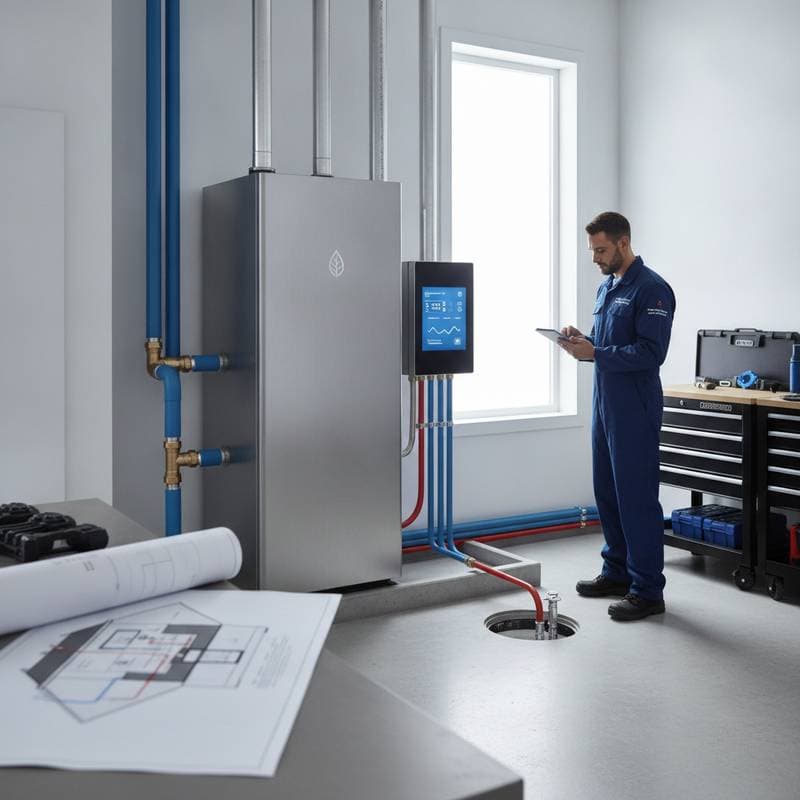
Precise calculations of heating and cooling needs prove vital for optimal savings. Factors include insulation levels, window efficiency, home orientation, and daily usage. I advise confirming that contractors employ approved software for these assessments to avoid imprecise guesses.
3. Installation and System Connection
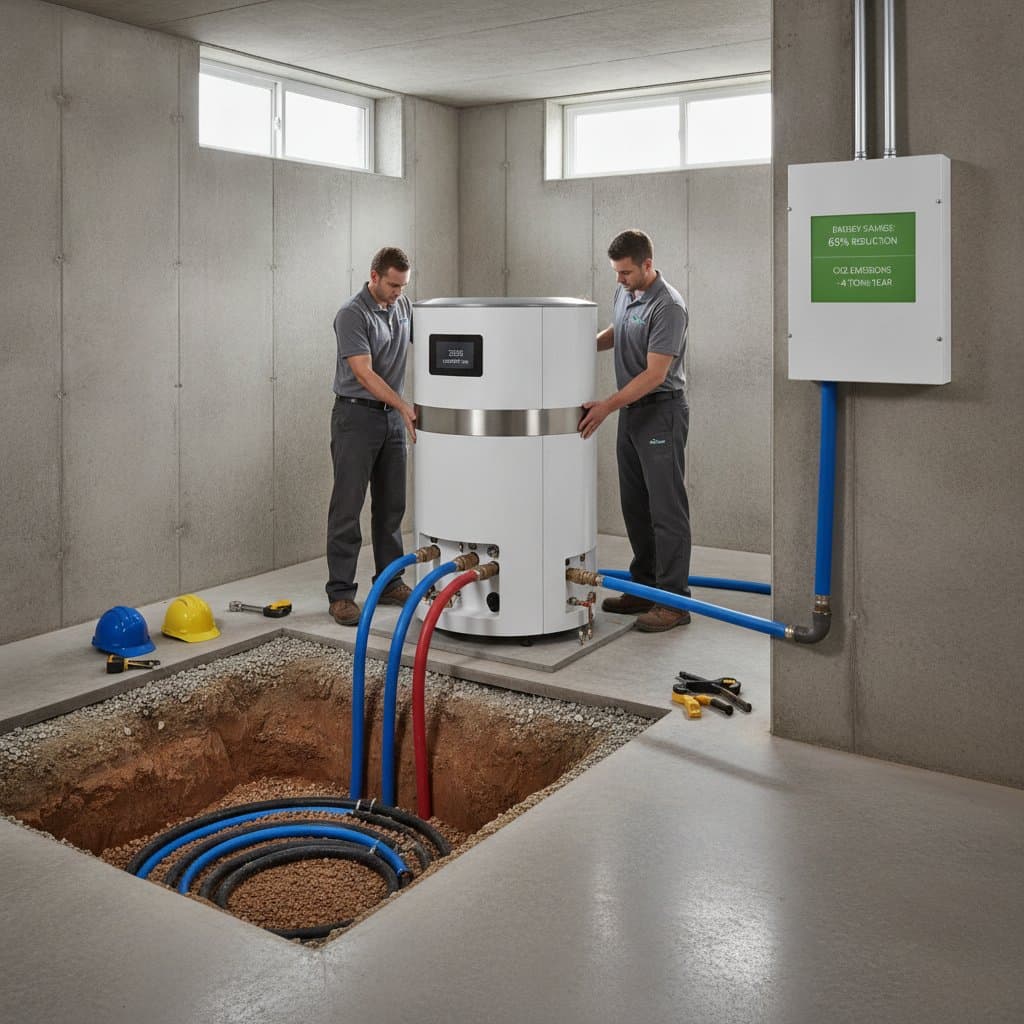
With plans in place, teams lay the ground loops and link them to the indoor heat pump. Integration occurs with existing ducts or underfloor heating. Projects typically span one to two weeks, allowing residents to stay on-site in many instances, although temporary yard alterations may occur.
4. Testing, Balancing, and Activation
Post-installation, technicians verify fluid pressure, circulation rates, and thermal output. These procedures guarantee reliable operation and durability. Homeowners receive a user manual covering routine upkeep and thermostat adjustments for best results.
Strategies to Enhance Eco-Efficiency
- Address air leaks and add insulation prior to the retrofit. A tighter building envelope lowers demand, enabling the system to function at full potential.
- Add a programmable or smart thermostat. These devices optimize settings based on occupancy and weather patterns.
- Explore hybrid setups. Combining geothermal with solar panels can cover the heat pump's power needs.
- Opt for systems with built-in monitoring. Sensors alert users to inefficiencies or required adjustments.
- Document all project details. Records aid in claiming incentives and pursuing eco-certifications.
Financial Returns and Investment Overview
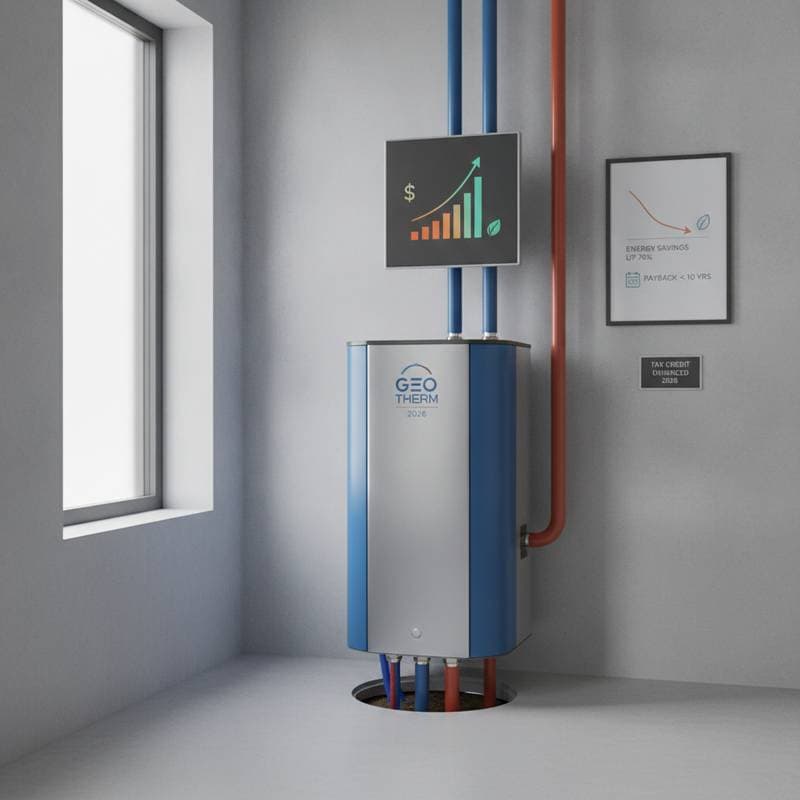
Geothermal retrofit expenses depend on site specifics, loop style, and unit size, generally falling between $18,000 and $35,000 for average homes. Though the initial outlay appears substantial, savings accumulate rapidly. Reductions of 40 to 70 percent in energy use surpass those from electric or gas alternatives, alongside decreased repair needs due to protected components.
Based on my oversight of numerous projects, owners recoup costs in five to eight years. Thereafter, benefits continue for decades, with loops enduring 50 years and indoor units 20 to 25 years. Environmentally, each installation avoids several tons of annual emissions, comparable to extensive tree planting or reduced vehicle travel.
Key Performance Indicators
Assess systems using Coefficient of Performance (COP) for heating and Energy Efficiency Ratio (EER) for cooling. Geothermal COP values range from 3 to 5, indicating three to five units of heat per unit of electricity. EER figures often hit 17 to 30, signaling superior cooling output.
Compared to alternatives, these metrics highlight advantages. Efficient air-source pumps achieve COP around 2.5, and basic electric heating scores 1. Geothermal consistently outperforms in both efficiency and cost savings.
Addressing Common Concerns
- Limited yard space. Vertical loops use little surface area and adapt to typical lots.
- Climate restrictions. Stable ground temperatures support operation in diverse weather zones.
- Landscape damage. Advanced methods minimize impact, with swift site restoration.
- Complex upkeep. Tasks remain straightforward, involving quarterly filter cleaning and yearly reviews.
- Prohibitive expense. Incentives and bill reductions accelerate return on investment.
Expert Perspective: Optimal Timing
Professionals recommend initiating a geothermal retrofit before the current HVAC fails. Advance preparation supports detailed planning, approvals, and budgeting. Delaying until equipment breaks leads to hasty choices and potential oversights.
Energy consultant Maria Jensen notes, "The key to success lies in thorough planning and professional design. A geothermal retrofit must be tailored to the property, not treated as a one-size-fits-all solution." This principle aligns with my observations: meticulous evaluation ensures outstanding outcomes.
Maximizing Retrofit Benefits Over Time
Extend value by pairing the system with upgrades like energy-efficient windows, water-saving fixtures, and LED bulbs. These measures cut total energy needs, easing the load on the geothermal unit and extending its service life.
Yearly maintenance runs $150 to $300, focused on filters and inspections. This contrasts sharply with the ongoing fixes and deliveries of conventional setups, underscoring geothermal's dual financial and ecological merits.
Steps to Proceed
To pursue this upgrade, arrange a site evaluation from a certified geothermal expert. Request comprehensive bids covering design, layout, expenses, and savings projections. Verify each provider's qualifications and retrofit history, as execution quality influences results.
Contact a trusted specialist through our directory for a free consultation. Our vetted professionals account for local geology, weather, and regulations. Follow our eco-upgrade resources to align your initiative with proven standards.
Frequently Asked Questions
How long does installation take? Most retrofits complete in one to two weeks, depending on site complexity.
What incentives are available? Federal tax credits cover up to 30 percent of costs, plus state and utility rebates vary by location.
Is geothermal suitable for my climate? Yes, the system's reliance on ground stability makes it effective nationwide.
How do I maintain the system? Change filters every three months and schedule annual professional checks.
What if my home lacks ductwork? Alternatives like ductless mini-splits or radiant systems integrate seamlessly.