Key Points
- Ocean plastic countertops transform marine waste into durable surfaces suitable for kitchens, bathrooms, and outdoor areas.
- Each slab incorporates hundreds of reclaimed plastic bottles or fishing nets, preventing them from polluting oceans.
- Professional installation provides non-toxic adhesion, stable colors, and resistance to heat and moisture.
- Costs align with mid-range quartz or granite, while delivering a reduced environmental impact.
- Routine care and verified sourcing ensure sustained sustainability and aesthetic appeal.
From Ocean Debris to Home Surfaces
Green building professionals often encounter homeowners seeking kitchens that balance beauty, utility, and planetary health. Residents near coastlines frequently observe plastic pollution accumulating on shores, fostering a sense of urgency for solutions. Ocean plastic countertops address this by converting such waste into robust, attractive surfaces for kitchen islands or bathroom vanities, influencing sustainable design in both coastal and inland settings.
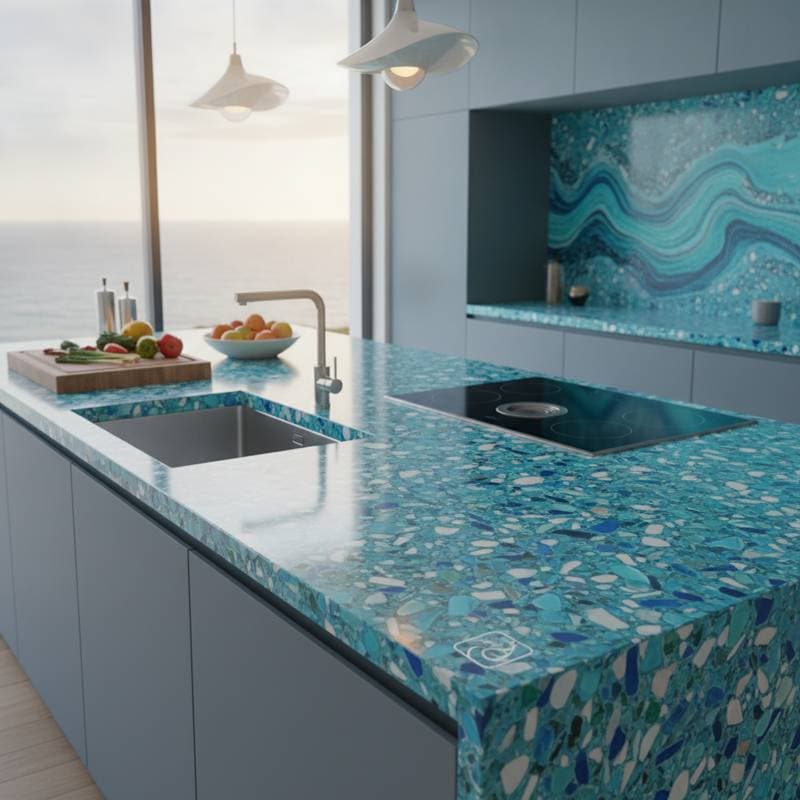
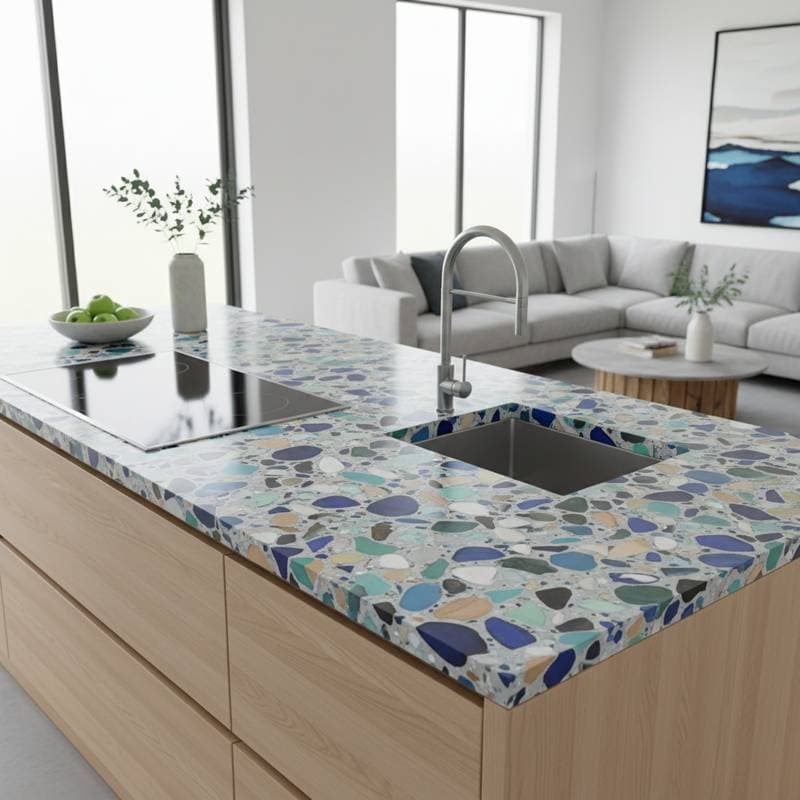
Envision a kitchen where the countertop under your touch features subtle blues, whites, and greens, each pattern derived from recycled ocean plastics. These surfaces extend beyond functionality to embody dedication to ocean preservation and efficient resource loops.
The Significance of Ocean Plastic Countertops
Plastic waste in marine environments poses a enduring threat. Organizations like the World Wildlife Fund report millions of tons entering oceans yearly, fragmenting into microplastics that disrupt food webs and endanger species. Conventional recycling recovers only a portion of this material, prompting innovators to repurpose ocean plastics for durable construction.
These countertops utilize plastics from beach cleanups, fishing discards, and intercepted waterway threats. A single slab removes substantial waste from disposal sites and seas, diminishing ecological harm. Professionals note a rising demand for materials that combine style with ethical impact, and these countertops fulfill that need.
Production Process
Manufacturing ocean plastic countertops involves precise steps for efficiency. Workers sort collected plastics by category and hue, then shred and cleanse them to eliminate contaminants like salt or debris. The resulting flakes melt and compress under intense pressure into solid sheets that replicate the density and resilience of stone. Certain producers add natural binders or low-emission resins to bolster strength while preserving recyclability.
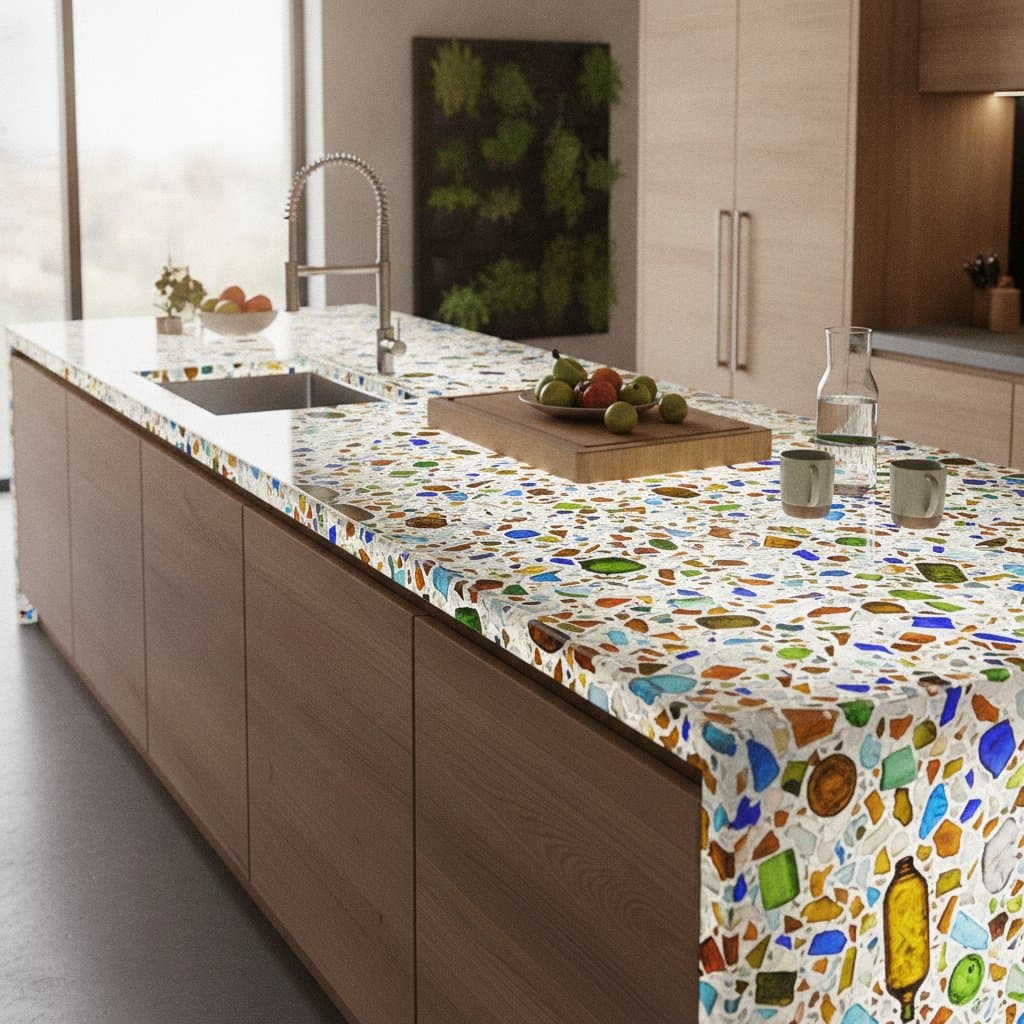
Patterns emerge uniquely, akin to natural stone, with colors evoking marine themes such as navy specks like coral or clear shades like sea glass. This method elevates former pollutants to sophisticated design elements.
Primary Advantages
Sustainability Focus
Each installation quantifies waste diversion. Brands vary, but one kitchen setup may repurpose up to 1,000 bottles or 50 pounds of ocean plastic. This verifiable contribution attracts those prioritizing origin tracking and environmental accountability.
Everyday Durability
These countertops withstand regular use effectively. They handle moderate heat from cooking and resist stains or fractures more than laminates. Proper sealing enables moisture repulsion, suiting humid regions or exterior applications with variable conditions.
Simplified Upkeep
Non-porous composition eliminates frequent sealing needs. Cleaning with mild soap and water maintains appearance, and light scratches yield to fine sandpaper buffing. Such ease reduces expenses and effort long-term.
Design Adaptability
These surfaces offer broad creative options. Pair them with recycled backsplashes or salvaged wood for coastal-modern aesthetics. Variations in color allow shoreline-inspired gradients across multiple slabs.
Safety Assurance
Select manufacturers employing non-toxic agents and formaldehyde-free processes to safeguard air quality. This supports certifications like LEED or WELL for healthier interiors.
Strategies for Enhanced Eco-Performance
Incorporate ocean plastic countertops within a comprehensive sustainability framework. Consider these approaches to amplify benefits:
- Audit Materials: Pinpoint substitutions in high-impact areas such as countertops, cabinets, and floors.
- Select Verified Providers: Partner with those affiliated with marine protection entities for material provenance.
- Favor Nearby Production: Minimize transport to lower carbon emissions from material lifecycle.
- Add Efficient Devices: Combine with certified appliances to optimize kitchen energy use.
- Prepare for Reuse: Inquire about supplier programs for recycling end-of-life pieces.
Cost and Longevity Analysis
Installed costs for ocean plastic countertops fall between $60 and $120 per square foot, influenced by composition and region. This positions them affordably against quartz or granite. Environmental savings and low maintenance enhance overall value.
Quality products endure 20 to 30 years under care. Surface refreshes address wear without full replacement. Including resale boosts, they often prove economical versus conventional options.
Case Example: Revitalizing a Coastal Residence
A family in a moisture-prone coastal area upgraded from laminate to ocean plastic countertops using recycled fishing nets. The new surfaces endured salty conditions that damaged prior materials and sparked discussions at social events. The rippled texture evoked flowing water, captivating visitors.
This change cut embodied carbon by about 40 percent over imported stone. The family later reflected, "Every time we cook, we feel connected to the ocean's recovery."
Addressing Myths
Skepticism about plastic countertops often stems from assumptions of fragility or unnatural looks. Advanced methods create dense, stone-comparable panels that resist scratches. Colors achieve organic depth through expert pigment control.
Success depends on quality sources emphasizing reinforcement and light stability. Inferior versions may fade in sunlight, so confirm warranty details for performance guarantees.
Broader Impacts
Adopting these countertops aids cleanup efforts, generates recycling employment, and funds community education. Producers often contribute to conservation or local collection drives.
This system promotes ecological care and equitable chains. Home improvements thus contribute to healthier seas and stronger communities.
Installation Essentials
Assess these elements for optimal results:
- Support Needs: Lighter than stone yet requiring solid bases.
- Heat Response: Account for minor expansion with edge allowances by experts.
- Finish Options: Matte variants conceal marks better than glossy ones.
- Coverage Details: Seek 10-year terms for structure and color retention.
- Regulatory Fit: Verify alignment with local eco-standards.
Engage specialists in composites for secure adhesion and sealing.
Insights from Specialists
Dr. Lina Ortega, a materials researcher, states, "Ocean plastic composites evolve from experimental to essential. Proper engineering turns waste into superior resources."
Interior designer Rafael Kim adds, "Clients connect deeply with these surfaces. The narrative infuses homes with intention."
Observations align with field experiences, signaling a durable pivot to circular practices.
Steps for Integration
To proceed, consult certified experts via resources like itsacoolerplanet.com for layout assessments and supplier links. Evaluate harmony with current elements; versatile palettes suit diverse motifs, from neutrals to oceanic accents.
This choice elevates spaces while advancing waste reduction and ingenuity. Such actions foster collective environmental gains.
Frequently Asked Questions
What makes ocean plastic countertops eco-friendly? They repurpose marine waste, diverting it from oceans and landfills to create long-lasting products.
Are they as durable as stone? Yes, they match or exceed laminate and approach quartz in heat, stain, and moisture resistance.
How do I maintain them? Wipe with soap and water; buff minor scratches with sandpaper. No sealing required.
What colors are available? Options include ocean-inspired hues like blues, greens, and neutrals with unique patterns.
Is installation complex? Professionals handle it similarly to quartz, ensuring proper support and sealing.